Advocacy
Bright Horizons: Celebrating the Breakthroughs of 2025
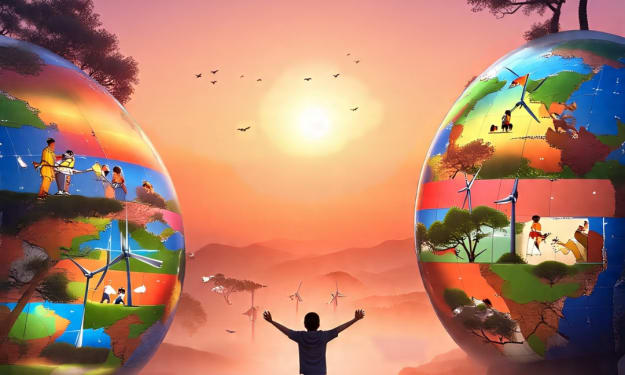
Bright Horizons: Celebrating the Breakthroughs of 2025 How Innovation, Unity, and Progress Are Shaping a Better Tomorrow Today As the sun rises on 2025, the world stands at the cusp of remarkable change. What once seemed like distant dreams are now vibrant realities, transforming how we live, work, and connect. Across continents and cultures, innovation is fueling progress, while unity among people drives solutions to some of humanity’s biggest challenges. This year is a testament to human ingenuity and resilience, offering hope and inspiration for a brighter future. A Leap Forward in Clean Energy One of the most exciting developments in 2025 is the dramatic expansion of clean energy. Solar and wind power, once supplementary sources, now dominate global energy grids. Thanks to advancements in energy storage technologies, such as ultra-efficient solid-state batteries and green hydrogen solutions, renewable energy is reliable and accessible—even in regions that previously struggled with power shortages. In cities worldwide, solar panels glitter on rooftops, while wind farms span coastlines and open plains. The result? A significant reduction in carbon emissions and cleaner air, making cities healthier places to live. Governments and private sectors have partnered in unprecedented ways to accelerate this green revolution, proving that economic growth and environmental responsibility can go hand in hand. Technology Bridging Distances The leaps in technology this year are nothing short of extraordinary. Artificial intelligence (AI) has become more intuitive and ethical, assisting in everything from healthcare diagnostics to personalized education. Telepresence robots and holographic communication have made remote work and virtual meetings feel more natural and engaging than ever before, effectively shrinking the world and connecting people regardless of location. Smart cities equipped with sensors and AI systems optimize everything from traffic flow to waste management, enhancing urban living while reducing environmental footprints. Autonomous electric vehicles glide through streets, improving safety and cutting pollution. In rural areas, internet connectivity has reached previously isolated communities, opening doors to education, commerce, and healthcare that were unimaginable just a few years ago. Health and Wellness Innovations 2025 marks a milestone in global health advancements. Breakthroughs in gene therapy and personalized medicine are helping patients manage chronic diseases with greater precision and fewer side effects. Vaccines for emerging illnesses have been developed and distributed faster than ever, thanks to AI-driven research and international collaboration. Mental health is also gaining the attention it deserves. Virtual reality therapy and AI-powered counseling apps provide accessible, stigma-free support for millions, promoting emotional wellbeing on a global scale. Communities are becoming more aware of holistic health approaches, integrating nutrition, exercise, and mindfulness into daily routines. Education for a New Era Education systems worldwide are evolving to prepare learners for the future. Interactive digital platforms, immersive simulations, and AI tutors personalize learning experiences, catering to diverse needs and paces. Lifelong learning is now a norm, with adults continually upskilling to adapt to rapidly changing job markets. Collaboration across borders allows students to engage in global projects, fostering cultural understanding and shared problem-solving skills. Schools emphasize creativity, critical thinking, and emotional intelligence—skills essential for navigating a complex and interconnected world. Global Cooperation and Social Progress Perhaps most inspiring is the growing spirit of global cooperation. Countries and organizations are working together to tackle climate change, poverty, and inequality with renewed determination. International agreements now include enforceable commitments and innovative funding mechanisms, ensuring sustained progress. Social movements are thriving, driven by awareness and technology. Communities advocate for human rights, gender equality, and inclusive policies that celebrate diversity and empower marginalized voices. The result is a more just and compassionate world where people feel seen, heard, and valued. The Path Ahead While challenges remain, the progress of 2025 is a powerful reminder of what can be achieved when humanity chooses hope and collaboration over division and despair. The breakthroughs in energy, technology, health, education, and social justice are not just stories of innovation—they are stories of people coming together to build a future that works for all. As we move forward, the collective effort to sustain this momentum is vital. Every individual, community, and nation plays a role in shaping the world we want to live in. With the tools and spirit now at our disposal, the horizon has never looked brighter.
By Muhammad Saad 7 months ago in Earth
The Last Selfie from Earth
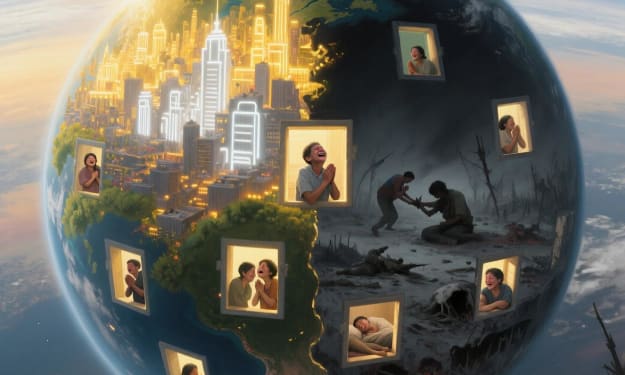
The skies were no longer blue. They bled in shades of orange and ash, thick with smoke from burning forests and decaying cities. Oceans had swallowed coastlines, once-bustling cities were now skeletal, and AI-driven machines roamed the streets — abandoned by their creators and left to wander without command. The planet had become a haunted graveyard of human ambition and arrogance.
By Fawad Khan7 months ago in Earth
Rising with the Tide: How Communities Thrive Amid Ocean Floods
As the sun rose over the coastal village of Elmar Bay, its golden light reflected off shimmering water channels that now wove through parts of the town like new, natural streets. Once seen as a threat, these ocean-fed waterways have become symbols of hope, innovation, and adaptation for a community that refused to be swept away. Elmar Bay, nestled on the eastern coast, had long been known for its charm — fishermen pulling in nets at dawn, children laughing on sandy shores, and colorful homes lining the beachfront. But over the past two decades, rising sea levels and tidal floods had become a constant challenge, creeping further inland with each passing year. The ocean, once a friend, began to feel like a quiet intruder. “At first, it was terrifying,” recalled Marina Lowe, a lifelong resident and community leader. “We had floods that destroyed homes, displaced families, and wiped out gardens. But we made a choice — to stay, and to adapt.” That choice marked the beginning of a remarkable transformation. Rather than retreating inland, Elmar Bay became one of the first towns in the region to embrace "living with water" — a concept that focuses not on resisting flooding, but learning how to coexist with it. One of the most visible changes was the construction of amphibious homes. Raised on floating foundations, these houses rest on solid ground during dry seasons and gently rise with floodwaters when the tides swell. The architecture, inspired by traditional stilt homes and modern engineering, has become a model for other coastal communities. “I used to worry about every storm,” said Arjun Patel, an architect who helped design the amphibious housing. “Now, I watch my home rise and fall with the tide, and it feels like we’re in harmony with the sea.” Nature played a key role in Elmar Bay’s resilience. Instead of concrete sea walls, the community invested in restoring mangroves and wetlands, which act as natural buffers against tidal surges. These ecosystems not only reduce flooding but also provide rich habitats for birds, fish, and other wildlife — bringing new life to the area. The town’s transformation wasn’t just physical. It was cultural. Schools began teaching children about climate science and sustainability through hands-on learning — like planting mangroves or designing flood-resilient models in science class. Local artists created murals celebrating water as both a life source and a powerful force, reminding everyone of the importance of respect and balance. Community gardens, built in raised beds, provided fresh food even after floods. Floating markets — boats transformed into mobile shops — allowed commerce to continue, even when roads were temporarily underwater. “It brought us closer together,” said Lowe. “Flooding used to isolate us. Now, we check on neighbors, share food, and support one another. We became more than just a community — we became a team.” International organizations and researchers began to take notice. Elmar Bay became a case study for climate resilience, hosting delegations from around the world who came to learn, not just about the technologies used, but the spirit that fueled them. Of course, challenges remain. Not every storm passes without impact, and the sea continues to rise. But Elmar Bay no longer views the ocean as an enemy. Instead, it sees the water as a reality — one that can be respected, understood, and even embraced. “Nature is changing, and we must change with it,” said Patel. “We’re not just surviving here — we’re thriving. That’s the real story.” The sound of children laughing echoed once more along the water’s edge as a group of them paddled down one of the new canals in bright yellow kayaks. Behind them, the horizon sparkled, the sea stretching endlessly outward, vast and calm. For Elmar Bay, the future isn’t about building walls to keep the ocean out. It’s about building lives that rise with the tide.
By Muhammad Saad 7 months ago in Earth
Bright Horizons: A World of Positive Change
Bright Horizons: A World of Positive Change Inspiring Stories and Global Progress Shaping a Better Future for All In a world often overwhelmed by headlines of conflict, crisis, and division, there are quieter, powerful stories unfolding — stories of cooperation, innovation, and hope. From renewable energy breakthroughs in Africa to grassroots education programs in South Asia, the world is steadily, and often silently, moving toward a better future.
By Muhammad Saad 7 months ago in Earth
Science Shaping Tomorrow: Breakthroughs of Today
Science Shaping Tomorrow: Breakthroughs of Today Exploring the Innovations Advancing Health, Technology, and Our Understanding of the Universe In laboratories, observatories, and startups around the globe, science is quietly — and rapidly — transforming the future. Each new day brings discoveries that not only answer age-old questions but also offer solutions to the challenges we face in the modern world. From medicine and climate change to space exploration and artificial intelligence, today’s scientific breakthroughs are paving the way for a healthier, smarter, and more sustainable tomorrow. One of the most significant areas of progress is healthcare. In the past year alone, scientists have developed new therapies using gene editing tools like CRISPR-Cas9 that are changing lives. A recent clinical trial successfully treated patients with sickle cell anemia — a painful and lifelong blood disorder — by editing their own cells. These kinds of gene therapies could soon become common treatments for other inherited diseases as well. Beyond genetics, AI is playing a growing role in medicine. New algorithms can now detect certain types of cancer earlier than ever before, simply by analyzing medical images. In some studies, AI has matched or outperformed experienced radiologists in identifying subtle signs of disease. This doesn’t mean doctors are being replaced — rather, AI is becoming a powerful tool that helps them make faster and more accurate diagnoses, leading to earlier treatment and better outcomes. Meanwhile, the fight against climate change is being bolstered by innovation. Scientists are developing cleaner sources of energy and smarter ways to store it. Solar panels are becoming more efficient, and battery technology is improving to make renewable energy more reliable, even when the sun isn’t shining or the wind isn’t blowing. Breakthroughs in green hydrogen — made using renewable power — promise to provide clean fuel for industries and transportation. But it’s not just about generating cleaner energy; it’s also about removing harmful carbon dioxide from the atmosphere. New technologies like direct air capture are being built to pull CO₂ directly out of the air and store it underground or convert it into useful products. These efforts, still in early stages, could become essential tools in reaching net-zero emissions goals. In space science, we are living through a new golden age of discovery. The James Webb Space Telescope, launched in 2021, continues to send back breathtaking images and data that are rewriting what we know about the universe. It has detected planets with atmospheres that may contain water and organic molecules — raising new questions about the possibility of life beyond Earth. Closer to home, space agencies are preparing for the return of humans to the Moon, and eventually Mars. NASA’s Artemis program is already testing new technologies that will support long-term exploration. Back on Earth, breakthroughs in material science and engineering are giving rise to futuristic inventions. Self-healing materials that can repair small cracks or damage are being integrated into construction and electronics. Bioengineers are growing lab-made organs that may one day eliminate transplant waiting lists. And quantum computers — once the stuff of science fiction — are starting to perform calculations that even the fastest classical computers can't handle. One of the most inspiring things about today’s science is how global and collaborative it has become. During the COVID-19 pandemic, researchers across countries shared data, collaborated on vaccine development, and helped each other understand the evolving virus. That spirit of open science continues, with global initiatives now focused on pandemics, climate action, biodiversity, and more. Importantly, science today is also becoming more inclusive. More women, people of color, and individuals from historically underrepresented communities are entering scientific fields and leading groundbreaking research. This diversity brings new perspectives and ideas, making science more creative, ethical, and impactful. Of course, challenges remain. Scientific progress often raises new questions — ethical, environmental, and societal — that must be carefully considered. But this is part of what makes science so powerful: it not only solves problems, but also encourages critical thinking, dialogue, and growth. As we look to the future, it’s clear that the science of today is shaping a tomorrow full of possibilities. Whether it's curing disease, protecting the planet, or exploring the stars, each breakthrough brings us closer to a world that is not only more advanced, but more hopeful. Science, at its best, is a force for good — a shared human endeavor that transcends borders and backgrounds. And in today’s world, where rapid change can sometimes feel overwhelming, it’s comforting to know that scientists everywhere are working hard, with curiosity and care, to build a better future for all.
By Muhammad Saad 7 months ago in Earth
Global Pulse: Staying Informed in a Changing World
In a world that seems to change by the hour, staying informed has never been more important—or more challenging. From global political shifts to groundbreaking technological advances, the stream of news is constant, complex, and, at times, overwhelming. Yet, for many people across the globe, being in touch with current events is not just a matter of curiosity—it's essential for understanding their place in the world. The Evolving News Landscape The way we consume news has changed dramatically over the past two decades. Not long ago, people relied heavily on television broadcasts, newspapers, and radio as their primary sources of information. Today, digital media dominates. According to recent studies, more than 70% of people under 40 now get their news online, particularly from social media platforms and news apps. This shift has had both positive and negative consequences. On the one hand, news is more accessible than ever before. Breaking events can be reported in real time, allowing people to respond and adapt quickly. On the other hand, the rise of misinformation and "fake news" has made it difficult to know what’s accurate and who to trust. "With so much information out there, it’s easy to feel lost," says Maya Ortiz, a media literacy educator based in Chicago. "That’s why teaching people how to evaluate sources and think critically about what they read is just as important as reporting the facts." Voices from Around the Globe Across continents, people are finding new ways to stay informed. In rural Kenya, radio remains a vital tool for sharing news, especially in areas with limited internet access. In contrast, young adults in Tokyo or Berlin may start their day scrolling through curated news feeds or watching bite-sized video summaries. "I follow international headlines on my phone during my commute," says Lena Müller, a university student in Germany. "But I also make time to read deeper articles from trusted sources when I want to understand something fully." In India, WhatsApp groups have become informal news hubs for families and communities. While convenient, this method also illustrates the challenges of modern news consumption. “Misinformation spreads fast when people trust messages just because they come from someone they know,” says journalist Ravi Narayan. Governments and organizations have taken steps to address this by launching fact-checking campaigns and promoting digital literacy. The goal is to help users identify credible sources and separate opinion from fact. The Power of Informed Citizens When people are well-informed, they are better equipped to participate in their communities and hold leaders accountable. This connection between news and civic engagement is especially evident during elections, social movements, and public health emergencies. The COVID-19 pandemic, for example, showed how crucial accurate and timely information could be. Public understanding of the virus, vaccination efforts, and safety protocols relied heavily on effective communication. News outlets, scientists, and public officials had to work together to share evolving data in ways the public could understand and act upon. "Information literally saved lives," says Dr. Sheila Browne, a public health advisor. "But it also showed us how damaging misinformation can be when people lose trust in the news." The Future of News Looking ahead, the news industry faces both exciting opportunities and serious challenges. Artificial intelligence is already transforming how stories are written, edited, and shared. Some outlets are using AI to generate quick summaries or translations of breaking events, allowing them to reach wider audiences faster than ever. However, concerns remain about media bias, privacy, and the ethics of automated content. As technology continues to evolve, so too must the standards and values of journalism. Meanwhile, citizen journalism—ordinary people reporting on events in real-time—has become a powerful tool in conflict zones, protests, and natural disasters. Platforms like X (formerly Twitter), TikTok, and YouTube have enabled users to document and share events that might otherwise go unnoticed. But as more voices enter the conversation, the responsibility to verify and contextualize those stories becomes even more critical. A Shared Responsibility Staying informed today requires more than just clicking headlines. It means asking questions, seeking multiple perspectives, and being open to learning—even when the truth is uncomfortable. As citizens, consumers, and participants in a global community, we all share in the responsibility of keeping the pulse of our world alive and accurate. Whether it's choosing credible sources, calling out misinformation, or simply making time to understand the bigger picture, every step we take toward informed awareness strengthens our societies. In the words of veteran journalist Christiane Amanpour: “Trust, truth, and integrity must be restored to the news business. But that also starts with the audience. A free and informed public is the foundation of any strong democracy.” So as the world keeps turning, take a moment each day to check in—not just with the headlines, but with the stories behind them. Because the better we understand our world, the better we can shape its future.
By Muhammad Saad 7 months ago in Earth
NISAR Satellite Launch Marks New Era in Climate Monitoring
NISAR Satellite Launch Marks New Era in Climate Monitoring NASA‑ISRO’s high‑resolution radar mission begins mapping Earth in unprecedented detail, empowering environmental forecasting and disaster response
By Muhammad Saad 7 months ago in Earth
Rising Together: The Growth of County Positions
Rising Together: The Growth of County Positions How Strategic Development and Community Investment Are Expanding Opportunities Across the County Over the past several years, counties across the country have witnessed a steady increase in job opportunities within local government—an encouraging sign of progress that reflects both population growth and a deepening investment in community services. From public health and safety to infrastructure and social programs, the growth in county positions marks a turning point in how local governments are responding to the evolving needs of their residents. In [Your County Name], the expansion of county positions has not only strengthened essential services but also created a more dynamic, diverse, and resilient workforce. According to the County Human Resources Department, more than 150 new positions have been added in the past five years, covering areas such as environmental services, mental health support, emergency management, public works, and community outreach. Meeting Community Needs Through Strategic Growth At the heart of this growth is a deliberate, strategic effort by county leaders to anticipate and address long-term community needs. County Administrator Lisa Morales explained that the growth in positions wasn’t a coincidence—it was the result of careful planning. “We looked closely at population trends, service requests, infrastructure demands, and public feedback,” Morales said. “What we saw was a clear need to invest more in human capital if we were going to keep up with demand and deliver the quality of service our residents deserve.” For example, the Public Health Department alone has seen a 30% increase in staffing since 2020, driven largely by the ongoing public health challenges and the county’s commitment to accessible, preventative care. This has allowed the department to open new community clinics, expand mental health counseling services, and launch mobile health units that bring care directly to underserved neighborhoods. Creating Career Pathways and Local Economic Impact The expansion of county positions has also opened doors for local residents seeking meaningful careers. For many, county jobs offer stability, benefits, and a chance to make a direct impact in their own communities. “We’ve hired dozens of people who used to drive an hour or more to find good work,” said Human Resources Director Jamal Thompson. “Now, they’re finding careers right here—careers with room to grow.” The county has invested heavily in training and workforce development to support new and existing employees. Initiatives include paid internships for high school and college students, tuition reimbursement for continuing education, and internal mentorship programs that promote professional advancement. These efforts have had ripple effects on the local economy. As more residents secure stable, well-paying county jobs, local businesses have also benefited from increased spending and a stronger sense of community investment. A Focus on Diversity, Equity, and Inclusion As the county expands, it has made diversity, equity, and inclusion (DEI) a central part of its hiring and management practices. The County DEI Office, established in 2022, works closely with department heads to ensure hiring processes are equitable and outreach efforts reach historically underrepresented communities. “We want our workforce to reflect the community we serve,” said DEI Officer Maria Gomez. “That means looking beyond traditional recruitment channels and creating spaces where everyone feels welcomed and valued.” Since the office was formed, there’s been a measurable increase in the representation of women, people of color, and individuals from underrepresented backgrounds in leadership roles within the county. Looking Ahead Looking to the future, the county is planning even more strategic hires to support major upcoming projects—including a new regional transit hub, expanded broadband access in rural areas, and a climate resilience initiative aimed at protecting local infrastructure from extreme weather. “None of this can happen without people,” said Morales. “Our most valuable asset is our workforce. Investing in people is how we build stronger, safer, and more sustainable communities.” Residents are also seeing the results of these investments firsthand. Public spaces are cleaner and safer. Roads and bridges are being repaired faster. Services like child welfare and senior assistance are more responsive. The collective impact of these improvements has helped restore trust in local government and encouraged greater civic engagement. Conclusion The growth in county positions is more than just a hiring trend—it’s a reflection of a community rising to meet its potential. Through thoughtful planning, inclusive hiring, and a commitment to service, [Your County Name] is setting an example of how counties can grow in a way that benefits everyone. As county departments continue to evolve and expand, one thing remains clear: when people are put first, progress follows.
By Muhammad Saad 7 months ago in Earth
Titanic: Triumph of Human Ingenuity
Titanic: A Dream Built on Water, a Legacy Built on Humanity On April 10, 1912, a ship like no other stood at the dock in Southampton, England. With four towering smokestacks and a hull that stretched nearly 900 feet, the RMS Titanic was hailed as the pinnacle of human innovation. Labeled "unsinkable" by the press and admired around the world, it was more than just a ship — it was a symbol of hope, progress, and bold ambition. The Titanic was the largest moving object ever built at the time. Inside, it was a floating palace — complete with a grand staircase, luxurious dining rooms, a swimming pool, and even a squash court. It carried over 2,200 passengers and crew, including some of the richest people in the world, as well as immigrants chasing a dream of a better life in America. But the Titanic was not just about luxury. It was a marvel of engineering. Its construction involved over 3 million rivets, 2,000 workers, and took more than two years to complete. The ship featured the latest in maritime technology, including watertight compartments and electronic communication systems. As the Titanic sailed across the Atlantic, there was excitement in the air. For many, it was a journey toward new beginnings. For others, it was a demonstration of mankind’s progress. But just four days into the voyage, on the night of April 14th, everything changed. At 11:40 PM, the Titanic struck an iceberg in the frigid waters of the North Atlantic. The collision tore open the side of the ship, and within hours, the once-proud liner began to sink. There were not enough lifeboats for everyone — a decision based on outdated safety regulations and the belief that they wouldn't be needed. What followed was one of the most tragic maritime disasters in history. More than 1,500 lives were lost. Yet, amidst the tragedy, stories of courage and humanity emerged — stories that continue to touch hearts more than a century later. There was Wallace Hartley, the ship’s bandleader, who led his fellow musicians in playing calming music as passengers boarded lifeboats. They played until the very end. There was Molly Brown, later known as “The Unsinkable Molly Brown,” who took charge of Lifeboat No. 6 and demanded the crew go back to search for survivors. And there were countless crew members who gave up their own chances at survival to help others escape. The Titanic disaster led to massive changes in maritime law. Ships were now required to carry enough lifeboats for all on board. 24/7 radio monitoring became standard. The International Ice Patrol was established to warn ships about dangerous icebergs. In many ways, the Titanic's loss helped save countless lives in the decades that followed. But perhaps what keeps the Titanic alive in our collective memory is not just the scale of the tragedy — it's the deeply human stories behind it. It’s the reminder that even in moments of unimaginable loss, bravery, kindness, and hope can rise to the surface. In 1985, over 70 years after it sank, the Titanic was discovered lying 12,500 feet below the ocean’s surface. The world watched in awe as images of the ship’s remains were broadcast — the bow still eerily intact, like a ghost frozen in time. The discovery sparked renewed interest in Titanic’s story, not just as a disaster, but as a symbol of human ambition and resilience. Today, the Titanic lives on through museums, films, books, and memorials. It continues to inspire questions about engineering, ethics, and human nature. It reminds us of the limits of technology — and the power of compassion. More than a century later, people still ask why Titanic captures our imagination. The answer may lie in its complexity. It was a triumph — and a failure. A ship of dreams — and of lessons. A tragedy — and a testimony to human courage. The Titanic teaches us that greatness is not just in building something powerful, but in how we respond when that power is tested. In every story of sacrifice, survival, and change, the Titanic lives on — not just at the bottom of the sea, but in the hearts of millions.
By Muhammad Saad 7 months ago in Earth
"Heart of the Deep: Unleashing the Power of the Pacific"
Heart of the Deep: Unleashing the Power of the Pacific Stretching across more than 63 million square miles, the Pacific Ocean is the largest and most powerful body of water on Earth. From its deep trenches to its towering waves, from tropical islands to icy northern shores, the Pacific isn’t just vast — it’s alive. Its moods, movements, and mysteries shape not only coastlines but climates, cultures, and life itself. This is the story of the Pacific Ocean: the heart of our planet’s blue soul. The name “Pacific” means peaceful, a title given by Portuguese explorer Ferdinand Magellan in 1521. But the ocean’s surface calm was deceptive. Beneath its tranquil waves, immense forces churn. The Pacific is home to the Ring of Fire — a horseshoe-shaped zone of frequent earthquakes and volcanic eruptions — making it one of the most geologically active regions in the world. Along its seafloor lies the Mariana Trench, the deepest point on Earth, plunging nearly 36,000 feet. It’s a realm darker than night, where strange creatures live under crushing pressure and scientists are only beginning to explore its secrets. But the Pacific’s influence reaches far beyond its depths. Its waters regulate the Earth’s climate through powerful systems like the El Niño and La Niña cycles, which can bring droughts, floods, and temperature shifts to continents thousands of miles away. The ocean’s currents act like conveyor belts, distributing heat and nutrients across the globe, influencing everything from hurricane formation to fisheries. The Pacific is also a cultural cradle. For thousands of years, it has been home to civilizations whose lives are deeply intertwined with the ocean. The Polynesians, among the greatest navigators in human history, traveled thousands of miles across the Pacific using only the stars, ocean swells, and bird patterns to guide them. They settled the scattered islands of Hawaii, Easter Island, and New Zealand long before European ships ever set sail. To the people of the Pacific, the ocean is not a barrier, but a bridge. It’s a provider, a protector, and a living ancestor. Indigenous traditions speak of the ocean’s spirit, its songs, and its teachings. Even today, communities rely on it for food, transport, and spiritual connection — fishing in its waters, surfing its waves, and honoring it in ceremonies passed down for generations. Ecologically, the Pacific is a jewel of biodiversity. It hosts the Great Barrier Reef, the largest coral reef system on Earth, teeming with thousands of species. Migrating whales sing through its vastness, giant squids lurk in its depths, and remote atolls buzz with seabirds and turtles. Yet, like many natural wonders, the Pacific faces modern threats. Plastic pollution, overfishing, coral bleaching, and rising sea levels caused by climate change are challenging its resilience. Island nations, some of the most vulnerable to climate impacts, are raising their voices on the global stage. Places like Kiribati and Tuvalu, with average elevations of just a few meters, are experiencing rising tides that eat away at homes and history. Despite their small size, these nations are leading calls for action, reminding the world that the Pacific’s future is tied to all of ours. But hope still flows through its currents. Across the region, scientists, activists, and Indigenous leaders are working together to protect marine habitats, restore coral reefs, and create vast marine sanctuaries. Traditional knowledge is being paired with modern science to better understand how to care for the ocean’s delicate balance. One such effort is the creation of the Pacific Ocean Peace Park — a network of marine protected areas spanning several countries and cultures. It’s a symbol of unity, resilience, and a shared commitment to preserving the ocean’s health for future generations. Standing on a cliff overlooking the Pacific, it’s easy to feel small. The wind smells of salt and endless space. Waves crash below, timeless and tireless. Yet, in that moment, one also feels part of something much larger — a vast, breathing system that connects continents, cultures, and all living things. The Pacific Ocean is not just water. It’s movement, memory, and mystery. It’s a force that sculpts the Earth and sings to the stars. It holds the past in its depths and the future in its tide. And as we learn to listen, protect, and respect this mighty ocean, we might just discover that the heartbeat of the planet begins in its waves.
By Muhammad Saad 7 months ago in Earth