Advocacy
Earth
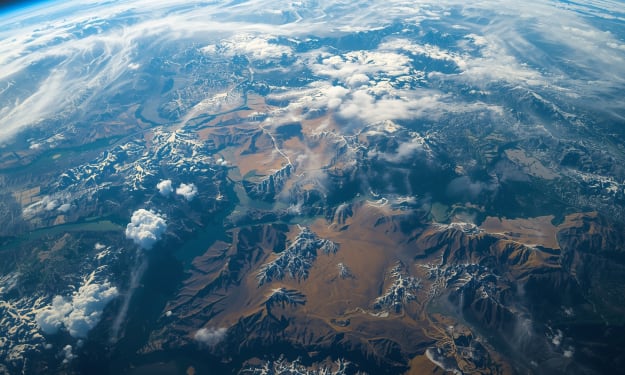
# Earth: Our Brittle Dejected Planet Earth, generally referred to as the “Blue Planet,” is the third planet from the Sun in our solar arrangement and the alone accepted angelic anatomy to anchorage life. Its different characteristics—ranging from its atmosphere and oceans to its assorted ecosystems—make it a arresting anchorage in the all-inclusive universe. Despite its familiarity, Earth charcoal a circuitous and aerial system, area accustomed processes and animal activities are intricately intertwined. Compassionate Earth’s structure, environment, and challenges is capital for ensuring its connected habitability for approaching generations.
By YOGANATHAN KIRUSHANTHAN6 months ago in Earth
Whispers of the Green Tomorrow
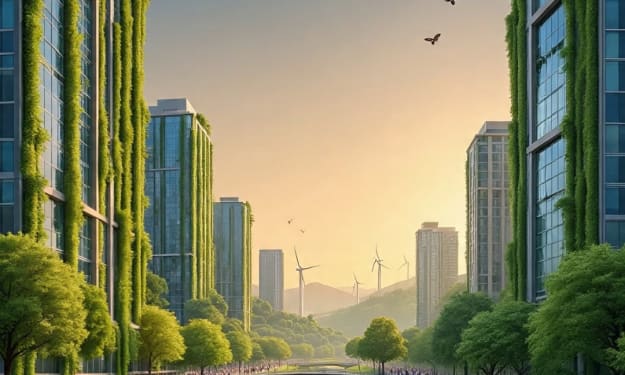
🌿 Whispers of the Green Tomorrow A Heartwarming Journey into a World Where Nature Heals, Hope Grows, and Humanity Thrives In the quiet valley of Aravelle, nestled between mountains painted in emerald hues, a transformation had begun. It wasn’t loud or sudden—no grand announcements or world leaders at podiums. It started with a whisper. A single voice, a single seed, and a spark of hope that spread like morning sunlight over dew-covered grass. Lena Wren, a schoolteacher in her early forties, had returned to her hometown after years in the city. The noise, the rush, the concrete—it had worn her thin. Aravelle was once a place of green hills and clean rivers, but like so many places, it had suffered. Trees had been cut down, the river had shrunk, and the birds had long forgotten the way home. But Lena believed in beginnings. With her savings, she purchased a small piece of neglected farmland on the edge of the village and began to plant—not just crops, but possibilities. She dug her hands into the soil, planted native trees, restored the stream with the help of some old village friends, and opened her land to children who had never seen a butterfly up close. At first, people smiled politely. "How lovely," they’d say, then continue scrolling on their phones or driving past in a hurry. But nature, like kindness, is contagious. One day, 9-year-old Tobi, who was always seen with headphones and a screen, wandered into Lena’s garden during a school field trip. He touched the bark of an old oak she’d planted and whispered, “It feels alive.” It was a small sentence, but for Lena, it was everything. Soon, other children followed. They came to plant, to paint rocks, to build bee hotels and birdhouses. They learned to listen to the wind and read the sky. Slowly, their parents began to join. Then neighbors. Then travelers who heard whispers of something special blooming in Aravelle. The garden became a sanctuary. Flowers danced with bees, and laughter flowed louder than ever. The once-dry river now sparkled, its waters returning with the trees. Birds built nests again, and deer peeked from the woods, curious about the joyful noise. Lena started something called “The Green Tomorrow.” It wasn’t just a garden anymore—it was a movement. People shared seeds and stories, planted hope in pots on balconies, and restored spaces long forgotten. News spread beyond the valley. A young filmmaker named Riya visited Aravelle to document the change. Her short film, Whispers of the Green Tomorrow, went viral. It wasn’t flashy—just moments of real people reconnecting with the earth, a boy’s laughter as a butterfly landed on his nose, a grandmother planting lavender with her granddaughter, Lena smiling with muddy hands. Viewers cried. They shared. They planted. Schools across countries began starting gardens. Cities painted murals of forests and turned rooftops green. People paused in their busy lives to breathe. And amidst all of it, Lena remained in Aravelle, tending her garden with the same quiet dedication. When asked why she did it, she would say, “Because I believe the earth remembers kindness—and gives it back.” Ten years later, Aravelle became a model village for sustainable living. Solar trees lined the paths, food was grown locally, and every child could name more birds than brands. But the real magic wasn’t in the technology or the policies. It was in the people—connected again, not just to nature but to each other. In one of the village’s new community centers, engraved on the wall were the words: “Hope is not a loud promise. It's a quiet seed that grows when someone dares to care.” And so, the whisper became a song. A melody of green tomorrows—sung by rivers, carried by winds, blooming in the hearts of people everywhere.
By Muhammad Saad 6 months ago in Earth
Amazon forest
Whispers of the Amazon Deep in the heart of South America, where the canopy stretches high like emerald cathedrals and rivers weave like silver veins, the Amazon Forest whispered ancient stories to those who listened. Twelve-year-old Lina stood at the edge of the Rio Negro, her boots caked in mud, eyes wide with wonder. She had traveled from her city home to visit her grandfather, a retired biologist who had spent his life studying the Amazon. Now, she was about to experience the forest not through textbooks or screens, but with her own senses. “Come, niña,” her grandfather called, adjusting his wide-brimmed hat. “The forest is alive. It’s not something you see—it’s something you feel.” As they ventured deeper, the green closed in around them. Sunlight filtered through the canopy in golden beams. The air was thick and rich with the scent of earth and growing things. Every step brought a new sound—the chirp of a tree frog, the flutter of toucan wings, the rustle of a sloth moving slowly overhead. Lina had never known silence could be so full of life. Her grandfather stopped by a massive tree, its roots spreading like ancient fingers across the ground. “This is a kapok tree,” he said. “One of the giants of the forest. Some of them are over 200 feet tall.” She ran her hand along the bark. “It’s beautiful. Is it important?” “Very,” he nodded. “Kapok trees support hundreds of species. Bats roost in their branches, and their flowers feed bees and birds. Everything in the Amazon is connected, just like this tree to the life it supports.” As they continued, Lina noticed how every part of the forest pulsed with harmony. Bright butterflies danced around blooming orchids. Ants marched in determined lines. Monkeys chattered from high branches, flinging fruit peels to the ground below. They stopped by a quiet stream, where her grandfather knelt and pointed to tiny ripples in the water. “Piranhas,” he whispered with a smile. “Don’t worry, they’re not as fierce as people say.” Lina giggled, crouching beside him. “I thought they’d be bigger.” “Many things in the forest are misunderstood,” he said. “That’s why it’s so important we protect it. People think the Amazon is just trees. But it’s the most biodiverse place on Earth—home to one out of every ten known species. And it helps regulate the climate for the entire planet.” Lina’s expression grew serious. She remembered news stories about fires and deforestation. “Are we doing enough to save it?” Her grandfather sighed. “Some are. Many indigenous communities have lived here for generations, protecting it better than any government. Scientists, activists, even students like you—they’re all part of the fight. But the forest still faces threats. Illegal logging, mining, and farming are eating away at it.” “But if it disappears…” Lina began. “It would be a disaster,” he finished. “Not just for the animals and people here, but for the world. The Amazon stores billions of tons of carbon. It keeps the planet cool. That’s why people call it the ‘lungs of the Earth.’” Lina sat quietly for a moment, listening to the rustle of the trees. “It’s worth saving,” she said firmly. Her grandfather smiled. “Yes, it is.” That night, Lina lay in her hammock at their small research outpost, watching fireflies blink in the dark. Insects buzzed softly around the netting, and somewhere nearby, a jaguar padded through the undergrowth. Despite the darkness, she didn’t feel afraid. The forest didn’t feel like a place of danger. It felt like home. In the days that followed, Lina helped her grandfather with his research. They took samples, tracked animal movements, and talked to local communities. She learned how native plants could heal wounds, how birds signaled changes in weather, and how every leaf and creature had a role. By the end of the week, Lina wasn’t just in awe of the Amazon—she was in love with it. When it was time to leave, she hugged her grandfather tightly. “I’m going to tell everyone about this place. At school, online—everywhere. People need to know what’s here.” He looked proud. “That’s how change starts. With someone who cares.” As the small boat pulled away from the riverbank, Lina waved goodbye, her heart full. Behind her, the Amazon whispered its ancient song—a song of life, of balance, of beauty. And now, she carried that song with her, ready to share it with the world.
By Muhammad Saad 6 months ago in Earth
Heart of the Green Giant
Heart of the Green Giant — A Journey Through the World's Largest and Most Lush Jungle — The sun rose like liquid gold over the canopy of the world’s largest jungle — a sea of green stretching endlessly to the horizon. Deep in the heart of the Amazon, the Earth pulsed with life. Birds sang in symphony, monkeys chattered between branches, and the mighty river curled through the trees like a silver serpent. For 12-year-old Lina Torres, this was more than just a trip — it was a dream come true. Lina had always been fascinated by nature. Growing up in São Paulo, she spent countless hours in the library reading about ecosystems, endangered species, and the rainforests that kept the planet breathing. Her grandmother, a retired forest biologist, often told her stories about her expeditions into the Amazon decades ago. Now, Lina was walking the same paths. She arrived with her parents and a group of researchers who were part of a conservation program working with local communities to protect the jungle. Their mission? To map an untouched section of forest, record its biodiversity, and install camera traps to study the elusive animals that roamed freely, unseen. From the moment she stepped off the boat and into the thick green world, Lina felt the jungle welcome her. The air was rich and heavy with the scent of life — wet leaves, earth, and distant flowers. Butterflies the size of her hands floated past, their wings flashing blue and gold. Overhead, scarlet macaws soared in pairs, calling to one another like old friends. Each day was a new adventure. By morning, the group hiked through towering trees, some as old as history itself. They waded through narrow creeks, climbed over tangled roots, and listened carefully to the whispers of the forest. Every rustle of leaves was a story waiting to be discovered. One afternoon, while helping set up a camera near a salt lick, Lina heard a soft rustling nearby. She froze, trying not to breathe too loudly. Slowly, through the underbrush, emerged a tapir — shy, gentle, and magnificent. It sniffed the air, stepped cautiously forward, then vanished like a shadow. It was her first close encounter with wild Amazonian wildlife, and she beamed with joy. The jungle had trusted her with its secret. As days passed, Lina learned not only from the scientists but also from the local guides — members of the Yawanawá community who had lived in harmony with the forest for generations. They taught her how to identify plants used for medicine, how to mimic bird calls, and how to walk lightly, without disturbing the life around her. “Nature is not something we visit,” said Aritana, a young guide and storyteller. “It is something we are part of. The jungle is our teacher, our guardian.” Lina nodded, taking every word to heart. One morning, as mist rose from the treetops and the air was thick with dew, Lina and Aritana climbed a small ridge to watch the sunrise. As they sat in silence, a family of howler monkeys began their morning calls, echoing like distant drums. Lina felt tears sting her eyes — not from sadness, but from awe. “This is the green giant,” she whispered. “Alive, breathing, and beautiful.” By the end of the two-week journey, Lina had filled her notebook with sketches of animals, descriptions of plants, and stories shared by the guides. Her heart was full, and her perspective forever changed. The jungle wasn’t just a place on a map — it was a living, breathing treasure, more powerful and delicate than she had ever imagined. Before leaving, the team gathered to plant seedlings in a reforestation area. As Lina placed a small Brazil nut sapling into the earth, she felt a sense of purpose. “I’ll come back one day,” she promised the tree, “and see how tall you’ve grown.” Back on the boat, watching the jungle fade into the distance, Lina knew that this was only the beginning. She had found her calling — not just to explore nature, but to protect it, share its beauty, and remind the world that the heart of the green giant beats for all of us. And somewhere deep in the jungle, where sunlight dances through emerald leaves and jaguars move like shadows, the forest remembered her too.
By Muhammad Saad 6 months ago in Earth
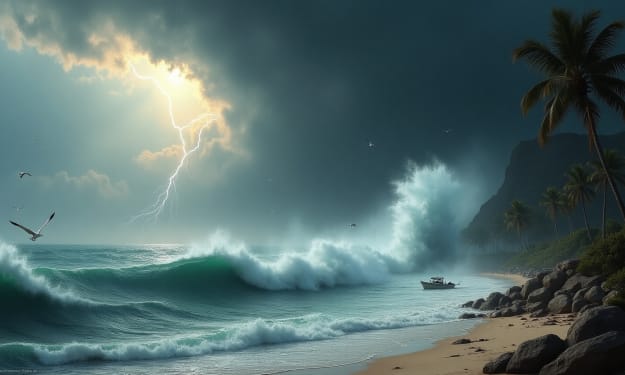
Breaking Weather Alert: Fierce Severe Thunderstorm Slams New Hampshire – 60 MPH Winds & Quarter-Sized Hail Threaten Communities
The skies over southern and central New Hampshire have turned ominous today as the National Weather Service (NWS) issued a Severe Thunderstorm Warning that has left residents stunned and scrambling for safety.
By Waqar Khan6 months ago in Earth
Trending Cultural Events in Europe (August 2025)
A powerful exhibition at Paris’s Institut du Monde Arabe showcases over 5,000 years of Gaza’s rich history. Featuring over 100 artifacts—from Byzantine mosaics to Roman-era statuettes—this show explores Gaza's deep heritage as a crossroads of civilizations. It remains open until November 2, 2025, drawing considerable international attention.
By Muhammad Ibrahim6 months ago in Earth
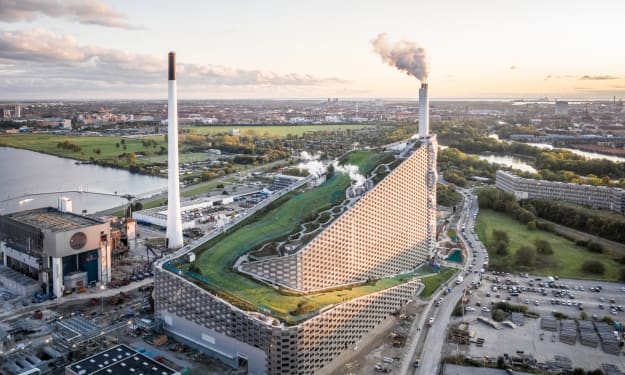
Copenhagen's Heat-and-Harbour Climate Strategy
by Futoshi Tachino In a city built on islands and inlets, the wind off the Øresund smells faintly of salt and cycling grease. Copenhagen’s answer to climate change is not a single icon so much as a choreography: heat the homes with shared pipes, cool the business core with seawater, turn rainstorms into parks, and turn trash into watts—then capture the carbon on the way out. The system hums in buried mains and pump rooms, but its logic is legible on the street.
By Futoshi Tachino6 months ago in Earth
Singapore's Water-Linked Climate Strategy
by Futoshi Tachino In equatorial Singapore, the late-afternoon thunderheads pile up like mountains, then dissolve into warm rain that runs from green roofs to canals and finally to the sea. The city’s response to climate change is not a single showpiece but an interlocking loop: cool the homes, power the water, harden the shores, and close the carbon cycle. The hum here is chilled water in buried pipes, biogas in co-digesters, and solar panels riding the reservoir’s skin. The strategy is small-state pragmatism at system scale.
By Futoshi Tachino6 months ago in Earth