
The Beauty of the Word
When “Beautiful” Becomes Power

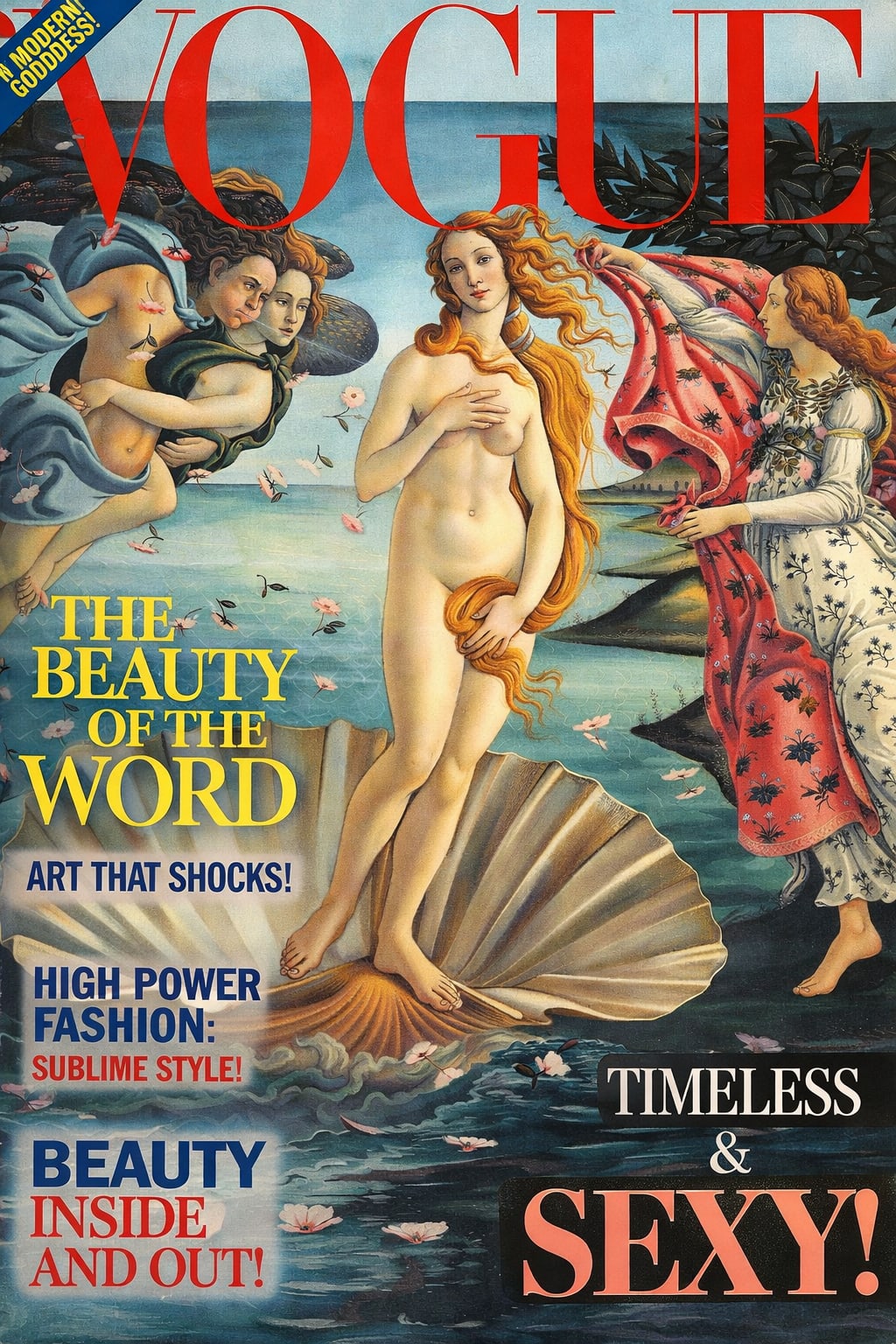
The Beauty of the Word: When “Beautiful” Becomes Power
We rarely say “ugly truth.” We prefer to say “beautiful.” The choice is not innocent. “Truth” sounds like information: a fact, a report, a statement to be verified or dismissed. “Beauty,” by contrast, is an experience. It is not merely known; it is felt. When we call something beautiful, we lift it from the level of data to the level of meaning. We grant it weight, dignity, even sacredness. The word itself performs an elevation.
This is why the meaning of “beauty” is so crucial. It is not just an adjective; it is a social instrument. Across history, beauty has shifted between two poles. On one side stands the classical idea that beauty is objective: symmetry, proportion, harmony. Ancient thinkers associated beauty with order. To call something beautiful was to say that it participates in a higher rational structure. On the other side stands the modern idea that beauty is subjective: a feeling in the mind of the observer, a pleasure that arises in contemplation. Between these poles lies our contemporary confusion. Beauty is at once personal and political, intimate and public.
The ambiguity gives the word power. If beauty is objective, then those who define it define the standard of value. If beauty is subjective, then those who control taste shape collective emotion. In both cases, beauty becomes a form of authority. It tells us not only what to admire, but what to ignore.
Nowhere is this clearer than in the phenomenon of “ugly” art. There is an entire tradition of intentional ugliness. Artists distort faces, clash colours, fragment bodies, and paint mutilated figures. Some works deliberately abandon harmony in order to shock. Anti-aesthetic movements rejected classical beauty as boring perfection. Disorder became a strategy. What appears ugly at first glance is presented as truer than prettiness.
Why does such art exist? It challenges norms. It forces viewers to question what they mean by “beautiful.” It expresses hard truths: a broken world cannot always be reflected in polished surfaces. It grants creative freedom, liberating the artist from the tyranny of perfection. It also engages the mind through surprise. An unsettling image may linger longer than a pleasant landscape.
But the decisive move happens when critics, curators or audiences describe these disturbing works as beautiful. The word shifts from describing form to describing intensity. A hideous painting of war may be called beautiful not because it is pleasing to the eye, but because it captures something overwhelming. Here the concept of the sublime emerges. Beauty expands beyond prettiness into awe, terror, magnitude. The horror remains, yet it is reframed as profound.
Why not simply call it “ugly truth”? Because “ugly” closes the door. Ugly is a dead end. It suggests failure or repulsion. Beautiful, even in its darkest form, keeps the object within the sphere of contemplation. It demands attention. It says: stay, look, feel. The power of the word lies in this command.
There is an ethical tension here. Critics argue that aestheticising suffering risks disrespecting victims. If we focus on the elegance of composition rather than the agony depicted, we may turn trauma into spectacle. Beauty can become a shield that protects us from the rawness of reality. The horror becomes manageable, even consumable.
Yet the opposite defence also exists. Calling a painful representation beautiful may honour it. It refuses to look away. It affirms that even tragedy deserves careful form. The labour of shaping chaos into an image can be seen as a gesture of respect. Beauty, in this sense, is not pleasure but dignity. It acknowledges that the subject matters.
The word therefore operates as a filter. It can sanitise or intensify. It can trivialise or elevate. Its power lies in its flexibility.
Consider also unintentional ugliness. There is art created with sincere ambition that fails technically: distorted anatomy, confused perspective, awkward composition. Institutions such as the Museum of Bad Art collect such works, celebrating pieces “too bad to be ignored.” Here ugliness is not a strategy but an accident. Yet even this failure can be reframed as charming or authentic. The “right to fail” becomes part of its value. The raw attempt itself acquires a strange beauty.
Naïve art and kitsch complicate matters further. Kitsch aims directly at beauty. It offers glowing cottages, sentimental children, adorable animals. It tries very hard to move us. Critics often dismiss it as tacky or superficial. Yet it remains immensely popular. Why? Because it produces immediate emotional recognition. It tells viewers how to feel and reassures them when they feel it. Beauty here is easy, accessible, comforting.
The philosopher Milan Kundera described kitsch as the “second tear”: the first tear is shed for the scene; the second for the pleasure of being the kind of person who is moved. Beauty becomes self-confirmation. It is not only about the object but about identity. To call something beautiful is to position oneself morally and emotionally.
This is where beauty reveals its political dimension. Entire movements declare their cause beautiful. Revolutions, protests, even acts of destruction may be described as beautiful because they serve a higher purpose. The aesthetic language masks the violence. An image of transgression can be labelled beautiful if it signals authenticity, courage, or truth. The ugliness of the act is reframed as moral radiance.
In contemporary culture, the word “beautiful” circulates endlessly. Social media captions, advertising slogans, activist speeches, corporate branding: all deploy the term. A product is beautiful because it embodies innovation. A campaign is beautiful because it promises justice. Even the grotesque can be rebranded as beautiful if it aligns with a celebrated narrative.
The convention of beauty shifts accordingly. What was once repulsive may become fashionable. Distortion can signal originality. Minimalism can signal sophistication. Mass-produced design styles are marketed as friendly and inclusive, even if some find them soulless. Beauty becomes a code that signals belonging.
The decisive question, then, is not simply “What is beauty?” but “Who gets to say?” The authority to label something beautiful is the authority to shape perception. When institutions, critics, influencers or political leaders apply the word, they guide collective feeling. They tell us what deserves reverence.
Yet beauty always retains a personal dimension. At the end of every public declaration stands a private judgement. You may publicly agree that something is beautiful because power expects it. You may privately recoil. Or the opposite: you may secretly find beauty in something others condemn. Beauty is not always publicly recognised or proclaimed. Sometimes it exists only in the silent encounter between eye and object.
This dual nature is the word’s ultimate force. It operates socially, but it lives individually. It can be imposed, but it must be felt. No decree can fully manufacture the experience.
To call something beautiful is to transform it. It is to grant it significance beyond description. It is to move from “this is what happened” to “this matters.” That transformation can be generous or manipulative, illuminating or deceptive. The word does not guarantee moral correctness. It guarantees intensity.
In a world saturated with images, the struggle over beauty is a struggle over meaning. If beauty is reduced to surface harmony, then anything asymmetrical is dismissed. If beauty is equated with truth, then even the grotesque may be sanctified. The choice of definition shapes our response.
Perhaps the final power of the word lies in its invitation. Beauty asks for attention. It asks you to look again. And in that second look, you become the first and last judge. You may follow the convention, echo the approved label, or keep your perception private. The world may declare something beautiful for reasons of ideology, commerce or prestige. But the experience of beauty—however defined—remains yours to accept or refuse.
About the Creator
Peter Ayolov
Peter Ayolov’s key contribution to media theory is the development of the "Propaganda 2.0" or the "manufacture of dissent" model, which he details in his 2024 book, The Economic Policy of Online Media: Manufacture of Dissent.
Keep reading
More stories from Peter Ayolov and writers in Critique and other communities.
Celluloid Comrades
A review of: Nadège Ragaru (2023). ‘Millions for the Movies’ in Late Socialist Bulgaria: : The Political and Moral Economy of the Cinema Industry. Sociétés politiques comparées. Revue européenne d’analyse des sociétés politiques . [online] doi:https://doi.org/10.36253/spc-18718.
By Peter Ayolovabout 11 hours ago in Critique


Comments
There are no comments for this story
Be the first to respond and start the conversation.