travel
True crime tourism; travel to infamous crime scenes and questionable locales from throughout history.
Dyatlov Pass
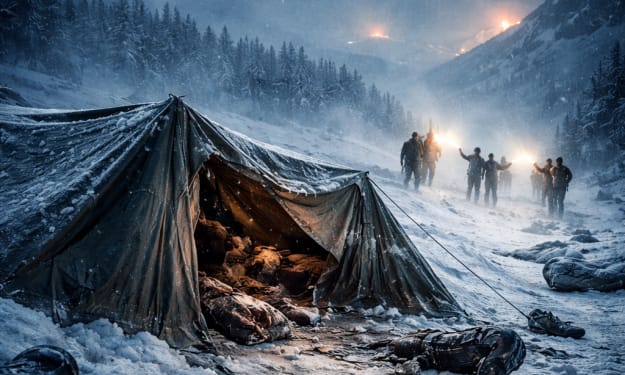
The northern Ural Mountains are not dramatic in the way the Alps are dramatic. They do not rise like stone cathedrals or glitter with postcard beauty. They are older than that—rounded, wind-carved, patient. In winter, they become something else entirely: a vast white emptiness where sound dies quickly and mistakes are punished without mercy. In late January of 1959, nine young people set out into that emptiness. They were students and recent graduates from the Ural Polytechnic Institute, most of them in their early twenties. They skied together, trained together, trusted one another. Their leader, Igor Dyatlov, was 23 years old—serious, meticulous, known for careful planning and quiet competence. This was not a reckless group chasing adventure for the thrill of it. This was a disciplined expedition aiming to complete a Category III winter trek, the highest difficulty rating at the time. They packed well. They documented everything. They kept diaries, took photographs, joked in their notes. Nothing in their writing suggests fear, tension, or even unease. That is what makes what happened next so disturbing. Their last confirmed campsite was on the eastern slope of a mountain the local Mansi people called Kholat Syakhl—often translated as “Dead Mountain.” The name predates the incident by centuries and refers not to curses, but to the fact that game animals rarely passed through the area. It was an empty place. On the night of February 1st, 1959, the weather was harsh but not unusual for the region: strong winds, sub-zero temperatures, blowing snow. The group pitched their tent on an exposed slope instead of descending into the forest below. Investigators later speculated that Dyatlov may have done this deliberately, as a training exercise—to practice camping under worst-case conditions. If so, it would be his final decision. Days passed. Then weeks. When the group failed to return or send word, a search was organized—first by fellow students, then by the military. On February 26th, rescuers found the tent. It was still standing. That detail alone should have been comforting. It wasn’t collapsed. It hadn’t been flattened by an avalanche. But as the searchers drew closer, comfort turned into confusion. The tent had been cut open from the inside. Not the entrance. The side. Clothing, boots, food, and equipment were still inside—neatly arranged, as if the occupants had planned to return. Footprints led away from the tent in a scattered line down the slope. Some were barefoot. Some wore socks. A few had a single boot. No signs of a struggle. No animal tracks. No indication of panic in the snow itself—just a quiet, impossible retreat into the freezing dark. The first two bodies were found beneath a large cedar tree about a mile from the campsite. They were nearly naked, dressed only in underwear. Their hands were raw and damaged, as if they had clawed at bark. A small fire had been built beneath the tree, its remains barely visible. They had died of hypothermia. Between the tree and the tent, searchers found three more bodies, spaced out along the slope as if they were trying—desperately—to return. One was Dyatlov himself. All showed signs of extreme cold exposure. No fatal injuries. At this point, the story might have ended as a tragic but explainable case: disorientation, exposure, a poor decision under stress. But four members of the group were still missing. Their bodies were discovered months later, buried under several meters of snow in a ravine. And this is where the case breaks apart. These four were better dressed, wearing clothes taken from their already-dead companions—suggesting they survived longer. But their injuries were catastrophic. One woman had a fractured skull. Another had multiple broken ribs. One man’s chest injuries were so severe that a medical examiner compared the force to that of a car crash. And yet—there were no external wounds consistent with such trauma. No bruising, no lacerations, no signs of impact against rocks or trees. One woman was missing her tongue. Another had radiation traces on parts of his clothing. The official Soviet investigation concluded in May 1959 with a single, vague sentence: “The cause of death was a compelling natural force which the hikers were unable to overcome.” The case was closed. That sentence has haunted people ever since. Over the decades, theories multiplied. Some argued avalanche—but the tent was not buried, the slope angle was shallow, and experienced skiers would not flee half-dressed from a minor slide. Others proposed katabatic winds, sudden violent gusts capable of producing terrifying noise and pressure. This might explain panic, but not the injuries. There were whispers of military tests, secret weapons, or parachute mines detonating in the air. Witnesses reported strange orange lights in the sky that night. Files were classified. Some remain missing. Others blamed infrasound, low-frequency sound waves produced by wind interacting with the mountain’s shape, possibly inducing panic or dread. Interesting—but still speculative. Then there are the wilder ideas: escaped prisoners, local tribes, unknown creatures
By The Insight Ledger 2 months ago in Criminal
The Epstein Files: What the Latest Disclosures Reveal—and What They Don’t
The name Jeffrey Epstein remains deeply embedded in public conversation, years after his death, largely due to renewed attention surrounding the so-called Epstein files. These documents—released in stages through court orders and legal proceedings—have sparked intense debate, speculation, and misunderstanding across media platforms. To grasp their true significance, it is essential to distinguish between verified facts, legal context, and public assumptions.
By KAMRAN AHMAD2 months ago in Criminal
Who Gets Stopped
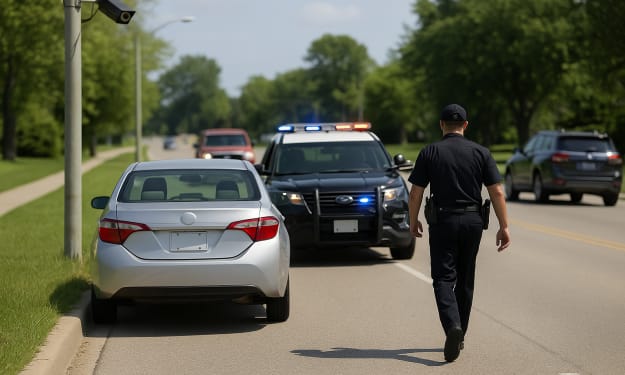
If you read my license plate article, you know plates are not dossiers. They are keys that open records. The question drivers actually want answered is simpler and more uncomfortable: who gets stopped, and why did that officer pick their car. The honest answer lives where law, discretion, and technology meet. It is not conspiracy. It is a system with plenty of legal cover and even more room for human habit.
By Dr. Mozelle Martin2 months ago in Criminal
Bonnie Blue Deported from Bali: The Shocking Truth Behind the Immigration Case
Bonnie Blue arrived in Bali expecting a relaxing holiday, beautiful beaches, and new content ideas. Instead, her visit ended with police questioning, a legal fine, and an order to leave Indonesia. Within a short time, the British adult content creator became international news. While many people believed the case involved pornography, the real reason behind Bonnie Blue’s deportation tells a much more important story about visa rules and local laws.
By iftikhar Ahmad2 months ago in Criminal
A Complaint on Trump
A Complaint on Trump: How Reckless Leadership Damaged Global Affairs Global leadership demands maturity, responsibility, and foresight—qualities that many citizens around the world expected from a superpower like the United States. But during Donald Trump’s administration, these expectations were repeatedly shattered. His approach to international affairs created confusion, instability, and rising global tensions. As a concerned citizen, I feel it is necessary to voice my complaint—not out of hatred, but out of responsibility to speak for global peace and justice.
By Wings of Time 2 months ago in Criminal