Kisama Riyo
Bio
I have always been interested in poetry and essay, especially rhyme style, so I decided to post my essay here and see if I have any talent in poetry or not.
Stories (377)
Filter by community
Solutions to Violence Against Women
Solutions to eliminate violence against women Solutions taken by countries All countries of the world must eliminate violence against women and prevent its practice by following all possible means, including the following: Ratifying the Convention on the Elimination of All Forms of Violence against Women. Punishing anyone who practices violence against women in accordance with laws and legislation, and compensating women who have been subjected to violence for the damages they have suffered. Developing a preventive approach, and comprehensive legal, political, administrative and cultural measures to enhance the protection of women from all forms of violence. Allocating sufficient resources in government budgets for activities aimed at eliminating this violence. Focusing on the education sector to modify social and cultural behaviors, and eliminating wrong practices against women: Solutions taken by society Society, with all its members, must strive to eliminate all forms of violence against women by following the following steps: Raising awareness among individuals about the dangers of customs and traditions that have harmful effects on women’s lives, and the poor conditions women face in rural areas, and raising awareness in society about the facts of the prevalence of violence against women. Listening to the experiences of women who have been subjected to violence, and responding to their needs. Training women and enhancing their ability to earn money, in addition to supporting their families. Raising community awareness of the negative effects of early and forced marriage. Encouraging women's participation in the political process and economic development. Reporting any form of violence against women when exposed to or witnessing it. Solutions taken by the family The family is the basic nucleus on which society is based, and society is reformed through its safety. Examples of the role of the family in combating violence against women include the following: Raising family awareness and increasing the awareness of its members of the importance of eliminating this violence. Sharing responsibilities equally between men and women to do household chores. Respecting the life partner even if opinions differ, and always inquiring about her needs. Solutions taken by educational institutions Education is a fundamental pillar in achieving equality and preventing violence against women, through the following methods: Creating a safe educational environment for all students. Encouraging women to learn by challenging the difficulties arising from the cultural norms of society, and changing beliefs that reject women's right to education, as this social transformation is achieved by striving towards equal opportunities to obtain a good education. The school's focus on reducing student aggression. Providing students with the arts of dealing and building relationships based on respect between the sexes. Solutions taken by the work environment Here are some ways to reduce the phenomenon of violence against women in the work environment: Encouraging programs to combat violence against women in the workplace. Establishing safe procedures for reporting cases of violence, and ensuring that they are dealt with well. Ensuring that disciplinary procedures in the work environment include dealing with cases of violence. Building respectful relationships between the sexes in the work environment. Raising awareness among employees about any practices related to violence against women. Solutions taken by the World Health Organization Violence can cause many negative effects on women's physical, mental, sexual and reproductive health, so the World Health Organization has taken several measures to participate in ending violence against women, including the following: Establishing an evidence base to measure the extent of violence against women, and clarifying its nature and consequences. Cooperating with international organizations to support countries' efforts to eliminate this violence. Developing national plans and policies to address this violence. Strengthening the health sector's response to violence against women.The Importance of Eliminating Violence Against Women Violence against women is a serious violation of human rights, so it is important to eliminate it because of the short- and long-term physical, psychological and mental effects it causes on women, in addition to preventing them from participating effectively in society. It is worth noting that its negative effects are not limited to women only, but extend to their families, communities and countries. The financial aspect plays a major role in motivating people to eliminate this type of violence, because of the huge financial costs and expenses it causes to individuals, families and countries, represented in the legal expenses of holding perpetrators accountable, and the need to provide more health care for abused women, in addition to the losses in production resulting from violence against women, which negatively affects the national budget and comprehensive development. Prevention of Violence Against Women The best way to end violence against women is to prevent it from happening in the first place, by addressing its causes, which are based on false social norms and gender discrimination, through: Achieving gender equality and strengthening relations of mutual respect between them. Empowering women in society. Granting women all their human rights. Making the home and public places safe for women. Enhancing women's economic independence. Increasing women's participation in decision-making processes. Raising awareness and educating society about this issue through the media and social networking sites. The role of men in eliminating violence against women There are many efforts being made at the international level to involve men in eliminating violence against women. This is done by targeting them in community campaigns that contribute to preventing this phenomenon, participating in educational programs, and benefiting from their powers as legislators of laws and policies that limit violence against women, or from men’s experiences as advocates and activists for women’s rights. The role of men in eliminating violence against women is clear from three aspects as follows: Avoiding men committing violence against women themselves. Positive intervention when confronted with violence against women by another man. Addressing the cultural and social causes and motivations for violence against women.
By Kisama Riyo about a year ago in Critique
The phenomenon of cheating in exams
Definition of cheating Cheating is deception and fraud, and it means that a person deceives another person and takes his effort or deprives him of a benefit or right through malicious fraudulent methods. Cheating is considered one of the negative phenomena that appear in society, and indicates a deviation from the values and standards of Islamic law; which leaves a negative impact on aspects of social life. Cheating is considered one of the social ills that harm society and distort its values, which leads to the theft of rights and encourages the spread of corruption. The cheating person is characterized by greed and selfishness, as he only thinks of his own interest, and seeks to achieve his goals and gains by various means, and relies on the principle that the end justifies the means. Cheating in an exam is one of the types of cheating Cheating in exams, whether at school or university, or any test through which the student's scientific or practical level is determined. Cheating in an exam is relying on the efforts of others and stealing them from them voluntarily or involuntarily in order to obtain higher grades and achieve success, but without justification. Cheating in exams is a negative phenomenon that is widespread in our schools. It is one of the biggest problems facing education and teachers, and it has the greatest impact on students and society. Cheating is often associated with other negative behaviors and bad morals, such as lying, deception, and theft. Cheating in exams is a betrayal of oneself and a betrayal of the teacher who monitors the exam hall. On the other hand, it is theft of someone else’s effort and the acquisition of illegitimate privileges. Like any negative behavior, cheating in exams is followed by other negative behaviors, as the person who cheats in exams is naturally forced to lie and evade the accusation if the teacher discovers him. Therefore, cheating brings together the worst qualities together. Islam has forbidden cheating in all its forms, including cheating in exams. The Messenger of Allah, may Allah bless him and grant him peace, said in an authentic hadith: (Whoever cheats us is not one of us). Cheating is a clear betrayal of trust and the teacher, deceiving others, and gaining from the work of others. Allah Almighty has forbidden betrayal, as is clear in the noble verse: (O you who have believed, do not betray Allah and the Messenger or betray your trusts while you know [it is permissible]) [Al-Anfal: 27]. The dangers of cheating in exams: Cheating in exams entails many dangers, including: deserving the wrath of Allah Almighty, as cheating is forbidden in all cases, and it is a way from Allah Almighty to deprive the cheater of blessings and answered prayers. Obstructing the educational process and disrupting one of its goals, which is to evaluate the student and give him the grade he deserves. Evaluating the cheating student is a falsification and distortion of his results and understanding of the educational material. - A defect in the societal system, as the student's habit of cheating will push him to continue cheating in high school and university exams and even in job entrance exams, which makes him a negative individual in society, always dependent on others, not characterized by creativity and productivity and does not serve any institution he works in in the future, and therefore the cheater is a source of danger wherever he is. In addition, the leniency of teachers and supervisors in the matter of cheating in exams and the failure to impose clear penalties on him leads to the creation of an entire generation characterized by irresponsibility, indifference and mockery of laws and regulations, which leads to more serious societal problems in the future. Reasons for cheating in exams Some students resort to cheating in exams for the following reasons: The student's weak academic achievement and awareness of it, which prompts him to obtain higher grades by means other than studying, including cheating. The student's neglect and lack of responsibility, which prompts him to not study and prepare adequately for exams. - The student's lack of confidence in his mental and academic abilities. - The presence of a problem related to the student's understanding of a particular subject, or a problem related to its teacher. - Feeling excessive anxiety about exams, which prompts the student to get rid of it by cheating. - The presence of an environment suitable for cheating, the supervisor's negligence and cheating by other students may be a motive for cheating in exams. - The student's feeling that the subject teacher discriminates between students, which makes him use cheating as a means to do justice to himself. - Short exam time, as this is sometimes a reason for cheating in exams. - The desire to prove the student's ability to cheat and follow different methods in it for entertainment sometimes, or to feel excitement, or to prove oneself in front of peers. - Treating the phenomenon of cheating in the following ways:- Raising children to feel that God is watching them, as it produces a conscious generation that watches itself and feels this watchfulness even in the absence of the teacher's supervision. - Activating the role of parents to get rid of this phenomenon, through parents' councils and their periodic meetings. - Encouraging students to study, and setting incentive laws that aim to reward the student when his performance improves, even if this improvement is simple; which instills in students the value of self-effort and motivates them. - Forcing the cheating student to communicate with the educational counselor to reach a solution to his wrong behavior before he moves on to his colleagues. - Imposing strict and clear penalties on cheaters. - Creating different models for tests.
By Kisama Riyo about a year ago in FYI
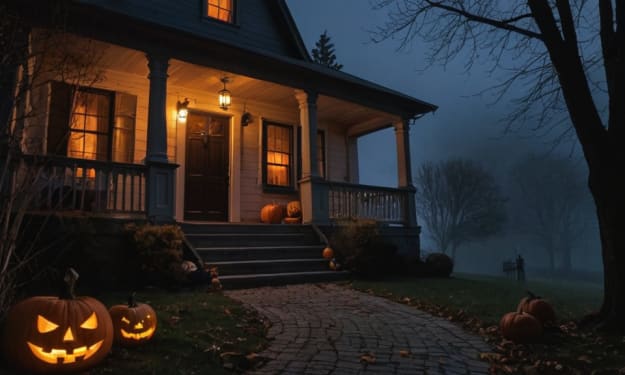
What is the story of Halloween?
The origin of Halloween Halloween dates back 2000 years ago, specifically in the European islands now called Ireland, Britain, and France. It was started by peoples called the Celts, who held an annual religious festival called Samhain, marking the end of the harvest season and the beginning of a new year. It is worth noting that Halloween included beliefs specific to the Celts, as they believed that the spirits of the dead return to visit the earth on this day, because the boundaries between the worlds of the dead and the living disappear on this day. The Celts also believed that these spirits bring evil to their lands and crops, so they set a day for a large and huge celebration, which included lighting fires, offering sacrifices of crops and animals to the Celtic gods, and wearing strange costumes resembling animals, to protect themselves from the evils of the spirits of the dead. Many Westerners believe that the idea of Halloween has purely Christian roots, as it is an annual celebration held specifically on the last day of October, so that the date of its celebration coincides with another historical Christian holiday called All Saints' Day. Other researchers and historians point out that the idea of Halloween has pagan roots, as the ancient Celtic culture (tribes that settled in Central Europe and shared language, culture and religion) knew the harvest festival or the Gaelic Samhain festival, which is similar in its celebration to Halloween, but it is likely that Halloween has unknown historical and cultural origins. History of the celebration of Halloween Halloween is celebrated on October 31 of each year in most Western countries, so it is an official holiday throughout the country, so that people can devote themselves to performing many scary and fun rituals, as it was and still is a holiday with religious and cultural origins for them. It is worth noting that the history of celebrating Halloween in the Christian religion dates back to the eighth century when Pope Gregory III moved All Saints' Day from May 13 to November 1, so that the night of October 31 combined All Saints' Day and Halloween. There are many reasons for celebrating Halloween, and the reasons that prompted people in the past and still prompt them to celebrate Halloween are many, the most important of which are the following: In honor of the harvest season that has ended, and in preparation for the winter season, which they considered the dark half of the year. To expel evil spirits from the dead that they believed were visiting them on this day. To protect themselves from the monsters that they believed would appear on that night and harm them, and this was done by wearing scary costumes. The ideas that Irish immigrants brought to the United States regarding the celebration of this holiday, later became popular and known throughout the West.Halloween Celebrations The most prominent feature of Halloween is that it is considered an official holiday in Christian countries, especially the United States of America, Britain, Ireland, and Canada. On this day, departments and institutions are closed. Among the Halloween celebrations: Wearing Halloween costumes Halloween costumes have always been terrifying. In the past, people chose to wear the skins and heads of the most dangerous types of animals, in addition to costumes that symbolize the souls of the dead. Over time, people began to wear costumes that they believed embodied spirits or demons, such as black clothes or black scarves, and wearing masks in the shape of a skeleton head. During the eighteenth century, clothes became less terrifying than they were in the past, as people began to make their own costumes at home, which usually consisted of sheets and some distinctive masks, with the use of a lot of makeup to disguise themselves, so that no one would recognize the identity of the owner of the costume. During the twentieth century, the type of costumes changed a lot, becoming an embodiment of some famous characters such as: pirates, gypsies, or clowns, and thus the scary Halloween costumes turned into more elegant costumes. Holding parties and visiting cemeteries Since Halloween is an official holiday throughout the country, many people resort to holding celebrations for entertainment and fun, where houses are decorated with lights, candles are lit, and they go to the graves of the dead to light candles on them, and some vegetables such as pumpkins are used in the form of a lamp, and they wear costumes and take some night marches that roam the streets of residential neighborhoods, and exchange gifts and sweets among themselves, and they also go to cemeteries and perform some rituals. Watching Halloween movies Western cinema has produced many films that simulate this special occasion, and many of them have already achieved huge financial profits, so people eagerly await watching them during Halloween, which often revolve around the idea of Halloween and the scary situations that include celebrating this day. Halloween trick-or-treating is one of the most popular traditions of the holiday, where young children dress up in costumes and walk the streets at night, then knock on doors to scare people as a joke, in order to get some candy and gifts. Halloween symbols Halloween is full of symbols with multiple meanings and connotations, so you will find that the largest commercial companies in the world are keen to be present before the celebration begins, and these symbols include the following:Halloween pumpkin lanterns The pumpkin symbol began to be used a long time ago in Ireland, specifically when the Celts carved turnips because they did not have pumpkins or gourds, and on the eve of the celebration of this holiday they would put a source of fire inside it, believing that it would drive away evil spirits from them, and after moving to America they began to use pumpkins instead of turnips. Halloween witch The witch symbol is a very old tradition and is considered one of the most used Halloween symbols among people, as the witch in Western culture always represents the supernatural female, and its use has been common since that time until today. Halloween bat The Halloween bat has deep roots in Western culture, as it is believed that it has the ability to eat all flying insects gathered around the fires that were lit on this occasion at that time, and the bat symbol is also associated with vampires, which are terrifying characters that some bats are believed to turn into. The Halloween ghost was a symbol of the ghost and is still one of the symbols that people are keen to use on this occasion annually, because they believe that the souls of the dead wander in the form of ghosts on this night to visit their loved ones in old abandoned houses. The Halloween cat The black cat is one of the symbols commonly used on Halloween, because of the prevailing belief that evil people were able to transform themselves into black cats, and there was an ancient belief that some witches could also transform into black cats, in addition to the association of these animals with witches who often wander with a black cat, which are all myths woven from the imagination. The Halloween scarecrow It is known that the scarecrow symbol was used in many different cultures, and animal skulls were often placed on it and then burned during the celebration; to instill fear in the souls of evil spirits that are believed to be trying to sneak into people to harm them. Recently, the scarecrow symbol has been used to refer to the fall and harvest season. In fact, the scarecrow is not only used as a symbol on Halloween, but it has also been used on other holidays such as Thanksgiving, where it refers to the idea of the earth's harvest and abundant goodness. Transferring terrifying and frightening stories On this day, people pass on terrifying and frightening stories about monsters and spirits that inhabit abandoned houses, and they weave stories and fantasies because they believe that on this day evil spirits move from their purified world to the earth, and in order to confuse and frighten those spirits, it is necessary to spread terror and fear in their hearts. Skeletons and skulls Skeletons and skulls are essential symbols on Halloween, as they are a clear and explicit embodiment of the idea of death, and this holiday has always been considered a holiday for the dead and their souls, as they move from their eternal world to the human world. Blood and spiders In Western culture, blood embodies life and death, and reminds us that we as humans suffer, suffer and fear death a lot, and it also carries an explicit reference to the vampire from whom blood flows. The idea of the spider and its use as a symbol on Halloween is old and rooted in Western cultures, especially since the spider is seen as weaving fate and being a companion of evil and witches, and these creatures prefer to be in dark and deserted places, such as: old houses, cemeteries and caves, and some of them are capable of killing people, so they were quickly associated with Halloween. Celebrating Halloween in the past and modern times In the past, the idea of Halloween revolved around celebrating evil spirits and monsters that were believed to leave their places to attack people on the night of October 31, and deliberately destroy their property, such as crops and others. These ancient beliefs continued to occupy a large part of the lives of Westerners, but gradually these ideas and beliefs faded, and people were no longer afraid of these monsters and evil spirits, but rather celebrated them in autumn festivals that included many festive events, such as dancing, singing and telling some ghost stories for fun and entertainment. Although there are many religious voices in the West that oppose such festive celebrations, most people still live the old customs they inherited from their fathers. It is worth noting that this holiday generates huge profits for companies, as the American people spend approximately 8 billion dollars annually on costumes, candy, games and other Halloween celebration rituals.
By Kisama Riyo about a year ago in Confessions
Does social media cause psychological harm to young people?
Depression rates among teens have skyrocketed since social media gained popularity in the early 2000s, with depression rates among young people reportedly increasing 52% between 2005 and 2017. Here are the details:
By Kisama Riyo about a year ago in Confessions
Does otitis media affect the brain?
Although most cases of otitis media go away without any problems, repeated infections that go untreated for a long time can lead to complications and cause the infection to spread outside the ear. Can the infection spread to the brain?
By Kisama Riyo about a year ago in Education
Detox Recipes: Are They Worth the Hype? Here's the Truth
The idea of cleansing your body of toxins known as “detox” sounds really tempting, and if you can lose weight and improve your health at the same time, that’s even better! But do detox recipes and regimens really live up to all these promises? Here are the facts.
By Kisama Riyo about a year ago in Education
The lost city of Atlantis
The Lost City of Atlantis There are many definitions and opinions about the lost city of Atlantis, also known as Atlantica, and it is said to be one of the legendary islands located in the Atlantic Ocean, specifically in the western part of the Strait of Gibraltar. The legend of Atlantis has been spreading for about 2,500 years, and was used to refer to a society characterized by its possession of a set of advanced achievements, whether in the fields of engineering, architecture and buildings, military power, or natural resources. Other definitions of Atlantis include that it is a place the size of a continent, and contains many plants and animals, pure water, rich soil, and other features. The story of the lost city of Atlantis The story of the city of Atlantis and its lost civilization has become part of the human imagination for many years, and no historical or archaeological information or indications have appeared about it. The first appearance of its story dates back to the philosopher Plato's description of it through his composition of a dialogue text entitled Timaeus, in which he describes a dialogue between Socrates and Pythagoras, and a mystic named Critias participates in this dialogue by talking about the city of Atlantis. Description of the lost city of Atlantis The philosopher Plato was keen to provide a description of the city of Atlantis, showing that it is the best place to live for engineers and architects, and he also said that it contains a group of ports, temples, docks and palaces, and that Atlantis was built on a hill surrounded by water in the form of a group of rings connected to each other by tunnels, and this contributed to allowing ships to sail in it, as these rings of water form a very large channel connected to the ocean. The myth of the lost city of Atlantis The philosopher Plato indicates in his writings that the lost city of Atlantis was ruled by the Greek sea god Poseidon, who was keen to use Atlantis to express his appreciation for his wife by building a large house for her on one of the hills in the middle of it. The philosopher Plato also explains that the inhabitants of the city were engineers who possessed advanced and sophisticated technology that surpassed other regions in the world, while the wealthy villagers of Atlantis lived in the mountains. As for the end of the legend of the city of Atlantis, it is with the wrath of the god Zeus, but this ending does not tell us whether Zeus decided to destroy the city of Atlantis or not, but rather it is satisfied with mentioning Zeus’s threat to teach Atlantis a violent lesson. Theories about the lost city of Atlantis Many theories have emerged about the lost city of Atlantis, all of which have been keen to provide reasons for the disappearance of this city, and have contributed to drawing pictures of its shape and nature. The following is information about the most important of these theories: Atlantis was a continent: This is the theory that indicates that the city of Atlantis was a continent that appeared in the middle of the Atlantic Ocean and was suddenly submerged. This theory is linked to the realization that Atlantis is a real place, and not a myth created by Plato. This theory appeared in the late nineteenth century AD through the book by Ignatius Donnelly entitled "Atlantis - The World Before the Flood", and the book contained a discussion of the achievements that appeared in the ancient world, and the writer linked it to the existence of a civilization with an advanced environment. Donnelly provided a description of Atlantis, saying that it was a continent that sank underwater based on the place that Plato specified in the Atlantic Ocean, and referred to it by the rocks found in the Strait of Gibraltar. The disappearance of Atlantis in the Bermuda Triangle: This is a theory that was inspired by the ideas of the writer Donnelly; many authors have been keen to expand the study and creation of theories and predictions about the location of Atlantis, the most important of which is Charles Berlitz, who wrote many books about supernatural phenomena and events. Among the predictions that Berlitz referred to is that Atlantis did exist, and it is one of the continents located opposite the Bahamas, but it disappeared in the Bermuda Triangle. Some supporters of this theory indicate that they have found traces of roads and walls off the coast of Bimini, but scientists have studied these walls and roads and were able to conclude that they are a group of natural forms. Atlantis is Antarctica: This is the theory that indicates that Atlantis is nothing but an advanced image of the present-day Antarctic continent, and this theory goes back to Charles Habbud through his book published in 1958 entitled "The Transforming Crust of the Earth"; Habbud believes that the Earth's crust underwent a transformation about 12 thousand years ago, which led to the emergence of the Antarctic continent.He also says that this continent was the site of one of the advanced civilizations, and the change in its location led to the burial of the Atlantean civilization under the ice. Mythical story: It is the theory that the city of Atlantis is nothing but an imaginary place, while the story of its loss is derived from one of the historical events, related to the flood that affected the Black Sea approximately in the year 5600 BC, and at that time the Black Sea was a lake that was half its current size, and many civilizations spread around it that faced the floods coming from the sea water. The Minoan civilization is Atlantis: It is a theory that says that Atlantis is the Minoan civilization that existed during the period between 1600 and 2500 BC, and it is a civilization that appeared on the islands of Thera and Crete, one of the islands belonging to Greece, and the people of the Minoan civilization belong to the legendary ruler Minos, and it is also indicated that this civilization is the first in the continent of Europe, and it contained many beautiful roads and palaces. Plato's invention of Atlantis: It is the theory that links Plato and his invention of the city of Atlantis; that is, it did not actually exist, but rather appeared as a result of Plato's ideas, and that Plato's accounts of the existence of Atlantis are nothing but imagination.
By Kisama Riyo about a year ago in Fiction
Causes of Body Pain When Sleeping?
Causes of Body Pain During Sleep Many people suffer from body pain during sleep, which can greatly affect the quality of their sleep. In this text, we will discuss the causes of body pain during sleep, as well as some tips to relieve these pains.
By Kisama Riyo about a year ago in Education
What are the benefits of sauna for heart health?
What are the benefits of sauna for heart health? Next time you go to the gym, don't miss the opportunity to enjoy a sauna session after your workout. Not only is it a relaxing and soothing experience, it can also provide important benefits for your heart health.
By Kisama Riyo about a year ago in Education
10 Differences Between a Regular Seller and an Effective Seller
Talking about selling does not end even in the event of an economic recession, sales experts advise updating the use of the Internet and e-commerce for the speed and ease of doing business and the ease of communicating and contacting customers, as maintaining customers and building a relationship with them in innovative ways is more important than the price, as the fiercest competitors will not be able to take a customer who is your friend.
By Kisama Riyo about a year ago in Education