Fred Bradford
Bio
Philosophy, for me, is not just an intellectual pursuit but a way to continuously grow, question, and connect with others on a deeper level. By reflecting on ideas we challenge how we see the world and our place in it.
Stories (172)
Filter by community
Margaret Atwood: Warnings Written in Ink
Margaret Atwood does not write fantasy. She writes possibility. For decades, readers have described her work as dystopian, speculative, even prophetic. But Atwood has always insisted on one important rule: she does not invent technologies or political systems that have no precedent in human history. Everything she writes about has happened somewhere, in some form, at some time. That grounding in reality is what makes her fiction so unsettling—and so powerful.
By Fred Bradfordabout 9 hours ago in BookClub
Aldous Huxley: When Comfort Becomes Control
When people think of dystopia, they often imagine boots, barbed wire, and shouting dictators. Aldous Huxley imagined something far more unsettling: a world where no one needs to be forced into submission because they are too entertained, too medicated, and too comfortable to resist. If George Orwell warned us about oppression through fear, Huxley warned us about oppression through pleasure.
By Fred Bradforda day ago in BookClub
Albert Camus: The Rebel Against Meaninglessness
Albert Camus did not promise hope in the traditional sense. He did not offer comforting answers about destiny, faith, or cosmic purpose. Instead, he began with a stark observation: the universe is silent. Human beings search desperately for meaning, yet the world does not provide it. From this tension, Camus built one of the most powerful philosophical positions of the modern era—the philosophy of the absurd.
By Fred Bradford2 days ago in BookClub
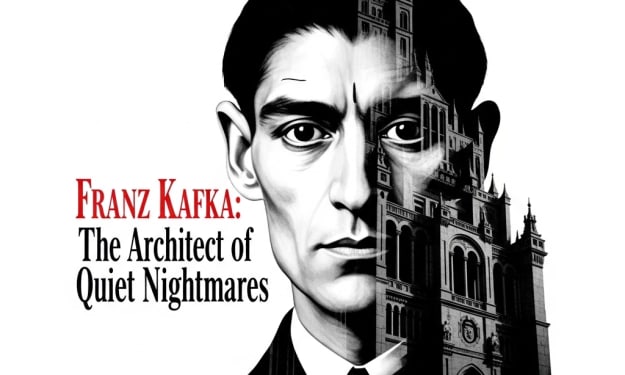
Franz Kafka: The Architect of Quiet Nightmares
Franz Kafka never set out to become one of the most influential writers in modern history. He lived quietly, worked a bureaucratic job, doubted his own talent, and published little during his lifetime. Yet his stories—strange, unsettling, and hauntingly familiar—reshaped how we understand anxiety, power, and the individual’s place in a system too vast to comprehend. Today, the word *Kafkaesque* describes experiences that feel absurd, oppressive, and inescapable. That alone is a measure of his lasting impact.
By Fred Bradford3 days ago in BookClub
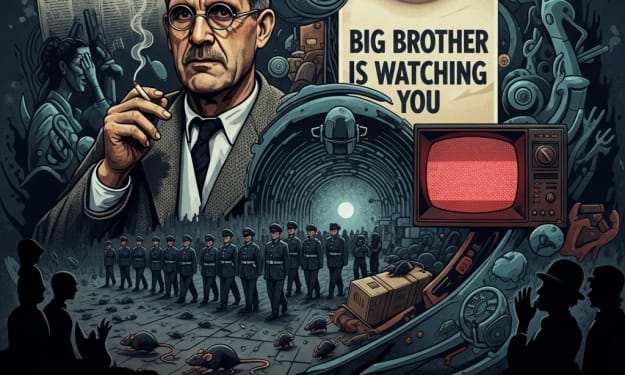
George Orwell: The Writer Who Warned us about the Future
George Orwell did not invent new political systems or build empires. Instead, he did something arguably more dangerous—he revealed how power manipulates truth. Through clear, relentless writing, Orwell exposed the mechanics of propaganda, authoritarian control, and the slow erosion of freedom. His work was not meant as distant fiction. It was a warning.
By Fred Bradford4 days ago in BookClub
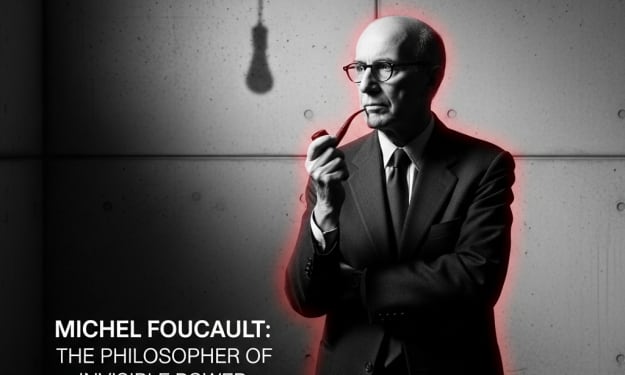
Michel Foucault: The Philosopher of Invisible Power
Michel Foucault did not study kings, presidents, or generals. He studied something far more unsettling: the power that does not announce itself. The power that operates quietly through norms, language, institutions, and habits. Long before surveillance capitalism, algorithmic control, and data-driven governance, Foucault revealed a truth that still defines modern life—power is most effective when you no longer see it.
By Fred Bradford7 days ago in Humans
Augustus Caesar — The Silent Victor
Augustus Caesar did not conquer Rome with thunder and spectacle. He conquered it with silence, patience, and restraint. Where others seized power through open violence, Augustus mastered something far rarer: the ability to win without appearing to rule. In doing so, he ended a century of civil war and founded an empire that would endure for centuries. His genius was not in dramatic battlefield heroics, but in knowing when *not* to act—and when to let others believe nothing had changed.
By Fred Bradford7 days ago in History
Marshall McLuhan: Philosopher of Media
Marshall McLuhan did not study media to understand television or newspapers. He studied media to understand *us*. Long before smartphones, social media, or constant connectivity, this Canadian philosopher saw that technology does not merely deliver information—it reshapes perception, thought, and society itself. McLuhan’s ideas remain disturbingly relevant because he grasped a truth many still resist: the most powerful effects of media are invisible.
By Fred Bradford9 days ago in Art
George Grant: Canada’s Moral Conscience
In the heart of Toronto’s York University, a quiet professor with a fierce intellect and a sorrowful gaze penned a sentence that would shake Canada’s post-war complacency to its core: *“The truth is that we are a colony of a new kind of empire.”* The year was 1965, the book was *Lament for a Nation*, and the man was George Grant—philosopher, conservative revolutionary, and the unsettling moral conscience of a country perpetually unsure it had one.
By Fred Bradford9 days ago in Humans
Frederick the Great: Winning When Surrounded
Few leaders in history have faced danger as relentlessly as Frederick II of Prussia, better known as Frederick the Great. He ruled a small, newly elevated kingdom with powerful enemies on every border, a limited population, and an army that could never afford large losses. Yet time and again, Frederick survived—and often triumphed—when surrounded by foes who should have crushed him. His genius was not conquest for its own sake, but the art of winning when defeat seemed inevitable.
By Fred Bradford10 days ago in History
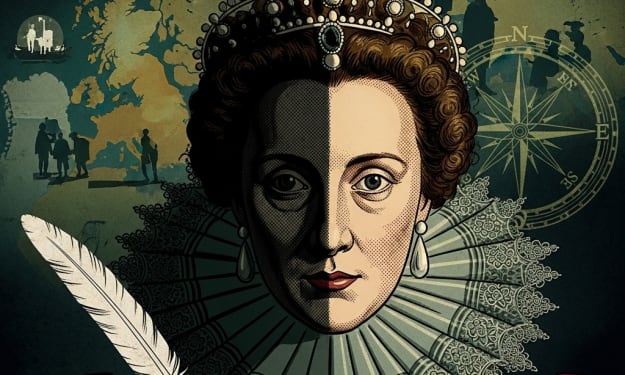
Elizabeth I of England: Strategic Ambiguity
Elizabeth I ruled in one of the most dangerous political environments in European history—and survived. Surrounded by religious conflict, foreign threats, and internal conspiracy, she governed not through brute force or rigid ideology, but through something far subtler: strategic ambiguity. Where others rushed toward certainty, Elizabeth mastered delay. Where others declared, she implied. Her power lay not in decisive answers, but in carefully preserved options.
By Fred Bradford11 days ago in History
Henry Kissinger — Modern Realpolitik Master
Henry Kissinger stands as one of the most consequential—and controversial—strategists of the modern era. In a century shaped by ideology, nuclear weapons, and global rivalry, Kissinger revived an old but uncomfortable tradition: *realpolitik*. Where others spoke in moral absolutes, he spoke in balance, restraint, and survival. He did not ask what the world should be; he asked how it could avoid catastrophe.
By Fred Bradford13 days ago in History