Fiaz Ahmed
Bio
I am Fiaz Ahmed. I am a passionate writer. I love covering trending topics and breaking news. With a sharp eye for what’s happening around the world, and crafts timely and engaging stories that keep readers informed and updated.
Stories (1169)
Filter by community
In Isolation, We’ll Never Flourish”: What Iranians Think About the Protests and the Future of the Islamic Republic. AI-Generated.
For years, Iran has lived under a cloud of political tension, economic pressure, and social restrictions. Periodic waves of protests have erupted, often sparked by specific events but fueled by deeper frustrations. Today, as demonstrations continue to surface across cities and towns, a powerful sentiment is emerging among many Iranians: isolation is suffocating the nation, and without meaningful change, the future looks increasingly uncertain. The question on many minds is no longer just about reform, but about whether the Islamic Republic itself can endure in its current form. A Society Strained by Isolation International sanctions, diplomatic isolation, and strained relations with the West have deeply affected daily life in Iran. While the government often frames resistance as a source of national pride, many ordinary citizens see isolation as a barrier to progress. Rising inflation, unemployment, and currency devaluation have eroded living standards, particularly for the middle and working classes. Young Iranians, who make up a significant portion of the population, feel this pressure most acutely. With limited job prospects, restricted travel opportunities, and a tightly controlled social environment, many believe their potential is being wasted. The phrase “in isolation, we’ll never flourish” captures a growing belief that economic resilience and cultural vitality require openness, not constant confrontation with the outside world. Protests as a Reflection of Everyday Grievances The protests seen in recent years are often portrayed by authorities as foreign-inspired or limited to small groups. However, conversations with Iranians inside and outside the country suggest a far broader base of discontent. Demonstrators include students, workers, women, professionals, and even former supporters of the system. For many, protests are less about ideology and more about dignity. Rising food prices, unpaid wages, and cuts to public services have made survival harder. Social restrictions, particularly those affecting women, have become symbols of a state that many feel is out of touch with modern Iranian society. Each protest becomes an outlet for frustrations that have accumulated over decades. Diverse Views on the Islamic Republic’s Future Iranians do not speak with one voice when it comes to the future of the Islamic Republic. Some still believe reform from within is possible, arguing that gradual change is safer than sudden upheaval. They point to the risks of instability, civil conflict, or foreign intervention if the system collapses abruptly. Others, however, have lost faith in reform altogether. For this group, protests are not just calls for better governance but expressions of a desire for a fundamentally different political order. They argue that repeated cycles of protest and repression show the limits of reform under the current structure. Between these positions lies a large group of citizens who are uncertain but weary. They may not have a clear vision of what comes next, yet they share a sense that the status quo is unsustainable. The Role of Women and Youth Women have emerged as some of the most visible and influential voices in recent protests. Their demands go beyond dress codes, encompassing broader calls for equality, personal freedom, and respect. Many Iranian women view their struggle as inseparable from the country’s broader fight for social justice. Youth activism has also reshaped the protest movement. Connected through social media and exposed to global ideas, young Iranians are less willing to accept isolation as a permanent condition. They often compare their lives with peers abroad and question why opportunities are so limited at home. This generational divide poses a serious challenge to a system built on values that resonate less with younger citizens. Fear, Hope, and the Cost of Dissent Despite widespread dissatisfaction, fear remains a powerful force. Arrests, surveillance, and harsh punishments deter many from participating openly in protests. Families worry about the safety of their children, and memories of past crackdowns linger. Yet hope persists. Each wave of protest, even when suppressed, leaves behind a sense of shared awareness. Many Iranians believe that simply speaking out — even quietly — chips away at the culture of silence. The growing Iranian diaspora also plays a role, amplifying voices from inside the country and keeping international attention focused on human rights issues. Looking Ahead What Iranians think about the protests ultimately reflects a deeper question about belonging and possibility. Many feel trapped between a state that emphasizes resistance and a world they are increasingly cut off from. The desire to flourish — economically, culturally, and personally — is driving calls for change more than any single political ideology. Whether the Islamic Republic adapts, reforms, or faces a more dramatic transformation remains uncertain. What is clear is that isolation is no longer seen as a badge of honor by much of the population. Instead, it is viewed as a heavy cost paid by ordinary people. Conclusion The protests in Iran are not just moments of unrest; they are expressions of a society grappling with its future. Across differing opinions, one message is strikingly consistent: without openness, opportunity, and meaningful participation in the global community, Iran cannot reach its full potential. “In isolation, we’ll never flourish” is more than a slogan. It is a reflection of a collective longing for dignity, connection, and a future that feels worth striving for — regardless of what political system ultimately shapes it.
By Fiaz Ahmed about a month ago in The Swamp
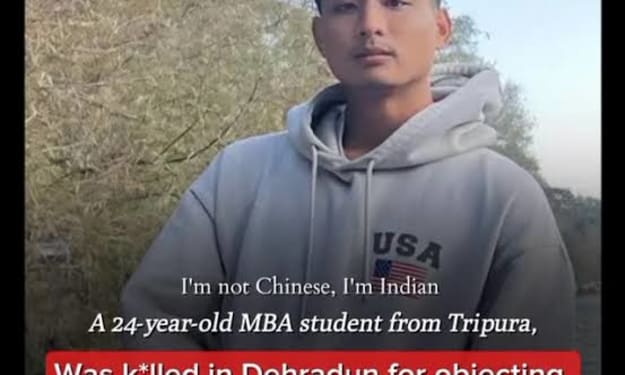
“How Do We Look Indian?”: Student’s Killing Puts Spotlight on Racism in India. AI-Generated.
The killing of a young student has reignited a long-simmering conversation in India about racism, identity, and the dangerous consequences of prejudice. The question reportedly asked during the incident — “How do we look Indian?” — has echoed across social media and public debates, forcing the country to confront uncomfortable truths about how discrimination operates within its own borders. A Tragic Incident That Sparked a National Debate The student’s death, allegedly linked to racial profiling and targeted violence, is not just an isolated crime. It has become a symbol of a deeper, systemic problem: the idea that being “Indian” has a specific look, language, or cultural marker. While India prides itself on diversity, this tragedy highlights how certain communities — particularly people from the Northeast, tribal regions, migrants, and religious minorities — are often treated as outsiders in their own country. As details of the incident emerged, public outrage grew. Candlelight vigils, student protests, and online campaigns demanded justice, but also something broader: acknowledgment that racism exists in India, even if it is often denied or downplayed. Racism Beyond Borders — And Within Them Racism in India is frequently discussed in the context of colonial history or discrimination faced by Indians abroad. Far less attention is paid to internal racism. Yet stereotypes based on skin color, facial features, accents, and regional origins are deeply ingrained. Students from northeastern states have long reported harassment in metropolitan cities, ranging from racial slurs and mockery to physical violence. African students and migrants have also faced attacks driven by misinformation and prejudice. In many cases, victims are asked to “prove” their Indian identity — a demand that reveals how narrow and exclusionary some definitions of nationality have become. The student’s killing has forced many to ask: who gets to decide what an Indian looks like? The Role of Stereotypes and Media Popular culture has played a significant role in reinforcing racial stereotypes. Films, television shows, and advertisements often portray fair skin as desirable and associate darker skin or distinct features with inferiority or comic relief. These portrayals seep into everyday thinking, shaping how people perceive one another. Social media, while amplifying voices calling for change, also exposes the scale of the problem. In the wake of the killing, countless individuals shared their own experiences of being followed, questioned, or attacked simply for not fitting a dominant image of “Indianness.” Students at the Center of the Struggle Educational institutions, which should be safe spaces for learning and inclusion, have increasingly become flashpoints for discussions about discrimination. Students from marginalized communities often face isolation, biased treatment, and lack of institutional support when incidents occur. The killing has intensified calls for universities and schools to adopt stronger anti-discrimination policies, offer cultural sensitivity training, and establish clear reporting mechanisms. Many student groups argue that without structural changes, expressions of solidarity will remain symbolic rather than transformative. Legal Frameworks and Their Limitations India’s constitution guarantees equality and prohibits discrimination, but enforcement remains inconsistent. While hate crimes and racially motivated violence are punishable under existing laws, activists argue that India lacks a comprehensive legal framework that explicitly addresses racism. The student’s death has renewed demands for clearer hate-crime legislation, better policing practices, and accountability for authorities who fail to protect vulnerable communities. Critics note that cases involving marginalized victims are often slow to progress, reinforcing a sense of injustice. A Moment of Reckoning What makes this incident particularly significant is the national introspection it has triggered. Commentators, educators, and public figures are questioning long-held assumptions about unity and diversity. The narrative of “unity in diversity,” while powerful, can sometimes mask inequalities that persist beneath the surface. Acknowledging racism does not weaken national identity — many argue it strengthens it. By confronting prejudice honestly, societies can move toward more inclusive definitions of belonging. The Way Forward Justice for the slain student is the immediate demand, but many see this moment as an opportunity for deeper change. Experts emphasize the need for education reforms that teach empathy, history, and respect for diversity from an early age. Media responsibility, institutional accountability, and public dialogue are all crucial steps. Most importantly, there is a growing call to listen — to the voices of those who have long felt unseen or unwelcome. Their experiences challenge the notion that racism is a “foreign problem” and remind us that discrimination can thrive anywhere it goes unchallenged. Conclusion The question “How do we look Indian?” cuts to the heart of a painful reality. India is not defined by a single face, language, or culture, yet rigid ideas of identity continue to fuel exclusion and violence. The student’s killing is a tragedy, but it has also become a catalyst for reflection. Whether this moment leads to lasting change depends on what follows — not just in courts and classrooms, but in everyday attitudes. Confronting racism requires courage, honesty, and sustained effort. The hope is that this loss will not be forgotten, and that it will push the nation toward a more inclusive understanding of what it truly means to be Indian.
By Fiaz Ahmed about a month ago in The Swamp
Ukraine calls on allies to raise pressure as Russia fires Oreshnik missile. AI-Generated.
As the war in Ukraine grinds on with no clear end in sight, Kyiv is urging its international partners to significantly intensify pressure on Moscow following Russia’s reported use of the Oreshnik missile, a weapon Ukrainian officials describe as both symbolically and strategically alarming. The latest strike underscores the evolving nature of the conflict, where military escalation is increasingly paired with diplomatic messaging aimed at shaping global opinion. A Missile With a Message Ukrainian authorities say the Oreshnik missile was launched during a recent wave of Russian attacks targeting infrastructure and military positions. While details about the missile remain limited, analysts believe Oreshnik represents a newer or modified system designed to test Ukrainian air defenses and signal Russia’s ability to adapt despite sanctions and battlefield losses. For Kyiv, the missile’s use is not just another attack—it is a deliberate escalation meant to demonstrate resilience and intimidate both Ukraine and its allies. Ukrainian defense officials argue that Moscow is using advanced or unfamiliar weaponry to pressure Western governments into slowing or limiting military aid. “This is not just about destruction,” a senior Ukrainian official said in a briefing. “It is about sending a message that Russia believes it can outlast international resolve.” Ukraine’s Call for Stronger Action In response, Ukraine has renewed its appeal to allies across Europe and North America to increase military, economic, and diplomatic pressure on the Kremlin. Officials argue that incremental support is no longer enough as Russia adapts its tactics and continues to mobilize resources for a prolonged conflict. Kyiv is specifically asking for: Faster delivery of advanced air defense systems Longer-range weapons to deter missile launches Tighter enforcement of sanctions Stronger action against countries and entities helping Russia bypass restrictions Ukrainian leaders stress that every delay in assistance increases the human and economic cost of the war, not just for Ukraine but for regional stability as a whole. What Is the Oreshnik Missile? Although Russia has not released full technical details, defense experts suggest the Oreshnik missile may be designed for precision strikes with enhanced maneuverability, making interception more difficult. Whether entirely new or an upgraded variant of existing systems, its reported use highlights Russia’s ongoing investment in missile technology despite years of international sanctions. Military analysts caution that even limited deployment of such weapons can force Ukraine to expend valuable air defense resources, creating vulnerabilities elsewhere. This, they argue, is part of a broader strategy to stretch Ukrainian defenses thin while testing Western commitment. A Test of Western Unity The missile strike comes at a sensitive time for Ukraine’s allies. Political divisions, election cycles, and economic pressures have complicated long-term support commitments. Ukraine fears that Russia is deliberately escalating at moments when Western unity appears fragile. European leaders have condemned the attack, reiterating support for Ukraine’s sovereignty. However, debates continue behind closed doors about how far military assistance should go, particularly regarding weapons capable of striking deep into Russian territory. For Kyiv, the concern is clear: hesitation sends the wrong signal. Ukrainian officials warn that failing to respond decisively now could encourage further escalation not just in Ukraine, but in other regions where authoritarian states may test international resolve. The Human Cost Behind the Headlines Beyond strategic calculations, the missile strike has once again disrupted civilian life. Power outages, damaged infrastructure, and psychological trauma remain daily realities for millions of Ukrainians. Each new weapon introduced into the conflict deepens fears among civilians who have endured years of air raid sirens and uncertainty. Human rights groups continue to document the impact of missile attacks on non-military targets, calling for accountability and renewed diplomatic efforts to protect civilians. What Comes Next? As Ukraine pushes for stronger action, the coming weeks may prove pivotal. Decisions made by NATO members and key partners could shape the next phase of the conflict—either deterring further escalation or emboldening Moscow to press ahead. For Ukraine, the message is urgent and unambiguous: the war is evolving, and so must the response. The use of the Oreshnik missile is being framed not as an isolated incident, but as a warning of what continued inaction could invite. In a conflict increasingly defined by endurance as much as firepower, Ukraine is betting that renewed international pressure can still alter the trajectory of the war—before escalation becomes the new normal.
By Fiaz Ahmed about a month ago in The Swamp
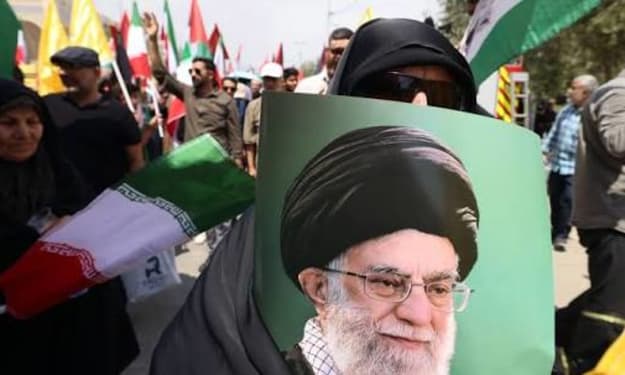
Iran’s Khamenei Lashes Out as Tehran Struggles to Quell Protests. AI-Generated.
Iran is once again gripped by widespread unrest as protests erupt across multiple cities, exposing deep fractures between the state and society. Supreme Leader Ayatollah Ali Khamenei has responded with fiery rhetoric, blaming foreign enemies, media manipulation, and “sedition” for the growing dissent. His sharp tone reflects not confidence, but pressure. As Tehran struggles to contain demonstrations fueled by economic hardship, social restrictions, and political frustration, Khamenei’s remarks underline a leadership facing one of its most serious legitimacy challenges in years. The latest wave of protests did not emerge overnight. Years of inflation, unemployment, and sanctions have eroded living standards for ordinary Iranians. The collapse of the national currency has made basic necessities increasingly unaffordable, while corruption scandals involving elites continue to circulate widely on social media. For many protesters, the issue is not a single policy failure but a system that appears unresponsive to their daily struggles. Khamenei’s reaction has followed a familiar pattern. In speeches broadcast on state television, he has accused Western governments, especially the United States and its allies, of orchestrating unrest to weaken Iran from within. He has also criticized Iranian dissidents abroad, calling them “tools of foreign intelligence agencies.” While such rhetoric resonates with hardline supporters, it has failed to calm the streets. Instead, many Iranians see these statements as an attempt to deflect responsibility rather than address real grievances. Security forces have been deployed heavily in major cities, including Tehran, Isfahan, Mashhad, and Shiraz. Reports from human rights groups suggest mass arrests, internet restrictions, and the use of force to disperse crowds. Despite this, protests have continued in waves, often reigniting after nighttime lulls. The persistence of demonstrations suggests that fear is no longer as effective a deterrent as it once was. A notable feature of the current unrest is the diversity of participants. Students, workers, women, shopkeepers, and even retirees have joined protests, each bringing their own demands. While some chant against economic mismanagement, others openly question clerical rule — a red line in Iran’s political system. This broad coalition makes it harder for authorities to isolate the movement or dismiss it as the work of a single group. Women have played a particularly visible role, challenging strict social codes and demanding greater personal freedoms. Their participation has transformed the protests from isolated economic demonstrations into a broader cultural and political movement. This shift has alarmed the leadership, which views challenges to social control as threats to the ideological foundations of the Islamic Republic. Khamenei’s lashing out also reflects growing unease within Iran’s power structure. While the Supreme Leader remains the ultimate authority, cracks are appearing beneath the surface. Some officials have called for dialogue and limited reforms, while hardliners insist on zero tolerance. This internal tension complicates the government’s response, as mixed signals weaken its ability to present a unified front. Internationally, the protests have drawn renewed scrutiny of Iran’s human rights record. Western governments have condemned the crackdown and imposed additional sanctions on Iranian officials and security bodies. Tehran, however, has doubled down on its narrative of foreign interference, expelling diplomats and restricting foreign media coverage. This confrontation further isolates Iran at a time when it is already struggling economically and diplomatically. The economic dimension of the crisis cannot be overstated. Sanctions linked to Iran’s nuclear program have cut off vital revenue streams, while mismanagement has discouraged foreign investment. Ordinary citizens feel trapped between international pressure and domestic policy failures. For many protesters, the leadership’s defiant posture offers little comfort when jobs are scarce and prices soar. Despite the unrest, the Iranian state still commands significant tools of control: loyal security forces, state media, and a network of ideological institutions. Khamenei’s authority, while challenged, remains intact for now. Yet history shows that prolonged unrest can gradually reshape political realities, even in tightly controlled systems. Each protest, each chant, chips away at the narrative of unanimous support. The critical question is whether Iran’s leadership will adapt or continue relying on repression and rhetoric. Khamenei’s harsh words may rally his base, but they do little to bridge the widening gap between rulers and ruled. Without meaningful economic relief and social reforms, protests are likely to resurface, regardless of how forcefully they are suppressed. For the Vocal Media audience, Iran’s unfolding crisis offers a stark reminder that stability built on fear is fragile. As Tehran struggles to quell protests, Khamenei’s lashing out reveals a leadership under strain, confronting not just dissent in the streets, but a deeper reckoning over Iran’s future direction.
By Fiaz Ahmed about a month ago in The Swamp
Russia Escalates Attacks on Key Ukrainian Region of Odesa. AI-Generated.
Russia has intensified its military campaign against Ukraine by sharply escalating attacks on the southern port city of Odesa, a region critical to Ukraine’s economy, security, and global trade routes. The renewed assault marks a dangerous phase in the ongoing war, signaling Moscow’s determination to cripple Ukraine’s access to the Black Sea and weaken its international connections.
By Fiaz Ahmed 2 months ago in The Swamp
Russia-Ukraine War Escalates as Moscow Probes Kyiv Link After Bomb Kills Senior General. AI-Generated.
The Russia-Ukraine war took a darker and more complex turn after a powerful bomb explosion killed a senior Russian general, triggering immediate investigations in Moscow and renewed accusations against Kyiv. As the conflict stretches deeper into its third year, the incident underscores how the war is expanding beyond conventional battlefields into covert operations, intelligence warfare, and targeted strikes.
By Fiaz Ahmed 2 months ago in The Swamp
Field Marshal Asim Munir Receives Saudi Arabia’s Highest National Honour. AI-Generated.
Pakistan’s Chief of Army Staff, Field Marshal Asim Munir, has achieved a major diplomatic and symbolic milestone after being awarded Saudi Arabia’s highest national honour, a distinction reserved for world leaders and individuals who have made exceptional contributions to bilateral relations and regional stability. The award reflects not only personal recognition but also the evolving strategic partnership between Pakistan and Saudi Arabia, two nations bound by history, faith, and mutual security interests. A Rare and Prestigious Recognition Saudi Arabia’s top civilian honour is seldom bestowed, making the gesture particularly significant. Traditionally awarded to heads of state, royal figures, or globally influential leaders, the honour signifies Riyadh’s appreciation for leadership that strengthens diplomatic, military, and economic cooperation. By conferring this award on Field Marshal Asim Munir, Saudi Arabia has sent a clear message about Pakistan’s importance in its regional outlook. The recognition highlights Pakistan’s role as a reliable strategic partner in a region marked by rapid geopolitical shifts. It also underscores Saudi Arabia’s confidence in Pakistan’s military leadership during a time when Middle Eastern and South Asian security dynamics are increasingly interconnected. Strengthening Pakistan–Saudi Ties Pakistan and Saudi Arabia share a long-standing relationship rooted in defense cooperation, economic collaboration, and people-to-people ties. Over the decades, Pakistan has provided military training, advisory support, and strategic assistance to the Kingdom, while Saudi Arabia has remained a key economic partner for Pakistan during times of financial stress. Field Marshal Asim Munir’s honour comes amid renewed engagement between the two countries, including high-level visits, defense dialogues, and discussions on counterterrorism cooperation. The award signals continuity in this partnership and recognition of Pakistan’s constructive role in promoting regional peace. Leadership in a Complex Security Landscape Asim Munir’s tenure as Pakistan’s top military leader has coincided with internal security challenges, economic pressures, and shifting regional alliances. His leadership approach has emphasized institutional stability, counterterrorism readiness, and balanced foreign relations. Saudi Arabia’s recognition suggests approval of Pakistan’s role as a stabilizing force rather than an escalatory actor. In an era where regional rivalries can quickly spiral, Pakistan’s measured military diplomacy has gained international acknowledgment. Symbolism Beyond the Individual While the honour is awarded to Asim Munir personally, its implications go beyond one individual. For Pakistan, it represents international validation of its military professionalism and diplomatic relevance. For Saudi Arabia, it reinforces a trusted partnership with a nuclear-armed Muslim country that holds strategic influence in South Asia. The award also resonates domestically in Pakistan, where civil-military relations and international perception of leadership matter deeply. Such recognition enhances Pakistan’s standing in the Muslim world and strengthens its voice in regional security conversations. Regional and Global Implications The timing of the honour is noteworthy. With conflicts in the Middle East, evolving power equations in Asia, and renewed focus on Islamic world cooperation, Saudi Arabia appears keen to reinforce alliances with dependable partners. Pakistan’s military leadership, experienced in counterinsurgency and regional diplomacy, fits well into this strategy. Analysts see the honour as part of a broader Saudi effort to diversify its strategic relationships while maintaining traditional alliances. Pakistan, with its strategic location and experienced armed forces, remains a natural partner in this vision. A Boost for Defense Diplomacy Defense diplomacy has emerged as a critical tool in modern international relations. Field Marshal Asim Munir’s recognition reflects how military leadership now plays a vital role in shaping foreign policy outcomes. It also highlights how Pakistan’s armed forces are increasingly engaged in diplomatic confidence-building rather than purely security-driven roles. This honour could open doors for expanded cooperation in defense training, intelligence sharing, and joint initiatives aimed at regional stability. Conclusion: A Moment of Strategic Significance Field Marshal Asim Munir receiving Saudi Arabia’s highest national honour is more than a ceremonial event—it is a strategic signal. It reflects trust, shared priorities, and mutual respect between two influential Muslim nations. For Pakistan, it reinforces international confidence in its leadership at a crucial time. For Saudi Arabia, it strengthens a partnership that has endured decades of change. As global and regional challenges continue to evolve, such recognitions remind the world .
By Fiaz Ahmed 2 months ago in The Swamp
Indonesia Calls in Military to Accelerate Forest Clearance Amid Environmental Concerns. AI-Generated.
Indonesia, a country renowned for its rich biodiversity and sprawling tropical forests, has recently taken the controversial step of calling in its military to assist in clearing forests at a rapid pace. The move, aimed at accelerating land conversion for agriculture and infrastructure projects, has sparked widespread discussion about balancing economic development with environmental protection. A Strategic Decision The Indonesian government’s decision comes amid mounting pressure to boost economic growth and meet domestic demands for land for farming, plantations, and urban expansion. Officials argue that military involvement will ensure efficiency, discipline, and a structured approach to large-scale land clearing projects, which have traditionally faced logistical challenges. Military personnel are being deployed to several provinces, particularly in regions like Sumatra and Kalimantan, where forest cover is dense but under increasing pressure from agricultural expansion, notably palm oil plantations. The government claims this initiative will help streamline development projects while maintaining law and order during land conversion processes. Economic Ambitions vs Environmental Concerns Indonesia’s forests are vital not only for the country’s ecology but also for global climate regulation. They act as carbon sinks, store vast amounts of biodiversity, and sustain local communities. The rapid clearance of forests, even under military supervision, raises concerns among environmentalists, scientists, and international observers. Critics argue that using military forces may prioritize speed over sustainability, potentially exacerbating deforestation, soil degradation, and habitat destruction. Environmental groups warn that such measures could accelerate the loss of endangered species and contribute to global climate change by releasing stored carbon dioxide into the atmosphere. On the other hand, the Indonesian government maintains that careful planning and oversight will mitigate ecological risks. Officials emphasize that cleared land will be used for essential infrastructure and agricultural projects to meet food security goals and provide employment for thousands of citizens. Historical Context of Deforestation in Indonesia Indonesia has long grappled with deforestation, primarily driven by palm oil cultivation, logging, and urbanization. According to recent studies, the country has lost millions of hectares of forest in the past two decades, causing soil erosion, flooding, and increased greenhouse gas emissions. Past efforts to curb deforestation through regulations and conservation programs have often faced enforcement challenges due to the scale of the forests and the economic incentives for clearing land. By deploying the military, the government hopes to achieve faster results, leveraging the organizational capabilities and manpower of armed forces to manage large-scale operations efficiently. Global Reactions and Sustainability Questions International organizations have expressed cautious concern over Indonesia’s approach. Experts note that while the country’s economic development goals are valid, the ecological costs could be significant if forest clearance is not managed sustainably. Climate scientists emphasize the importance of maintaining tropical forests as critical components of the global ecosystem and urge Indonesia to adopt innovative methods that balance growth with conservation. Some environmentalists have suggested alternatives such as reforestation programs, agroforestry, and precision land management techniques that allow development without wholesale destruction of natural habitats. These strategies could provide economic benefits while reducing the environmental footprint. Military Role and Public Perception The involvement of the military in non-traditional roles such as forest clearing has sparked debate within Indonesia itself. Supporters argue that the military can bring discipline, coordination, and manpower to projects that would otherwise face delays. Critics, however, worry about the militarization of environmental management and the potential neglect of ecological expertise in favor of rapid results. Public opinion is divided. While some citizens welcome faster land development that could improve infrastructure and generate jobs, others are concerned about long-term environmental consequences and the loss of Indonesia’s natural heritage. Looking Ahead Indonesia’s decision to deploy the military for forest clearance reflects a broader tension between economic ambition and environmental stewardship. As the country moves forward with these initiatives, it will need to carefully balance growth with sustainability, ensuring that development does not come at the expense of ecosystems and local communities. Experts suggest that transparency, rigorous environmental assessments, and collaboration with conservation organizations will be critical in mitigating risks. The world will be watching closely, as Indonesia’s approach could serve as a model—or a cautionary tale—for other nations facing similar development pressures. Conclusion The deployment of Indonesia’s military to accelerate forest clearance marks a significant moment in the country’s development trajectory. While it aims to drive economic growth and meet domestic demands, it also highlights the ongoing challenge of harmonizing human progress with environmental responsibility. The coming months will be crucial in determining whether this strategy can deliver both economic and ecological benefits, or whether it will exacerbate one of the world’s most pressing environmental concerns.
By Fiaz Ahmed 2 months ago in Journal
Welcome’ Marks 18 Years; Anil Kapoor Pens Emotional Note for Feroz Khan: ‘Wasn’t Without RDX’. AI-Generated.
Bollywood has always had a flair for unforgettable characters, memorable dialogues, and cinematic energy that leaves audiences laughing for days. One such film that has left an indelible mark on Indian cinema is Welcome, which celebrates its 18th anniversary this year. Even after nearly two decades, the film’s blend of comedy, drama, and larger-than-life action sequences continues to entertain new generations of moviegoers. Anil Kapoor, one of the stalwarts of Bollywood, recently penned a deeply emotional note reflecting on the legacy of Welcome and the profound impact of his late co-star, Feroz Khan. Kapoor’s tribute offers fans a rare glimpse into the camaraderie and dynamics on set, revealing how the film’s success was built on both talent and heartfelt teamwork. A Star-Studded Ensemble Welcome, released in 2007, boasted a star-studded ensemble that included Akshay Kumar, Katrina Kaif, Nana Patekar, and Anil Kapoor himself, with Feroz Khan playing a pivotal role. The film’s appeal lay not just in its narrative but also in the chemistry between these actors, each bringing their unique flair to the screen. The storyline, revolving around gangsters, mistaken identities, and romance, was elevated by sharp comedic timing and high-energy performances. Feroz Khan, who passed away in 2009, was remembered for his charismatic screen presence and his ability to infuse even the most intense sequences with charm. Kapoor’s recent tribute reflects the lasting influence of Khan on the cast and crew. Writing on social media, Anil Kapoor described working with Feroz Khan as “wasn’t without RDX,” a nod to the explosive energy and intensity that Khan brought to the film—both on-screen and behind the scenes. Anil Kapoor’s Emotional Note In his heartfelt message, Kapoor recalled moments of laughter, rehearsals, and the sheer thrill of bringing the script to life. He spoke of how Feroz Khan’s guidance and experience elevated the performances of younger actors, creating an atmosphere of mentorship and creativity on set. For Kapoor, Welcome was not just a commercial success but also a reminder of the bond shared among colleagues who celebrated each other’s talents and contributions. Kapoor’s tribute has resonated with fans across the country. Many took to social media to share their memories of watching Welcome in theaters, reminiscing about iconic dialogues, hilarious situations, and memorable action sequences that remain etched in Bollywood history. The Film’s Enduring Popularity Even after 18 years, Welcome continues to enjoy popularity on streaming platforms and television reruns. Its timeless humor, coupled with strong performances, ensures that it appeals to both nostalgic viewers and a younger audience discovering it for the first time. The film’s songs, choreography, and dialogues are often referenced in pop culture, attesting to its lasting influence on Indian cinema. The anniversary also highlights the impact of ensemble films in Bollywood. Welcome demonstrated how a mix of talent, humor, and a touch of chaos could create an experience that transcends time. Feroz Khan’s presence was central to this dynamic, his performance complementing the comedic beats and action sequences that defined the film. Legacy of Feroz Khan Kapoor’s tribute underscores the enduring legacy of Feroz Khan. Beyond his role in Welcome, Khan’s career was marked by iconic films and a reputation for professionalism and dedication. He remains an inspiration for actors and filmmakers, illustrating how charisma, discipline, and passion for the craft can elevate a film to legendary status. For fans, Kapoor’s message is a reminder of the personal connections and heartfelt collaborations that bring Bollywood films to life. Behind the glamour, lights, and camera setups, it is the mutual respect and friendship between actors that often leave a lasting mark, both on the screen and in the memories of audiences. Conclusion As Welcome celebrates 18 years since its release, Bollywood enthusiasts are taking a moment to appreciate not just the film’s entertainment value but also the relationships and memories it fostered. Anil Kapoor’s emotional note for Feroz Khan encapsulates the spirit of camaraderie, respect, and shared creative energy that made the film a blockbuster hit. Eighteen years on, Welcome continues to entertain, inspire, and remind audiences of the explosive magic that occurs when talented actors come together, fueled by passion and, as Kapoor aptly noted, “a bit of RDX.” For Bollywood and its fans, the legacy of Welcome and the memory of Feroz Khan remain vibrant, proving that great cinema—and great actors—never truly fade.
By Fiaz Ahmed 2 months ago in Geeks
Friedrich Merz Wants Berlin to Be a Geopolitical Hub: Will German Voters Reward Him?. AI-Generated.
Germany has long maintained a careful approach to international politics, balancing diplomacy, economic influence, and its role within the European Union. But Friedrich Merz, the prominent conservative politician and CDU (Christian Democratic Union) leader, is seeking to redefine Berlin’s global role. His proposal: transform Germany into a geopolitical hub, a country that not only drives economic policy but also asserts itself strategically on the global stage. Merz’s Vision for Berlin Merz has consistently framed Germany as a country that cannot remain on the sidelines of international affairs. According to him, Berlin should serve as a key center for diplomacy, defense strategy, and economic decision-making. By leveraging Germany’s economic power, technological prowess, and EU leadership, Merz argues that the country can shape global norms rather than merely react to them. Central to his platform is the notion that Germany must increase its strategic autonomy. This includes bolstering defense capabilities, investing in emerging technologies such as artificial intelligence and cybersecurity, and taking more assertive positions in multilateral organizations like NATO and the United Nations. Merz also emphasizes stronger ties with key allies, particularly the United States, while advocating for a more independent European voice in global security matters. A Shift From Tradition Germany has historically embraced a cautious foreign policy, shaped by its post-World War II history and commitment to multilateralism. The country has often focused on trade, humanitarian aid, and diplomacy rather than military power. Merz’s vision represents a marked departure from this approach, proposing a more proactive and assertive stance. This shift is particularly notable given the challenges facing Europe today: rising tensions with Russia, instability in the Middle East, competition with China, and the need to address climate and energy security. Merz argues that Germany cannot remain passive and that Berlin must act as a central decision-making hub for the continent and beyond. Political and Public Reception Merz’s ambitions have sparked debate among politicians and the public. Supporters praise his vision as bold and necessary. They argue that Germany’s economic influence is already formidable, and a more active geopolitical role would solidify the country’s leadership on the world stage. For proponents, Merz offers a pragmatic solution to global uncertainties, positioning Germany as a country that shapes events rather than follows them. However, critics question whether the German electorate is ready for such a transformation. Many voters remain wary of increased military engagement and are concerned about overextension in international conflicts. Some also fear that prioritizing geopolitical ambitions could divert attention from domestic issues such as healthcare, education, and energy costs. Moreover, Merz must contend with Germany’s complex coalition politics. Achieving his vision would require significant legislative support and consensus across parties—a challenge in a system often defined by compromise and negotiation. Economic and Strategic Implications If implemented, Merz’s strategy could have far-reaching consequences. Economically, Berlin could become a hub for strategic investments and global trade agreements, attracting multinational corporations and fostering innovation in key sectors. Strategically, Germany would take on a more visible role in conflict resolution, defense coordination, and international diplomacy. Yet, this vision also carries risks. Greater assertiveness may strain relations with countries that prefer a less interventionist Germany. Additionally, ambitious defense and technology initiatives would require substantial public funding, which could spark debates over priorities and fiscal responsibility. The Voter Question At the heart of the matter is whether German voters will endorse Merz’s vision. His appeal will likely resonate with conservative and pro-business constituencies who see opportunity in a more influential Germany. At the same time, moderate and progressive voters may be hesitant to embrace a platform that emphasizes assertiveness in foreign policy, especially if it appears to overshadow domestic concerns. Merz’s challenge lies in balancing bold global ambitions with domestic reassurance. He must convince voters that Germany can expand its international role without compromising the values and stability that have long defined the country. Conclusion Friedrich Merz’s proposal to transform Berlin into a geopolitical hub reflects an ambitious attempt to redefine Germany’s role in a rapidly shifting world. His vision aligns with the need for European strategic autonomy and a proactive stance in global affairs. Yet, whether German voters will reward this approach remains uncertain, hinging on public perceptions of risk, responsibility, and the balance between international influence and domestic priorities. As the 2025 election cycle approaches, Merz’s ideas will be tested not only in debates and policy proposals but also at the ballot box. The outcome will determine whether Germany remains a cautious observer on the global stage or emerges as a decisive player shaping the future of international relations.
By Fiaz Ahmed 2 months ago in Journal
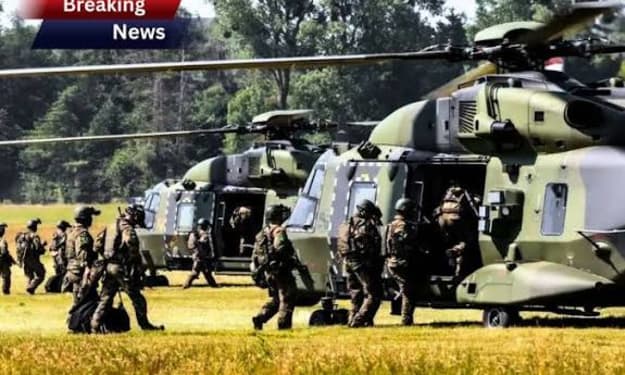
Germany Turns Its Back on Europe’s Defense: Why Berlin Is Suddenly All-in on the U.S. Military Drones. AI-Generated.
Germany has long been seen as a cautious player in European defense, balancing NATO commitments with its historical reluctance to project military power abroad. However, recent developments reveal a striking shift: Berlin is now investing heavily in U.S.-made military drones, raising questions about the country’s long-term defense strategy and Europe’s own capabilities. A Strategic Pivot For decades, Germany prioritized diplomatic channels and conventional military forces within Europe. While other NATO members invested in advanced drones and unmanned systems, Germany relied largely on traditional fighter jets and armored units. The recent pivot toward American drones represents a dramatic change in posture. According to defense analysts, Berlin’s decision is driven by multiple factors. Firstly, the rise of asymmetric threats in Europe—ranging from regional conflicts to cyber and hybrid warfare—demands rapid response capabilities that drones can provide. Secondly, U.S. drones offer advanced surveillance, targeting, and strike capabilities that Germany’s domestic programs have struggled to match. Why U.S. Drones? The choice to turn to American technology rather than European-developed drones is notable. While Europe boasts capable defense industries, political and technical hurdles have slowed the deployment of continent-wide drone programs. By opting for U.S. drones, Germany gains access to proven systems, faster deployment timelines, and interoperability with NATO allies, particularly the United States. However, this reliance on American drones is not without controversy. Critics argue that it may undermine Europe’s autonomy in defense matters and deepen dependency on Washington. Some European defense experts warn that Berlin’s strategy could set a precedent, encouraging other countries to rely on foreign technology rather than developing homegrown capabilities. Political Implications in Europe Germany’s pivot is reshaping defense conversations across the continent. France and Italy, for instance, have invested heavily in indigenous drone programs, aiming to assert Europe’s strategic independence. Berlin’s embrace of U.S. drones signals a willingness to prioritize immediate operational capability over long-term continental autonomy, potentially creating friction within European defense circles. Additionally, Germany’s decision may reflect broader geopolitical concerns. The ongoing conflict in Eastern Europe and increasing Russian military activity have underscored Europe’s vulnerability, prompting Berlin to act decisively. Drones, capable of surveillance and rapid response, offer a low-risk, high-impact solution to modern threats. Domestic Debate Within Germany, the move has sparked debate. Supporters emphasize the strategic necessity of modernizing the Bundeswehr and argue that American drones provide a reliable, tested solution in a volatile security environment. Opponents caution against overreliance on foreign technology and warn of potential ethical and legal challenges associated with drone warfare. The German public, still wary of military overreach due to historical context, remains divided. Transparency regarding the missions, capabilities, and limitations of these drones will be crucial for maintaining public trust. Technical Advantages U.S. drones bring several advantages to the table. Equipped with advanced sensors, AI-driven targeting systems, and long-endurance flight capabilities, these unmanned systems can conduct intelligence, surveillance, and reconnaissance missions with minimal human risk. In a conflict scenario, they can provide Germany with real-time battlefield awareness and precision strike capabilities, compensating for gaps in conventional forces. Furthermore, integration with NATO command systems ensures that Germany’s drones can operate seamlessly alongside allied forces, enhancing collective defense and strengthening the transatlantic bond. A Sign of Things to Come? Germany’s embrace of U.S. drones may signal a broader trend in European defense. As threats evolve and technology advances, countries may increasingly favor proven systems over domestic development. This pragmatic approach could accelerate the adoption of drones across Europe, reshaping military doctrines and alliance strategies in the process. At the same time, Germany faces the challenge of balancing immediate operational needs with long-term strategic autonomy. Maintaining investment in domestic drone technology alongside U.S. systems may be critical to preserving Europe’s independent defense capabilities. Conclusion Germany’s sudden commitment to U.S. military drones represents a seismic shift in European defense thinking. Driven by urgency, technological advantages, and geopolitical realities, Berlin is prioritizing capability over autonomy. As the debate continues at home and abroad, the move underscores the growing role of drones in modern warfare and the complex strategic choices facing European powers. Whether this decision strengthens Europe’s security or deepens reliance on external powers remains to be seen. What is certain, however, is that Germany’s embrace of American drones will be felt across the continent—and will shape the conversation about European defense for years to come.
By Fiaz Ahmed 2 months ago in The Swamp
Dhurandhar Wasn’t Shot in India or Pakistan: Here’s the Asian Country Where the Town of Lyari Was Recreated. AI-Generated.
The buzz around Ranveer Singh’s latest film Dhurandhar is unmissable, and one question has intrigued fans since the first trailer dropped: where was the iconic town of Lyari recreated for the film? While the story revolves around India and Pakistan, the filmmakers chose an unexpected location in Asia to bring the gritty, vibrant streets of Lyari to the screen. The Challenge of Recreating Lyari Lyari, a historic neighborhood in Karachi, Pakistan, is known for its colorful streets, community spirit, and, in cinema, as a backdrop for drama and action. However, shooting in the real Lyari would have posed multiple challenges, including safety concerns, logistical hurdles, and the difficulty of capturing the neighborhood’s essence authentically without disrupting daily life. For filmmakers, the solution lay in finding a location that could convincingly mirror Lyari’s narrow lanes, bustling markets, and architectural charm. The team needed an Asian country with urban landscapes adaptable to the film’s vision, combined with the infrastructure to support a large-scale production. The Surprise Location After extensive scouting, the production team selected Thailand as the primary shooting location for Dhurandhar. Thailand’s urban areas offered the flexibility required to build sets that closely resemble Lyari’s streets. Moreover, the country’s film-friendly policies, availability of skilled technicians, and logistical support made it an ideal choice. The production designers didn’t just rely on Thailand’s existing neighborhoods. They painstakingly reconstructed key landmarks of Lyari, from the distinctive markets to local housing structures, ensuring authenticity down to every poster, signboard, and street mural. Even the smallest details—like street food stalls and hand-painted shop signs—were meticulously recreated to capture the neighborhood’s raw energy. Attention to Cultural Accuracy One of the biggest concerns in recreating Lyari outside Pakistan was maintaining cultural authenticity. Lyari’s distinct identity, influenced by Sindhi and Balochi communities, demanded a careful portrayal to avoid stereotyping. Costume designers, set decorators, and consultants worked closely with local artists and researchers familiar with Lyari’s culture. Actors, too, immersed themselves in the local environment. Ranveer Singh reportedly spent weeks understanding the nuances of Lyari’s street life, including the community’s mannerisms, accents, and daily routines. The effort reflects the filmmakers’ commitment to presenting Lyari not just as a backdrop but as a living, breathing character in the story. Thailand’s Contribution to Cinematic Magic Thailand’s infrastructure and film expertise significantly enhanced the production quality of Dhurandhar. The country’s studios allowed for controlled lighting and sound conditions, which were crucial for shooting high-intensity action sequences. Streets were transformed into dynamic sets that could accommodate chase sequences, crowd scenes, and complex camera movements without the unpredictability of shooting in real urban neighborhoods. Additionally, Thailand’s skilled local workforce contributed to set construction, logistics, and technical support, ensuring the film could meet its ambitious schedule without compromising on quality. Many of the extras and background actors were trained to emulate the hustle and bustle of Lyari’s streets, creating an immersive experience for the audience. Impact on Viewers The result is striking. When audiences watch Dhurandhar, the recreation of Lyari feels authentic, even for those familiar with the actual neighborhood. The combination of meticulous set design, cultural accuracy, and Ranveer Singh’s immersive performance transports viewers into the heart of Lyari, despite the fact that the scenes were shot thousands of kilometers away. Film critics have noted that this creative choice demonstrates how cinema can transcend geographical limitations. By choosing Thailand, the filmmakers were able to maintain safety, production efficiency, and artistic authenticity—an approach that many modern productions are now adopting globally. Conclusion The recreation of Lyari in Thailand for Dhurandhar is a testament to the dedication, creativity, and cultural sensitivity of the film’s team. While the story is rooted in India-Pakistan dynamics, the production proves that with vision and effort, cinematic worlds can be authentically recreated anywhere. For fans of Dhurandhar, knowing where Lyari was brought to life adds another layer of fascination, highlighting the lengths filmmakers go to craft a believable, immersive experience. As the film releases, viewers can enjoy the action, drama, and intricate detail that makes Lyari come alive on screen, without ever leaving their seats.
By Fiaz Ahmed 2 months ago in Geeks