Aqib Hussain
Stories (168)
Filter by community
The List of World Leaders Invited to Trump’s Board of Peace for Gaza. AI-Generated.
In January 2026, former U.S. President Donald Trump announced an ambitious — and controversial — global initiative aimed at bringing peace and reconstruction to the Gaza Strip. He called it the “Board of Peace”, a multinational body meant to help govern, stabilize, and rebuild Gaza after years of conflict. The plan has stirred reactions worldwide. Some leaders are cautiously supportive, some have declined, and others are still deciding. Let’s take a closer look at the leaders and nations involved in this controversial project. What Is the Board of Peace? The Board of Peace is intended to be a multilateral forum overseeing the next phase of Gaza’s peace process. Its mission covers governance reform, security stabilization, economic development, and reconstruction. While the initiative focuses on Gaza, its charter hints at broader global influence — which has raised eyebrows among diplomats and international institutions, including the United Nations. Membership works a bit differently than traditional diplomatic organizations. Countries can serve three-year terms, but if they contribute $1 billion toward the board, they earn a permanent seat. Who’s Leading the Board? The executive leadership includes former and current U.S. officials, financial figures, and international diplomats. Key members are: Donald Trump – Chair Marco Rubio – U.S. Secretary of State Steve Witkoff – U.S. Special Envoy to the Middle East Jared Kushner – Former Senior Advisor Tony Blair – Former U.K. Prime Minister Marc Rowan – U.S. Financier Ajay Banga – President of the World Bank This core group will oversee the board’s operations and guide Gaza’s peace and reconstruction efforts. Heads of State and Government Invited According to multiple news reports and diplomatic sources, a wide range of world leaders received invitations. Confirmed Invitations / Acceptances Hungary – Prime Minister Viktor Orbán (accepted) Vietnam – Government (accepted) Argentina – President Javier Milei (invited/accepted) Canada – Prime Minister Mark Carney (agreed in principle) Morocco – King Mohammed VI (accepted) Turkey, Egypt, Jordan, India – Invitations sent, responses pending Other Nations Reportedly Invited Media reports suggest that leaders from countries including Australia, Brazil, Germany, Greece, Italy, Japan, Saudi Arabia, Singapore, South Korea, Spain, Sweden, Switzerland, UAE, United Kingdom, and Ukraine also received invitations. Some of these invitations are officially unconfirmed, but sources indicate outreach was made. Responses from Leaders Acceptances Hungary and Vietnam have officially accepted the invitations. Canada and Morocco have indicated willingness to participate in principle. Hesitations France has formally declined, expressing concern about the board’s legitimacy and overlap with the UN. Many European countries have been cautious, concerned about a lifetime chairmanship by Trump and financial obligations. Russia and China Russia is reviewing the invitation. China confirmed it received the invitation but hasn’t committed yet. Controversy Surrounding the Board The Board of Peace has stirred debate. Critics argue it may undermine the UN and established peace efforts. The $1 billion contribution requirement has also drawn scrutiny for potentially privileging wealthy nations and private interests over humanitarian needs. Even Israel has raised objections, worrying that the board could influence Gaza without proper coordination with its own security strategy. What’s Next? The full list of participants and the board’s powers are expected to be officially announced at an upcoming ceremony alongside the World Economic Forum in Davos. With some key players hesitating, questions of legitimacy, and potential overlap with international institutions, the board’s real-world impact remains uncertain. Final Thoughts Trump’s Board of Peace for Gaza has created a complex diplomatic landscape. While some leaders are stepping forward to participate, others are watching carefully. Whether this initiative becomes a groundbreaking effort for Gaza’s reconstruction or a controversial footnote in global diplomacy will depend on the next few months. One thing is clear: the world will be watching.
By Aqib Hussain13 days ago in The Swamp
Greenland Updates: Denmark Floats NATO Mission on Island. AI-Generated.
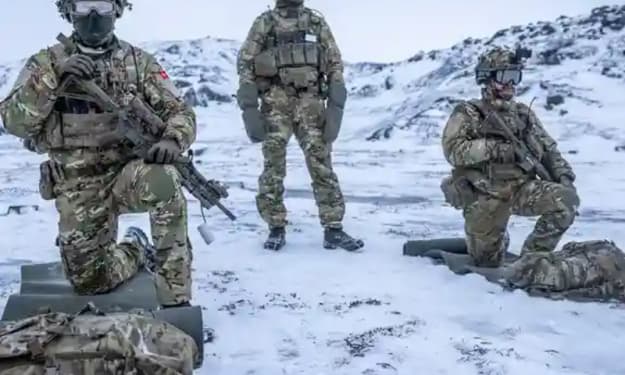
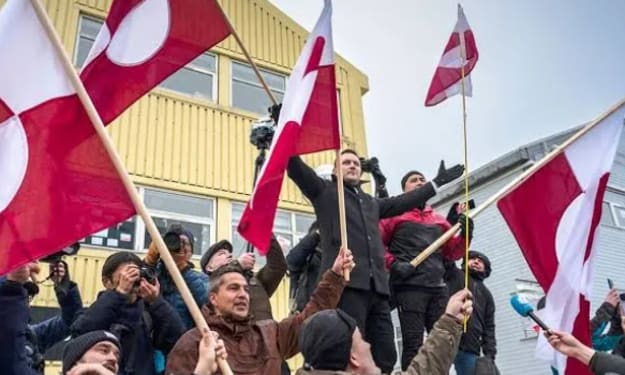
Greenland, the world’s largest island, is suddenly at the center of global attention—not because of its ice sheets, but because of geopolitics. In early 2026, Denmark proposed a NATO mission for Greenland, sparking discussions about Arctic security, international alliances, and the future of this strategically crucial territory. Here’s everything you need to know. Why Greenland Matters You might think of Greenland as remote, icy, and largely untouched—but in geopolitical terms, it’s gold. The island sits between North America and Europe, overlooking vital transatlantic air and sea routes. It’s near the GIUK gap, a key corridor for naval and air movements between the Atlantic and Arctic Oceans. With Arctic ice melting faster than ever, new shipping routes and untapped natural resources have made Greenland a hot spot for military planning. NATO, led by Denmark, sees the island as a linchpin in protecting northern Europe and the wider Atlantic region. Denmark’s Proposal: A NATO Mission On January 19, 2026, Denmark, in partnership with Greenland’s government, floated the idea of a NATO-backed mission on the island. Danish Defence Minister Troels Lund Poulsen and Greenland’s Foreign Minister Vivian Motzfeldt discussed the proposal with NATO Secretary-General Mark Rutte in Brussels. While details are still scarce, the mission would focus on collective security, surveillance, and strengthening military cooperation in the Arctic. Troops from other European allies could rotate in, and Denmark is already boosting its Arctic presence with new patrols, drones, and surveillance systems. The goal is clear: ensure Greenland—and by extension, NATO’s northern flank—is prepared for any security challenges, from hostile incursions to climate-driven emergencies. The US Factor Greenland has also caught the attention of the United States. Former President Donald Trump has publicly suggested that Greenland is strategically important enough for the U.S. to take control—comments that caused waves internationally. Denmark and Greenland immediately rejected these suggestions, emphasizing that Greenland’s future belongs to its people and their elected government. European leaders, including British Prime Minister Keir Starmer, have also pushed back, arguing that threats of tariffs or political pressure are unacceptable. The episode highlighted tensions within NATO and the delicate balance between alliance cooperation and national sovereignty. Strengthening Arctic Defenses Denmark isn’t just talking; it’s acting. Operations like Arctic Endurance involve Danish and allied forces conducting exercises across Greenland to improve readiness and situational awareness. The plan is for NATO allies—including France, Germany, the UK, Finland, and the Netherlands—to rotate forces on the island, reinforcing Denmark’s commitment to collective defense. These moves signal a shift in NATO’s approach: Arctic security is no longer a niche concern for Denmark or the U.S.; it’s a collective responsibility for the alliance. With climate change opening new routes and opportunities, a strong military presence ensures both deterrence and preparedness. Why a NATO Mission Matters A NATO mission in Greenland isn’t just about military muscle. It’s about sending a message: the Arctic matters, alliances matter, and Greenland’s sovereignty matters. By working together, NATO allies can deter potential threats, reassure citizens, and share the burden of Arctic defense more fairly. The mission would also serve as a diplomatic tool, strengthening ties between Greenland, Denmark, and the wider European community. In contrast, unilateral actions—like a U.S. takeover—would risk undermining decades of transatlantic cooperation. What’s Next The proposal is still in its early stages. NATO needs to discuss operational details, troop commitments, and funding before anything is finalized. But the conversations themselves mark a turning point: Greenland is no longer a frozen backwater—it’s a strategic hub, pivotal to both military strategy and global diplomacy. As nations reassess their Arctic priorities, Greenland will remain a key player in discussions about climate, security, and international cooperation. Whether the NATO mission becomes reality or not, one thing is clear: the island’s icy terrain is now at the heart of 21st-century geopolitics. Bottom Line Greenland may be covered in ice, but it’s heating up in global politics. Denmark’s NATO mission proposal is more than a military plan—it’s a statement about sovereignty, alliance unity, and Arctic security. Keep an eye on Greenland: in a world of shifting alliances and climate-driven change, this island may be small in population but massive in geopolitical significance.
By Aqib Hussain14 days ago in The Swamp
‘Like an Earthquake’: How 40 People Died in a Spanish Train Crash. AI-Generated.
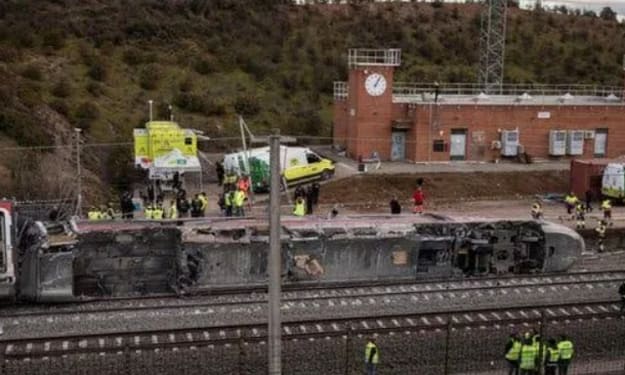
The sound, survivors said later, was not like metal grinding on metal. It was “like an earthquake.” In a matter of seconds, a routine train journey in Spain turned into one of the country’s deadliest rail disasters, claiming the lives of 40 people and injuring dozens more. The crash not only devastated families but also sparked national soul-searching about rail safety, human error, and institutional responsibility. A Normal Journey Turns Catastrophic The train was traveling at high speed along a well-used route, carrying commuters, tourists, and families eager to reach their destinations. Witnesses recall a calm atmosphere inside the carriages moments before the derailment. Some passengers were reading, others chatting or checking their phones, unaware that disaster was seconds away. As the train approached a sharp curve, it failed to slow down adequately. The result was catastrophic. Several carriages derailed, slamming into each other and overturning with immense force. The impact was so violent that passengers were thrown from their seats, luggage became deadly projectiles, and metal structures twisted beyond recognition. Emergency responders later described the scene as chaotic and haunting. Debris was scattered across the tracks, and cries for help echoed through the wreckage. “Like an Earthquake” Survivors struggled to put the experience into words. Many compared the crash to a natural disaster rather than an accident. “It felt like the ground exploded,” one passenger said. Another recalled being lifted out of their seat before everything went dark. The sensation of sudden, uncontrollable force left deep psychological scars on those who lived through it. For some, survival came down to where they were sitting or how the carriage landed. Others were trapped for hours, waiting for rescue teams to cut through twisted metal to free them. In those moments, fear mixed with disbelief as passengers realized the scale of what had happened. The Human Cost Forty people lost their lives that day, each one leaving behind grieving families and unanswered questions. Vigils were held across Spain as the nation mourned. Flowers lined train stations, and moments of silence were observed in schools, workplaces, and government buildings. The victims came from diverse backgrounds—students, workers, retirees, and visitors. What united them was the ordinary nature of their journey. They were not taking risks or engaging in dangerous behavior; they were simply traveling by train, a mode of transport widely considered safe. For families, the pain was compounded by the suddenness of the loss. Many learned of the crash through breaking news alerts or frantic phone calls, rushing to hospitals and information centers in desperate search of loved ones. Investigations and Accountability In the aftermath, attention quickly turned to how such a tragedy could occur. Investigators examined train speed, signaling systems, and operational procedures. Early findings suggested that excessive speed on a dangerous curve played a central role, raising questions about driver awareness, training, and the adequacy of automated safety systems. Critics argued that reliance on human judgment without sufficient technological safeguards created a deadly vulnerability. Why, they asked, were automatic braking systems not in place to prevent such a high-speed approach to a known hazardous section of track? The crash triggered legal proceedings, official inquiries, and heated public debate. For many families, accountability became as important as remembrance. They demanded transparency, reforms, and assurances that no one else would suffer a similar fate. A Turning Point for Rail Safety The Spanish train crash became a turning point in national discussions about transportation safety. Authorities pledged to review rail infrastructure, improve monitoring systems, and strengthen safety protocols. The tragedy served as a grim reminder that even modern rail networks require constant vigilance and investment. Experts emphasized that rail disasters are rarely caused by a single factor. Instead, they result from a chain of failures—technical, human, and organizational. Breaking that chain, they argued, is the key to preventing future loss of life. Remembering the Victims Years later, the crash remains etched into Spain’s collective memory. Memorials stand near the site, and anniversaries are marked with quiet reflection. For survivors and families, healing is ongoing, shaped by grief, resilience, and the hope that lessons learned will save lives. The words “like an earthquake” continue to echo—not just as a description of the physical impact, but as a symbol of how profoundly the disaster shook the nation. It was a moment that exposed vulnerabilities, demanded change, and reminded the world that behind every statistic are human lives forever altered by tragedy
By Aqib Hussain14 days ago in The Swamp
Trump Threatens 200% Tariff on French Wines as Macron Reportedly Snubs ‘Board of Peace’ Seat. AI-Generated.
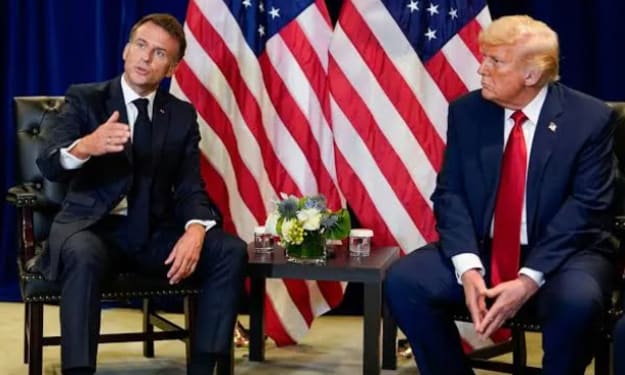
Former U.S. President Donald Trump has reportedly threatened to impose a staggering 200% tariff on French wine and champagne after French President Emmanuel Macron declined to participate in Trump’s proposed “Board of Peace.” The dramatic warning has sparked controversy across diplomatic, economic, and political circles, reviving memories of earlier transatlantic trade disputes while introducing an entirely new layer of geopolitical tension. So how did wine become the centerpiece of an international power play? Let’s break it down. A Tariff Threat That Shook the Wine World Donald Trump is no stranger to bold economic threats, but this one raised eyebrows even among seasoned political observers. According to reports, Trump suggested that French wine and champagne imports into the United States could face a 200% tariff unless Macron agreed to join the Board of Peace. For context, the United States is one of the largest markets for French wine exports, with Americans spending billions annually on champagne, Bordeaux, Burgundy, and other premium labels. A tariff of this scale would effectively triple retail prices, putting French wines out of reach for many consumers and potentially wiping out U.S. demand overnight. While Trump later noted that Macron was not required to join the board, the message was clear: refusal could come at a steep economic cost. What Exactly Is the ‘Board of Peace’? The Board of Peace is a proposed international body championed by Trump, allegedly designed to oversee ceasefires, mediate conflicts, and promote long-term global stability. The initiative was initially linked to maintaining peace in the Middle East, particularly following ceasefire efforts involving Israel and Hamas, but it has since expanded into a broader global concept. Membership reportedly comes with significant financial commitments, potentially exceeding $1 billion over several years, along with active participation in conflict monitoring and decision-making. Trump has floated the idea of inviting major world leaders — including heads of state from Europe, Asia, and beyond — positioning the board as an alternative or complement to existing global institutions. However, critics argue the proposal lacks transparency and overlaps with established bodies like the United Nations, raising questions about its legitimacy and long-term viability. Why Macron Reportedly Said No France’s refusal appears rooted in both principle and politics. As a permanent member of the UN Security Council, France already plays a central role in global peacekeeping and diplomacy. French officials reportedly view the Board of Peace as redundant and potentially undermining established international frameworks. Additionally, there is concern in Paris that the board would be U.S.-dominated, giving Washington disproportionate influence over global conflict resolution. From Macron’s perspective, joining could signal acceptance of an informal power structure that bypasses multilateral consensus. In response to Trump’s tariff threat, French officials have expressed frustration, describing the move as economic coercion rather than genuine diplomacy. Europe Pushes Back The reaction from Europe has been swift and firm. European Union leaders have criticized the idea of using trade penalties to pressure political alignment, warning that such tactics could violate international trade norms. Behind the scenes, EU officials are reportedly discussing possible countermeasures should the tariffs be enacted. This situation revives memories of previous U.S.–EU trade conflicts — including disputes over steel, aluminum, and digital taxes — but analysts say this case is unique because it explicitly ties economic punishment to diplomatic participation. If the dispute escalates, it could strain transatlantic relations at a time when unity is already being tested by global conflicts and economic uncertainty. The Wine Industry Caught in the Crossfire For French winemakers, the threat is deeply unsettling. The U.S. market is essential to France’s wine and champagne industry, especially for small and mid-sized producers who rely heavily on exports. A 200% tariff would make French bottles virtually unsellable in American stores and restaurants, forcing importers to cancel contracts and seek alternatives. The ripple effects could extend far beyond vineyards. Distributors, retailers, sommeliers, and hospitality businesses would all feel the impact. Even American consumers would lose access to many of the wines they enjoy, while prices for remaining imports would soar. Market reactions have already shown unease, with shares of major French luxury and beverage companies dipping following the news. Trump’s Transactional Foreign Policy Returns Supporters of Trump argue that this approach reflects strong, results-driven leadership, using America’s economic power to force meaningful engagement. They view tariffs as leverage — not punishment — and claim that traditional diplomacy often fails without real consequences. Critics, however, see the tactic as reckless and destabilizing. Linking trade sanctions to participation in a loosely defined peace initiative is unprecedented, they argue, and risks turning global diplomacy into a transactional bargaining game. Regardless of perspective, the episode reinforces a familiar Trump-era theme: economics and politics are inseparable, and trade tools are fair game in international negotiations. What Happens Next? At the time of writing, the tariff threat remains just that — a threat. No formal trade action has been announced, and diplomatic channels are still open. Macron has shown no public sign of reversing his stance, while European leaders continue to signal resistance to economic intimidation. Whether cooler heads prevail or the dispute escalates into a full-blown trade clash remains to be seen. What is certain is that this standoff highlights how fragile global alliances can be when diplomacy, economics, and personal politics collide. For now, French wine remains on American shelves — but the cork is firmly wedged under mounting pressure.
By Aqib Hussain14 days ago in The Swamp
Trump Says He Will “100%” Carry Out Greenland Tariffs Threat, as EU Vows to Protect Its Interests. AI-Generated.
When former U.S. President Donald Trump declared that he would “100%” follow through on imposing tariffs connected to Greenland, the statement landed like a geopolitical thunderclap. Once again, Trump revived a familiar mix of economic pressure, unconventional diplomacy, and headline-grabbing rhetoric—this time triggering a firm response from the European Union, which vowed to protect its interests. The moment reflects more than a trade dispute; it reveals how economic tools are increasingly used as instruments of political power. Greenland, the world’s largest island, occupies a unique position in global politics. Though geographically part of North America, it is an autonomous territory within the Kingdom of Denmark and closely tied to the European Union through trade and political agreements. Its strategic importance has grown in recent years due to melting Arctic ice, access to rare earth minerals, and its location along emerging shipping routes. Trump’s renewed focus on Greenland taps into these realities, but his approach has reignited controversy rather than cooperation. Trump’s tariff threat echoes his earlier, widely publicized interest in acquiring Greenland during his presidency. At the time, the idea was dismissed by Danish officials as absurd, yet it underscored a serious point: the United States views Greenland as a critical strategic asset. Now, instead of proposing a purchase, Trump is leaning on tariffs—an economic lever he frequently favored while in office. By framing the move as something he would carry out “100%,” Trump signaled both resolve and defiance, a style that has long defined his political brand. From Trump’s perspective, tariffs are a straightforward solution. He has repeatedly argued that they protect American interests, rebalance unfair trade relationships, and force allies and rivals alike to negotiate on U.S. terms. Supporters see this approach as tough but effective, believing that economic pressure is sometimes the only language international partners respect. In this context, Greenland becomes part of a larger narrative: America asserting itself in a competitive, multipolar world. The European Union, however, sees the issue differently. EU officials responded swiftly, making it clear that any tariffs affecting Greenland or Denmark would be met with firm resistance. For the EU, the threat is not just economic but symbolic. Allowing unilateral tariffs to go unanswered could set a precedent that undermines collective bargaining power and the rules-based international order the bloc relies on. The EU’s vow to protect its interests reflects a broader determination to stand united when faced with external pressure. At the heart of the dispute lies a clash of philosophies. Trump’s worldview prioritizes national leverage and bilateral deals, often at the expense of multilateral institutions. The EU, by contrast, emphasizes cooperation, shared rules, and mutual benefit. When these two approaches collide, trade disputes quickly escalate into political standoffs. Greenland, despite its relatively small population, finds itself caught in the middle of this ideological tug-of-war. There are also economic implications to consider. Tariffs rarely operate in isolation; they ripple through supply chains, affect prices, and influence investor confidence. Greenland’s economy, which relies heavily on fishing, mining, and trade partnerships, could face uncertainty if caught between U.S. tariffs and EU countermeasures. For ordinary people—workers, exporters, and consumers—these high-level political decisions translate into real-world consequences. Beyond economics, the situation raises questions about sovereignty and respect. Greenland’s leaders have consistently emphasized their right to self-determination and their desire to shape their own future. Being treated as a bargaining chip in a larger power struggle risks sidelining local voices. Any long-term strategy involving Greenland will need to acknowledge not only its strategic value but also the aspirations of its people. The timing of Trump’s statement is also notable. As global tensions rise and alliances are tested, bold declarations resonate more strongly than ever. For Trump, reaffirming his willingness to use tariffs reinforces his image as a decisive leader unafraid of confrontation. For the EU, responding firmly helps maintain credibility and unity among member states. Both sides are speaking not only to each other but also to domestic audiences watching closely. Ultimately, Trump’s promise to “100%” carry out the Greenland tariffs threat highlights a broader reality of modern geopolitics: economic policy is inseparable from political strategy. Whether this standoff evolves into a full-blown trade conflict or becomes a catalyst for renewed dialogue remains uncertain. What is clear is that Greenland—once seen as remote and peripheral—is now firmly at the center of global conversations about power, influence, and the future of international relations. As the EU prepares to defend its interests and Trump doubles down on his hardline stance, the world is reminded that even the most unexpected places can become flashpoints. In this new era, tariffs are not just about trade—they are about who sets the rules and who is willing to challenge them.
By Aqib Hussain14 days ago in The Swamp
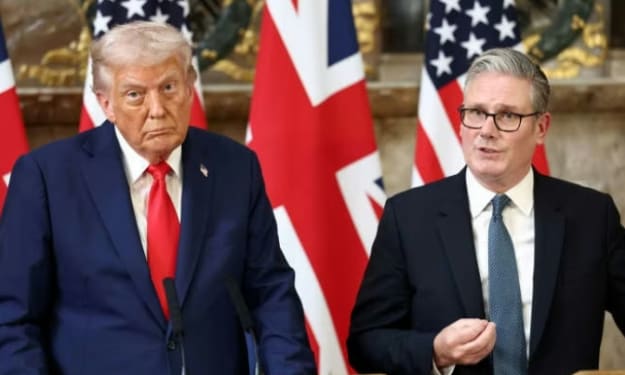
‘Act of Great Stupidity’: Trump Launches Another Tirade Against a NATO Ally — This Time It’s the UK. AI-Generated.
Former U.S. President Donald Trump has once again stirred controversy on the international stage, this time directing his ire toward one of America’s closest allies: the United Kingdom. In a recent public tirade, Trump reportedly described a UK policy decision as an “act of great stupidity,” marking yet another episode in his long-running pattern of criticizing NATO allies. The remarks have sparked backlash in both Washington and London, while reigniting debate about Trump’s approach to diplomacy and alliances. A Familiar Pattern of Criticism Trump’s criticism of NATO members is hardly new. During his presidency from 2017 to 2021, he repeatedly accused alliance members of failing to meet defense spending commitments and portrayed the United States as unfairly burdened by the cost of collective security. Germany, France, and Canada were frequent targets. The UK, however, largely escaped Trump’s harshest rhetoric during those years, often being described by him as a reliable partner. That dynamic now appears to have shifted. In his latest comments, Trump took aim at a UK government decision related to defense and foreign policy—framing it as reckless and harmful to Western interests. While Trump did not shy away from dramatic language, critics argue that his remarks lacked nuance and ignored the complex political and security considerations facing Britain. Why the UK Became a Target Analysts suggest Trump’s criticism of the UK may be rooted in broader frustrations with NATO and the post–World War II alliance system. Trump has long argued that alliances should be transactional, measured primarily by financial contributions rather than shared values or long-term strategic stability. The UK’s strong alignment with NATO and its continued support for multilateral cooperation stand in contrast to Trump’s “America First” worldview. By singling out Britain, Trump may be attempting to reinforce his message to U.S. voters that traditional alliances are outdated or mismanaged—a theme that resonates with parts of his political base. Reactions from Britain and Beyond British officials have responded cautiously, avoiding direct escalation while reaffirming the strength of the U.S.–UK relationship. Diplomats emphasized that the alliance between the two countries is built on decades of cooperation, shared intelligence, and mutual defense commitments that extend beyond any single political figure. Political commentators in the UK were less restrained. Several lawmakers and analysts criticized Trump’s remarks as uninformed and unnecessarily provocative, arguing that they undermine unity at a time when NATO faces significant challenges, including ongoing tensions with Russia and global security instability. Across Europe, Trump’s comments have revived concerns about the future of NATO should he return to power. Many leaders remember the uncertainty of his first term, when he openly questioned the alliance’s relevance and reportedly considered withdrawing the U.S. altogether. Implications for NATO Unity Trump’s renewed attacks come at a sensitive moment for NATO. The alliance has worked to present a united front amid geopolitical crises, and internal divisions—especially involving the United States—could weaken its deterrence capabilities. Experts warn that rhetoric like Trump’s, even when delivered outside of office, can have real consequences. It may embolden adversaries, sow doubt among allies, and complicate diplomatic efforts. For countries like the UK, which rely heavily on transatlantic cooperation, such uncertainty is deeply unsettling. A Political Strategy or Personal Grievance? Some observers view Trump’s comments less as a policy critique and more as a political strategy. As he remains a dominant figure in U.S. politics, his statements often serve dual purposes: shaping foreign policy narratives and energizing domestic supporters. By attacking a NATO ally, Trump reinforces his image as a leader willing to defy convention and challenge established norms. Supporters praise this as honesty and strength, while critics see it as reckless and damaging to global stability. Conclusion Trump’s description of a UK decision as an “act of great stupidity” is more than just another headline-grabbing insult—it reflects a deeper divide over the role of alliances in a rapidly changing world. While the U.S.–UK relationship remains strong at an institutional level, repeated attacks from influential political figures risk eroding trust and cooperation. As global security challenges continue to mount, the question remains whether future leaders will prioritize unity and diplomacy or embrace confrontation—even with long-standing allies. For now, Trump’s latest tirade serves as a reminder that the debate over NATO, and America’s place within it, is far from over.
By Aqib Hussain14 days ago in The Swamp
Global Leaders Gather in Switzerland to Ponder the Future of a Messy World. AI-Generated.
In a world marked by conflict, climate crises, and economic instability, the small alpine country of Switzerland has once again become the focal point for global diplomacy. Leaders from around the world have gathered in Geneva this week to engage in what many are calling one of the most consequential international meetings of the decade. The purpose? To ponder the future of a world that seems increasingly messy, unpredictable, and interconnected in ways that defy easy solutions.
By Aqib Hussain14 days ago in The Swamp
Trump Tariffs Live: EU Considers $108 Billion Retaliation as Denmark Says ‘Europe Will Not Be Blackmailed’. AI-Generated.
The latest chapter in U.S.-Europe trade tensions has taken center stage. President Donald Trump has threatened sweeping tariffs on European goods, escalating an already tense transatlantic relationship. In response, European leaders, led by Denmark’s Prime Minister Mette Frederiksen, have pushed back strongly, declaring that Europe “will not be blackmailed.” Now, Brussels is considering as much as $108 billion in retaliatory tariffs. This isn’t just about economics—it’s about alliances, sovereignty, and global influence. Here’s everything you need to know, in a clear, blog-style format. What Sparked This Tariff Threat? It all started with Trump’s controversial Greenland proposal. The U.S. President suggested buying the strategic autonomous territory from Denmark, citing national security reasons. Denmark and Greenland’s government flatly rejected the idea. Trump responded by announcing a 10% tariff on imports from eight European countries, threatening to increase it to 25% by June if a deal on Greenland isn’t reached. The countries targeted include: Denmark Sweden France Germany Netherlands Finland United Kingdom Norway This move is widely seen as a coercive tactic, linking trade policy to geopolitical demands—a strategy that European leaders are not taking lightly. Europe Pushes Back: ‘We Will Not Be Blackmailed’ European leaders have responded with a united front. They issued a statement warning that the tariff threats “undermine transatlantic relations and risk a dangerous downward spiral.” Danish PM Mette Frederiksen didn’t mince words: “Europe will not be blackmailed.” Other leaders in Germany, France, and Sweden echoed her sentiment. They emphasized that while Europe prefers dialogue over conflict, it will defend sovereignty and international law at all costs. This message is clear: Europe values its relationship with the U.S., but it won’t compromise under economic threats. Brussels Considers $108 Billion in Retaliation In response, Brussels has convened emergency meetings to explore countermeasures. The EU is considering tariffs on U.S. goods totaling $107.7 billion, essentially mirroring the scale of Trump’s threat. Potential measures could include levies on: Machinery and vehicles Agricultural products Consumer goods In addition, the EU may activate its “Anti-Coercion Instrument”, a legal tool designed to counter economic pressure from powerful partners. If used, it could restrict U.S. access to investment opportunities and public procurement in the EU. Why This Matters Politically and Economically The stakes are high. Markets have already reacted, with the euro and sterling showing signs of volatility. European leaders argue that punitive tariffs on allies are counterproductive, stressing the importance of maintaining transatlantic cooperation. British PM Keir Starmer has criticized the U.S. approach, calling it “completely wrong” and urging negotiations while protecting alliances. Economists warn that a prolonged trade standoff could: Disrupt supply chains Affect investment flows Slow global economic growth This isn’t just a fight over Greenland—it’s a test of how far economic tools can be used in geopolitical disputes. Diplomacy in the Midst of Tension Despite the hard talk, Europe hasn’t closed the door on diplomacy. Officials are keen on negotiations based on: Mutual respect Sovereignty Shared values NATO commitments and Arctic security remain pivotal, even amid disagreements. European leaders are trying to balance firmness with dialogue, showing the world that alliances can survive friction, even when under economic pressure. What Happens Next? Here’s the likely timeline: February 1, 2026: Trump’s 10% tariffs on European goods are set to take effect. June 2026: Tariffs could rise to 25% if no agreement is reached. EU retaliatory measures: Still under discussion, with emergency summits planned to finalize any actions. Financial markets, policymakers, and global observers will be watching closely. Decisions in the coming weeks could reshape transatlantic trade and diplomatic norms. Key Takeaways Greenland is the spark, but trade is the battlefield. Trump’s Greenland proposal is the reason behind the latest tariffs, but the broader fight is about economic and geopolitical influence. Europe stands united. Denmark’s PM and other leaders are sending a clear message: coercion won’t work. Retaliation could be massive. $108 billion in EU counter-tariffs could escalate into a full-blown trade conflict. Diplomacy isn’t dead. Despite tensions, Europe and the U.S. still share security and economic interests, keeping negotiation channels open. Global impact is real. Supply chains, investments, and market stability are all at risk if the standoff continues. Final Thoughts The Trump tariffs saga highlights how trade policy and geopolitics are deeply intertwined. While economic measures are powerful tools, they also carry political and strategic consequences. Europe’s firm stance shows that even in an era of rising power competition, alliances like NATO and the EU-U.S. relationship remain resilient—but not untested. The world will be watching closely as February approaches. Will diplomacy prevail, or are we heading toward a transatlantic trade war that could ripple across the global economy? Stay tuned, because the next few weeks could reshape the balance of power in Europe, the U.S., and beyond.
By Aqib Hussain14 days ago in The Swamp
Canada’s Tariff Cut Just Made This High-Tech Chinese EV 50% Cheaper. AI-Generated.
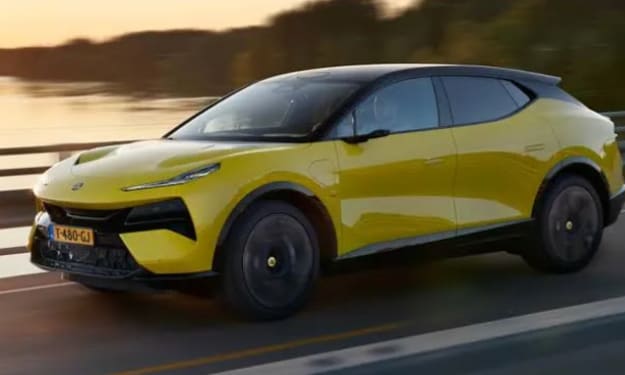
Canada has just shaken up the electric vehicle (EV) market in a big way. Thanks to a recent tariff cut, one high-tech Chinese EV just became 50% cheaper for Canadian buyers. That’s huge news for anyone thinking about switching to electric—or keeping an eye on the auto industry.
By Aqib Hussain15 days ago in The Swamp
As Divisions Over Greenland Grow, Europe Examines Its Options. AI-Generated.
If you thought Greenland was just an icy, remote island, think again. This vast Arctic territory has suddenly become a hotbed of geopolitical tension, sparking debates across Europe about strategy, security, and sovereignty. What used to be a quiet corner of the world is now at the center of a storm involving the United States, Denmark, and the European Union.
By Aqib Hussain15 days ago in The Swamp
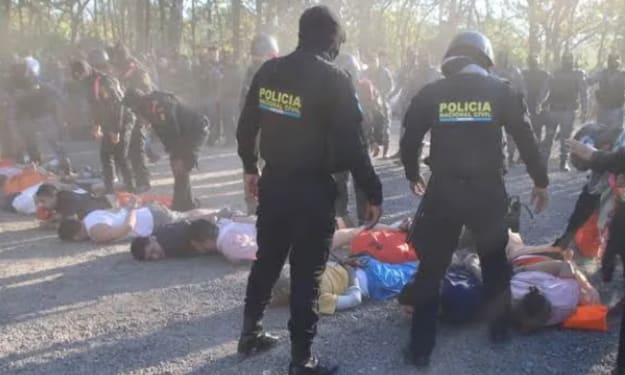
8 Police Officers Killed in Guatemala After Prison Crackdown on Gangs. AI-Generated.
Guatemala is facing a wave of violence that has shocked the nation. Over the past weekend, eight police officers were killed in coordinated attacks following a major government crackdown on gangs in the country’s prison system. The events mark a disturbing escalation in a conflict that has plagued Guatemala for decades, with ordinary citizens and law enforcement alike caught in the crossfire.
By Aqib Hussain15 days ago in The Swamp
‘Night of Deep Pain’: Train Crash in Southern Spain Leaves 39 Dead. AI-Generated.
Spain is in mourning after a devastating train crash in southern Andalusia left 39 people dead and dozens injured. Prime Minister Pedro Sánchez described the incident as a “night of deep pain”, while rescue teams worked tirelessly through the night to help survivors.
By Aqib Hussain15 days ago in The Swamp