Aqib Hussain
Stories (168)
Filter by community
Is America About to Attack Iran? A Look at Rising Tensions and Global Stakes. AI-Generated.
Amid rising geopolitical tensions, many around the world are asking a question with serious consequences: Is the United States preparing to attack Iran? The short answer is that while there is no confirmed imminent attack, developments over the past weeks suggest a heightened risk environment involving serious threats, military build‑ups, and diplomatic pressure that could, under certain conditions, escalate into conflict. The Economist Here’s a clear, informative breakdown of what’s happening — and what it might (or might not) mean for a U.S. strike on Tehran. What’s Fueling the Tension At the heart of the current crisis are escalating threats between the U.S. and Iran, particularly over Iran’s nuclear program and its internal political repression. Donald Trump — now back in the White House — has issued several warnings to Tehran, saying a large U.S. naval “armada” is heading toward the region and that Iran should agree to a nuclear deal or face a “far worse” attack. اnational In response, Iran has signaled strong resistance. Iranian leadership has declared that any military action would be treated as the beginning of a full‑scale war, with immediate and far‑reaching retaliation. TASS These developments are accompanied by military deployments — including aircraft carriers and destroyers — and aggressive rhetoric on both sides. Financial Times +1 What the U.S. Has Actually Done To understand whether a major attack is imminent, it helps to look at what the U.S. has already done: 1. Naval and Military Buildup The U.S. has sent significant naval assets to the Middle East, including the USS Abraham Lincoln and accompanying strike group. Military analysts note this is the largest U.S. deployment in the region in years, signaling seriousness but not necessarily intent to strike immediately. Fina2. Past Strikes on Nuclear Sites In June 2025, U.S. forces, alongside or in support of Israeli operations, bombed three Iranian nuclear facilities as part of efforts to curb nuclear development. At the time, U.S. officials insisted they did not want full war, characterizing the mission as a necessary action to check nuclear escalation. Military.com This prior strike is relevant because it shows the U.S. is capable of acting militarily against Iran — but it also said it was not seeking a broader war. Military.com Tehran’s Response Iranian officials have issued stark warnings about the consequences of any U.S. attack: Iran will treat any U.S. military action as a start of war, promising immediate retaliation against the U.S., its allies, and potentially Israel. TASS Iran’s foreign minister has emphasized readiness to respond “powerfully” to any aggression, while also warning that threat‑based diplomacy undermines negotiations. Philstar.com These statements underscore that Iran is not sitting passively — and any attack could trigger a broader regional conflict. Are Diplomacy Efforts Still Alive? Despite the threats, diplomatic channels have not completely closed: Iran has reiterated that it is open to a “fair and equitable” nuclear deal that respects its right to peaceful nuclear technology, but it rejects negotiations under a cloud of military threat. Philstar.com Other global powers, including Russia, have urged the U.S. and Iran to pursue talks rather than force, warning that military action would destabilize the broader Middle East. Reuters This suggests that — even amid hostile rhetoric — there is still a space for negotiation. What Experts Say Security analysts caution that the current situation contains elements of warning, deterrence, and diplomacy rather than clear signs of imminent war: Some see recent rhetoric — like threats of bombardment — as part of pressure tactics meant to force Iran back to negotiations rather than a prelude to immediate conflict. ent of a large naval force could be interpreted as a deterrent posture, aimed both at signaling resolve and reassuring U.S. allies in the region, not solely preparing for an offensive strike. Financial Times Historical context matters: past interactions between the U.S. and Iran have included crises that did not escalate into full war, even when they appeared close. Experts note that both sides are aware of the high risks of a wider conflict. Could It Still Happen? Yes — but it is far from certain. A U.S. attack could occur under specific circumstances, such as: A sudden Iranian attack on U.S. forces or critical regional infrastructure Intelligence suggesting a imminent threat from Iran’s nuclear program Breakdown of diplomatic de‑escalation efforts However, many policymakers and analysts emphasize that the U.S. is not currently at war with Iran and that Washington continues to publicly claim it doesn’t want a broader war, even if it is prepared militarily. TIME What Would Be the Consequences? A direct American military strike on Iran could escalate dramatically: Iran has a wide range of ballistic missiles capable of striking U.S. bases and regional partners. Al Jazeera Iran could activate allied militias and regional forces, potentially spreading conflict across multiple Middle Eastern theaters. omic instability could follow, particularly if the Strait of Hormuz is affected. For these reasons, many diplomats and analysts argue that all-out war would be deeply dangerous — and is not something either side would choose lightly. Bottom Line So, is America about to attack Iran? Not imminently — at least not based on confirmed evidence — but the risk environment is serious and volatile. The U.S. has bolstered its military presence and ramped up rhetoric, while Iran has responded with warnings of severe retaliation. A conflict could occur if diplomatic channels fail or if violent engagement erupts first — but military analysts still see deterrence and negotiation as significant factors in preventing an outright war. Conditions are tense, and global observers are watching closely — because the stakes extend far beyond Iran and the U.S. themselves. The Economist
By Aqib Hussain4 days ago in The Swamp
As Ukraine Accuses Russia of Terrorism, a Deadly Train Strike Sparks Controversy Over Starlink. AI-Generated.
The war in Ukraine has entered a deadly new phase. On January 27, 2026, a passenger train in Kharkiv was hit by drones, killing at least five people and injuring dozens. Ukraine’s government quickly labeled the strike an act of terrorism, and the incident has sparked a heated debate over modern technology in war, especially the controversial role of Starlink satellite internet.
By Aqib Hussain4 days ago in The Swamp
A Better Greenland Deal: Redefining Arctic Diplomacy for the 21st Century. AI-Generated.
Greenland — that massive icy island up north — is suddenly back in the headlines. In early 2026, it became the center of an international stir, thanks to bold statements from U.S. leaders about its strategic value. What started as vague discussions about “total access” soon turned into diplomatic tension, protests in Copenhagen and Nuuk, and a worldwide debate about what a better Greenland deal should look like.
By Aqib Hussain4 days ago in The Swamp
Huge Landslide Leaves Sicilian Homes Teetering on Cliff Edge. AI-Generated.
The ground gave way without warning. One moment, homes stood quietly against the backdrop of sea and sky; the next, the earth beneath them began to slide toward the void. In parts of Sicily, a massive landslide has left entire neighborhoods perched precariously on a cliff edge, forcing evacuations and reigniting urgent conversations about climate change, aging infrastructure, and the fragile balance between people and nature.
By Aqib Hussain4 days ago in The Swamp
Colombian Lawmaker Among 15 Killed in Plane Crash Near Venezuela. AI-Generated.
Tragedy struck Colombia this week when a small passenger plane crashed near the Venezuelan border, killing all 15 people on board. Among the victims was Diógenes Quintero, a sitting Colombian lawmaker known for his work advocating for peace and marginalized communities. The devastating accident has left the nation mourning and searching for answers.
By Aqib Hussain4 days ago in The Swamp
Exclusive: Trump Says Hamas Helped Find Last Hostage, Now Must Disarm. AI-Generated.
In a statement that has quickly made international headlines, former U.S. President Donald Trump claimed that Hamas helped locate the remains of the final Israeli hostage, calling the moment a turning point in the long-running Gaza conflict. But Trump didn’t stop there. According to him, this cooperation comes with a condition — Hamas must now disarm.
By Aqib Hussain6 days ago in The Swamp
NATO Chief Wishes ‘Good Luck’ to Those Who Think Europe Can Defend Itself Without U.S. Help. AI-Generated.
When NATO’s Secretary General bluntly tells Europe “good luck” if it believes it can defend itself without the United States, it’s more than just a sarcastic remark — it’s a wake-up call.
By Aqib Hussain6 days ago in The Swamp
UK’s Starmer Heads to China to Repair Ties as He Navigates Tensions with the US. AI-Generated.
When British Prime Minister Sir Keir Starmer stepped onto Chinese soil this week, it wasn’t just another overseas visit — it was a signal. A signal that the United Kingdom is rethinking how it engages with the world’s major powers at a time when global alliances feel more fragile than ever. Starmer’s trip to China, the first by a UK leader in nearly eight years, comes amid strained relations with the United States, rising geopolitical uncertainty, and growing pressure to revive Britain’s economic prospects. Walking this diplomatic tightrope won’t be easy, but Starmer seems determined to prove that the UK doesn’t have to choose sides in an increasingly polarized world. Why This Visit Matters China is the world’s second-largest economy and the UK’s fourth-largest trading partner, with annual trade nearing £100 billion. Despite that, political relations between London and Beijing have been frosty in recent years, weighed down by concerns over human rights, cybersecurity, Hong Kong, and alleged espionage. Starmer’s visit marks a clear attempt to reset the tone. Rather than isolation or confrontation, his government is pursuing what it calls a “pragmatic” approach — one that recognizes China’s economic importance while still maintaining safeguards around national security and democratic values. Before departing, Starmer made his position clear: engaging with China does not mean abandoning the United States. “The UK won’t have to choose,” he said, emphasizing that economic realism must coexist with political caution. Economic Pressures at Home At the heart of this diplomatic push is economics. The UK economy has struggled with sluggish growth, high living costs, and post-Brexit uncertainty. For Starmer, unlocking new trade and investment opportunities is essential — and China represents a vast, largely untapped market for British businesses. The prime minister arrived in Beijing accompanied by senior ministers and business leaders from sectors including finance, healthcare, technology, and manufacturing. Meetings with Chinese President Xi Jinping and Premier Li Qiang are expected to focus on boosting cooperation, easing trade barriers, and encouraging Chinese investment into the UK. Currently, Chinese direct investment accounts for only a tiny fraction of total foreign investment in Britain — a figure Starmer hopes to improve. The US Factor Looms Large Starmer’s outreach to China cannot be separated from the current state of UK-US relations. Tensions with Washington have risen in recent months, driven by disagreements over trade policy, NATO commitments, and a more unpredictable American foreign policy stance. The US remains Britain’s closest ally and largest investor, but recent rhetoric and actions have made European leaders increasingly uneasy. By opening channels with Beijing, Starmer appears to be signaling that the UK intends to maintain strategic independence, even while preserving its transatlantic ties. It’s a delicate balancing act — one that will be closely watched in Washington as well as in European capitals. Critics Sound the Alarm Not everyone is convinced this reset is a good idea. At home, critics have accused the government of being too soft on China, warning that economic engagement could come at the cost of national security or moral credibility. Human rights organizations have urged Starmer to directly raise issues such as the erosion of freedoms in Hong Kong and the treatment of ethnic minorities in China. Security experts have also voiced concerns about expanding Chinese influence in the UK, particularly following approval for a new, large Chinese embassy in London. Skeptics fear that closer ties could increase the risk of surveillance or political interference. Starmer’s government insists that safeguards remain firmly in place. Britain’s Foreign Influence Registration Scheme, designed to monitor foreign lobbying and political activity, reflects this effort to engage without compromising security. Can Trade and Trust Coexist? One of the biggest questions surrounding Starmer’s visit is whether warmer diplomatic ties will actually translate into tangible economic gains. Previous British governments have attempted similar engagement strategies with China, often with limited long-term success. While trade volumes have grown, significant increases in Chinese investment or market access have proven elusive. Analysts warn that optimism must be tempered with realism. China’s economic slowdown, domestic policy priorities, and increasing self-reliance could limit how much progress can be achieved, regardless of political goodwill. Still, supporters argue that refusing to engage would only marginalize Britain further in a multipolar world. Europe Is Watching Closely Starmer’s visit also reflects a broader European reassessment of China. Across the continent, leaders are attempting to strike a balance between economic cooperation and strategic caution. The UK’s renewed engagement could serve as a test case for how middle powers navigate a world increasingly shaped by competition between Washington and Beijing. If Starmer can secure meaningful agreements without undermining democratic principles or security, it may strengthen Britain’s diplomatic standing and offer a model for others. A High-Stakes Diplomatic Gamble Ultimately, this trip is about positioning the UK for a future that looks very different from the past. Starmer is betting that Britain can maintain strong ties with the US while rebuilding pragmatic relations with China — all without losing its voice on human rights or national security. It’s a gamble shaped by economic necessity and geopolitical reality. Whether this strategy pays off will depend on what follows after the handshakes, photo-ops, and press statements fade. For now, Starmer’s China visit sends a clear message: the UK is no longer content to stand on the sidelines of global power shifts. Instead, it is trying to carve out a role that is flexible, independent, and economically focused — even if that path is fraught with tension. As the world watches how this diplomatic balancing act unfolds, one thing is certain: Britain’s relationship with both China and the United States is entering a new, more complicated chapter.
By Aqib Hussain6 days ago in The Swamp
How Trump Became a Liability for Europe’s Far Right. AI-Generated.
For much of the past decade, Donald Trump was viewed by Europe’s far-right movements as a symbol of possibility. His rise to power proved that anti-establishment politics, nationalist rhetoric, and open hostility toward liberal institutions could win at the highest level. Across Europe, populist leaders praised Trump’s defiance of political norms and saw him as proof that their own ambitions were achievable.
By Aqib Hussain6 days ago in The Swamp
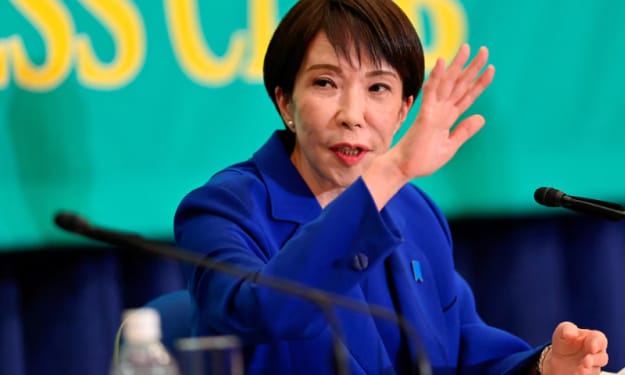
Japan‑US Alliance Could Collapse if Tokyo Ignores Taiwan, PM Takaichi Warns. AI-Generated.
Japan’s Prime Minister Sanae Takaichi has made waves recently, warning that the Japan‑US security alliance could crumble if Tokyo ignored a serious crisis involving Taiwan. Her remarks, though cautious about Japan taking unilateral military action, highlight how deeply Japan’s security is tied to its relationship with the United States. Let’s break down what she said, the reactions it sparked, and why it matters for the region.
By Aqib Hussain7 days ago in The Swamp
Viral Video Shows Skier Viciously Attacked by Snow Leopard After Trying to Take a Selfie With It. AI-Generated.
A viral video has taken the internet by storm, showing a skier being viciously attacked by a snow leopard after attempting to take a selfie with the rare predator. The shocking incident, which occurred in northwest China, has left people stunned and sparked a heated conversation about wildlife safety and human behavior.
By Aqib Hussain7 days ago in The Swamp