Annie Kapur
Bio
I am:
🙋🏽♀️ Annie
📚 Avid Reader
📝 Reviewer and Commentator
🎓 Post-Grad Millennial (M.A)
***
I have:
📖 280K+ reads on Vocal
🫶🏼 Love for reading & research
🦋/X @AnnieWithBooks
***
🏡 UK


Stories (2925)
Filter by community
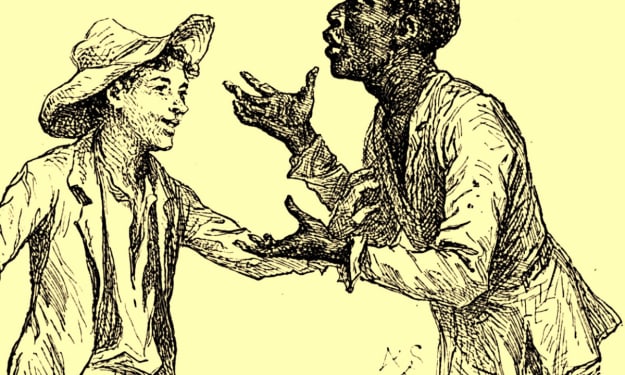
"The Adventures of Huckleberry Finn" by Mark Twain
It has been a long, long time since I have first read Huckleberry Finn. When I was a little girl of about seven or eight, there was an illustrated version that was written for very small children, a simplification of the story that I would read. When I was about eleven, I sought out the real thing and pretty much skipped Tom Sawyer because I heard it wasn’t very good. I only read it when I was thirteen and managed to slip my fingertips into Don Quixote. I really don’t remember how that happened at all, I just remember having the book. No idea where i got it from. Huckleberry Finn managed to change my opinions of the possibilities for children’s literature. Apparently, children’s literature could be sophisticated and hyper-realistic even though it was written in a dialect and contained some questionable language uses. It was one of those books that when you first read it, it moves you in its sheer realism, its heartbreaking emotion and the way it takes you away on one of the greatest journeys the Mississippi River has ever seen.
By Annie Kapur6 years ago in Geeks
50 Great American Novels
The Great American Novel (or the GAN as it is sometimes called) is something that has always been up for debate because of the fact America has had such an incredible output of literature in a far shorter space of time than other countries. The question of which epic best represents America was never really there, but the question of which piece of literature best represents the American experience has always been there since the country first put out its literary culture upon the world.
By Annie Kapur6 years ago in Geeks
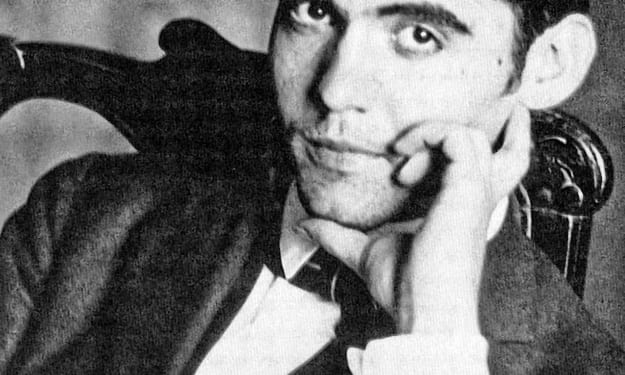
The Best Works: Federico Garcia Lorca
Federico Garcia Lorca is possibly one of the most recognised names in 20th Century poetry. During one of the greatest ages of European Modernism, Spain's 'Generation of '27' (referring to the year 1927) came to prominence with his works at the forefront. Not only a poet, but also a man of plays, Garcia Lorca is also famous for being a rival of Nationalists during the Spanish Civil War. He was killed by them in 1936 and his body has yet to be entirely located.
By Annie Kapur6 years ago in Poets
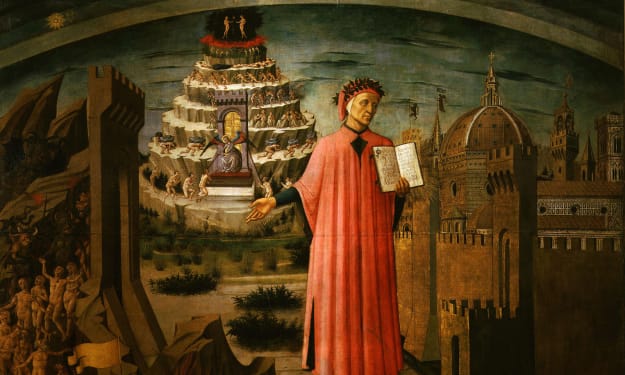
"The Divine Comedy" by Dante Alighieri
It has been a very, very long time since my first attempt at the Divine Comedy. I was thirteen when I first read it and I probably still have the notebook where I kept all my notes on what was happening in the text somewhere as well. This is a book which changed almost everything about me and made me really believe in the unlimited possibilities of literature. The book changed the very essence of my personality, it came to change my belief in poetry and its possibilities, it came to change the way I saw the Renaissance and finally, it changed my loves and likes, my interests and my intentions in reading, film and even my interests when it came to my own future. It is possibly the book that has had the greatest effect on my existence since I read “The Picture of Dorian Gray” at eleven years’ old.
By Annie Kapur6 years ago in Geeks
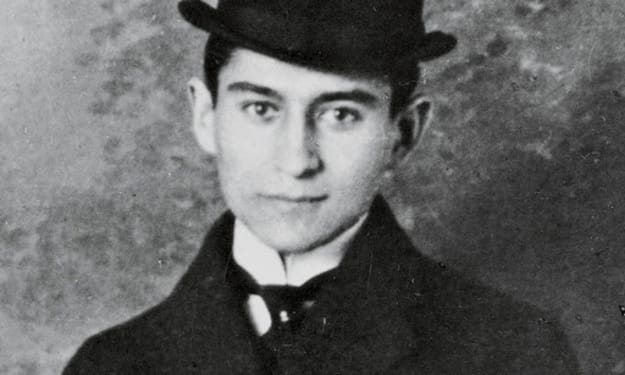
The Best Works: Franz Kafka
Known as one of the most influential writers of the 20th century, Franz Kafka was actually a lawyer working for a company selling insurance. He wrote in his spare hours and compiled many short stories and a few short novels. Kafka's works are often known to depict the extremes of emotional and mental torture in human beings, dystopian as they may be - Kafka nearly always drew on his real life experiences to write symbolistically about the political situation and the emotional turmoil of everyday life in his country and time.
By Annie Kapur6 years ago in Geeks
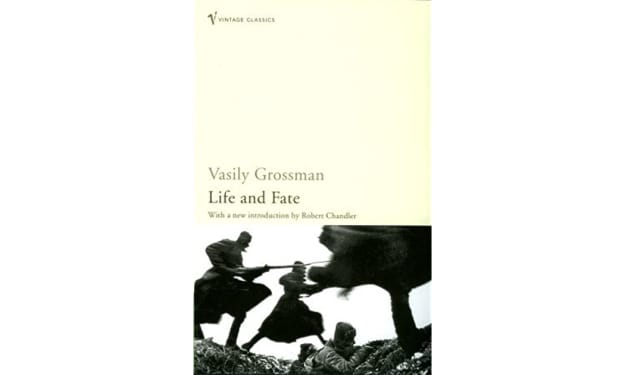
“Life and Fate” by Vasily Grossman
Vasily Grossman’s “Life and Fate” has normally been called the 20th century’s answer to “War and Peace” by Leo Tolstoy. Set in the midst of Russia’s turmoil at the battle of Stalingrad. The book goes through the various characters’ lives and grieves as they live through not only great turmoil but also great loss. The question of whether death is really glorious at war is one of the things it differs from when it comes to “War and Peace”. In comparison to when people die in death camps to Prince Andrei dying in his home after listening to how Natasha was being unfaithful towards him but forgives her on his deathbed. “Life and Fate” though not as great as its 19th century counterpart by Tolstoy. Throughout the book, there are many quotations, chapters and small speeches by characters that relate to the violence and wrongs of war, the way in which the characters deal with death and how the battle sends many, many people to their demise. But the real question is in this novel is how the lives of the everyday person can survive when the only means for having that life, in this novel, are through violence. It is a very poignant aspect of the novel since the first page states “if you attempt to erase the peculiarities and individuality of life by violence then life itself must suffocate” (p.3). The main message of this book, I believe, is that battle keeps people in fear of dying and in fear of their loved ones dying and so, nobody can really live their lives to the full since they are so focused on how this is all going to end and whether it is going to end at all.
By Annie Kapur6 years ago in Geeks
20 Books of 2020 (Pt.28)
I have been fairly sick recently. For days I was unable to eat, drink or speak until finally, I began to get ever so slightly better. It's a slow recovery but it's getting there still. Throughout those days, I had been reading in order to keep my mind occupied. I was re-reading favourites of mine like "The Picture of Dorian Gray" and newly found favourites like James Shapiro's "Shakespeare in a Divided America" (which continues to wow me even now!). When it comes to comfort reading and re-reading favourites, I have absolutely no problem with whatever it is you like to 'comfort read' as long as it is comfortable.
By Annie Kapur6 years ago in Geeks
"The Odyssey" by Homer
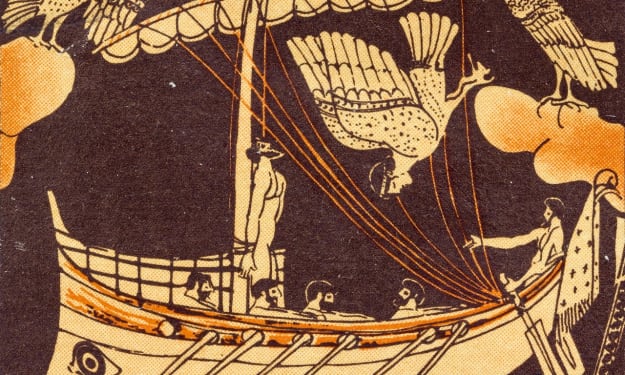
It’s been about ten years since I first attempted my read of both the Iliad and the Odyssey. I would like to admit that I preferred the latter to the former because I was far more interested in the grand adventures of trying to get back to his beloved Ithaca rather than a bloody and brutal war in which I already knew the outcome before reading the book. The first reading experience I had of the Odyssey completely changed my entire view on the adventure genre. It changed my perception on what was possible for literature and it definitely made me believe in the fact that adventures could all grand, depressing, dangerous and purposeful at once. There was a great amount that I had to write down. I made a flow chart of each adventure Odysseus encountered on his ten-year journey back home and even rated them out of five on how dangerous I believed them to be. The most dangerous, in my fourteen-year-old opinion, was the cyclops. Even though I read this book about ten years ago, I have read it a few times since and I cannot help but losing myself in the rhythm of the seas every time I read it.
By Annie Kapur6 years ago in Geeks
"The Diamond as Big as the Ritz" by F. Scott Fitzgerald
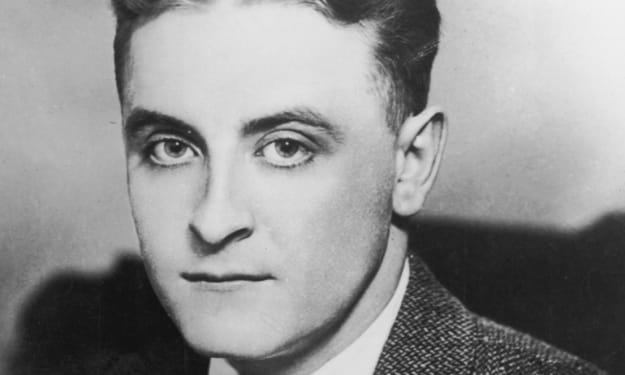
I first read “The Diamond as Big as the Ritz” by F. Scott Fitzgerald when I was fourteen years’ old. I discovered it whilst searching for short stories about money and wealth in the early American 0th Century and the reason being was I wanted something to counteract my views of how it all worked based on the fact I’d just finished O.Henry’s “Gift of the Magi”. By this point, I had already read “The Great Gatsby” and wasn’t all too impressed. I found Gatsby a bit too short in its explanations and descriptions. I wasn’t all impressed because of the fact that Gatsby was attempting to explain these deep philosophical workings of how wealth can absolutely corrupt even when the intentions are, in the eyes of those carrying out the intentions, particularly good. But I was determined that I wouldn’t give up on Fitzgerald. I hardly ever give the author only one chance and normally read two or three books by them in order to make an informed decision of whether I will continue reading their books. My first reading experience of this particular story though was intensely good. It was amazing. I was completely consumed with all the pomp and decadence of the story and the way it worked so cleverly and so symbolically. There are certain parts of the story that I have simply not been able to forget - including the extremely famous ‘bribing god’ scene. This book completely changed my opinion of Fitzgerald and even though to this day, I’m still not entirely won over by Gatsby, I am however won over by Fitzgerald’s other novels.
By Annie Kapur6 years ago in Geeks
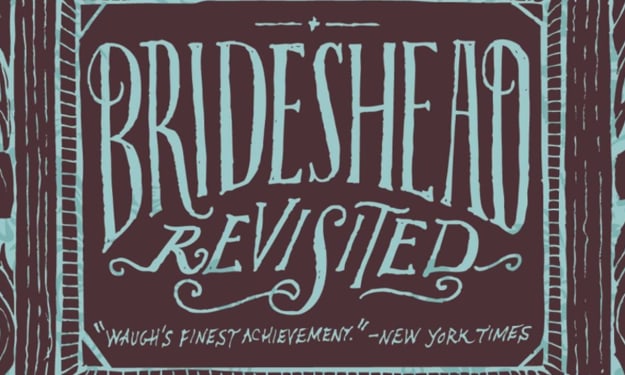
"Brideshead Revisited" by Evelyn Waugh
“Brideshead Revisited” by Evelyn Waugh is one of those books you read and you just don’t forget. You don’t just put it away after one read, you don’t just leave it out of your life. After you’ve read it, like a spell it will keep pulling you back into its charm. I read it for the first time when I was fifteen. I remember it very well because it just so happens I wrote that day down in my diary. Apparently, I was in a moving car and it was the bleak midwinter. My mother was driving and kept telling me to put the book down because apparently it would give me a headache (which to this day I do not understand, I have never had a headache from reading in a moving car, train, bus etc.).
By Annie Kapur6 years ago in Geeks
A Filmmaker's Review: "The Devil Next Door" (2019, Netflix)
There were some aspects of this documentary that were better done than others. First and foremost we have the portrayal of information. Let us first go through what that information is. The information is simply this: a man who is now living in America after coming from Europe years before was once the ‘Ivan the Terrible’ at the Soribor Death Camp in Poland during the Second World War. This man ‘Ivan the Terrible’ was the one who took the most joy in sending the Jews to their deaths and was considered one of the scariest and harshest guards on site at the time. The suspect is taken to Jerusalem to face trial and is initially sentenced to death by hanging. But, when other pieces of information emerge, he is claimed to be not guilty and sent back to the USA. It is after a further point that he is considered to be a guard at the Treblinka Death Camp but not the ‘Ivan the Terrible’ they are looking for and he is arrested in America and put in prison with due course. During this time, he fakes disability and being too sick to face trial, a farce used by the Nazis during the Nuremberg trials in the 40s. However, he is still sentenced and we are left to make up our own minds about who he is after being given every piece of information about his past, his present and finally - his end.
By Annie Kapur6 years ago in Geeks
A Filmmaker's Review: "The Accountant of Auschwitz" (2018)
This documentary really shakes you, but the feeling you also get from it is anger because it is so late for the trial to happen. The overview is this: the now 93 year-old “accountant” of Auschwitz that was responsible for stealing the valuable items from the Jews as they entered the death camp was now on trial after several years. The background tells us the story of what the survivors of Auschwitz thought of this guy and what happened at the failed Nuremberg trials. It also talks about the case of Ivan the Terrible at Treblinka and Soribor and the trials that went ahead in Israel for that some years before. When we know all of this, we can only imagine that the man who was once the “accountant” of Auschwitz is living rather on borrowed time since he would’ve always been in fear of being caught. We get the opinions of others - Jews and non-Jews on what the general consensus is around putting this man on trial. It is very clear that the non-Jewish people don’t care for it and think that the 93 year-old should live in peace. Whereas the Jewish people, understandably do not think this is the case. There are many many opinions during the film in which the speakers state that a man of 93 who committed a crime at 23 or 33 etc. is still a guilty man and that he should not get away with it. Then we get on to the trial itself.
By Annie Kapur6 years ago in Geeks