Annie Kapur
Bio
I am:
🙋🏽♀️ Annie
📚 Avid Reader
📝 Reviewer and Commentator
🎓 Post-Grad Millennial (M.A)
***
I have:
📖 280K+ reads on Vocal
🫶🏼 Love for reading & research
🦋/X @AnnieWithBooks
***
🏡 UK


Stories (2927)
Filter by community
"Jane Eyre" by Charlotte Bronte
It has been a number of over ten years since I first read “Jane Eyre” by Charlotte Bronte. I was going to be thirteen and it was fairly cold outside (my birthday is in the winter). I was reading “Jane Eyre” for the first time because it was on a reading list I had found listed next to “Pride and Prejudice” by Jane Austen - another classic. The way in which I discovered my copy of the book was simply by going to my local bookstore and reserving myself a copy (it was fairly popular and the book had sold out at that time). When I first read the book, it absolutely took me away. It made me cry, it gave me hope, it made me sad, it made me cry again and then finally, when it was all over - I could sob to myself happily in peace. It changed my whole life that book did. It was like reading something that was specially written to hit you right in the heart and make you feel every inch of the character’s emotions with them. Every bit of her anger and resentment, all of her rage and then, all of her calm and sorrow. Eventually, you can feel her happiness as well.
By Annie Kapur6 years ago in Geeks
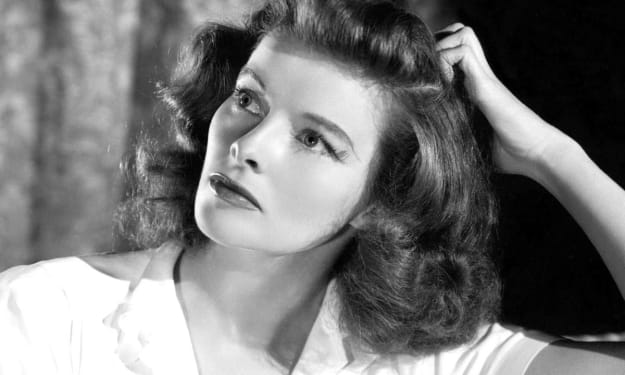
A Filmmaker's Guide to the Best Performances: Katharine Hepburn
For over six decades, Katharine Hepburn was one of the most popular and most talented leading actresses in Hollywood. Born to incredibly wealthy parents in Hartford, Connecticut, USA - Hepburn was mostly known for her amazing talents to play any such character that she wanted with a great amount of accuracy. Her intelligence was often put together with a personality made of steel and she moved Hollywood's image of females forwards by her amazing fearlessness. The AFI called her the greatest actress of Classic Hollywood Cinema.
By Annie Kapur6 years ago in Geeks
"Memoirs of an Anti-Semite" by Gregor Von Rezzori
This novel is told in five separate episodes of one man’s experiences growing up and being told that anti-semitism was the normal way of thinking. Since our narrator is an aristocrat, he has some obvious class prejudices which include anti-semitism towards the poorer Jewish folk. Slowly, but surely, he seeks to learn that his prejudices were wrong and actually, there is no difference between him - a rich and worldly man, and a working-class Jewish person. He realises this through various friendships, relationships and even complex meetings involving Jewish people in which he finds not only sympathy and rage, but also confronts himself in this rage - asking himself why he thinks about them in this way. As the narrator confronts his past, we see prime Jewish characters of complex natures such as Wolf Goldmann, the hearty child of Dr. Goldmann who only seeks to make a friend but often struggles to assimilate into a more ‘Eurocentric’ lifestyle. We also see the Jewish woman in which our narrator falls in love with. But, in hiding and concealing her Jewishness, he ultimately leaves her for her fakery. There are also many more in which the narrator has to confront why exactly it is that Jewish folk hide their Jewishness but then expect nobody to realise. He analysis this over and over again, looking both ways at how this is a product of being racially stigmatised and how this is also a deceit on the part of the Jewish folk who choose to conceal themselves. As we go through the book once more, we find that the confrontation that the narrator has with himself looks deep within his own personal prejudices and develops some contradictions and hypocrisies before he can attempt to rectify things that he had once believed that now, seem absurd.
By Annie Kapur6 years ago in Geeks
"Moby-Dick" by Herman Melville
I first read this book when I was sixteen years’ old and the way in which it had an effect on me was so long-lasting that I don’t think I got over the book for a long time. I don’t think I’m even over it now. I’m just coping. I discovered the book after finding a really pretty Penguin copy in the bookstore. It looked rustic and beautiful and so I bought it. I had heard of the book but didn’t really know what it was about before I’d read it. My first reading experience of it was definitely immersive. It was one of those things that I stayed up all night for and I really got so into it that by the time it was morning, I hadn’t even realised the sun had come up. I was still making notes and drawing pictures. That’s what I do when I get too into a book to the point of no return. I make notes and sketches. This book completely changed my perception on the way books about the sea could be written. It was one of the first American books that I’d ever fallen in love with so much that I barely put the book away for an entire year afterwards. I had it on my bedside table and would constantly be scribbling about it, highlighting it and writing short stories about the characters and other wild adventures they’d go on at sea. Yes, this was my life and pretty much, still is.
By Annie Kapur6 years ago in Geeks
“The Makioka Sisters” by Junichiro Tanizaki
Tanizaki’s “The Makioka Sisters” is a story about four sisters who are on the brink of losing certain traditions and cultures obtained through their historical family to the changing world of Japan during the mid-20th century. A critical analysis of the varying degrees of cultural change over Japan and the wider world, the reader sees tensions grow between the sisters as all four of them seem to want different things from the world. Whilst there is a sister who prefers the lavish and feminine lifestyle of old, without worry and without an occupation or hobbies. Whereas, another sister prefers the world of the working woman and thus, turns the Makioka tradition of non-working, uneducated females upside-down. Her want to have hobbies, make a professional of herself and other things creates great tensions. But the sister that creates the most tension is the one that has not been able to get married. She may have suitors but after a newspaper-bred scandal that left her reputation amongst Makioka and other Japanese people alike, she has been unable to find a husband for herself and her family are extremely worried that, like the working woman, this will tarnish the historical name of Makioka. As far as tradition and females go, there are many characters who want to protect the culture of rich history that has many, many years and generations of members. However, with the war at hand, there are things that required to be changed in order to survive - even if this concerns being modernised within the confines of a traditional family who do not think certain things should be done by women. The symbolic nature of the sisters seems to represent the way in which war changes a population. There are obviously those who want to keep the current regime that is the old one at any cost - even if it means losing people they love. There are then the ones who care not for the modern world at all and want to keep everyone within the older regime in hope of keeping the tradition alive and thriving. Then finally we have the modern ones who care not for traditions and regimes, but choose to grow up with the world, growing together and changing to modernise. These are considered the best adapted to survive after the war. They may be considered to be best adapted but this novel also takes into account the fact that old and new are required equally in order for the world to move on from history. History is where we learn from and the modern is what we strive towards. This is exactly how the book sees things as well.
By Annie Kapur6 years ago in Geeks
20 Books of 2020 (Pt.33)
Can we talk about audiobooks for a bit? Thanks. Audiobooks are often considered "not reading" and honestly, I thought that this was true until I started to go partially blind and had to be more selective of my paperbacks, making sure the font and text size was good enough for me to see. (Not necessarily big enough, but at least printed in a font that I could see easily). I have been experimenting with audiobooks because I don't really listen to audiobooks of books I haven't read. I like listening to my favourite books via audiobook such as: "The Picture of Dorian Gray", "The Brothers Karamazov", "Anna Karenina", "War and Peace", "Jane Eyre" and "Moby-Dick".
By Annie Kapur6 years ago in Geeks
"Cloud Atlas" by David Mitchell
It has been a while since I first read “Cloud Atlas” by David Mitchell. I was sixteen years’ old and my first reading experience of it basically blew my mind. I stayed up all night making notes, drawing sketches of characters and by the morning, I was not only insanely tired, but I had a whole notebook filled with masses and masses of information about the book. I had handwritten over one hundred pages of notes, quotations, sketches, drawings, opinions, lists and so many other things. This would be an annual thing and now I can’t live without the book. I still have my copy from all the way back then. I used it at university for one of my essays and it’s now covered in notes and highlighting. Now, my copy is safely tucked into a box under my bed and I take it out every now and again, I was reading it the night before my twenty-first birthday, at Christmas whilst I was twenty-three and I read it recently and the ripe age of twenty-four. It changed my entire opinion on the very limitations of literature. The truth is: there are no limitations.
By Annie Kapur6 years ago in Futurism
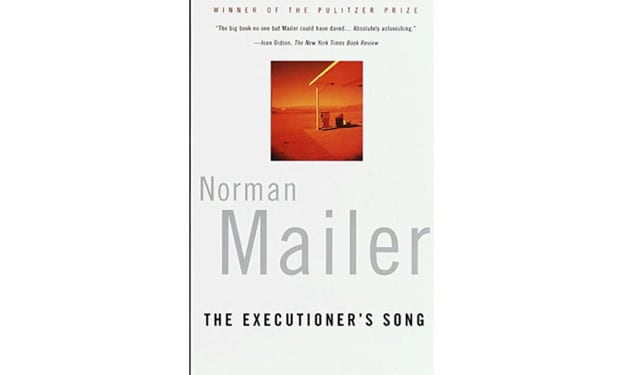
The Executioner’s Song by Norman Mailer
It’s been a few years since I read “The Executioner’s Song” when I was eighteen years’ old and it was a funny experience because I’d only ever seen a picture of the book before that. I had constantly wanted to read it over the course of a year because it sounded amazing. But when I received it in the post, my jaw dropped at how long it was in comparison to how long I thought it was. I managed to get it done in a few days anyway. I really just couldn’t put it down at all. At some points, I was actually crying about the other characters. My first reading experience was heavily emotional and I was put into an emotional whirlwind of sorrow. It completely changed my perspective on creative nonfiction, just like the book “In Cold Blood” by Truman Capote had done some years before.
By Annie Kapur6 years ago in Criminal
Anna Akhmatova
Anna Akhmatova was one of the most well known poets in Russian History and is, to this day, one of the most respected poets of the 20th century. I read Akhmatova's poetry whilst I was in school via a tiny book I found called "The Everyman Poets: Anna Akhmatova". She uses so much incredible language with such raw emotion and the quotations about imprisonment and love have such a vivid image to them. Anna Akhmatova was the basis for reading all Russian Poetry of the difficult ages, the transition between Royalist Russia to Communist Russia. She was the borderline between those who were on the outside of the situation and those who were on the inside, and by inside, I mean prison.
By Annie Kapur6 years ago in Poets
20 Books of 2020 (Pt.32)
Well, we're underway into the 600s now and I can honestly say that it has been a great ride, but we're not stopping here! In this article introduction, I want to talk shortly about reading books and reading kindle books/ebooks etc. and the way in which we see differences between them.
By Annie Kapur6 years ago in Geeks