
What Is Medium.com Used For in 2026? The Honest Truth No One Told Me Before I Joined
A simple guide for readers and new writers who keep hearing about Medium but aren’t sure if it’s actually worth their time.

Medium.com in 2026 is still where long-form writing lives online, but it’s changed a lot, and nobody explains it in plain English.
That’s what I wish I’d had before I signed up, got lost, got frustrated, and then finally figured out how to make it work for me.
So let’s talk about what Medium.com is actually used for in 2026 — for readers, for new writers, and for the people who are quietly asking, “Is this still a thing, or am I late to the party?”
What Is Medium.com Used For in 2026, Really?
I’ll start with the version I wish someone had told me:
Medium in 2026 is mostly three things:
A reading app for curious people
A training ground for new and mid-level writers
A side-income platform for the few who stick around long enough
On the surface, it still looks like a blogging site.
Underneath, it’s more like a giant, messy digital magazine where anyone can submit an article and hope the algorithm hands it to the right people.
Medium calls them “stories.” Readers pay a subscription. Writers get paid based on how long members read those stories.
That’s the clean explanation. The lived reality is messier, and honestly, more interesting.
The Night I Realized Medium Wasn’t Just “Another Blog Site”
I remember the exact night Medium clicked for me.
It was 1:17 a.m. I’d fallen into one of those insomnia holes where your brain keeps hitting replay on a dumb conversation from five years ago.
I opened the Medium app expecting the usual productivity fluff.
Instead I found a 9-minute piece from some random guy in Portugal writing about quitting a PhD program he’d been killing himself over.
It wasn’t polished. There were typos. The formatting annoyed me.
But somewhere around the third paragraph, he admitted he’d stayed in the program an extra year just because he didn’t know who he was without the title.
That landed way harder than it should’ve.
I read the whole thing. Then I followed him. Then I started clicking around and realized:
Wait… this place is full of people doing exactly this. Just… telling the truth about their lives, their work, their weird obsessions — and strangers are actually reading it.
That’s Medium’s real engine in 2026: personal essays, thoughtful explainers, niche nerd articles, and oddly specific stories that don’t fit anywhere else.
It’s messy. It’s inconsistent. And it’s addictive if you’re the kind of person who prefers long-form reading over 10-second clips.
How Medium Works for Readers in 2026
If you’re a reader, Medium is basically a long-form social feed built around topics instead of people.
You subscribe (or don’t — there’s a free tier with limits), and then you:
Follow writers you like
Follow topics you care about
Let the algorithm throw you weird, interesting curveballs
Medium is used for:
Deep dives on specific topics: AI, parenting, crypto, freelancing, weird niche hobbies
Personal essays that feel like reading someone’s journal, just slightly tidier
Slow thinking — the opposite of doomscrolling short content
Learning new skills through long guides and “how I actually did this” breakdowns
I use Medium for what I call “coffee-length reading” — the kind of 5–12 minute stories you can finish in one sitting while your drink’s still hot.
Some days I’m reading big, well-known publications.
Other days I’m reading an unknown writer with 37 followers who just wrote something that hits harder than anything on the front page of the New York Times.
Is it all good? No. Some of it’s bad. Some of it’s boring.
But when Medium works, it feels like randomly finding a great conversation in a quiet café — the kind you weren’t looking for but can’t get out of your head later.
How Medium Works for New Writers (That No One Explains)
If you’re a new writer, Medium in 2026 is both a blessing and a trap.
It’s used for:
Publishing without needing your own website
Getting real readers faster than a stand-alone blog
Practicing writing consistently and publicly
Earning some money from your words, eventually
But here’s what I wish someone had told me on day one:
Medium is not a “post once and go viral” platform. It’s more like a crowded open mic night.
You get:
A microphone (your profile)
A stage (your story pages)
A chance to be heard — not a guarantee
I’ve seen this same pattern over and over:
New writer joins, posts 3–5 stories in the first week
Gets a handful of views, maybe 1–2 followers
Wonders what they’re doing wrong
Quits and tells everyone “Medium is dead”
Medium in 2026 favors consistency and specificity.
Writers who treat it like a weekly column, not a dumping ground for random thoughts, tend to slowly build something real.
The platform is used by smart readers who can smell lazy content instantly. If you’re just rehashing generic advice, you’ll sink.
But if you’re writing about actual lived experience, even in a tiny niche — like “how I survived my first year teaching middle school” or “why I stopped tracking every calorie” — Medium still has room for you.
What Is Medium.com Actually Paying Writers for Now?
This is where everyone gets weirdly quiet or weirdly loud.
The honest answer in 2026:
Medium pays writers for high-quality reading time from paying members. Not clicks. Not claps. Not followers.
If someone with a paid membership reads your whole story slowly, you’re rewarded more than if 200 people skim it and bounce after 20 seconds.
Writers use Medium to:
Make side money from stories they’d probably write anyway
Test which topics people care enough about to finish reading
Build a small but loyal audience over time
I’m not one of those “I made $10,000 a month on Medium” people.
I’m more in the “this covered my groceries and most of my internet bill” bracket.
And you know what? That still startled me.
Because the first time I got paid for something I wrote at 2 a.m. in my kitchen, it felt like finding a $20 bill in an old coat.
Not life-changing. But real.
Is Medium good for making a full-time income? For 99 out of 100 writers, no. It’s much closer to:
Gas money
Bill money
“Treat myself to sushi for finishing this draft” money
But as a place to learn, experiment, and get paid a little while you improve? It’s better than people give it credit for.
What Do People Actually Read on Medium in 2026?
Here’s where Medium surprised me.
I assumed the platform was all tech, productivity, and crypto bros explaining things no one asked for.
Those categories exist. But the stories that stick with me are almost always in these zones:
Personal essays about messy life stuff
Divorce, burnout, weird friendships, starting over at 40, moving back in with your parents, quitting a “dream job.”
Honest career stories
“I got laid off and here’s what I did next,” “What I learned from 10 years as a nurse,” “Why I stopped chasing promotions.”
Simple, grounded how-to guides
Not “10 hacks,” but “Here’s how I actually built a daily writing habit in 30 minutes a day” level specificity.
Thoughtful explainers
People breaking down complex topics like AI, finance, or health in plain language, with real examples and nuances.
Medium is used by readers who want to slow down and think.
They’ll read 2500 words if you’re saying something honest and specific.
They won’t tolerate fluff.
And the best writers on the platform have figured out that they’re not just chasing clicks — they’re having recurring conversations with the same readers who keep coming back.
Is Medium Worth It for New Writers in 2026?
Short answer: It can be. If you’re clear about what you want from it.
Here are the main ways writers use Medium now:
Practice and feedback
You use it as a public journal with slightly better editing. You learn how to title pieces, structure them, and see what people respond to.
Audience building
You consistently write about a small set of topics — writing, relationships, health, tech, creativity — and attract people who care about those things.
Portfolio and proof
Medium acts like a live résumé of your writing. You can send a link to clients, editors, or collaborators, and they can see your style and consistency.
Side income
Over time, a library of 50–100 solid stories keeps earning tiny amounts each month. It’s not passive, but it’s more “compounding effort” than “start from zero every time.”
Where people get frustrated is thinking Medium owes them attention.
It doesn’t.
It gives you a clean page, a distribution system, and a chance to reach strangers. That’s already more than most platforms give.
But you still have to figure out what you’re actually saying and who it’s for — which, frankly, most of us don’t know at the start.
What Is Medium.com NOT Good For Anymore?
There’s some stuff Medium just isn’t great for in 2026, and pretending otherwise burns new writers out.
Medium is not:
A replacement for your own site if you’re building a brand long term
A quick path to viral fame
A guaranteed income stream
A place where your old high school friends will easily find your writing
And here’s something I didn’t want to admit for a long time:
Medium’s algorithm doesn’t love experiments as much as it used to.
If you write all over the place — one day about gardening, next day about cryptocurrency, then about your cat — you’ll probably grow slower.
Readers still like that range. The system doesn’t always reward it.
So you end up with a weird split: Medium as a playground of ideas versus Medium as a strategic writing platform.
I live somewhere in the middle. I’ve accepted that not every piece will perform, but I’m also not just tossing a diary entry online and hoping for the best.
How Is Medium Different from Vocal, Substack, or a Personal Blog?
This is where things get interesting in 2026, because Medium isn’t alone anymore.
People ask:
“Is Medium better than Substack?”
“Should I write on Medium or Vocal?”
“Do I still need my own blog?”
Here’s how I see it, after juggling all three:
Medium is best for:
Discoverability through an algorithm
Learning what topics people sit with and actually read
Getting paid a bit while you practice long-form writing
Vocal (where you’re reading this) is great for:
Community-based reading — people actually browse communities like Writers, Humans, Psyche
Challenge-based motivation (writing contests help you finish)
More control over formatting, media, and niche communities
Substack is strong for:
Building an email list you own
Talking to a specific audience that actively chose you
Long-term relationships and potential paid newsletters
Personal blog is ideal for:
Total control
Long-term SEO and owning your content
Being Google-able for specific topics
Medium is used as the “public square” version of your writing life.
Vocal feels more like a series of curated rooms.
Substack is the intimate weekly dinner.
Your own site is your house.
Do you need all of them? Not at first.
But understanding what Medium is used for in 2026 helps you decide whether it deserves a spot in your writing ecosystem.
How Do You Actually Start on Medium in 2026 Without Burning Out?
This is the part no one explains without turning it into a course.
So here’s the simple version I wish someone had handed me in a DM:
If you’re a brand new Medium writer:
Read for a week before you publish anything
Follow 10–20 writers whose work genuinely moves you. Notice what you finish reading and what you abandon. That’s data.
Pick 2–3 themes you’ll start with
Not forever, just for the first 10–15 stories. For example:
Learning to write online
Burnout and work
Mental health and anxiety
Or whatever your real life revolves around right now.
Aim for 2 stories a week, not daily posts
Quality beats volume on Medium in 2026. A thoughtful 1200-word piece is worth far more than five shallow 400-word posts.
Use specific titles, not poetic mysteries
“How I Stopped Checking Email 47 Times a Day” will outperform “Silence in the Modern Age” almost every time.
Join the Partner Program only when you’re ready
You can write free and then turn monetization on later.
Don’t let the idea of money choke your creativity in the first month.
And if you’re wondering: “How long before I see anything happen?”
Most people need at least:
10–20 stories to find their voice
3–6 months to see consistent reads
A year to look back and realize they’re better — and braver — than when they started
I know that sounds slow.
It is.
But I’ve watched writers go from 0 to “I get 10k–20k views a month” simply by showing up, telling the truth, and paying attention to what lands.
So… Should You Use Medium in 2026?
Here’s where I contradict myself a bit.
If you’re already stretched thin, juggling three platforms, and you hate the idea of yet another algorithm judging your worth — maybe not.
You don’t have to be everywhere. You really don’t.
But if you:
Love reading long-form stories
Want to practice writing publicly
Like the idea of strangers discovering your work
Don’t mind growing slowly and steadily
Then Medium is still worth your time in 2026.
It’s not shiny anymore. The hype wave passed.
What’s left is quieter and, in a way, better: people writing about their real lives to an audience that’s choosing to read, not just scroll.
The question isn’t “Is Medium dead?”
The real question is “Does the kind of writing you want to do belong in a place built for slow reading?”
If the answer feels like a yes — even a small one — then it might be worth opening an account, writing that first messy story, and seeing who shows up.
Because sometimes the internet still surprises you.
Not with viral charts.
Not with overnight success.
Just with one stranger in another country reading your story at 1:17 a.m. and thinking, quietly:
“Oh. So it’s not just me.”
About the Creator
abualyaanart
I write thoughtful, experience-driven stories about technology, digital life, and how modern tools quietly shape the way we think, work, and live.
I believe good technology should support life
Abualyaanart
Keep reading
More stories from abualyaanart and writers in Writers and other communities.
Early March 2026: 4 Goals Accomplished
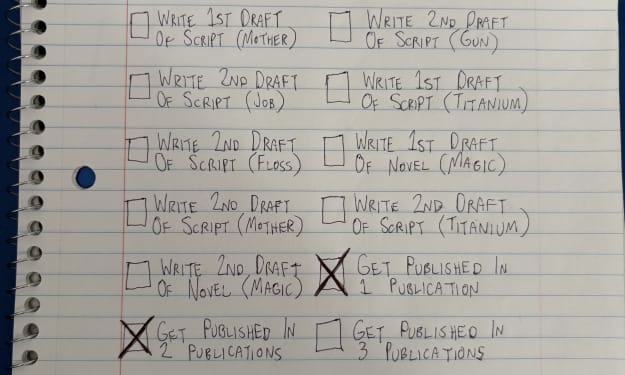
It's early March and I've now accomplished my 4th writing goal for the year of 2026. Before diving into the behind-the-scenes of it... why not tell you up front what that accomplishment was? I was published in a 2nd publication for this year. Published in Helix Literary Magazine out of Central Connecticut State University. You can read it for free right now!
By Stephen Kramer Avitabile6 days ago in Writers
A New Song
A New Song I woke up the other day and heard this new song. It seemed a bit familiar, but I could not place it. I don’t know where it was coming from either. So I smiled and listened to it. It was one of the most beautiful songs, I have heard in a long time.
By Alexandra Grant5 days ago in Writers
The Politics of Playing Dress-Up
Well, to start off I'd like to say a happy world book day to all who celebrate. I know I haven't really posted anything on my socials about it but I'm not a jubilant kind of person. I lay low most of the time. Let's start off with a popular anecdote from the vaults...
By Annie Kapur6 days ago in Geeks


Comments
There are no comments for this story
Be the first to respond and start the conversation.