
The Timeless Charm of Felt Products: A Deep Dive into Wool Felt and Its Wonders
Let’s explore the world of felt—what it is, how it’s made, and how you can take care of it for years of use.
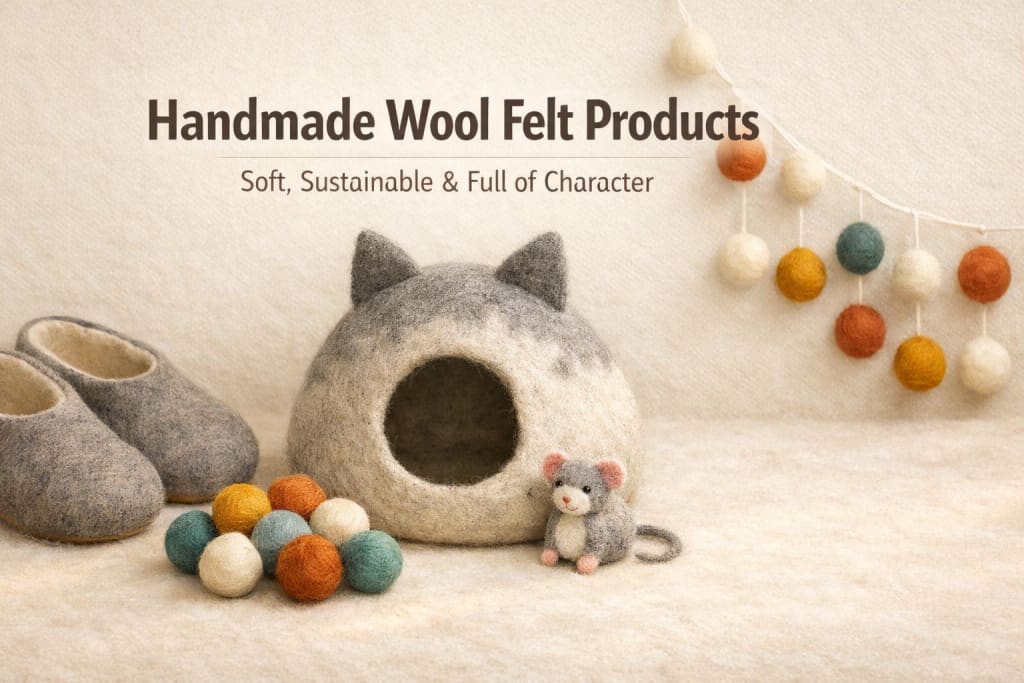
Felt has been part of human life for thousands of years, yet it still feels wonderfully timeless and relevant today. From cozy slippers and colorful hats to trendy home décor and children’s toys, felt products have gained incredible popularity in recent years. What makes this simple material so special is not only its natural texture and warmth but also the craftsmanship and eco-friendly values behind it.
Let’s explore the world of felt—what it is, how it’s made, and how you can take care of it for years of use.
What Is Felt?
Felt is one of the oldest textiles known to humankind. Unlike woven or knitted fabrics, which are made by interlacing yarns, felt doesn’t require weaving at all. It’s a non-woven fabric created by matting and compressing fibers together using a combination of heat, moisture, and friction.
The result is a dense and durable material that can be cut, shaped, and molded into almost anything. Felt can be made from both natural fibers (like wool) and synthetic fibers (like acrylic or polyester). However, natural wool felt stands out because of its softness, insulating qualities, and sustainable origins.
In simple terms, felt is the fabric that stays warm in winter, soft under your fingertips, and sturdy enough to last through years of use.
The Beauty of Wool Felt
Wool felt is the purest and most beloved type of felt. It’s made from sheep’s wool—sometimes mixed with fibers from alpaca, yak, or other animals—and is completely biodegradable and renewable. What makes wool fiber so unique is its natural scaly surface structure, which allows it to lock together when exposed to moisture and heat. This property is what makes felting possible.
Wool felt has several wonderful qualities:
Soft yet strong: It feels gentle to the touch, but its dense structure makes it incredibly durable.
Natural insulation: Wool fibers trap air, helping to keep warmth inside, making felt slippers and hats naturally cozy.
Moisture resistant: Wool can absorb a surprising amount of moisture without feeling wet—great for coasters, mats, and footwear.
Eco-friendly: Since it’s made from renewable animal fibers, wool felt is biodegradable and sustainable.
Because of these qualities, wool felt has become a favorite material in both traditional handicrafts and modern design. From artisans in Nepal hand-felting each ball for colorful garlands, to designers in Europe crafting sleek minimalist home accessories, wool felt continues to bridge the gap between nature and creativity.
How Is Wool Felt Made?
Making wool felt is both an art and a science. The process can be done entirely by hand or using industrial machines, but the basic principles stay the same—heat, moisture, pressure, and movement.
Here’s a simplified version of how wool felt is made:
Wool Preparation
It begins with shearing wool from sheep. The raw wool is then cleaned to remove dirt, lanolin (natural oils), and any debris.
Carding and Layering
The clean wool is combed (or carded) to align the fibers in the same direction. Artisans then layer these fibers evenly to create a fluffy base.
Felting Process
Warm, soapy water is applied to the layers of wool. Gentle rubbing or rolling begins, causing the fibers to tangle and interlock. As they continue to be worked through pressure and agitation, the wool gradually transforms into a firm, dense fabric.
Fulling (Hardening)
After the initial felting, the material is further rolled, squeezed, or thrown to shrink and tighten the structure. This makes the felt stronger and more compact.
Rinsing and Drying
Finally, the felt is rinsed to remove soap and dried naturally, often shaped into final forms while drying.
In handmade felt crafts, artisans often shape the item directly during felting—like a felt bowl, cat cave, or slipper—so each piece develops its unique form and character. This is one reason why handcrafted felt goods have so much personality and charm.
Popular Felt Products You’ll Love
The versatility of felt means it appears in countless everyday items, both functional and decorative. Some of the most common felt products include:
Home décor: Rugs, coasters, wall hangings, felt flower garlands, and storage baskets.
Fashion items: Hats, scarves, felt bags, slippers, and jewelry.
Toys and crafts: Felt balls, soft toys, play mats, and educational sets for children.
Pet supplies: Felt cat caves and wool dryer balls for grooming pets.
Each felt product carries a warm, handmade touch. In countries like Nepal, many local artisans create these items using traditional hand-felting techniques, supporting sustainable livelihoods and keeping ancient crafts alive.
How to Wash and Care for Felt Products
One of the most common questions people ask is: Can I wash felt? The answer is yes—but gently. Because wool fibers naturally shrink and tangle more when exposed to heat and agitation, improper washing can cause your felt item to lose its shape or firmness. Here’s how to take care of it properly:
For Spot Cleaning:
If it’s just a small stain, gently blot the area with a damp cloth and mild soap. Avoid rubbing, as that can distort the fibers.
For Hand Washing Wool Felt:
- Fill a basin with cool or lukewarm water (never hot).
- Add a small amount of gentle detergent or baby shampoo.
- Submerge the felt item and gently press it—don’t twist or wring.
- Rinse carefully in cool water until the soap is gone.
- Gently press out excess water with a towel, reshape the item, and let it air dry naturally. Keep it away from direct sunlight or heaters.
For Machine Washing:
It’s better to avoid machine washing handmade felt, but if it’s machine-safe felt (like synthetic decorative felt), use a delicate cycle with cold water inside a mesh laundry bag.
By following these steps, you can keep your felt slippers, hats, or pet caves clean and soft for a long time.
Why Choose Felt Products?
In an era when fast fashion and synthetic materials dominate the market, wool felt stands for something different—sustainability, craftsmanship, and natural beauty. Felt products are made to last. They bring a sense of texture, warmth, and authenticity to your living space.
Moreover, when you buy handmade felt items, especially those made in artisan communities, you support small-scale producers and ethical trade. It’s more than just owning a product—it’s about cherishing a tradition that honors both nature and human skill.
Final Thoughts
Felt is more than just a fabric—it’s a story woven (or rather matted) through centuries of creative expression and human connection with nature. Whether it’s the soft slipper warming your feet or the colorful garland brightening your home, every felt item carries a touch of heritage and heart.
Next time you come across a felt product, take a moment to appreciate its humble origins: wool, water, and the hands that shaped it. That’s the quiet beauty of felt—simple, sustainable, and endlessly comforting.
About the Creator
Reviewing the Ninth Annual Women's Royal Rumble
Before I went to bed last night, I decided to go to Netflix and relive the 2018 Women's Royal Rumble Match, the very first Women's Rumble. Amazing. A Women's Royal Rumble Match seemed like just a pipe dream. Now, not only did it come true in 2018, but we are now in Year Nine of the Women's Rumble. On Saturday, January 31, 2026, the 39th annual Royal Rumble event took place, and for the first time since the very first one in 1988, they left the country, as the Saudi capital of Riyadh hosted the event.
By Clyde E. Dawkinsa day ago in Viva
Why Da Nang Is a Growing Destination for Wellness Travel
Da Nang has emerged as a wellness destination not through aggressive branding, but through alignment. The city sits between the East Sea and forested mountains, creating an environment where balance feels instinctive rather than curated. Unlike high-density Asian capitals, Da Nang moves at a calmer pace while still offering modern infrastructure, quality healthcare access, and international connectivity. For wellness travellers, this combination is powerful. It removes friction while preserving tranquillity, allowing restoration to begin the moment one arrives rather than after days of adjustment.
By Aurora Gianna7 days ago in Viva



Comments
There are no comments for this story
Be the first to respond and start the conversation.