
United States Plant-Based Food Market Size and Forecast 2026–2034
Health, Sustainability, and Innovation Drive America’s Shift Toward Plant-Based Nutrition

The United States plant-based food industry is no longer a niche segment catering only to vegans and vegetarians. It has evolved into a mainstream, innovation-led, consumer-driven market that is reshaping grocery shelves, restaurant menus, and institutional food services across the country.
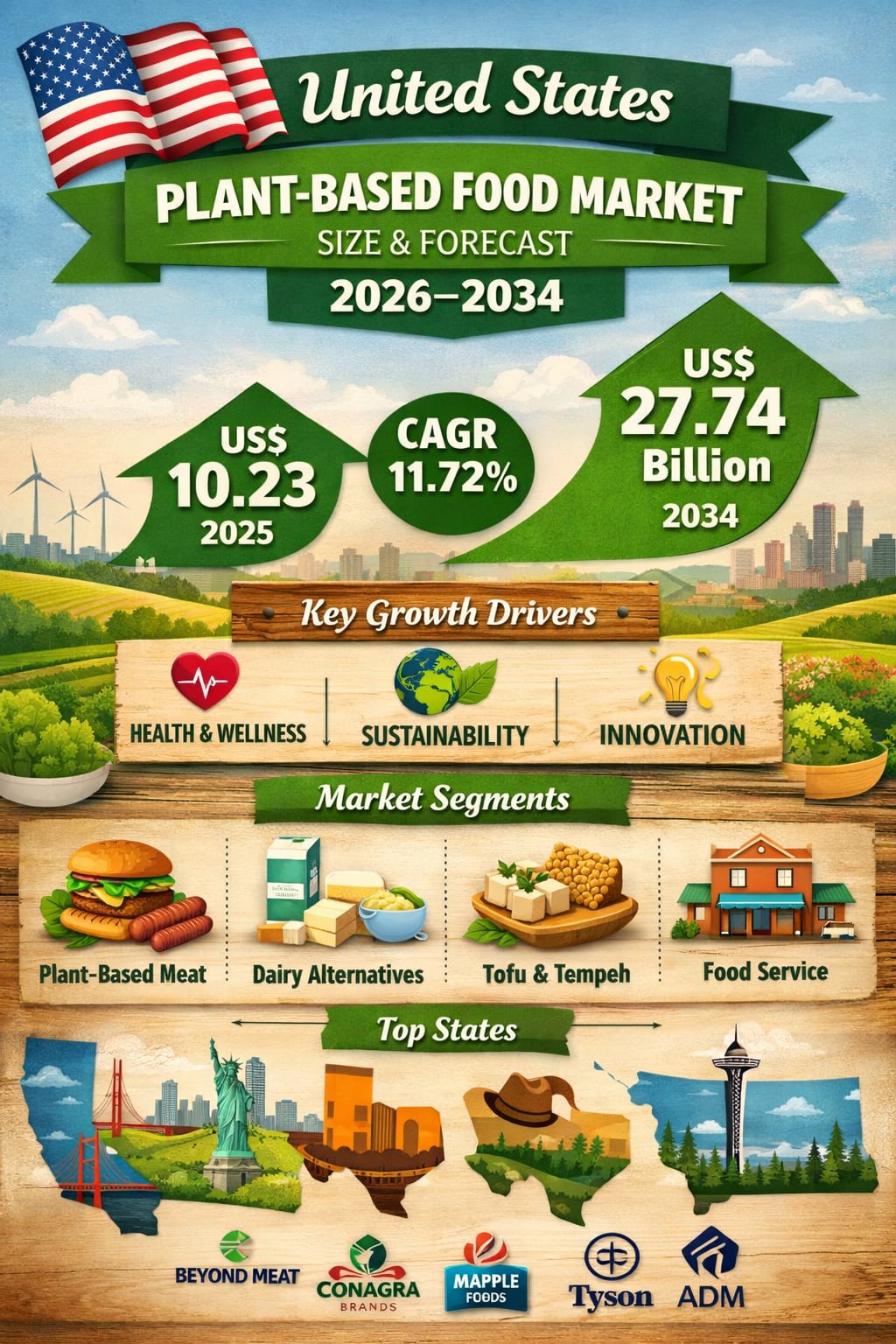
According to Renub Research, the United States Plant-Based Food Market is projected to expand from US$ 10.23 billion in 2025 to US$ 27.74 billion by 2034, growing at a robust CAGR of 11.72% between 2026 and 2034. This remarkable growth reflects a broader transformation in consumer behavior—where health consciousness, environmental responsibility, and ethical considerations are converging to redefine food choices.
As Americans rethink what goes on their plates, plant-based foods are emerging as a long-term dietary shift rather than a passing trend.
United States Plant-Based Food Market Outlook
Plant-based foods include products made primarily or entirely from plant ingredients such as fruits, vegetables, legumes, grains, nuts, seeds, and plant-derived proteins. The category spans a wide range of offerings:
Meat substitutes
Dairy alternatives like plant-based milk and cheese
Ready-to-eat meals
Functional beverages
Plant-based snacks
Egg substitutes
Condiments and spreads
What sets modern plant-based foods apart is their engineering. These products are designed to closely replicate the taste, texture, and nutritional profile of traditional animal-based foods. Advances in food science and protein processing have enabled manufacturers to develop alternatives that appeal not just to vegetarians but also to flexitarians and mainstream consumers.
Over the past decade, the US market has witnessed growing demand for plant-based options due to rising awareness about chronic diseases, environmental sustainability, and animal welfare. Today, plant-based food is firmly positioned within the mainstream American diet.
Growth Drivers for the United States Plant-Based Food Market
1. Rising Health and Wellness Awareness
Health concerns remain one of the most powerful drivers of plant-based adoption in the United States.
According to data from the Centers for Disease Control and Prevention (CDC), 42.4% of American adults are clinically obese. Additionally, nearly 96 million adults have prediabetes, and cardiovascular diseases continue to rank among the leading causes of death.
Plant-based diets are widely perceived as healthier alternatives because they typically contain:
Lower saturated fat
No cholesterol
Higher fiber content
Rich antioxidants and micronutrients
Consumers are increasingly shifting toward flexitarian diets—reducing meat consumption without eliminating it entirely. This approach has significantly broadened the customer base for plant-based products.
Healthcare professionals and dietary guidelines are also promoting plant-forward eating patterns to manage obesity, diabetes, and heart disease. As preventive healthcare gains importance, plant-based food adoption is expected to accelerate further.
2. Sustainability and Environmental Concerns
Environmental sustainability has become a defining factor in food purchasing decisions.
Livestock farming contributes significantly to greenhouse gas emissions, land use, and water consumption. In contrast, plant-based food production generally has a smaller environmental footprint.
Consumers—especially millennials and Gen Z—are aligning their food choices with climate-conscious values. Brands are responding by emphasizing sustainability messaging, carbon footprint reduction, and responsible sourcing.
In January 2026, Ripple Foods introduced Ripple Organic Plant-Based Milk featuring 5 grams of plant-based protein, reinforcing the brand’s commitment to sustainability and nutrition. Product launches like this highlight how environmental positioning and innovation work hand-in-hand to strengthen market expansion.
3. Product Innovation and Expanding Retail Availability
Continuous product innovation remains a cornerstone of the market’s growth.
Food companies are investing heavily in research and development to improve:
Taste
Texture
Nutritional balance
Ingredient transparency
Advances in pea protein, soy protein, and wheat protein technologies have dramatically enhanced the sensory experience of plant-based meat alternatives.
Retail accessibility has also improved significantly. Major grocery chains, warehouse clubs, and convenience stores are allocating more shelf space to plant-based products. Private label offerings and competitive pricing strategies have made these foods more accessible to middle-income households.
In April 2025, TiNDLE Foods expanded into 500 additional grocery stores nationwide, including Fred Meyer, Ralphs, and Smith’s, increasing its total retail footprint to over 1,300 stores. Such aggressive expansion signals growing confidence in long-term demand.
Challenges in the United States Plant-Based Food Market
Price Sensitivity
Plant-based products often remain more expensive than conventional animal-based options. Higher production costs, specialized processing techniques, and ingredient sourcing contribute to price differentials.
Although the gap is narrowing due to economies of scale and improved manufacturing efficiency, cost remains a barrier for price-sensitive consumers.
Taste, Texture, and Consumer Perception
While product quality has improved substantially, some consumers still perceive plant-based foods as inferior in flavor or overly processed.
Negative first experiences can discourage repeat purchases. Misconceptions about nutritional value and ingredient transparency may also limit broader adoption.
However, continued innovation and improved formulations are gradually overcoming these barriers.
Segment Insights
United States Meat Plant-Based Food Market
The meat alternative segment is among the most dynamic categories within the broader plant-based ecosystem.
Products include plant-based burgers, sausages, nuggets, and ground meat substitutes made from soy, pea, wheat, and other proteins. Growth is fueled by flexitarian consumers seeking meat-like experiences without the environmental and health concerns associated with animal protein.
Quick-service restaurants and full-service dining establishments have integrated plant-based burgers and chicken alternatives into their menus, driving mass-market acceptance.
United States Tofu and Tempeh Plant-Based Food Market
Tofu and tempeh represent mature yet steadily growing categories.
These traditional soy-based proteins appeal strongly to health-conscious consumers seeking minimally processed, high-protein options. Increased interest in Asian cuisine and clean-label foods continues to support this segment.
Ready-to-cook flavored varieties have expanded appeal among mainstream shoppers.
Food Service Channel Growth
Plant-based food adoption extends well beyond retail.
Full-Service Restaurants
Full-service restaurants are incorporating creative plant-based menus to attract environmentally conscious diners. Culinary innovation and global cuisine influences are expanding menu diversity.
Quick Service Restaurants (QSR)
Fast-food chains are increasingly offering plant-based burgers and wraps, normalizing meat alternatives for everyday consumption.
Healthcare Institutions
Hospitals and medical centers are introducing plant-based meals to support cardiovascular and metabolic health. Nutrition-based treatment strategies are contributing to this shift.
Recreation and Sports Venues
Sports arenas and entertainment venues now offer plant-based options, reflecting growing demand from health-conscious consumers and athletes.
State-Level Market Highlights
California
California remains a dominant force in the US plant-based market. Cities like Los Angeles and San Francisco serve as innovation hubs for vegan startups and sustainable food brands.
High awareness of environmental issues and strong retail penetration make California a growth leader in plant-based meat alternatives.
New York
New York’s diverse and affluent urban population drives demand for innovative food concepts. The state’s vibrant restaurant culture and openness to global culinary trends strengthen the adoption of plant-based alternatives.
Retail chains across New York are expanding plant-based assortments to meet consumer expectations.
Washington
Washington’s environmentally progressive consumer base supports strong demand for sustainable foods. A tech-forward population readily embraces innovative food technologies, making it a promising market for next-generation plant-based products.
Arizona
Arizona is witnessing steady growth in plant-based food consumption, particularly in metropolitan areas like Phoenix and Tucson. Younger consumers and fitness-conscious individuals are contributing to rising demand.
Although traditional dietary habits remain influential, gradual shifts toward healthier eating patterns are reshaping the market landscape.
Market Segmentation
By Product
Milk
Meat
Meals
Ice Cream
Yogurt
Creamer
Butter
Cheese
Tofu and Tempeh
Ready-to-Drink Beverages
Condiments, Dressings, and Mayo
Spreads, Dips, Sour Cream, and Sauces
Eggs
Others
By Food Services
Quick Service Restaurants (QSR)
Full Service Restaurants
Education
Healthcare
Lodging/Casino
Recreation
Business and Industry
Others
Top States
California, Texas, New York, Florida, Illinois, Pennsylvania, Ohio, Georgia, New Jersey, Washington, North Carolina, Massachusetts, Virginia, Michigan, Maryland, Colorado, Tennessee, Indiana, Arizona, Minnesota, Wisconsin, Missouri, Connecticut, South Carolina, Oregon, Louisiana, Alabama, Kentucky, and the Rest of the United States.
Competitive Landscape
Leading companies operating in the United States Plant-Based Food Market include:
Beyond Meat Inc.
Conagra Brands
Maple Leaf Foods Inc.
Archer Daniels Midland
US Foods Holding Corp
Kellanova
Tyson Foods
Hormel Foods Corporation
These companies are evaluated across five viewpoints:
Overview
Key Persons
Recent Developments & Strategies
Product Portfolio
Financial Insights
Major players are leveraging mergers, acquisitions, product launches, and strategic partnerships to expand their market presence and diversify portfolios.
Final Thoughts
The United States Plant-Based Food Market is entering a transformative decade. With revenues projected to nearly triple from US$ 10.23 billion in 2025 to US$ 27.74 billion by 2034, the industry reflects more than changing taste preferences—it represents a broader cultural shift toward health, sustainability, and conscious consumption.
While pricing challenges and perception barriers persist, continuous innovation and expanding retail penetration are steadily overcoming these hurdles. From grocery aisles to hospital cafeterias and high-end restaurants, plant-based foods are becoming an integral part of America’s culinary landscape.
About the Creator
Tariff Invalidation, a 15 Percent Reset, and Bitcoin’s Structural Shift
On February 20, 2026, global financial markets experienced one of the most unusual macroeconomic events of the past decade. The Supreme Court of the United States ruled that the comprehensive tariffs imposed under the International Emergency Economic Powers Act were unconstitutional. The decision directly challenged the legal foundation used by Donald Trump to implement sweeping trade measures.
By crypto genie5 days ago in Trader
United States Proton Therapy Market Size & Forecast 2026–2034
Introduction The United States proton therapy market is entering a decisive phase of growth, driven by the rising burden of cancer, the increasing adoption of precision oncology, and rapid technological advancements in radiation therapy systems. As healthcare providers and patients alike seek treatments that are not only effective but also safer and more targeted, proton therapy is emerging as one of the most promising solutions in modern cancer care.
By Sakshi Sharma3 days ago in Trader


Comments
There are no comments for this story
Be the first to respond and start the conversation.