
Australia Heat Pump Market: Powering Efficiency in a Decarbonizing Landscape
A detailed analysis of Australia’s heat pump market — size, growth drivers, strategic opportunities, and key developments shaping the transition to energy‑efficient heating and cooling technologies.

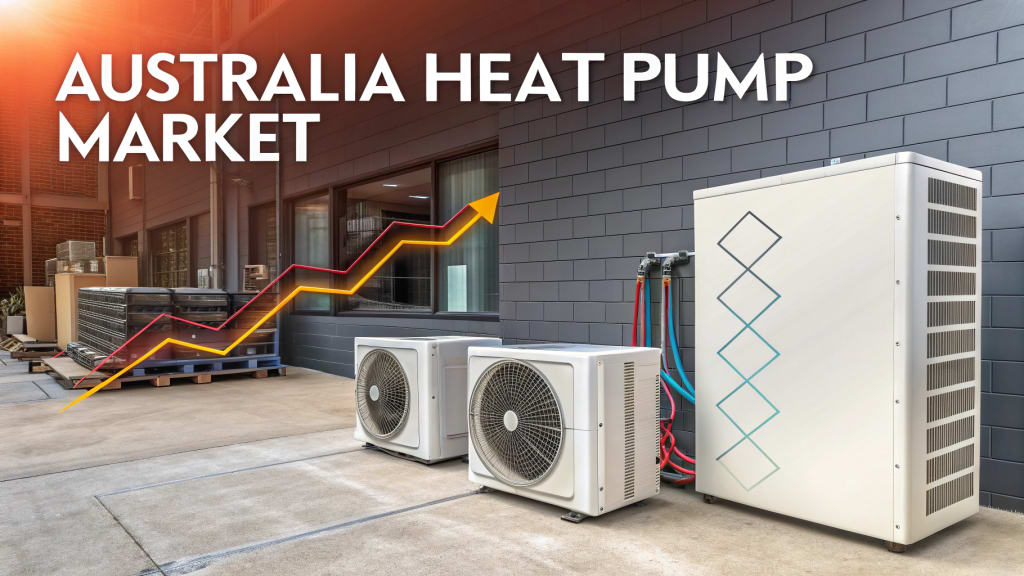
The Australia heat pump market reached a valuation of approximately USD 1,284 million in 2024 as households and businesses increasingly adopt energy efficient thermal management systems over conventional electric or fossil fuel based units. Over the next decade, this market is projected to grow to USD 2,603.31 million by 2033, expanding at a strong compound annual growth rate (CAGR) of 8.17 percent during 2025–2033.
Heat pumps — devices that transfer heat rather than generate it — are emerging as key solutions in Australia’s efforts to reduce greenhouse gas emissions and cut energy costs. Their versatility for both residential and commercial applications drives demand across diverse end use sectors. According to IMARC’s market segmentation, the industry comprises rated capacity segments (up to 10 kW, 10–20 kW, 20–30 kW, above 30 kW), product types (air source, ground source, water source, exhaust air and others), and end use industries (residential, commercial, hospitality, education, retail, food and beverage, paper & pulp, chemicals and petrochemicals, and more).
Why the Market Is Growing So Rapidly
Increasing Energy Costs and Cost Efficiency Focus
Australia has experienced rising electricity prices in recent years, prompting households and commercial enterprises to seek ways to lower their energy expenditure. Heat pumps, which can deliver several units of heat energy per unit of electricity consumed, offer significantly higher efficiency compared with traditional resistive electric heating or gas systems. This cost efficiency advantage is motivating growth across multiple end uses.
Heightened Environmental and Sustainability Goals
National and sub national commitments to reduce carbon emissions are enhancing the appeal of heat pumps as a low carbon thermal technology. By substituting high emission heating systems with electric heat pumps — particularly when paired with renewable energy sources — consumers and businesses can reduce their environmental footprint, contributing toward Australia’s broader climate targets.
Government Incentives and Support
Federal and state governments in Australia are promoting energy efficient technologies through rebates, financial incentives, and performance based programs. These initiatives help offset upfront installation costs, making heat pump adoption more financially viable for both households and commercial facilities. Early adoption trends suggest that supportive frameworks will continue to expand market access and penetration.
Integration with Green Building Standards
Sustainability certification requirements and green building frameworks — such as those tied to energy efficiency ratings and environmental performance — increasingly favor technologies like heat pumps. Incorporating heat pumps in new commercial and residential construction projects helps developers achieve higher sustainability ratings, boosting adoption and long term growth.
Advancements in Technology and System Performance
Recent improvements in heat pump technologies — including smart controls, improved refrigerants, hybrid systems that integrate with solar PV, and enhanced performance in diverse climates — are contributing to broader market appeal. Higher operational reliability and reduced maintenance requirements are strengthening vendor buyer confidence in these systems.
What the Opportunities Are
1. Scale Up in Residential Retrofit Projects:
Older homes present a significant retrofit opportunity as residents look to improve energy efficiency and reduce ongoing utility costs through heat pump installations.
2. Commercial Sector Modernization:
Offices, hotels, educational institutions, and shopping centers are prioritizing energy upgrades. Heat pump solutions that offer both heating and cooling advantages can tap into this high value segment.
3. Industrial Process Heat Applications:
Industries such as food and beverage processing — where low and medium temperature heat is essential — can greatly benefit from heat pump systems, enhancing both emissions reduction and operating costs.
4. Hybrid Energy Systems Integration:
Pairing heat pumps with renewable energy generation (e.g., rooftop solar) and energy storage unlocks new value propositions in reducing peak grid demand and improving overall system efficiency.
5. Smart Control and IoT Connectivity:
Heat pump manufacturers and service providers can differentiate by embedding advanced monitoring, predictive maintenance, and smart scheduling features that reduce total cost of ownership and elevate customer experience.
6. Regional and Off Grid Market Expansion:
Remote and off grid areas in Australia often face high energy costs. Deploying autonomous systems such as heat pumps — particularly when combined with renewable generation — can unlock new demand pools.
7. Workforce Training and After Sales Services:
Establishing training programs for installation and maintenance technicians, paired with robust after sales support, can help ensure long term customer satisfaction and repeat business.
• March 2025: Several Australian states expanded their energy rebate programs to include enhanced incentives for residential heat pump installations. These expanded rebates aim to stimulate early adoption, especially in major metropolitan areas where energy costs remain high.
• June 2025 (Regulatory Action): Federal and state authorities introduced streamlined building code requirements for energy efficient heating and cooling technologies. Updates to compliance frameworks emphasize performance metrics for emissions reductions and system efficiency, lowering barriers for heat pump inclusion in new builds.
• September 2025 (Market Adoption Milestone): Industry data reported double digit year on year growth in heat pump installations across major urban centers, supported by increased consumer awareness of cost savings and environmental benefits. Installers highlighted rising demand in multi unit residential developments and commercial complexes.
Why Should You Know About the Australia Heat Pump Market?
Understanding the Australia heat pump market is crucial for investors, policymakers, and businesses navigating the energy transition. With market value projected to grow from USD 1,284 million in 2024 to USD 2,603.31 million by 2033 at an 8.17 percent CAGR, heat pumps represent a meaningful intersection of energy efficiency, emissions reduction, and cost savings.
For investors, this market offers exposure to technologies that enhance energy affordability and support decarbonization. For manufacturers and service providers, expanding product lines and service ecosystems around hybrid and connected heat pump systems creates new revenue streams. For policymakers, promoting heat pump adoption aligns with national climate goals, energy security objectives, and the modernization of building standards.
As Australia’s homes and businesses increasingly seek sustainable and efficient thermal solutions, heat pumps will play an essential role in shaping the country’s low carbon future.
About the Creator
Amélie Belle
Hi, I’m Amélie Belle—27, New York writer, lover of quiet moments and honest words. I share poetry and reflections on love, healing, and life’s small miracles. If my writing makes you feel seen, I’m exactly where I’m meant to be.
Keep reading
More stories from Amélie Belle and writers in Trader and other communities.
Australia E-Mobility Market: Driving Electrification and Sustainable Mobility
The Australia e-mobility market reached an estimated USD 1,290.91 million in 2024, marking a pivotal shift toward electrified transport solutions across passenger, commercial, and micro-mobility segments. Looking forward, the market is expected to skyrocket to USD 12,949.66 million by 2033, representing a robust compound annual growth rate (CAGR) of 29.20 percent during the 2025–2033 period. This dramatic expansion highlights Australia’s accelerating transition from traditional fossil-fuel-based vehicles to electrified mobility options driven by sustainability goals, government policy, and evolving consumer demand.
By Amélie Belleabout 6 hours ago in Trader
The Cave Part 6
If you have ever heard a tale about yourself that you cannot remember and doubtless think is made up, you will know how I felt when Tharkin related all that the eagle had seen of me before my memories were scattered. Of far distances and traveling companions that I did not recall, camping out under the stars and making our way to the mountains with deliberate purpose. The great bird had lost contact with my party once we entered the forests, and the seven other members were not seen again by him or his brethren since.
By Jamye Sharp8 days ago in Chapters


Comments
There are no comments for this story
Be the first to respond and start the conversation.