
Australia Facade Market: Growing Demand for Sustainable & Smart Building Envelopes
Driven by energy-efficiency goals, modern architecture trends, and rapid construction activity, the Australia facade market is projected to nearly double by the end of the decade.

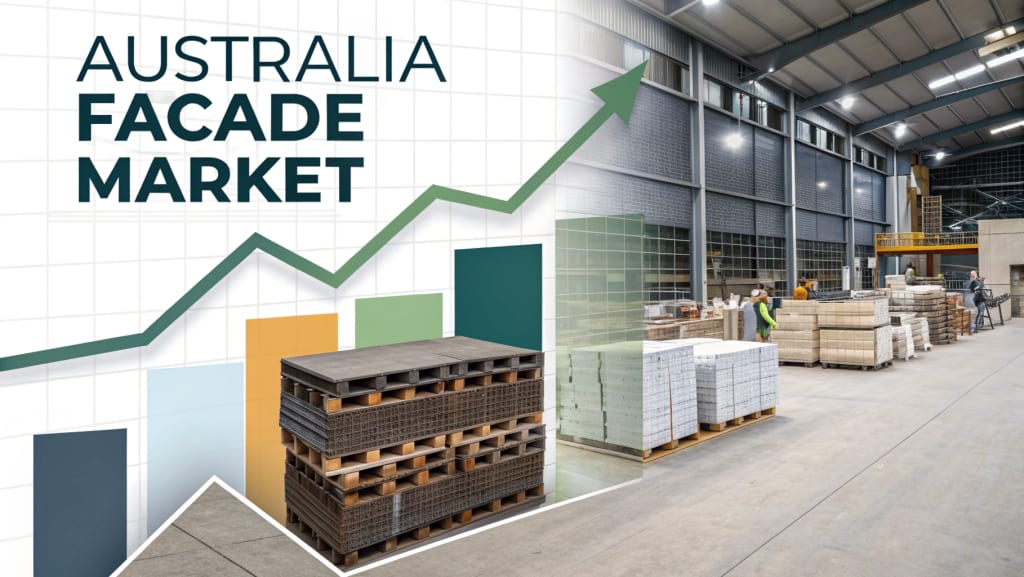
The Australia Facade Market has been expanding significantly as developers and designers increasingly prioritise performance, aesthetics, and sustainability in building exteriors. According to the latest IMARC Group analysis, the market reached USD 5.8 billion in 2024 and is expected to grow to USD 10.4 billion by 2033, exhibiting a compound annual growth rate (CAGR) of 6.59% during 2025–2033.
This growth reflects the broader evolution in Australia’s construction sector — where facades are no longer just exterior finishes, but critical components that contribute to energy performance, occupant comfort, and architectural identity. Enhanced material technologies, sustainability mandates, and rising investment in urban development have all strengthened demand for advanced facade solutions across commercial, residential, and industrial infrastructure.
The Australia facade market’s expansion is supported by shifting design norms toward lightweight systems, modular assemblies, and high-performance envelopes that address insulation, climate control, and environmental impact. With regulatory frameworks increasingly aligning with net-zero targets, facades are becoming integral to long-term building value and sustainability metrics.
Why the Market Is Growing So Rapidly
1. Sustainability and Energy Efficiency Priorities
Australian developers are increasingly integrating energy-efficient facade systems to meet both green building codes and consumer expectations. Facades that deliver thermal insulation, solar shading, and airtight performance help reduce HVAC loads and lower operational costs — outcomes that align with national sustainability frameworks and grow the overall appeal of high-performance envelopes.
2. Modern Architectural Trends
Contemporary architectural aesthetics are influencing facade choices across the built environment. Sleek glass systems, metal cladding, and innovative ventilated facades are being adopted not only for performance but for visual distinction in skyscrapers, residential towers, institutional buildings, and mixed-use developments.
3. Regulatory Support and Green Building Codes
Building standards such as Green Star, NABERS, and National Construction Code (NCC) increasingly feature facade energy performance criteria, pushing investment toward compliant materials and systems. This regulatory encouragement ensures that facade technology remains central in design and construction strategy.
4. Growth in Construction and Urban Expansion
Australia’s major cities — from Sydney and Melbourne to Brisbane and Perth — continue to see strong real estate development pipelines. Commercial office spaces, residential towers, and urban infrastructure projects all demand robust facade solutions, extending market reach across varied end-use segments.
5. Advances in Materials and Smart Technologies
Lightweight materials like aluminium, high-performance glass, plastic composites, and fibre systems are gaining traction for their ease of installation, durability, and aesthetic flexibility. At the same time, smart facades embedded with sensors and dynamic controls are emerging as solutions that respond to environmental conditions, further elevating performance and design capability.
What the Opportunities Are
1. Energy-Efficient Facade Systems
There is strong opportunity for innovators in high-insulation, low-energy facade designs that can demonstrate proven energy savings and thermal performance benefits for developers and owners.
2. Lightweight and Modular Facade Materials
Suppliers of lightweight, prefabricated facades — including aluminium composites, fibre cement, and engineered panels — can capture demand from builders seeking faster installation and reduced structural load.
3. Smart Facade Technologies
Systems that integrate sensors, IoT connectivity, and responsive shading can unlock new value in building management, occupant comfort, and sustainability reporting — positioning facade solutions as smart building components.
4. Retrofit and Recladding Solutions
Older building stock presents a compelling market for retrofitting and recladding with modern facades, improving energy efficiency and aesthetics without full demolition — a cost-effective value proposition for property owners.
5. Commercial High-Rise Development
Demand for advanced facade systems in commercial skyscrapers, hotels, and retail spaces remains robust, offering opportunities for premium solutions that balance performance with architectural flair.
6. Regional Growth Across Australia
While major urban centres dominate current demand, emerging growth corridors in Queensland, Western Australia, and other regional markets are amplifying construction activity and facade needs.
7. Integration with Sustainability Incentives
Facade providers who align with sustainability certifications and government incentive programmes — particularly those tied to net-zero goals — can differentiate themselves and attract environmentally conscious clients.
• March 2025: Government Action: The Australian Building Codes Board updated facade energy performance requirements under the National Construction Code to tighten thermal efficiency standards for all new commercial and residential buildings. This regulatory move is expected to boost demand for high-performance facade systems that contribute to lower operational emissions and improved occupant comfort.
• July 2025: Company Expansion: Design Facade Technologies Pty Ltd announced an expansion of its manufacturing facility in Melbourne, adding automated production lines for ventilated and dynamic facade panels. The expansion is backed by a A$45 million investment and is set to increase the company’s output capacity by 40 %, helping meet rising demand from large-scale urban development projects.
• October 2025: Market Adoption Milestone: Industry data revealed that uptake of ventilated facade systems in commercial and mixed-use developments rose by over 12 % year-over-year, driven by performance benchmarks and sustainability compliance pressures. This adoption surge underscores shifting preferences toward advanced facade technologies in Australia’s urban core.
Why Should You Know About the Australia Facade Market?
The Australia facade market represents a critical intersection of design excellence, sustainability ambition, and construction innovation. For investors, the sector offers clear growth trajectories backed by strong construction pipelines, regulatory tailwinds, and performance-driven demand. For manufacturers and suppliers, opportunities abound in advanced materials, modular systems, and smart facade offerings that can differentiate product portfolios. And for policy makers, understanding facade trends is key to shaping building standards that balance energy efficiency, safety, and aesthetic quality across urban environments. As urbanisation continues and sustainability goals deepen, facades will remain central to the evolution of Australia’s built environment — driving both economic and environmental value.
About the Creator
Amélie Belle
Hi, I’m Amélie Belle—27, New York writer, lover of quiet moments and honest words. I share poetry and reflections on love, healing, and life’s small miracles. If my writing makes you feel seen, I’m exactly where I’m meant to be.
Keep reading
More stories from Amélie Belle and writers in Trader and other communities.
Australia Healthcare Asset Management Market Set to More Than Double by 2034 on Tech-Driven Efficiency Gains
In 2025, the Australia healthcare asset management market reached approximately USD 550.3 million and is forecast to grow to USD 1,277.6 million by 2034, expanding at a compound annual growth rate (CAGR) of 9.81% from 2026 through 2034. This robust growth underscores the increasing emphasis by healthcare providers on technology-led asset tracking, improved patient safety, cost reduction and compliance adherence — all supported by sophisticated systems that manage equipment, inventory and critical resources in real time.
By Amélie Belle4 days ago in Trader
Taiwan Air Freight Market Size, Share, Trends, Industry Analysis, Report to 2033
Market Overview The Taiwan air freight market plays a crucial role in supporting the island’s export-driven economy. As one of Asia’s major technology manufacturing hubs, Taiwan relies heavily on efficient logistics networks to transport high-value goods such as semiconductors, electronics, and precision components. Air freight offers speed, reliability, and security, making it an essential transportation method for time-sensitive shipments.
By Jackson Watson5 days ago in Trader



Comments
There are no comments for this story
Be the first to respond and start the conversation.