Lifestyle
For the lives that we love, and everything that comes with it.












Cute Femboy Outfits
Femboy fashion is a celebration of blending traditionally feminine aesthetics with personal expression, creating looks that are soft, playful, and uniquely confident. "Cute" in this context often means embracing pastels, delicate details, comfortable textures, and silhouettes that feel both joyful and authentic. If you're looking to build or refresh your wardrobe with cute femboy outfits, this guide will walk you through the essential pieces and styling principles.
By David Femboy11 days ago in Pride
Assisted Living vs. Memory Care: Comparing Levels of Care Side by Side
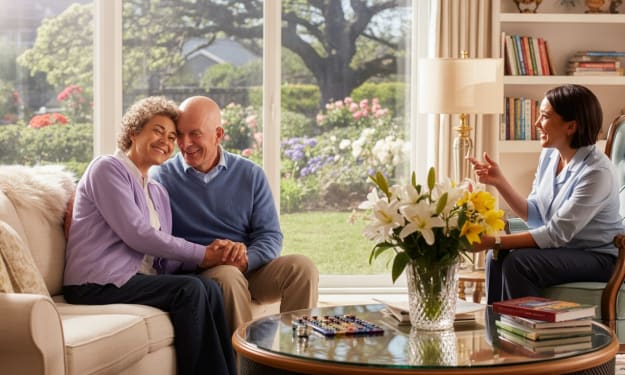
Picking the right spot for a loved one who's getting older can be a real headache. Assisted living and memory care both help out with everyday stuff, but they're not the same—especially when you look at the levels of care in assisted living compared to memory care's special setup. If it's for your mom or dad facing age-related changes or something like dementia, getting the differences straight makes everything less stressful. Let's lay it out side by side: what they offer day-to-day, safety measures, fun activities, and the price tag.
By Patrica Overton11 days ago in Families
Genderfluid Flag
The Genderfluid Pride Flag is a vibrant and meaningful banner that represents individuals whose gender identity is not fixed, but rather changes or fluctuates over time. Created by JJ Poole (also known as Marilyn Roxie) in 2012, the flag was designed to give visibility and a cohesive symbol to the genderfluid community, distinguishing it from the broader genderqueer or non-binary umbrellas.
By David Femboy11 days ago in Pride
What Is A Demiboy
In the diverse and nuanced landscape of gender identity, where many seek language more precise than the broad categories of "man" or "non-binary," the term demiboy offers a vital point of clarity. A demiboy (also known as demiguy, demiman, or demi-male) is a person whose gender identity is partially, but not wholly, male or masculine.
By David Femboy11 days ago in Pride
Xenogender
In the ever-expanding universe of gender identity, where language strives to capture the profound nuances of human experience, xenogender emerges as one of the most innovative and poetic concepts. Xenogender is an umbrella term for non-binary gender identities that are defined in ways that go beyond the typical understanding of gender in relation to "male," "female," androgyny, or neutrality. Instead, xenogender individuals understand and describe their gender through concepts, metaphors, and ideas that are not inherently linked to human sexes or traditional gender roles.
By David Femboy11 days ago in Pride
What Is Pangender
In the vibrant and evolving landscape of gender identity, where language continually expands to better describe human experience, the term pangender has emerged as a powerful and inclusive identity. Pangender describes a person whose gender identity encompasses, or is experienced as, all genders. The prefix "pan-" derives from Greek, meaning "all," "every," or "involving all." Therefore, a pangender individual feels a connection to the totality of the gender spectrum.
By David Femboy11 days ago in Pride
How Long Does It Take to Put in Extensions. AI-Generated.
The Clock of Beauty: How Long Does It Really Take to Get Hair Extensions? In the modern world of high-fashion aesthetics, long, voluminous hair is no longer a prize reserved for those with the patience to wait years for natural growth. Hair extensions have revolutionized the beauty industry, offering a "shortcut" to glamour. However, for most consumers, the most pressing logistical question before booking an appointment or hitting "buy" is: How long is this going to take?
By Alex Morgan11 days ago in Blush
When Family Fights
Growing up, I often found myself caught in the middle of family conflicts. My parents had their share of disagreements, and as a child, I never fully understood why these arguments kept occurring. There were times when I wished for nothing more than to escape, to find peace away from the shouting and tension that seemed to consume our home. But as I grew older, I began to realize that these experiences, though painful, were shaping who I was becoming. In my early childhood, I would often hide in my room, trying to block out the sounds of raised voices. It felt like my entire world was spinning out of control. I loved both of my parents deeply, but watching them fight left me feeling torn. I had no idea how to fix things, and no one ever explained to me what was really happening. The confusion and hurt lingered, and I carried that weight with me every day. However, over time, I started to notice the way my parents would act after their arguments. There were moments of quiet reflection and, occasionally, a heartfelt apology. They would sit down together, discuss what went wrong, and work towards finding a solution. Slowly, I began to understand that conflict was not necessarily a bad thing—it was how it was resolved that mattered. One pivotal moment stands out in my memory. I was about ten years old, and my parents were having another argument. This time, instead of retreating to my room, I stayed in the living room, watching them from the corner of the room. As they argued, something shifted. My father, usually the more outspoken one, paused and looked at my mother. “I’m sorry,” he said softly, his voice filled with sincerity. “I didn’t mean to hurt you. Can we talk about this?” It was the first time I saw my father admit he was wrong. It was the first time I saw him vulnerable. My mother, who had been upset, took a deep breath and nodded. They began to talk calmly, working through their differences. Watching them communicate in such a mature and respectful way left a lasting impression on me. It showed me that even in moments of conflict, it was possible to find resolution through understanding and empathy. As I grew older, I learned that family fights weren’t necessarily a sign of failure. They were an opportunity for growth. Every disagreement, every misunderstanding, had the potential to teach us something valuable. I began to see my parents as human beings, not just authority figures, and I understood that they, too, were navigating the complexities of life just like I was. I also realized that family fights were a reflection of love, in a way. When we care deeply about someone, we argue with them. We disagree because we want what’s best, and sometimes that leads to tension. But it’s in the aftermath of those fights that we learn the most about each other and about ourselves. The willingness to apologize, to forgive, and to move forward is what truly strengthens a family bond. As I entered my teenage years, I found myself in the midst of my own conflicts with my parents. I began to question everything—why did they always seem so strict? Why didn’t they understand me? It was during one particularly heated argument that I realized the cycle of conflict and resolution had come full circle. I wasn’t a child anymore, but a young adult, capable of making my own choices and forming my own opinions. I, too, had to learn the importance of communication, compromise, and forgiveness. That realization didn’t come easily, but it was a turning point in my relationship with my parents. I started to communicate more openly with them, expressing my thoughts and feelings in a way I never had before. And, in turn, they began to listen. It wasn’t always perfect, but the foundation of trust and understanding we had built over the years was strong enough to weather the storms that came our way. Now, as an adult, I look back on those family fights with a sense of gratitude. I may not have understood them at the time, but they played a crucial role in shaping my understanding of relationships. They taught me that conflict is inevitable, but resolution is a choice. They taught me that love is not about perfection; it’s about being able to navigate the ups and downs together. And they taught me that, in the end, it’s not the fights that matter—it’s how we come together afterward that defines us. In my own relationships now, I find myself applying the lessons I learned from my parents. When disagreements arise, I remind myself that they are an opportunity to grow, to understand the other person better, and to strengthen the bond we share. I no longer fear conflict, because I know it’s a natural part of life. What matters is how we choose to handle it. And so, looking back, I can see how those family fights shaped my childhood and helped me become the person I am today. They taught me resilience, communication, and the importance of love and forgiveness. The lessons I learned in those difficult moments have guided me through life’s challenges, and for that, I am truly grateful.
By Gowhar ali Khan11 days ago in Families