
YASAR Heroes: The IDF Unit That Found and Identified Ran Gvili
Inside the elite Israeli search-and-rescue team whose mission brought answers amid national grief

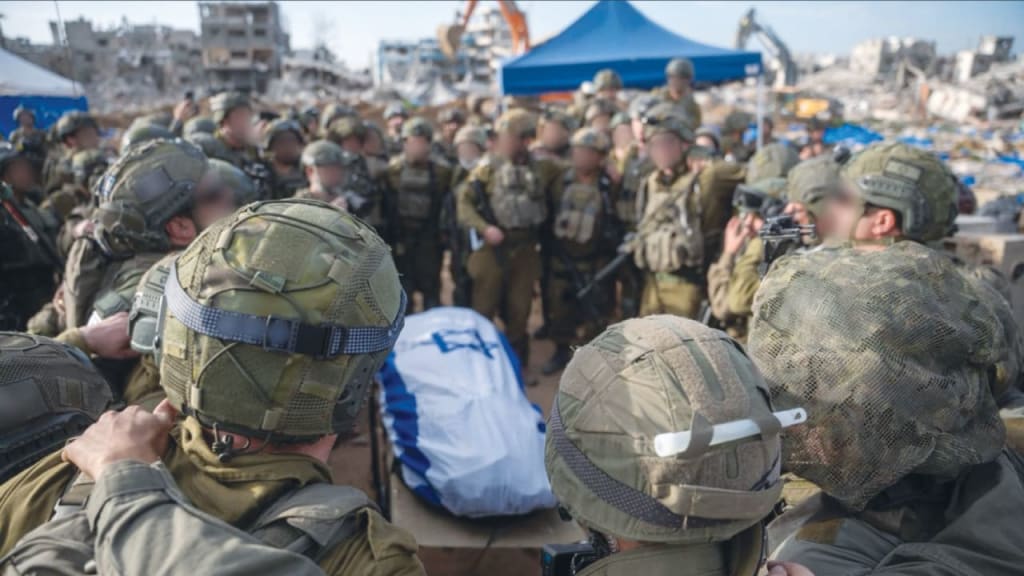
In times of war and national tragedy, some of the most critical work happens far from the battlefield spotlight. One such effort was carried out by YASAR, the Israel Defense Forces’ elite search-and-rescue identification unit, whose mission led to the discovery and identification of Ran Gvili, an Israeli citizen whose fate remained unknown for months.
The operation underscored not only the technical capabilities of the YASAR unit but also its humanitarian role — providing certainty, closure, and dignity in circumstances defined by chaos and loss.
Who Was Ran Gvili?
Ran Gvili was among those reported missing following the October 7 attacks, when widespread violence and abductions left Israeli authorities struggling to determine the fate of many individuals. As days turned into weeks, Gvili’s status remained unresolved, placing him among the growing list of missing persons whose families lived in painful uncertainty.
For families of the missing, not knowing is often more devastating than receiving tragic confirmation. Identifying remains, confirming deaths, and providing verified information becomes a moral obligation as much as a military task — one that falls to specialized units like YASAR.
What Is the YASAR Unit?
YASAR is an elite IDF search, recovery, and identification unit, trained to operate in the most complex and dangerous environments. Its missions include:
Locating missing or fallen individuals
Recovering remains from combat zones
Conducting forensic identification
Coordinating with medical and intelligence branches
Unlike frontline combat units, YASAR operates at the intersection of military precision, forensic science, and humanitarian responsibility. Its personnel include specialists trained in navigation, engineering, intelligence analysis, and forensic recovery.
Their work is rarely publicized, yet it is essential to maintaining trust between the state, the military, and civilians affected by war.
The Mission to Find Ran Gvili
The operation that led to the discovery of Ran Gvili was the result of months of intelligence gathering, battlefield analysis, and coordinated efforts across multiple IDF branches. YASAR teams worked with fragmented data — surveillance materials, battlefield reports, and recovered evidence — to narrow down potential locations.
Operating in hostile and unstable areas, the unit faced constant risks. Terrain conditions, unexploded ordnance, and ongoing conflict made every step of the mission dangerous. Despite this, YASAR personnel continued their work with methodical discipline.
When remains believed to belong to Gvili were located, the process shifted from search to forensic identification, a painstaking procedure requiring absolute certainty before notifying family members.
The Importance of Identification in War
Identifying fallen individuals is not merely an administrative process — it carries deep ethical, religious, and emotional significance.
In Israeli society, where military service is universal and deeply personal, confirming the fate of the missing is a national priority. Proper identification allows:
Families to mourn and grieve with certainty
Religious burial rites to be performed correctly
Historical records to remain accurate
The state to fulfill its moral obligation to its citizens
YASAR’s work ensures that even amid large-scale conflict, individual lives are not reduced to statistics.
The Human Side of YASAR’s Work
Members of YASAR operate under intense emotional pressure. Unlike combat soldiers who engage the enemy, YASAR personnel often encounter the aftermath — destruction, loss, and grief. They work knowing that behind every mission is a waiting family.
According to military sources, YASAR teams receive psychological training to cope with repeated exposure to traumatic scenes. Still, the burden is heavy. Many describe their motivation as a sense of duty to the families rather than to military objectives alone.
The identification of Ran Gvili brought closure to his loved ones, but it also marked the end of a mission that carried emotional weight for those who carried it out.
A Symbol of Commitment Beyond Combat
The story of YASAR and Ran Gvili highlights a lesser-known dimension of modern warfare — the responsibility to account for every individual, even when the battlefield is unforgiving.
While public attention often focuses on combat operations, elite recovery units like YASAR represent a quieter form of heroism. Their work does not aim to defeat an enemy, but to restore dignity, truth, and humanity in the aftermath of violence.
Why This Story Resonates
The identification of Ran Gvili resonated across Israel because it reflected a collective promise: no one is forgotten. In a time of national trauma, YASAR’s mission served as a reminder that behind every uniform and every name is a human story deserving respect.
As conflicts continue to evolve, the role of units like YASAR will remain essential — not only for military accountability, but for preserving the moral fabric of societies shaped by war.
Conclusion
The YASAR unit’s role in finding and identifying Ran Gvili exemplifies courage of a different kind — one rooted in persistence, compassion, and responsibility. Their work brought painful truth, but also certainty, allowing a family and a nation to take the next step forward.
In war, victories are often measured in territory and strategy. YASAR reminds us that sometimes, the most meaningful victories are measured in answers, closure, and dignity.
About the Creator
Asad Ali
I'm Asad Ali, a passionate blogger with 3 years of experience creating engaging and informative content across various niches. I specialize in crafting SEO-friendly articles that drive traffic and deliver value to readers.
Trump Criticized Rep. Ilhan Omar in Iowa Hours Before a Man Sprayed Substance on Her in Minneapolis
Verbal attacks in political rallies and real‑world violence raise concerns about rhetoric and safety for public officials, as Minnesota lawmaker sprayed with unknown liquid at town hall
By Salaar Jamali6 days ago in The Swamp
A Love Forboding
The chipped stone slope caused unbearable footing. I slid, skirting on my heels. I cast my shield, relinquishing my guard to stay upright. Left with my double-edge and a prayer to the maker, I skated toward my objective. The earthly stubble gave way to solid ground. I found myself restored, a trail of dust in my wake.
By James U. Rizzi3 days ago in Fiction



Comments
There are no comments for this story
Be the first to respond and start the conversation.