
Houston Runoff Sets Up Next Democratic Generational Fight
A pivotal election that could redefine Democratic leadership in one of America’s most influential urban districts


The upcoming runoff election in Houston’s 18th Congressional District is shaping up to be far more than a routine political contest. While voters will technically be choosing a representative to fill a long-vacant U.S. House seat, the race has evolved into a symbolic generational struggle within the Democratic Party. The outcome may signal where Democratic voters stand on leadership, experience, and the future direction of the party in Texas and beyond.
Houston’s runoff has drawn national attention because it reflects broader debates playing out across the Democratic landscape: Should the party lean into younger, confrontational leadership styles, or rely on seasoned figures with deep institutional knowledge?
Why the Houston Runoff Matters
Texas’ 18th Congressional District has a long and influential political history. It was once represented by trailblazing leaders such as Barbara Jordan and, more recently, the late Sheila Jackson Lee. The seat became vacant after a rare and tragic sequence of events, including the passing of two prominent Democratic leaders within a short period. As a result, the district has gone without representation for months, intensifying pressure on state officials to resolve the vacancy.
The runoff election comes after a crowded initial contest where no candidate secured a majority. Now, two Democrats remain, each offering voters a different vision of leadership — and a different interpretation of what the Democratic Party should look like in the years ahead.
The Candidates: Two Paths Forward
The runoff features Christian Menefee and Amanda Edwards, both accomplished Democrats but with contrasting political styles and trajectories.
Christian Menefee: A New-Generation Challenger
At 37, Christian Menefee represents a rising generation of Democratic leaders. As Harris County Attorney, he has gained statewide visibility by challenging Republican policies in court, particularly on voting access, public health measures, and state oversight of local governments.
Menefee’s campaign emphasizes bold action, generational change, and a willingness to confront entrenched power structures. His messaging resonates strongly with younger voters and progressive activists who believe Democrats need sharper strategies and more aggressive leadership to counter Republican dominance in Texas.
Amanda Edwards: Experience and Stability
Amanda Edwards, 44, brings a background rooted in local governance. A former Houston City Council member and attorney, she has built her career around infrastructure development, economic growth, and community-level policymaking.
Edwards has run for higher office before, including a U.S. Senate bid, and her supporters view her as a steady, experienced leader who understands the complexities of governing a major metropolitan area. Her campaign appeals to voters who prioritize experience, coalition-building, and pragmatic leadership over generational branding.
A Broader Generational Divide in the Democratic Party
The Houston runoff highlights a debate that Democrats nationwide are increasingly facing: experience versus renewal. While both candidates are relatively young compared to longtime incumbents, the race is unfolding against the backdrop of veteran Democratic figures who continue to wield influence.
One such figure is Rep. Al Green, a long-serving Democrat who plans to seek a full term in the district once the runoff concludes. His presence underscores the generational contrast — younger candidates aiming to reshape Democratic leadership versus seasoned lawmakers who argue that longevity brings effectiveness and influence in Washington.
This dynamic mirrors similar tensions in cities like New York, Chicago, and Los Angeles, where younger Democrats are challenging established party hierarchies and redefining political engagement.
Redistricting and Political Strategy
Adding complexity to the race is Texas’ recent congressional redistricting. While the 18th District remains safely Democratic, boundary changes have altered voter demographics and campaign strategies. Candidates must now appeal to a slightly different electorate, making grassroots outreach and voter mobilization more critical than ever.
Runoff elections historically attract lower turnout, meaning organizational strength and voter engagement efforts could ultimately decide the race. Both campaigns are working to energize voters who may feel fatigued by prolonged election timelines or frustrated by earlier delays.
Voting Access and Public Trust
The election process itself has faced challenges. Severe weather disruptions and limited early voting access have raised concerns among civil rights advocates and community leaders. These obstacles have reignited debates over voting rights in Texas, particularly in urban districts with diverse populations.
For many voters, the runoff is not only about choosing a representative but also about asserting their right to be heard in a system they feel often works against them.
What the Outcome Could Signal
The winner of the Houston runoff will temporarily fill the congressional seat, but the political implications extend far beyond a single term. The result may offer insight into how Democratic voters view generational leadership, activism, and institutional experience.
A victory by a younger, more confrontational candidate could signal a growing appetite for change and sharper political tactics. A win by a more experienced, establishment-aligned figure might suggest that voters still value stability and proven governance during uncertain times.
Conclusion: A Bellwether Race for Democrats
The Houston runoff is more than a local election — it’s a test case for the Democratic Party’s future. As voters choose between two capable candidates, they are also weighing broader questions about leadership, representation, and political strategy.
In a district with a rich civil rights legacy and national significance, the decision made at the ballot box could echo far beyond Houston, shaping Democratic politics for years to come.
About the Creator
Asad Ali
I'm Asad Ali, a passionate blogger with 3 years of experience creating engaging and informative content across various niches. I specialize in crafting SEO-friendly articles that drive traffic and deliver value to readers.
Kingspan Wins Historic State Support for €280m Kyiv Factory
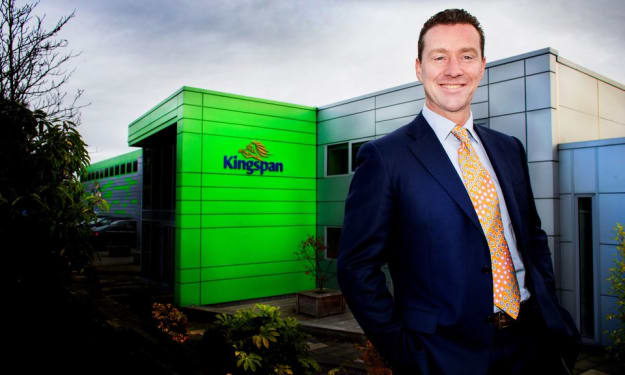
Irish building materials giant Kingspan Group has secured a landmark investment agreement with Ukrainian authorities to build a €280 million manufacturing campus near Lviv, marking the first time a foreign company has won dedicated state support under Ukraine’s new investment incentive framework. The project underscores both Ukraine’s efforts to attract foreign capital amid ongoing conflict and the determination of international firms to help rebuild the country’s economy and infrastructure. independent.ie +1 The new facility, which will manufacture energy-efficient insulation and advanced construction materials, is expected to create more than 700 jobs and play a key role in Ukraine’s reconstruction efforts, particularly in the building and energy sectors. k-online.com A Vote of Confidence in Ukraine’s Future The decision by Kingspan, a global leader in high-performance building solutions, to move forward with the €280 million investment is seen as a historic milestone. It comes under Ukraine’s blueprint for state support of “significant investment projects,” designed to encourage international business involvement despite Russia’s ongoing war, economic disruption, and the risks of operating in a conflict-affected region. independent.ie “Ukraine’s ability to attract a foreign investment of this scale — and to do so with the active support of state agencies — shows the country remains open for business,” said a senior UkraineInvest official, referring to the government body that worked with Kingspan to facilitate permits, regulatory engagement and strategic planning. UkraineInvest Officials from the Ministry of Economy of Ukraine and Lviv regional authorities have praised the company’s commitment, saying the factory will not only bolster local employment but also strengthen domestic industrial capacity at a time when relying on imported construction materials is both costly and strategically vulnerable. Jobs, Technology and Reconstruction Construction of the campus has already begun, with preparatory groundwork and site development underway. Once fully operational — the majority of the complex is expected to be built within the next five years — Kingspan’s facility will produce insulation products and district heating solutions that are vital to energy-efficient buildings. k-online.com These fields are particularly important given Ukraine’s focus on rebuilding cities, homes, public buildings and infrastructure damaged or destroyed during the war. Energy efficiency remains a top priority for reconstruction, as Ukraine seeks to modernize its building stock and reduce dependence on imported energy sources. Industry data suggests that widespread production of local construction materials could also help Ukraine produce up to 90% of what it needs for reconstruction, if foreign and domestic investment continues to flow. odessa-journal.com The Lviv site is being developed with low-carbon and renewable energy technologies in mind. Kingspan has positioned the campus as an example of sustainable industrial design, aligning with the company’s global strategy to reduce carbon emissions and promote environmentally friendly building solutions. k-online.com Historical Commitment Amid Conflict Kingspan first announced plans for a major Ukrainian investment in mid-2022, shortly after Russia’s full-scale invasion, making it one of the early major commitments by a Western firm since the war began. At that time, the €280 million project — initially described as a state-of-the-art building technology campus — was seen as a bold signal of confidence in Ukraine’s long-term prospects. cdnc.heyzine.com The company’s efforts have unfolded despite continuing military threats and challenging logistics. Lviv, in western Ukraine, is comparatively distant from active frontlines but has nonetheless experienced missile attacks and disruptions. Still, Kingspan leaders and Ukrainian partners say the investment reflects projected demand for materials tied to internal rebuilding and broader European interest in sustainable construction. globalinsulation.com Public and Business Reaction In Kyiv and Lviv, the state support deal has been welcomed by business groups as evidence that Ukraine can still attract foreign direct investment during wartime. Analysts note that having a multinational company like Kingspan establish a manufacturing base could encourage other businesses to consider similar commitments. “The psychological and economic impact of this project is significant,” noted an investment expert. “It shows Ukraine can provide both policy incentives and operational support to make large-scale investments viable.” The expert added that those benefits will be closely watched by other foreign investors assessing long-term opportunities in the region.
By Fiaz Ahmed a day ago in The Swamp
Live: Blast in Iran’s Bandar Abbas caused by gas leak, fire chief says
A powerful explosion rocked the southern Iranian port city of Bandar Abbas on Saturday, according to local officials, with preliminary investigations pointing to a gas leak as the cause of the blast, the city’s fire chief said. The incident has resulted in casualties, structural damage, and heightened tension amid ongoing geopolitical sensitivities in the region. Reuters +1 Explosion Rocks Strategic Port City The blast occurred in a residential building in the strategically important port city of Bandar Abbas, located along the Gulf coast near the Strait of Hormuz — one of the world’s most vital maritime shipping lanes. The local fire department chief, Mohammad Amin Lyaghat, told state media that a buildup of gas led to the explosion, but investigations are still underway to confirm the exact details. � LBCIV7 According to Iranian reports, at least one person was killed and 14 others were injured in the blast, with emergency services rushing the wounded to nearby hospitals. State authorities denied social media speculation that the explosion targeted a military figure or was related to any security incident. � Reuters What Happened in Bandar Abbas? Eyewitnesses described chaotic scenes as smoke and debris filled the air following the explosion. The building’s facade was damaged, vehicles nearby were affected, and emergency crews worked to secure the area. Initial assessments suggest that the blast occurred in a multi-story residential complex, but authorities have not yet ruled out other contributory factors. � L'Orient Today The announcement that the blast was caused by a gas leak aligns with official comments from local authorities, but analysts note that inquiries are continuing. This is standard procedure in incidents of this nature, particularly in regions with older infrastructure or limited safeguards in residential gas systems. Casualties and Immediate Response Officials confirmed that at least one fatality and numerous injuries were linked to the explosion, prompting widespread emergency response. Firefighters, paramedics, and police secured the site, evacuated residents from surrounding buildings, and began preliminary rescue and recovery operations. Reuters The injured include civilians of various ages, with several in serious condition. Hospitals around Bandar Abbas have reported receiving multiple patients requiring urgent care, although officials have not yet provided a complete breakdown of the casualties. Infrastructure and Economic Impact Bandar Abbas serves as a crucial hub for Iran’s maritime trade. Beyond its residential areas, the city hosts commercial port facilities, customs operations, and logistics infrastructure supporting international shipping. Any disruption here can have ripple effects on both domestic supply chains and foreign commerce that passes through the Strait of Hormuz. L'Orient Today While authorities stress that port operations and critical services are continuing without major interruption, there is concern about the stability of infrastructure near the blast site. Local officials are conducting safety inspections on nearby buildings and utility lines to prevent secondary incidents. Broader Context The explosion occurred at a time of heightened regional tensions, with diplomatic relations between Iran and several global powers under strain due to geopolitical disputes in the Middle East. Although Iranian officials have dismissed rumors of an attack, saying the blast resulted from a gas leak, some analysts caution that speculation continues on social media. Hindustan Times A separate gas-related explosion in another Iranian city, Ahvaz, earlier on the same day reportedly killed four people, underlining the risks associated with ing gas infrastructure in multiple locations across the country. Anadolu Ajansı Public Reaction and Safety Concerns Residents of Bandar Abbas expressed shock and concern after the blast. Many took to social media to share images and accounts of the explosion’s immediate aftermath, including videos of smoke plumes rising above the city skyline. Some commenters emphasized fears about gas safety and called for better infrastructure maintenance, while others echoed official denials of any malicious intent. Concerns about routine gas leaks and building safety are particularly acute in regions with older pipelines or limited regulatory oversight. Past incidents in Iran and elsewhere have demonstrated that gas leaks can be deadly when preventive measures are insufficient, and public pressure is mounting for improved safety standards. Investigations Underway Iranian authorities have launched an official investigation to analyze the cause of the blast, secure the site, and prevent potential future incidents. The fire department and crisis management teams are involved in assessing both structural damage and gas system integrity. As with many industrial and residential disasters, investigators are expected to review maintenance records, witness statements, and technical evidence from the site to better understand what triggered the gas buildup. The findings will determine whether the explosion was purely accidental or exacerbated by human error or infrastructure decay. Looking Ahead The blast in Bandar Abbas serves as a stark reminder of the dangers posed by gas leaks and aging infrastructure in densely populated urban areas. As authorities continue their inquiry, residents and policymakers alike are calling for stronger safety measures and preventive strategies. The incident highlights the dual challenges faced by cities like Bandar Abbas — maintaining vital economic activity through port operations while ensuring the safety and well-being of local communities. As families recover and rebuild, the emphasis on accountability, safety reforms, and emergency preparedness will remain central issues in the region.
By Fiaz Ahmed 3 days ago in The Swamp



Comments
There are no comments for this story
Be the first to respond and start the conversation.