trade
How will free-trade fare under the Trump administration? Trade thoughts and opinion about negotiations, embargo, what works and what doesn't..
Ex-Google Engineer Convicted for Stealing AI Secrets for China-Linked Startup. AI-Generated.
In a landmark case that underscores the rising stakes of global competition in artificial intelligence, a federal jury in San Francisco has convicted a former Google engineer of economic espionage and theft of trade secrets in a case prosecutors say was intended to benefit China-linked technology ventures. � justice.gov The conviction marks one of the most serious U.S. legal actions involving economic espionage tied to cutting-edge AI technologies and highlights how intellectual property theft is increasingly seen not just as a corporate problem, but as a national security threat. � The Times of India +1 The Verdict and the Charges On January 30, 2026, a federal jury convicted Linwei Ding, also known as Leon Ding, a 38-year-old former software engineer at Google, on 14 federal counts—seven for economic espionage and seven for theft of trade secrets. � justice.gov The conviction came after an 11-day trial before U.S. District Judge Vince Chhabria in the Northern District of California. � It represents a rare and significant application of U.S. laws aimed at protecting advanced technological innovation from exploitation by foreign entities. Reuters Prosecutors showed that Ding accessed and stole thousands of pages of confidential Google documents between May 2022 and April 2023, uploading them to his personal Google Cloud account without authorization. � justice.gov According to U.S. authorities, the stolen materials included highly sensitive information about Google’s artificial intelligence infrastructure, including hardware and software used to train and operate large AI models. � justice.gov What Was Stolen: The Heart of AI Infrastructure The documents Ding stole weren’t generic files—they contained secret designs and technical specifications that give companies a competitive edge in the global race for AI supremacy. � fintool.com According to prosecutors: The stolen materials included architecture and designs for Google’s custom Tensor Processing Unit chips (TPUs)—specialized processors that accelerate AI workloads. � justice.gov They also covered Graphics Processing Unit (GPU) systems, which are essential for training complex machine learning models. � justice.gov The theft included proprietary cluster management software that orchestrates thousands of chips in Google’s AI supercomputers. � fintool.com “SmartNIC” network interface card technology—critical for high-speed data transfer within AI servers—was also part of the stolen data. � fintool.com These elements are widely considered the “crown jewels” of AI infrastructure—tools that help companies train, deploy, and scale powerful machine-learning systems. � fintool.com How the Theft Unfolded Evidence from the trial detailed a sophisticated plot that took place over almost a year: Ding began working at Google in May 2022, where he had access to confidential systems. � justice.gov While still employed, he uploaded stolen trade secrets to his personal Google Cloud account. � justice.gov Prosecutors presented evidence that Ding was secretly affiliated with two China-based technology companies, one of which he aspired to lead as chief technology officer. � justice.gov By early 2023, Ding had also founded his own AI and machine learning startup in China, positioning himself as CEO while still working at Google. � justice.gov In presentations to potential investors, Ding claimed he could build an AI supercomputer using stolen Google technology—a plan prosecutors described as both reckless and illegal. � justice.gov Just weeks before resigning from Google in December 2023, Ding downloaded the stolen materials to his personal computer—a last-minute attempt to retain control of the trade secrets before his departure. � justice.gov Alleged Motivations and Geopolitical Implications The prosecution painted Ding’s actions not as a quirk of bad judgment, but as part of a broader push by individuals and companies seeking to leverage American innovation in the global AI race. Court evidence included Ding’s effort to participate in a Chinese government-sponsored “talent plan,” which aims to attract foreign technology expertise to China and bolster its domestic innovation capabilities. � uk.news.yahoo.com In some investor materials, Ding even outlined plans to help China develop computing infrastructure on par with leading international standards—a statement prosecutors argued showed his intent to benefit not just commercial ventures, but national technological goals. � uk.news.yahoo.com U.S. Government Response: National Security and Economic Espionage Top U.S. officials framed the conviction as a powerful message about the seriousness with which the U.S. treats economic espionage and intellectual property theft—especially in sectors as strategically important as AI. According to the Department of Justice: “This conviction exposes a calculated breach of trust involving some of the most advanced AI technology in the world at a critical moment in AI development,” said an Assistant Attorney General for National Security. � justice.gov The DOJ highlighted that Ding “abused his privileged access” to aid foreign interests while employed at Google, putting U.S. technological leadership and competitiveness at risk. � justice.gov The FBI’s Counterintelligence and Espionage Division likewise said Ding’s actions represented a betrayal of both his employer and the United States. “He betrayed both America and Google,” FBI officials said in statements. � justice.gov Why This Case Matters: AI, Security, and Global Competition This conviction has multiple layers of significance: 1. First Major AI Espionage Verdict According to the DOJ, this is the first conviction in the United States involving economic espionage tied specifically to artificial intelligence technologies—signaling that U.S. law enforcement is treating AI trade secrets with the same seriousness as traditional defense technology. � justice.gov 2. National Security Concerns AI is widely seen as a cornerstone of future economic power and military capability. Protecting intellectual property in this domain isn’t just about corporate profit—it’s about safeguarding national competitiveness and security. 3. U.S.–China Tech Rivalry The case highlights the broader geopolitical competition between the U.S. and China over AI leadership, a rivalry that spans corporate strategy, government policy, and technology acquisition. Analysts have long warned that economic espionage could accelerate China’s technological advancements by giving it access to decades-worth of innovation without paying for research and development costs. � The Economic Times Potential Penalties and Next Steps Linwei Ding now faces significant legal exposure. He is scheduled for a status conference on February 3, 2026, as judges begin the process of determining his sentence. � justice.gov Because he was convicted on 14 counts—each carrying stiff penalties—Ding could face: Up to 15 years in prison for each economic espionage charge Up to 10 years in prison for each trade secret theft charge Those maximums, if imposed consecutively, could amount to decades behind bars, though actual sentencing will depend on multiple legal factors and federal guidelines. � justice.gov Industry Reactions and Corporate Security Google itself has said little beyond praising the verdict and reaffirming its support for law enforcement efforts to protect intellectual property. However, the case has prompted discussions across Silicon Valley about the need for enhanced internal security protocols, employee monitoring, and stricter controls on access to sensitive data. In an era where data flows easily and remote collaboration is common, companies face a growing challenge in safeguarding not just product code, but the architectural secrets behind AI breakthroughs. Conclusion: A Landmark Case in the AI Era The conviction of a former Google engineer for stealing AI trade secrets represents a pivotal moment in the intersection of technology, national security, and law. It underscores that as artificial intelligence becomes central to economic and military power, protecting the intellectual groundwork of innovation is not just a corporate concern—it is a matter of national interest. The verdict also serves as a warning to employees with access to sensitive technologies: violating trust and abusing privilege can carry severe consequences, both legally and ethically. With sentencing yet to come, Linwei Ding’s case is likely to be studied as a cautionary tale in the high-stakes world of AI competition.
By Zahid Hussain2 days ago in The Swamp
EU Council President Arrives in India to Seal Historic Trade Pact. AI-Generated.
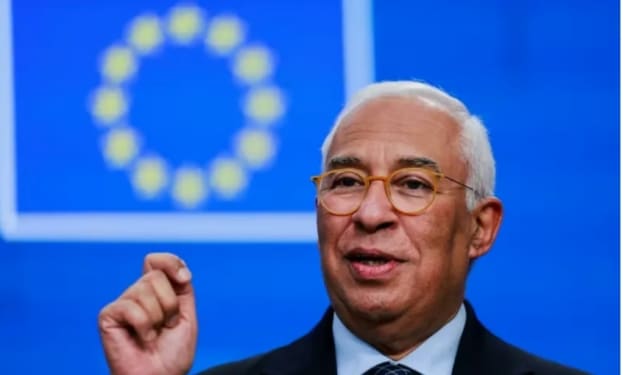
New Delhi, India — The European Union’s top political representative, European Council President António Costa, has touched down in New Delhi, signalling a critical moment in long‑running negotiations with India over a free trade agreement (FTA) that both sides hope will reshape global economic ties. Costa’s arrival comes amid celebrations of India’s Republic Day and on the eve of a high‑stakes EU‑India summit, where leaders aim to finalize the deal after nearly two decades of diplomacy and talks.
By Salaar Jamali8 days ago in The Swamp
2026 Oscar Nominations: The Complete List of Nominees. AI-Generated.
The annual celebration of cinematic achievement is upon us once again. On January 22, 2026, the 98th Academy Awards nominations were officially revealed, setting the stage for one of the most exciting Oscar seasons in recent memory. With record-breaking nods, surprise contenders, and an unusually diverse field of films and talents, the Academy Awards nominations have generated widespread conversation in Hollywood and around the world.
By Salaar Jamali9 days ago in The Swamp
Thai Exports in 2025 Set New Record at $339.6 Billion, Marking 12.9% Growth. AI-Generated.
Thailand’s exports surged to a historic high of $339.6 billion in 2025, posting a robust 12.9% year-on-year growth and underscoring the country’s successful rebound in global trade. The milestone reflects a broad-based recovery across manufacturing, agriculture, and services-linked exports, supported by resilient global demand, supply-chain realignment, and proactive trade policy.
By Salaar Jamali10 days ago in The Swamp
Commerce Ministry Moves to Tighten Checks on Rs15bn Rice Export Support Scheme. AI-Generated.
Pakistan’s Commerce Ministry has initiated a move to tighten checks on the Rs15 billion rice export support scheme, signaling a shift toward stronger oversight and accountability in one of the country’s most important export sectors. The decision comes amid concerns over misuse of incentives, weak monitoring mechanisms, and the need to ensure that public funds translate into real export growth rather than windfall gains for a limited group of exporters.
By Salaar Jamali10 days ago in The Swamp
Gold notches record above $4,700/oz, silver hits all-time high.”. AI-Generated.
Precious metals have entered uncharted territory as gold surged beyond $4,700 per ounce, setting a new all-time record, while silver climbed to its highest level ever. The historic rally reflects a powerful convergence of economic uncertainty, geopolitical tension, and structural shifts in global demand. For investors, policymakers, and consumers alike, the move signals more than just a price milestone — it marks a profound change in how the world values safety, scarcity, and trust.
By Salaar Jamali12 days ago in The Swamp
Gold Hits Record as Trump’s Greenland Tariff Threats Rattle Asia Markets. AI-Generated.
Gold prices have surged to historic highs as escalating tariff threats over Greenland sent shockwaves through financial markets in Asia. Investors, reacting to the prospect of intensified U.S.-Europe trade tensions, flocked to safe-haven assets, pushing gold to record levels. The recent rally underscores how geopolitical uncertainty, coupled with rising global inflation concerns, continues to drive demand for precious metals as a hedge against risk.
By Salaar Jamali13 days ago in The Swamp
“Trump's trade rep says Greenland tariff threat could ‘set the scene’ for negotiation.”. AI-Generated.
The debate surrounding Greenland, trade policy, and U.S. foreign relations took a new turn this week after President Donald Trump’s trade representative suggested that the administration’s tariff threats tied to Greenland were not meant as punishment, but rather as a strategic move to “set the scene” for negotiations. The remarks have sparked intense discussion across diplomatic, economic, and financial circles, highlighting once again how Trump’s approach blends geopolitics with economic leverage.
By Salaar Jamali13 days ago in The Swamp
: US Lawmakers Move to Stop Trump’s Threatened Tariffs on European Allies. AI-Generated.
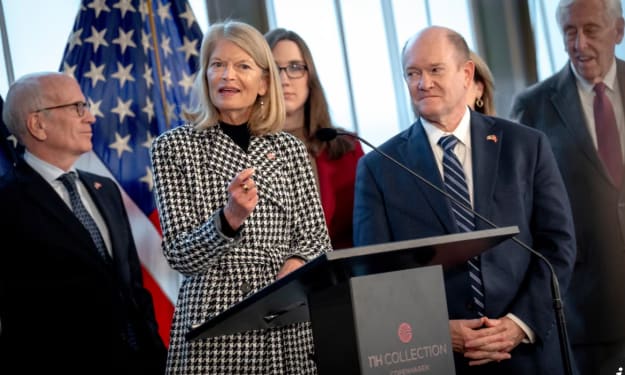
The United States is facing a potential trade storm as former President Donald Trump once again threatens tariffs—this time targeting European allies. In response, a growing number of US lawmakers are stepping up, seeking to block these threatened measures before they can disrupt international trade relationships and domestic markets. Trump, known for his aggressive trade policies during his presidency, has repeatedly criticized what he perceives as unfair trade practices by Europe. Now, his latest rhetoric suggests he may impose tariffs on European goods, raising alarms across Capitol Hill and the global trade community. For many members of Congress, this is not just about economics—it’s about diplomacy, alliances, and maintaining the stability of long-standing trade agreements. Bipartisan Concern Over Tariffs What’s notable about this pushback is the bipartisan nature of it. Lawmakers from both parties are expressing concerns about the potential impact of these tariffs. Republican senators, while traditionally aligned with Trump on issues of trade protectionism, are warning that broad tariffs could hurt American exporters and consumers. Democrats are emphasizing the diplomatic fallout and the risk of escalating trade tensions with Europe, which remains a key ally in both economic and security matters. Senator Susan Collins, a Republican from Maine, stated, “We need to protect American workers, but imposing sweeping tariffs on our European allies is not the way. It could backfire on the very industries we are trying to support.” Similarly, Democratic Representative Katherine Clark noted, “Tariffs should never be the first option. We must preserve our alliances while addressing legitimate trade concerns.” This bipartisan consensus signals the seriousness with which Congress is treating Trump’s threats. Unlike during his presidency, when Trump often faced a divided legislative branch, the current environment shows unified resistance to measures that could destabilize US-European trade relations. The Economic Risks Economists have long warned that tariffs, especially those imposed suddenly and broadly, can have ripple effects throughout the economy. Tariffs on European goods could raise prices for American consumers on everyday items ranging from wine and cheese to cars and industrial equipment. At the same time, European countries could retaliate with tariffs of their own, targeting American exports such as agricultural products, technology, and aerospace goods. Analysts also highlight the potential for long-term damage. Trade tensions can discourage investment, slow supply chains, and increase uncertainty for businesses that rely on global partnerships. For US companies already navigating post-pandemic recovery and supply chain disruptions, additional tariffs could be a significant burden. A report from the Peterson Institute for International Economics suggests that even targeted tariffs on a few European goods could reduce US GDP growth by up to 0.5% over the next year. While this may sound modest, in an already uncertain economic environment, such declines could affect jobs, wages, and consumer spending. Diplomatic Fallout Beyond the economic consequences, the diplomatic implications of these threatened tariffs are substantial. Europe has traditionally been a close ally of the United States in international affairs, from NATO cooperation to climate agreements. Imposing tariffs risks straining these relationships at a time when global cooperation is critical on issues such as security, energy, and economic stability. European leaders have already expressed concern. Officials in Brussels have warned that any unilateral tariffs could lead to retaliatory measures and may undermine ongoing trade negotiations. While Trump’s statements have been framed as protecting American interests, allies perceive them as a threat to the stability and fairness of international trade norms. Lawmakers’ Proposed Solutions In response, Congress is exploring several avenues to block or limit the impact of any new tariffs. Some lawmakers are drafting legislation that would require a congressional vote before the executive branch can impose such trade measures, effectively curbing unilateral authority. Others are pushing for closer oversight and transparency, ensuring that any proposed tariffs undergo thorough economic and diplomatic analysis. Representative Richard Neal, chairman of the House Ways and Means Committee, emphasized the need for checks and balances. “Congress has a role in protecting not just American jobs, but also the integrity of our alliances. We will not sit idle while threats of tariffs jeopardize our economic and diplomatic relationships.” These proposals reflect a growing recognition that trade policy cannot exist in a vacuum. Economic decisions are intertwined with international relations, and lawmakers appear determined to prevent impulsive actions that could have far-reaching consequences. Public Reaction Public reaction has been mixed, with some Americans supporting strong trade measures to protect domestic industries, while others worry about higher prices and disrupted supply chains. Business groups, particularly in sectors reliant on European imports or exports, have been vocal in opposing new tariffs. The US Chamber of Commerce issued a statement urging lawmakers to block any measures that could escalate trade tensions unnecessarily. “American businesses thrive on predictable trade relationships. Tariffs create uncertainty, hurt consumers, and may lead to retaliatory measures from our allies.” Consumer advocacy groups echo this concern, warning that tariffs are essentially a tax on everyday goods. For families already grappling with inflation, even modest tariff increases could hit household budgets hard. Looking Ahead While Trump’s threats have sparked immediate concern, the final outcome remains uncertain. Lawmakers are moving quickly to draft legislation and coordinate with European counterparts to prevent unilateral action. Analysts suggest that diplomatic engagement combined with congressional oversight could significantly reduce the likelihood of new tariffs being implemented. The episode underscores a broader lesson about US trade policy: cooperation and negotiation remain essential, even in an era of political polarization. Tariffs may be a powerful tool in theory, but in practice, they carry risks that can ripple across the economy, international relations, and domestic politics. As Congress continues to act, one thing is clear: any attempt to impose tariffs on European allies will not go uncontested. Lawmakers on both sides of the aisle appear ready to defend economic stability and diplomatic relationships, sending a message that the US is committed to protecting its interests without alienating long-standing partners. In a world where trade disputes can quickly become geopolitical flashpoints, the coming weeks will be crucial. How the US navigates these threats may set the tone for its economic and diplomatic relationships for years to come.
By Muhammad Hassan13 days ago in The Swamp