politics
Politics does not dictate our collective cultural mindset as much as it simply reflects it; We've got to look in the mirror sometimes, and we've got one.
Fresh Snow and Ice Warnings Issued for Weekend as Arctic Air Hits the UK. AI-Generated.
Britain is bracing for a sharp return to winter conditions after forecasters issued fresh snow and ice warnings for the weekend, with Arctic air sweeping south across the country. Temperatures are expected to plunge well below seasonal averages, raising concerns about travel disruption, hazardous roads, and pressure on health services. The UK Met Office has warned that a band of cold air moving in from the north will bring freezing temperatures overnight and snowfall in several regions, particularly across Scotland, northern England, and higher ground in Wales. “This is a significant shift from the milder weather seen earlier in the month,” a spokesperson said. “People should be prepared for icy conditions, reduced visibility, and difficult journeys.” Arctic Blast Sweeps South Meteorologists say the cold spell is being driven by Arctic air descending from Scandinavia and the North Atlantic, replacing recent Atlantic systems that brought heavy rain and flooding to parts of the country. Daytime temperatures are expected to struggle above 2°C in northern regions, while overnight lows could drop to -6°C in rural areas. Snow showers are forecast for upland regions, with some lower-lying towns also at risk of temporary accumulations. The cold front is predicted to arrive late Friday, intensifying through Saturday and into Sunday. “It’s not unusual for February, but the contrast with recent wet and windy weather will feel dramatic,” said one forecaster. Travel Disruption Likely Transport authorities have urged motorists and rail passengers to check conditions before travelling. Ice forming on untreated roads could make driving dangerous, particularly early in the morning and late at night. Airports in Scotland and northern England are also preparing for possible delays if snowfall intensifies. Airlines have warned passengers to allow extra time for journeys and monitor flight updates closely. Network Rail confirmed that engineers will be on standby throughout the weekend to respond to frozen points and snow-covered tracks. “Even light snowfall can cause problems when temperatures drop quickly,” a rail official said. Health Warnings for Vulnerable Groups Health officials are advising older people and those with existing medical conditions to take extra precautions. Cold temperatures increase the risk of hypothermia, respiratory illness, and heart problems. GP practices and hospitals are preparing for a potential rise in weather-related admissions, particularly among elderly patients and those with chronic conditions. Local councils have also opened emergency shelters for people experiencing homelessness, as overnight temperatures fall below freezing. “We’re working with charities and community groups to ensure no one is left outside in these conditions,” a council spokesperson said. Impact on Schools and Services Some schools in rural and hilly areas have warned of possible closures if snow accumulates or roads become unsafe. Parents are being advised to check school websites and local authority announcements before setting out. Bin collections and other council services may also be disrupted if vehicles cannot safely access residential streets. Farmers have expressed concern about livestock, particularly newborn animals, as freezing winds and snowfall increase the risk of exposure. Contrast with Flooding Concerns The cold snap follows weeks of heavy rain that caused flooding in several parts of the Midlands and the north of England. While the drier Arctic air will reduce rainfall, melting snow later next week could add to pressure on already saturated ground. Environmental agencies are monitoring river levels closely, warning that rapid thawing could still trigger localized flooding. “People should not assume that the risk has passed simply because the weather turns cold,” one official said. Public Advised to Prepare Authorities are urging households to take simple steps to stay safe, including: Keeping warm with adequate heating and clothing Checking on elderly neighbors and relatives Stocking up on essential supplies Ensuring cars have antifreeze, fuel, and emergency kits Pet owners are also being advised to bring animals indoors where possible and protect outdoor water sources from freezing. When Will It End? Forecasters say the Arctic conditions are likely to persist for several days, with a gradual return to milder weather expected early next week. However, further cold spells cannot be ruled out as weather patterns remain unsettled across Europe. “There is still uncertainty about how long the cold air will hold,” the Met Office said. “People should keep checking forecasts and warnings as conditions may change quickly.” A Reminder of Winter’s Grip The sudden return of snow and ice serves as a reminder that winter is far from over. While many had hoped for an early taste of spring after recent storms, the Arctic blast is expected to bring renewed challenges for communities already dealing with the effects of extreme weather. Emergency services say preparation and caution will be key in the days ahead. “This weekend is about staying safe,” said a police spokesperson. “If you don’t need to travel, consider staying at home until conditions improve.” As Britain prepares for freezing winds, icy roads, and falling snow, residents are being urged to take weather warnings seriously and look out for one another during the coldest weekend of the season.
By Fiaz Ahmed 6 days ago in The Swamp
Scandals Cloud ‘Sinister’ French Ice Dancers Who Beat Americans for Controversial Gold. AI-Generated.
The victory of France’s top ice dancing pair at the Winter Olympics has been overshadowed by controversy, accusations of biased judging, and a series of scandals that critics say tarnish one of the most dramatic moments of the Games. Their gold-medal performance, which edged out the American favorites by a narrow margin, has ignited fierce debate within the figure skating world and among fans watching around the globe. The French duo’s routine — dark, theatrical, and described by commentators as “sinister” in tone — impressed judges with its technical difficulty and emotional intensity. Yet many viewers questioned how it could have outscored the Americans, who delivered a technically clean and widely praised performance. The uproar has quickly grown beyond artistic preference and into deeper concerns about transparency, politics, and past disciplinary issues surrounding the French team. A Victory That Sparked Immediate Doubts When the final scores were announced, the arena reacted with both cheers and audible surprise. Social media erupted within minutes, with fans replaying side-by-side footage of the routines and accusing judges of favoring style over substance. Several former champions and skating analysts publicly expressed confusion over the scoring gap. “It was a matter of fractions, but those fractions decide history,” said one retired Olympic medalist. “People deserve to understand how those numbers were reached.” The Americans’ coaching team filed a formal inquiry, not contesting the result outright but requesting clarification on component scores related to artistry and interpretation — categories often criticized for being subjective. Shadows from the Past Fueling the backlash are previous controversies involving the French skaters and their coaching staff. Years earlier, the pair had been linked to a training camp investigated for alleged emotional abuse of younger athletes. While no formal ban was imposed on the skaters themselves, the incident left lingering questions about the environment in which they trained. In addition, leaked messages from a former federation official suggested behind-the-scenes lobbying ahead of major competitions. Though the authenticity of the messages has not been legally proven, they have resurfaced following the Olympic win and intensified suspicions about political influence within international figure skating. Critics argue that the pair’s victory fits a troubling pattern in which reputations and federation power can outweigh on-ice performance. Judging Under the Microscope The International Skating Union, represented by the International Skating Union, defended the judging panel, stating that all scores were awarded according to established rules and reviewed for consistency. “The panel followed protocol,” the ISU said in a statement. “There is no evidence of irregularity or misconduct.” Still, calls for reform have grown louder. Some experts argue that the current system gives too much weight to artistic components that cannot be objectively measured. “Technical elements can be counted and reviewed,” said a sports ethics researcher. “But interpretation and choreography remain vulnerable to unconscious bias.” A Performance Called “Sinister” Part of the controversy also stems from the routine itself. The French pair skated to music inspired by psychological thrillers, incorporating sharp, unsettling movements and dark facial expressions. While supporters praised its originality, others felt the theme crossed into theatrics at the expense of skating fundamentals. The Americans, by contrast, presented a more traditional program emphasizing precision and harmony. “This became a clash of philosophies,” said one judge who spoke anonymously. “Innovation versus classic ice dance.” Public and Political Reaction French media celebrated the win as a triumph of creativity and courage. Headlines described the skaters as “artists who dared to be different.” Meanwhile, American outlets questioned whether the result reflected fair competition. Politicians in both countries avoided direct criticism but praised their athletes for professionalism under pressure. The controversy has since become a symbol of broader dissatisfaction with judged sports, where outcomes are determined by panels rather than clocks or finish lines. Impact on the Sport The debate arrives at a sensitive time for figure skating, which has struggled with credibility after past judging scandals. Officials fear that public trust could erode further if reforms are not introduced. Some proposals now under discussion include: Reducing the weight of artistic scores Increasing transparency of judges’ identities Publishing detailed breakdowns of scoring decisions Fans, meanwhile, remain divided. Supporters of the French pair argue that bold choreography should be rewarded and that innovation keeps the sport alive. Detractors insist that technical accuracy must remain the primary standard. Looking Ahead As the dust settles from the Games, the French champions are preparing for a world tour of exhibitions, while the American runners-up focus on next season’s competitions. Both teams have said they want to move forward and let their skating speak for itself. Yet the controversy is unlikely to fade quickly. Analysts say the result will be studied for years as an example of how modern ice dancing balances sport and art — and how fragile that balance can be. The gold medal ceremony at the Winter Olympics was meant to be a celebration of excellence. Instead, it has become a flashpoint for debate about fairness, influence, and the future of judged sports. In a discipline where fractions of a point separate triumph from heartbreak, the French victory may ultimately be remembered not only for its choreography but for the questions it raised about what truly defines winning on the ice.
By Fiaz Ahmed 6 days ago in The Swamp
Indian Scrapyards Welcome Growing Number of Dark Fleet Tankers. AI-Generated.
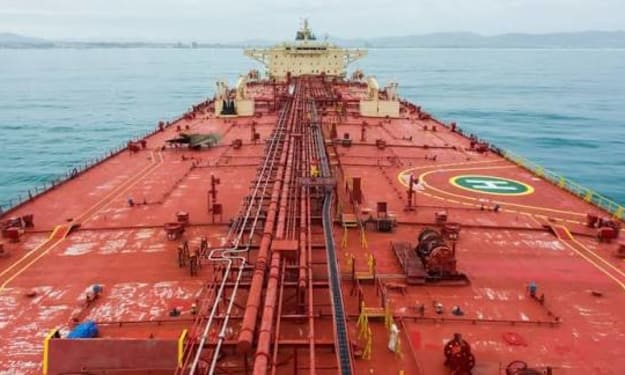
Indian shipbreaking yards are witnessing a sharp rise in the arrival of so-called “dark fleet” oil tankers — aging vessels that operate outside mainstream regulatory systems and are often linked to sanctioned or opaque energy trade routes. Industry sources say the trend reflects both tightening international enforcement and the deteriorating condition of ships that have spent years transporting oil under secrecy. The vessels, many of which previously served Russian, Iranian, or Venezuelan oil shipments, are now reaching the end of their operational life. India’s massive ship recycling sector has emerged as a primary destination for their dismantling. What Is the “Dark Fleet”? The term “dark fleet” refers to tankers that frequently switch flags, disable tracking systems, and use complex ownership structures to avoid scrutiny. These ships expanded rapidly after Western sanctions were imposed on Russia’s oil exports following the Ukraine war, and similar tactics had already been used by fleets linked to Iran and Venezuela. Analysts estimate that hundreds of tankers now operate in this shadow network, moving crude oil and petroleum products through indirect routes and offshore transfers. “These ships were never meant to last forever,” said a maritime risk consultant. “Many are now too old and unsafe to continue sailing, so scrapyards are the final stop.” India Becomes a Key Destination India is home to one of the world’s largest ship recycling industries, centered around the coastal hub of Alang in Gujarat. Known for dismantling everything from cargo ships to aircraft carriers, Alang has increasingly received tankers suspected of being part of the dark fleet. Shipbreakers say the vessels often arrive with minimal documentation and under flags of convenience such as Gabon, Cameroon, or Mongolia. Once cleared by Indian authorities, the ships are beached and dismantled piece by piece for scrap steel. Steel recovered from these ships feeds India’s booming construction and manufacturing sectors, making the business highly profitable despite growing scrutiny. Regulatory Concerns Environmental and safety groups have raised alarms over the risks posed by these tankers. Many dark fleet ships are more than 20 years old and lack proper maintenance records. They can contain hazardous materials such as asbestos, oily sludge, and toxic paint residues. The International Maritime Organization has repeatedly warned about unsafe practices linked to aging tankers and illegal oil transfers at sea. “These vessels pose a threat not just to crews but also to coastal ecosystems,” said a spokesperson for an environmental watchdog group. “If they are not dismantled under strict safety rules, the pollution cost will be enormous.” India has introduced tougher ship recycling standards in recent years, including compliance with the Hong Kong Convention for safe and environmentally sound ship recycling. Officials say every vessel entering Indian scrapyards must provide documentation proving it is free of radioactive or prohibited materials. A Result of Sanctions Pressure Experts say the influx of dark fleet tankers into scrapyards is a direct consequence of tighter sanctions enforcement by Western governments. Insurance companies and major shipping registries have cut off support to vessels suspected of violating oil price caps or sanctions. Without insurance and port access, many of these ships can no longer trade safely. “Once a tanker loses insurance, it becomes commercially useless,” said a shipping analyst in Mumbai. “Scrapping is the only option left.” Some tankers arriving in India are believed to have transported Russian crude to Asia at discounted prices before being retired. Others previously moved oil between the Middle East and China under opaque arrangements. Economic Benefits vs Ethical Questions For India’s shipbreaking industry, the arrival of more tankers means steady business and employment for thousands of workers. Local steel mills benefit from a consistent supply of scrap metal, keeping prices stable. However, critics argue that dismantling dark fleet vessels indirectly supports a system that helped evade international sanctions. “There is a moral dilemma here,” said a geopolitical expert. “India is not violating sanctions by scrapping ships, but it is benefiting from a trade that exists because of them.” Indian authorities maintain that ship recycling is a lawful industrial activity and that vessels are processed according to domestic and international regulations. Environmental and Worker Safety Risks Shipbreaking has long been controversial because of hazardous working conditions. Laborers often work with cutting torches near fuel residues and toxic materials. Although safety standards have improved, accidents still occur. Local NGOs in Gujarat say dark fleet tankers may be more dangerous than average because their maintenance history is unknown. “These ships were pushed to their limits,” said one activist. “They are floating environmental hazards when they arrive.” What Comes Next With sanctions on Russia and Iran likely to remain in place for years, analysts expect more dark fleet tankers to reach scrapyards across South Asia, including India, Bangladesh, and Pakistan. India’s government is under pressure to ensure that shipbreaking does not become a backdoor service for illegal shipping networks. Regulators are now reviewing stricter background checks on vessel ownership and previous trading routes. At the same time, global shipping companies are watching closely. The dismantling of older tankers may reduce supply in the shadow fleet, potentially tightening enforcement of oil sanctions worldwide. A Quiet End for Shadow Ships For vessels that once moved millions of barrels of oil across hidden routes, their final destination is silent and industrial: a beach lined with cranes and cutting torches. What began as a strategy to bypass sanctions is ending in scrapyards, where steel is melted down and reused for buildings, bridges, and factories. The growing presence of dark fleet tankers in Indian yards highlights a little-seen consequence of global geopolitics — where international conflict, energy markets, and environmental responsibility intersect on the country’s shores.
By Fiaz Ahmed 6 days ago in The Swamp
Rubio Warns Europe of New Era in Geopolitics Ahead of Major Munich Speech. AI-Generated.
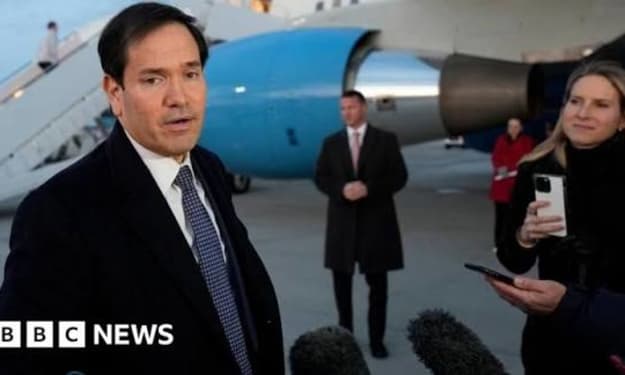
U.S. Senator Marco Rubio has warned European leaders that the world is entering a new and more dangerous era of geopolitics, marked by shifting alliances, intensifying great-power competition, and growing instability. His remarks come ahead of a highly anticipated speech at the Munich Security Conference, one of the world’s most influential gatherings of political and security leaders. In comments released before his address, Rubio said that Europe and the United States must prepare for a future defined less by cooperation and more by rivalry among major powers, particularly involving China, Russia, and regional actors seeking to challenge the Western-led international order. “We are no longer living in the post–Cold War moment,” Rubio said. “We are entering a period where power politics is returning, and democracies must be prepared to defend not only their interests but their values.” A Changing Global Landscape Rubio’s warning reflects growing concern in Washington that global politics is undergoing a fundamental transformation. Conflicts in Ukraine and the Middle East, rising tensions in the Indo-Pacific, and the spread of advanced military technologies have reshaped strategic thinking across NATO and the European Union. According to Rubio, Europe can no longer assume that peace and stability will be guaranteed through diplomacy alone. He argued that defense spending, military readiness, and technological innovation must become central priorities for Western nations. “The idea that economic interdependence alone would prevent conflict has proven wrong,” he said. “Authoritarian states are using trade, energy, and technology as tools of coercion.” His message is expected to resonate strongly in Munich, where leaders from more than 40 countries will discuss security threats ranging from cyber warfare and artificial intelligence to energy security and climate-related risks. Focus on Russia and China A central theme of Rubio’s upcoming speech is expected to be the twin challenges posed by Russia and China. He has consistently described Russia’s war in Ukraine as a defining conflict for Europe’s future and warned that failure to deter Moscow could embolden other powers. Rubio is also expected to urge European governments to reduce their economic dependence on China, particularly in strategic sectors such as telecommunications, rare earth minerals, and advanced manufacturing. “Europe must decide whether it wants strategic autonomy or strategic vulnerability,” Rubio said. “You cannot rely on authoritarian regimes for the foundations of your economy and security.” His comments come as several European countries reassess their trade and investment policies with Beijing, amid fears of supply chain disruption and political pressure. Pressure on NATO Unity Rubio’s remarks also highlight concerns over unity within NATO. While the alliance has expanded and strengthened its eastern defenses since the Ukraine war, divisions remain over burden-sharing and long-term strategy. He warned that internal disagreements could weaken Europe’s ability to respond to future crises. “Adversaries are watching for cracks in our unity,” Rubio said. “They believe democracies are too divided and too slow to act. We must prove them wrong.” The senator is expected to call for closer U.S.–European cooperation on defense production, intelligence sharing, and joint military exercises, arguing that fragmented responses would only benefit rival powers. Europe’s Role in a New Era European officials attending the Munich conference are likely to view Rubio’s speech as both a challenge and a reassurance. On one hand, his message underscores the seriousness of the threats facing Europe. On the other, it signals continued American engagement in European security at a time when questions persist about the future direction of U.S. foreign policy. Several European diplomats have privately acknowledged that the geopolitical environment has changed more rapidly than anticipated. One senior EU official said that Rubio’s warning reflects “a broader recognition that the old assumptions about stability no longer apply.” The conference is expected to include discussions on strengthening Europe’s defense industry, protecting critical infrastructure, and coordinating responses to hybrid threats such as disinformation campaigns and cyberattacks. A Broader Political Signal Rubio’s appearance in Munich also carries political significance at home. As a prominent voice on foreign policy in the U.S. Senate, he has positioned himself as a leading advocate for a tougher stance on authoritarian powers and for renewed leadership among democratic allies. His speech is likely to be seen as part of a broader effort to shape Western strategy for the coming decade, emphasizing deterrence, resilience, and unity. Analysts say his warning should not be interpreted as pessimism but as a call to action. “This is about preparing Europe and the United States for a world where competition is the norm,” said one transatlantic security expert. “Rubio is urging leaders to face reality and adapt.” Looking Ahead As Rubio takes the stage in Munich, his message will test how ready European governments are to confront a harsher geopolitical climate. Whether his call leads to concrete policy shifts remains to be seen, but his warning underscores a growing consensus that the global order is entering a period of profound change. For Europe, the challenge will be to translate rhetoric into long-term strategy — ensuring that security, economic independence, and democratic values remain at the center of its response to a rapidly evolving world.
By Fiaz Ahmed 6 days ago in The Swamp
Vast Majority’ of Parents Should Be Involved if Children Question Their Gender, Schools Told. AI-Generated.
Schools in England have been instructed that the vast majority of parents should be informed and involved when a child begins questioning their gender identity, under new guidance issued by the Department for Education. The policy marks a significant shift in how schools are expected to handle sensitive discussions about gender and reflects growing political and social debate around safeguarding, parental rights, and children’s welfare. The guidance states that schools should not adopt a default position of secrecy when a pupil raises questions about their gender. Instead, teachers and school leaders are encouraged to work with families unless there is a clear and demonstrable risk of harm to the child if parents are informed. Officials said the aim is to balance the wellbeing of pupils with the legal responsibility of schools to act in a child’s best interests, while recognizing the important role parents play in providing emotional and practical support. A New Framework for Schools Under the new framework, schools are told that parental involvement should be the norm rather than the exception. Only in rare circumstances — such as where there is evidence that a child may face abuse, neglect, or serious distress at home — should schools consider withholding information from parents. The guidance emphasizes that children questioning their gender identity may be experiencing confusion, anxiety, or stress and that professional care, including safeguarding leads and pastoral staff, should be involved in decisions. A spokesperson for the Department for Education said the guidance was designed to “put children’s welfare first while ensuring that parents remain central to decisions that affect their child’s development.” The government added that schools must not treat a child’s declaration of gender identity as a medical or irreversible decision, but rather as part of a broader conversation requiring sensitivity and support. Political and Social Context The issue has become increasingly prominent in British politics over recent years, with debates intensifying over the role of schools in addressing gender identity and the limits of confidentiality between teachers and pupils. Supporters of the new guidance argue that parents have a fundamental right to know when their child is struggling with identity questions and that excluding families risks isolating vulnerable children. Critics, however, warn that automatic parental involvement could discourage some young people from seeking help at school, particularly those who fear rejection or misunderstanding at home. Education unions have urged caution, saying that teachers need clear legal protection and training to manage complex situations without placing themselves or students at risk. “This is one of the most sensitive areas schools deal with,” said one headteacher association representative. “Staff need clarity, but also flexibility, to make judgments based on individual circumstances.” Safeguarding at the Core The guidance stresses that safeguarding remains the overriding principle. Schools are instructed to document decisions carefully and consult with designated safeguarding leads when handling cases involving gender questioning. It also notes that social transition in schools — such as changing names, pronouns, or uniforms — should not be treated as a routine step and must involve consultation with parents and, where appropriate, health professionals. Officials highlighted concerns that some children may be influenced by social media or peer groups and that schools should take a cautious, evidence-based approach rather than encouraging irreversible decisions. The guidance also reinforces that schools must remain politically neutral and avoid promoting any single ideology related to gender or identity. Reaction From Campaign Groups Parent advocacy groups largely welcomed the guidance, describing it as a return to common sense. “Parents should not be the last to know when their child is going through something this significant,” said one family policy campaigner. “Schools exist to support families, not replace them.” Meanwhile, some LGBTQ+ advocacy organizations expressed concern that the policy could place vulnerable children in difficult situations. They warned that without strong safeguards, pupils who do not feel safe at home might be forced into conversations before they are ready, potentially increasing stress and isolation. Legal and Practical Challenges Legal experts say the guidance could reduce confusion for schools that have struggled to interpret existing equality and safeguarding laws. Until now, many schools developed their own policies, leading to wide variation across the country. Some adopted strict confidentiality rules, while others prioritized parental involvement. The new guidance attempts to standardize practice while still allowing discretion in exceptional cases. However, school leaders say implementation will be challenging, particularly in communities with diverse cultural and religious views. Training and resources will be crucial, they argue, to ensure staff can navigate conversations with both children and parents sensitively and professionally. Looking Ahead The Department for Education has said it will review how the guidance is applied and will gather feedback from schools over the coming months. Officials insist that the policy is not intended to stigmatize children who question their gender but to ensure they receive support from both schools and families. As debates over gender identity continue across the UK, the guidance highlights a broader struggle to define the boundaries between personal identity, parental responsibility, and the role of public institutions. For schools, the message is clear: decisions about a child’s wellbeing should rarely be made in isolation, and parents are expected to play a central role in supporting young people through some of their most difficult and personal questions.
By Fiaz Ahmed 6 days ago in The Swamp
Russia Pushes Back Hard Against Prospect of U.S.-Built Nuclear Plant in Armenia. AI-Generated.
Russia has sharply criticized the possibility that Armenia could host a nuclear power plant built by the United States, warning that such a move would undermine long-standing regional energy arrangements and shift the geopolitical balance in the South Caucasus. The reaction highlights growing competition between Moscow and Washington for influence in a region traditionally viewed by Russia as part of its strategic sphere. Armenian officials have recently confirmed that they are exploring international partners for the construction of a new nuclear facility to replace the aging Metsamor plant, which has been in operation since the Soviet era. Among the options under discussion is cooperation with U.S. companies, supported by technical and financial assistance from Washington. The idea has drawn an unusually strong response from Russian officials, who argue that nuclear energy projects should remain under frameworks that have historically linked Armenia with Moscow. Russia’s Strategic Concerns Russia has long played a dominant role in Armenia’s energy sector, including nuclear power. The existing Metsamor plant was built with Soviet technology and is currently maintained with Russian technical support and fuel supplies. A shift toward U.S. involvement would represent a significant break from this tradition. Officials in Moscow warned that allowing an American-built reactor could expose Armenia to political pressure from Washington and weaken existing regional security arrangements. A spokesperson for Russia’s foreign ministry said that nuclear cooperation should remain “free from geopolitical games” and based on “trusted partnerships.” Analysts say Russia’s response is driven by both economic and strategic fears. Losing a major nuclear contract would mean reduced influence over Armenia’s critical infrastructure, while also signaling that Yerevan is drifting closer to the West. Armenia’s Search for Alternatives Armenia has defended its right to explore different options, citing safety, modernization, and long-term energy independence. The Metsamor plant, although upgraded several times, is considered outdated by international standards and sits in a seismically active region, raising concerns among European regulators. The Armenian government has said it is studying proposals from multiple partners, including Russia, the United States, and European firms, before making a final decision. A senior Armenian official stated that the goal is not to replace one dependency with another but to secure the safest and most economically viable technology for the next generation of nuclear power. Washington’s Interest The United States has signaled growing interest in supporting nuclear energy projects in Eastern Europe and the Caucasus as part of a broader effort to counter Russian dominance in the energy sector. U.S. officials argue that modern American reactor designs meet the highest safety standards and offer transparency in financing and operations. The U.S. State Department has previously promoted civil nuclear cooperation agreements with several countries, presenting them as tools for energy security and economic development. For Washington, involvement in Armenia’s nuclear future would represent not only a commercial opportunity but also a strategic foothold in a region where Russian and Iranian influence remains strong. A Regional Power Struggle The dispute over Armenia’s nuclear plant reflects a broader geopolitical contest between Russia and the United States in the post-Soviet space. Since the conflict in Ukraine, Moscow has grown increasingly sensitive to Western involvement in countries such as Georgia, Moldova, and Armenia. Russia has traditionally viewed itself as Armenia’s main security guarantor, particularly after years of conflict with neighboring Azerbaijan. However, Armenia’s leadership has recently sought to diversify its partnerships, engaging more actively with Western institutions. This shift has already strained relations between Yerevan and Moscow, and the nuclear project could become another flashpoint. A Moscow-based energy analyst said the issue is “less about technology and more about control.” Whoever builds and maintains the reactor will shape Armenia’s energy policy for decades. Safety and Environmental Questions Supporters of a U.S.-built reactor argue that modern designs would significantly reduce risks associated with earthquakes and aging infrastructure. International observers have long urged Armenia to close Metsamor, describing it as one of the most dangerous nuclear plants still operating. Russia, however, insists that its own nuclear technology meets global standards and that it remains the most reliable partner for Armenia, given decades of cooperation. The Russian state nuclear corporation Rosatom has reportedly offered to construct a new reactor in Armenia using upgraded versions of its existing technology, along with long-term fuel supply contracts. Diplomatic Implications Diplomats warn that the nuclear decision could influence Armenia’s broader foreign policy direction. Choosing a U.S.-built plant would likely be interpreted by Moscow as a political signal, even if Armenian officials frame it as a technical or economic choice. At the same time, rejecting Western involvement could disappoint partners in Washington and Brussels who see Armenia as a potential bridge between Europe and the Caucasus. One European diplomat said the issue demonstrates how infrastructure projects have become tools of foreign policy. “Energy is no longer just about electricity. It’s about alliances.” Looking Ahead Armenia is expected to continue consultations before making a final decision, a process that could take years. In the meantime, Russia’s pushback underscores how sensitive the question has become. Whether Armenia ultimately turns to Moscow, Washington, or a mixed partnership, the controversy shows that nuclear energy is now deeply intertwined with geopolitics in the region. As global competition intensifies, even a single power plant can become a symbol of shifting loyalties and emerging strategic realities in the South Caucasus.
By Fiaz Ahmed 6 days ago in The Swamp
Denmark Has a Clear Message for U.S. Travelers Amid Tensions Over Greenland. AI-Generated.
As diplomatic tensions simmer between Copenhagen and Washington over the future of Greenland, Denmark’s national tourism board has delivered a reassuring message to U.S. travelers, emphasizing that they remain welcome in Scandinavia’s most southerly kingdom despite political strains. The communication, aimed at travel professionals and the public, reflects broader efforts by Danish authorities to separate geopolitics from people-to-people ties while managing growing global scrutiny of Greenland’s strategic status. The message was distributed in late January by VisitDenmark, the country’s official tourism promotion agency, in an email sent to approximately 6,000 U.S.-based travel advisers and tour operators. It sought to quell concerns among American holidaymakers about visiting Denmark — and by extension Greenland — against the backdrop of heightened media attention on Arctic politics. A Welcome Message in a Fraught Moment In its communication, VisitDenmark stressed that there is no evidence the political situation has affected travel safety or tourism operations in Denmark. “First and foremost, travelers are welcome in Denmark,” the message affirmed, noting that regular conversations with industry partners and recent reporting indicate that visitor experiences remain largely unaffected. The note also addressed anxieties expressed by potential visitors who had been following news coverage of U.S. political rhetoric regarding Greenland, including past proposals by American leadership to assert control or increase influence over the island. While some travelers had questioned whether Americans would still feel welcome in Nordic countries, Denmark’s tourism officials responded with clear reassurance. Mette Ejlskov Hansen, VisitDenmark’s U.S. marketing manager, described the response to the email as “extremely positive,” with open rates significantly higher than typical correspondence — an indication that audiences were eager for clarity. “We’ve heard from many travel professionals that they wanted to see clarity on this topic,” she said. The Broader Geopolitical Context The backdrop to this messaging campaign is a complex geopolitical dispute over Greenland, an autonomous territory within the Kingdom of Denmark that has increasingly become a flashpoint in international relations. Greenland’s location — strategically placed in the Arctic and rich in natural resources — has drawn attention from global powers, including the United States. Tensions escalated in recent years as some U.S. political figures publicly suggested stronger U.S. involvement in Greenland’s future, including controversial proposals to purchase or exert greater control over the territory. That rhetoric triggered protests in Denmark and Greenland, with demonstrators insisting that Greenland “is not for sale” and expressing strong support for Danish sovereignty. Denmark’s government has consistently rebuffed notions of relinquishing control or entertaining unilateral proposals, arguing that decisions about Greenland’s future should respect international law, the rights of Greenland’s people, and the existing constitutional structure of the Danish realm. Diplomats from Copenhagen and Nuuk have engaged with U.S. counterparts to discuss Arctic issues, including through joint working groups, but the fundamental disagreement remains. Danish and Greenlandic Voices Early in the dispute, Denmark’s foreign minister described the situation as involving “fundamental disagreement” with the U.S. on Greenland’s future, underlining that proposals inconsistent with Greenland’s self-determination and territorial integrity were unacceptable. Similarly, Greenlandic leaders have publicly declared their preference to remain aligned with Denmark, emphasizing local autonomy and the importance of respecting the island’s democratic processes. Despite these tensions, both Danish and Greenlandic officials have maintained that international cooperation remains possible, and constructive diplomatic engagement has continued. For example, high-level meetings between officials from Denmark, Greenland, and the United States have taken place to exchange views and establish working groups aimed at managing the dispute and clarifying strategic priorities. Helsinki Times Tourism, Perception, and Reality For the travel industry, the key concern has been whether political disagreements — especially dramatic or sensational headlines about territorial ambitions — might spill over into tourists’ perceptions of safety and welcome. VisitDenmark’s message was crafted expressly to counter misgivings that might deter Americans from booking trips to Denmark or Greenland. Travel operators have reported no significant decline in interest or bookings tied directly to the geopolitical spotlight, with patterns reflecting seasonal variations rather than political avoidance. In fact, VisitDenmark officials note that travel from U.S. markets grew in 2025 compared to the previous year, with strong interest in Danish cities and cultural attractions. Critically, the tourism board emphasised that the Danish people distinguish between government disputes and individual visitors, and that there is “no hatred toward Americans” in the broader public. This distinction aims to reassure travelers that everyday interactions in Denmark remain unaffected by diplomatic tensions. Looking Ahead As the Greenland debate continues to unfold, Denmark’s message to U.S. travelers serves as a reminder that governments often aim to compartmentalise political friction and everyday life. With Arctic geopolitics only likely to gain further attention in coming years, Copenhagen’s approach highlights the importance of clear communication in maintaining confidence in sectors like tourism, which thrive on perceptions of safety, welcome, and cultural exchange. For now, Americans contemplating travel to Denmark and, potentially, Greenland can take comfort in official assurances that their presence is wanted and valued — even as strategic debates persist at the highest levels of international diplomacy.
By Fiaz Ahmed 6 days ago in The Swamp
Two Pakistani Nationals Indicted in U.S. Over Alleged $10 Million Healthcare Fraud Scheme. AI-Generated.
Two Pakistani nationals have been indicted in the United States for their alleged involvement in a $10 million healthcare fraud scheme, according to an announcement by the United States Department of Justice. Federal authorities claim the accused orchestrated a complex billing operation that targeted Medicare and private insurance providers, resulting in millions of dollars in fraudulent reimbursements.
By Ayesha Lashari6 days ago in The Swamp
Japan Seizes Chinese Fishing Boat and Arrests Skipper Amid Rising East China Sea Tensions. AI-Generated.
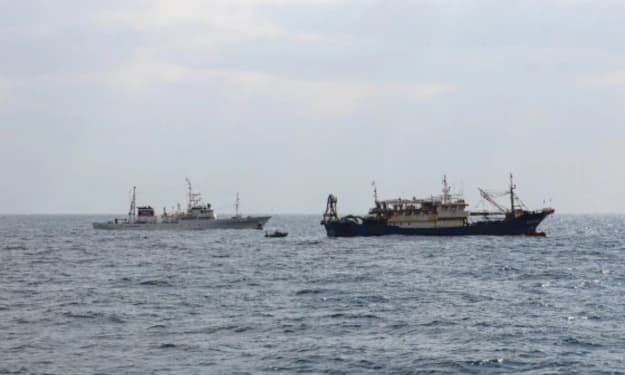
In a dramatic escalation of long-standing maritime tensions, Japan has seized a Chinese fishing boat and arrested its skipper in disputed waters of the East China Sea. The incident, which unfolded near the contested Senkaku Islands, has reignited diplomatic friction between Tokyo and Beijing and drawn international attention to one of Asia’s most sensitive geopolitical flashpoints. The waters surrounding the uninhabited islands—known as the Senkaku Islands in Japan and Diaoyu Islands in China—have long been a source of confrontation between the two regional powers. Administered by Japan but claimed by China, the islands sit in resource-rich waters believed to hold valuable fishing grounds and potential undersea energy reserves. According to Japanese authorities, the vessel entered what Japan considers its territorial waters near the Senkaku Islands without authorization. The Japan Coast Guard reportedly intercepted the fishing boat after it ignored repeated warnings to leave the area. Officials stated that the skipper was detained under Japanese law on suspicion of violating fisheries regulations and maritime boundaries. The Chinese government swiftly condemned the action, describing it as “illegal” and demanding the immediate release of both the vessel and its captain. Beijing maintains that the islands are inherent Chinese territory and routinely dispatches fishing fleets and coast guard vessels to assert its sovereignty claims. A Familiar Flashpoint Incidents like this are not unprecedented. In 2010, a similar episode saw a Chinese trawler collide with Japanese patrol boats, triggering a diplomatic crisis that lasted weeks. The current arrest mirrors that earlier confrontation, underscoring how fragile stability remains in the East China Sea. Tokyo insists its enforcement actions are lawful and consistent with international maritime standards. Japanese officials argue that they are protecting national sovereignty and ensuring compliance with domestic fishing laws. The government in Tokyo has emphasized that any vessel entering its territorial waters without permission risks detention. Beijing, however, views Japan’s control of the islands as illegitimate. Chinese authorities frequently lodge diplomatic protests when Japanese forces intercept Chinese vessels in the disputed zone. The latest seizure has once again led to heated rhetoric between the two capitals. Strategic and Economic Stakes The confrontation is not merely about fishing rights. The East China Sea holds significant strategic value. Beyond its abundant marine resources, the area is believed to contain potential oil and gas reserves. Control over these waters also carries broader security implications, as both nations seek to project maritime power in the region. For Japan, the incident reinforces concerns about increased Chinese maritime activity near its southwestern islands. Japanese officials have reported a steady rise in Chinese coast guard and naval presence in recent years. This pattern, they argue, demonstrates a coordinated effort by Beijing to strengthen its territorial claims. China, on the other hand, accuses Japan of provocation and of escalating tensions through patrols and surveillance operations. Chinese state media often frames such encounters as defensive actions aimed at safeguarding national sovereignty. Diplomatic Fallout The arrest of the skipper could have immediate diplomatic consequences. Historically, such incidents have led to ambassadorial summons, public protests, and temporary freezes in high-level talks. Analysts suggest that both sides may attempt to manage the dispute carefully to prevent further deterioration of bilateral relations. Trade ties between the two countries remain substantial despite political tensions. China is Japan’s largest trading partner, and economic interdependence acts as a moderating force during diplomatic crises. Nevertheless, public sentiment in both nations can quickly turn nationalistic, limiting leaders’ room for compromise. In Beijing, officials have urged Japan to “correct its mistakes” and avoid actions that could inflame regional tensions. Meanwhile, Japanese leaders have reiterated their commitment to upholding maritime law and protecting national territory. International Implications The East China Sea dispute also intersects with broader regional security dynamics. The United States, a key ally of Japan, has previously affirmed that the U.S.-Japan Security Treaty covers territories administered by Japan, including the Senkaku Islands. While Washington takes no official position on ultimate sovereignty, it opposes unilateral changes to the status quo. As maritime disputes become more frequent across Asia, the international community watches closely for signs of escalation. Analysts warn that even minor confrontations between coast guard vessels could spiral into larger crises if mismanaged. The current incident highlights the delicate balance between law enforcement and geopolitical signaling. While Japan frames the seizure as routine maritime policing, China perceives it as a direct challenge to its sovereignty claim. The arrest of the skipper personalizes what is otherwise a complex territorial dispute, making diplomatic resolution more urgent. Legal and Political Ramifications Under Japanese law, foreign nationals detained in territorial waters may face investigation and potential prosecution. However, in past cases involving the Senkaku Islands, Japanese authorities have sometimes released detained Chinese captains to defuse tensions. Whether Tokyo will pursue legal action this time remains uncertain. Political leaders on both sides must weigh domestic expectations against diplomatic pragmatism. Nationalist voices in Japan demand firm enforcement, while Chinese citizens expect their government to defend territorial claims vigorously. Social media in both countries has already amplified the incident, intensifying public scrutiny. A Test for Crisis Management Ultimately, the seizure of the Chinese fishing boat and arrest of its skipper represent more than a maritime law enforcement action. They serve as a test of crisis management between two of Asia’s most powerful nations. Observers suggest that quiet diplomatic negotiations may soon follow public statements. Historically, back-channel communications have helped de-escalate similar disputes. The coming days will reveal whether both governments prioritize stability or allow tensions to rise. For now, the waters around the Senkaku Islands remain a volatile arena where fishing boats, coast guard ships, and geopolitical ambitions intersect. The latest confrontation underscores the enduring complexity of Sino-Japanese relations and the challenges of maintaining peace in contested seas. As regional powers navigate these troubled waters, the world watches closely—aware that even a single fishing vessel can become the catalyst for far-reaching diplomatic consequences.
By Aqib Hussain6 days ago in The Swamp