humanity
Humanity topics include pieces on the real lives of politicians, legislators, activists, women in politics and the everyday voter.
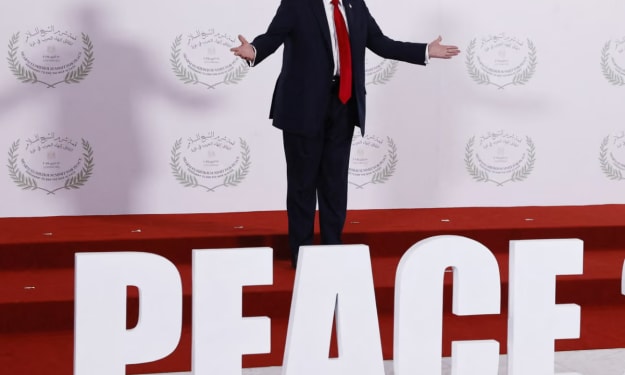
Trump News at a Glance: President Creates Gaza ‘Board of Peace’. AI-Generated.
Former President Donald Trump has announced the creation of a new initiative dubbed the “Gaza Board of Peace”, an effort aimed at encouraging dialogue, reducing tensions, and promoting stability in the volatile Gaza region. The announcement has drawn attention both in the United States and internationally, sparking debate about the practicality and potential outcomes of the plan. While details remain limited, the move reflects Trump’s continued engagement in international affairs and his focus on high-profile diplomatic initiatives. What Is the Gaza ‘Board of Peace’? According to Trump’s statement, the Gaza Board of Peace is intended as a neutral forum for leaders, civil society members, and local stakeholders in Gaza to discuss conflicts, negotiate solutions, and identify strategies for peace and development. The initiative reportedly seeks to create a non-governmental advisory structure that can offer recommendations, facilitate cooperation, and mediate disputes in the region. The board is envisioned as a platform where representatives from diverse communities in Gaza can voice concerns, collaborate on humanitarian projects, and coordinate with international partners. Trump described it as “a bold step to create dialogue where too often there is only conflict,” highlighting his administration’s emphasis on visibility and high-profile solutions. Background: Gaza’s Complex Situation Gaza has long been a region of political and humanitarian complexity. Governed by Hamas and experiencing periodic escalations with Israel, the region faces persistent challenges including limited access to basic services, high unemployment, and recurrent conflicts. International organizations have repeatedly called for sustained dialogue, economic development, and humanitarian support to stabilize the area. Trump’s Gaza Board of Peace enters this context with ambitious goals: promoting communication, reducing violence, and creating opportunities for civic engagement. Critics, however, point out that external initiatives often struggle to navigate local politics and entrenched divisions, making implementation difficult. Reactions from Experts Diplomatic analysts have offered mixed reactions to the announcement. Supportive Voices: Some experts argue that the initiative could serve as a catalyst for dialogue, particularly by encouraging local leaders to engage in non-violent conflict resolution. “Creating formal channels for communication is a necessary first step,” says Dr. Leila Mansour, a Middle East policy analyst. “Even if progress is slow, structured dialogue is better than isolation.” Skeptical Voices: Others are more cautious. They note that previous international efforts have faced significant obstacles due to political factionalism, lack of trust, and regional tensions. “Initiatives led from abroad, especially by former U.S. officials, often face resistance on the ground,” warns Jamal Al-Farouq, a regional analyst. “The success of such a board depends on local buy-in and practical implementation, not just announcements.” Trump’s Diplomatic Style The creation of the Gaza Board of Peace is consistent with Trump’s high-visibility approach to diplomacy. Throughout his political career, Trump has often emphasized bold gestures, media-focused initiatives, and direct engagement in international conflicts. While these moves generate attention and can influence negotiations, they sometimes face criticism for lacking detailed execution plans or long-term sustainability. In this case, Trump’s announcement serves multiple purposes: signaling continued U.S. interest in the region, demonstrating leadership in international affairs, and reinforcing his image as a problem-solver willing to tackle high-stakes issues. Potential Impact on Gaza The board’s potential impact remains uncertain. Supporters highlight several ways it could make a difference: Facilitating Dialogue: By providing a formal platform, the board may encourage communication between factions and civic leaders who might otherwise struggle to coordinate. Promoting Peace Initiatives: Recommendations from the board could influence local development projects, humanitarian aid distribution, and conflict prevention strategies. Engaging International Partners: The board may serve as a bridge between Gaza and international organizations, potentially attracting funding and technical support. However, obstacles abound: entrenched political divisions, security concerns, and skepticism among residents could limit participation. The effectiveness of the board will hinge on trust, transparency, and tangible results, rather than symbolic announcements alone. Broader U.S. Political Context Trump’s Gaza initiative comes amid ongoing debate in the United States about the role of former presidents in foreign policy. While official diplomatic power rests with the sitting administration, former leaders can influence discussions, shape public opinion, and engage with international partners. The Gaza Board of Peace positions Trump as an active player in Middle East diplomacy, even outside formal office. This could bolster his credibility among supporters who value strong international engagement while drawing scrutiny from critics who question the feasibility of such initiatives without governmental authority. Lessons from Past Initiatives History offers cautionary lessons. Past U.S.-led or international peace efforts in Gaza have often faced delays, political pushback, and limited implementation. Effective initiatives require a combination of local engagement, long-term commitment, and flexible strategies. Trump’s board may benefit from learning these lessons: Ensuring that local voices are genuinely represented and empowered. Creating clear objectives and measurable outcomes to track progress. Collaborating with existing humanitarian organizations to avoid duplication or political friction. Public and Media Response Media coverage of the Gaza Board of Peace has been mixed. Some outlets emphasize the ambitious and optimistic nature of the plan, while others focus on its symbolic elements and the challenges of translating announcements into meaningful action. Public reaction, particularly among supporters of Trump, frames the board as a continuation of his reputation for bold problem-solving on global issues. International observers are watching closely, evaluating whether this initiative can influence real-world conditions or primarily serves as a political statement. Conclusion Trump’s creation of the Gaza Board of Peace underscores both the promise and complexity of international initiatives in conflict-prone regions. While structured dialogue has the potential to reduce tensions, the success of such efforts relies on local buy-in, practical implementation, and sustained follow-through. The announcement highlights Trump’s continued engagement in global affairs and reinforces his visibility as a figure in international diplomacy. Whether the Gaza Board of Peace will produce tangible results—or remain primarily symbolic—remains to be seen. One thing is clear: in a region marked by persistent conflict and humanitarian challenges, any initiative aimed at dialogue and peace is a step worth monitoring.
By Muhammad Hassan24 days ago in The Swamp
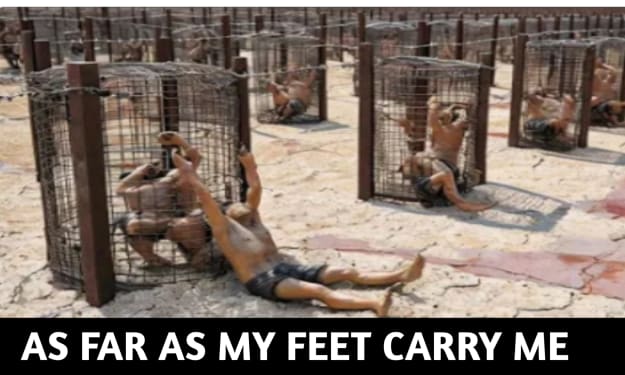
“Escape from Siberia: A Journey of Courage and Survival”
At the beginning of the story, we see a prison in Siberia, where many German soldiers are lined up. In fact, after the end of World War II, Russia captured a large number of German soldiers and forced them to work day and night in coal mines. Although the security of this prison was quite low, no one ever tried to escape from it. The reason was that the prison was surrounded by nothing but endless snow, and it was located about 14,000 kilometers away from any human settlement. So even if a prisoner managed to escape from this prison, his death in the freezing cold of Siberia was certain. This prison was built in the middle of snow stretching thousands of kilometers in every direction, which is why no prisoner could even imagine escaping from here. However, among these prisoners, there was one man who was extremely intelligent and wanted to escape from this prison to return to his wife and daughter. This prisoner’s name was Clemens Feirl. He had been sentenced to 25 years in this prison, and Clemens did not want half of his life to pass inside these prison walls. Clemens wanted to escape from this prison at any cost. Fortunately, one day Clemens got a chance to escape, and he fled the prison by hiding inside a freight train carrying coal. When he came out of the prison and saw the stars in the open sky, he felt overwhelmed with happiness. But this happiness was short-lived. After traveling some distance, the freight train was stopped. When Clemens looked outside, he saw a Russian soldier standing in front of him with a gun aimed at him. Unfortunately, Clemens was caught, and for the crime of escaping, he was locked inside an open-air cell. The cold was extreme, and the rain during the night worsened Clemens’s condition. He was not kept in that cell for a few hours, but for a full two days. After two full days, the next morning, the prison warden came to him and took him out of the cell, but did not torture him. He only said, “Your companions are waiting for you impatiently.” When Clemens reached his fellow prisoners, they were waiting for him with sticks and clubs in their hands. They were extremely angry with Clemens because, due to his escape attempt, all of them had been kept hungry for the past two days. Now Clemens understood why the warden had said that his companions were waiting for him. As soon as the other prisoners saw Clemens, they attacked him and beat him very badly. During this beating, Clemens was injured so severely that he had to be admitted to the prison hospital. The doctor of this prison was also a German prisoner. When Clemens regained consciousness, he said to the doctor, “I want to escape from this prison once again, and I need your help.” The doctor was astonished by Clemens’s courage. Even after enduring so much suffering, he was still not ready to give up. The doctor explained to him that escaping alive from this prison was impossible, and even if he did escape, he would die in the freezing cold outside. But the truth was that even if he did not escape, his death was still certain. The coal mines where they worked had extremely high levels of carbon, which entered their bodies through the air and caused deadly diseases like cancer. That is why the doctor said to Clemens, “You must try to escape from this prison one last time.”
By Filmon Ke Raaz | Movie Mysteries Explained24 days ago in The Swamp
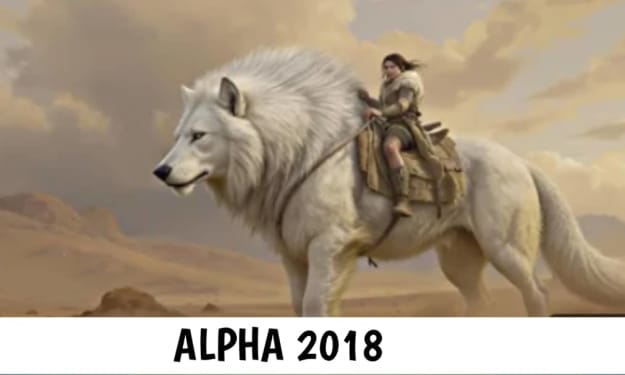
“When Survival Created the First Friendship Between Man and Beast”
This story takes us back about 20,000 years from today, to a time when humans lived in small tribes. In the story, we see ancient European people who lived in tribal groups and hunted together. We are introduced to the leader of this tribe, whose name is Ergen. A few months later, winter is about to arrive, so Ergen goes out hunting with the people of his tribe to gather food for the cold season. In front of them is a very large herd of wild bison. Everyone crawls closer to the bison. Ergen, being the leader of the tribe, waits for the right moment and signals the attack, and everyone rushes toward the bison. To escape the hunters, the bison start running in the opposite direction, and one by one many of them fall into a ravine. However, one bison survives and, in anger, charges toward Ergen’s son, Noyan. Noyan has come on a hunt for the first time and does not know how to protect himself. Ergen tells his son to move out of the way, but Noyan gets scared and starts running. The wild bison quickly approaches Noyan, lifts him onto its horns, and runs toward the ravine. Seeing this, Ergen throws his spear at the bison to save his son. The spear hits the bison, but despite being injured, it does not let go of Noyan and instead throws him toward the edge of the ravine. From here, the story goes into a flashback, one week earlier, where we see the tribe preparing for the hunt. They are making different kinds of sharp weapons from stones. This was not just preparation; new people who wanted to join the hunt had to make such stone weapons. Whoever made the sharpest and most pointed weapon was selected for the hunt. In this competition, Ergen’s son Noyan also succeeds. That night, Noyan’s mother tells Ergen not to take Noyan on the hunt with him, saying that he is still a child. She says that she loves him very much and does not want to lose him. Ergen replies that winter is coming and at this time of the year everyone goes hunting. If they do not hunt, they will die of hunger during the winter, and Noyan must prove that he is his son. The next morning, all the people of the tribe leave for the hunt. Noyan’s mother feels anxious that something might happen to her son, but Ergen reassures her and says not to worry, nothing will happen to Noyan. Then they all set off on the hunt. After going some distance, they encounter another tribe that, like them, has also gone out hunting to gather food for the winter. After traveling a long distance, they reach a stone structure that was built by their ancestors. This journey is very dangerous, and many of their elders had lost their lives during it, which is why they built this stone structure in their memory. Moving forward, they spot a wild boar, which they injure with a spear. Ergen tells his son Noyan to kill it, but Noyan has never hunted before. He panics and is unable to kill the boar. Ergen then snatches the stone dagger from his hand, kills the boar, and says: “I never thought you would turn out to be so cowardly. Only the strong survive here — this is the law of the jungle.” At night, while they are eating their hunt, strange sounds are suddenly heard. Ergen tells everyone to stay alert. At that moment, a lion appears and carries away one of the boys. The next morning, they make a small grave in memory of that boy and continue their journey. Despite walking many miles, they do not find any more prey. After walking the entire day, they decide to spend the night in a cave. There, Ergen makes star-shaped tattoos on Noyan’s hand and tells him that these stars will appear in the night sky, and if he follows them, he will find his way back home. In reality, this is a map, so that if someone gets lost during the hunt, they can find their way back home.
By Filmon Ke Raaz | Movie Mysteries Explained25 days ago in The Swamp
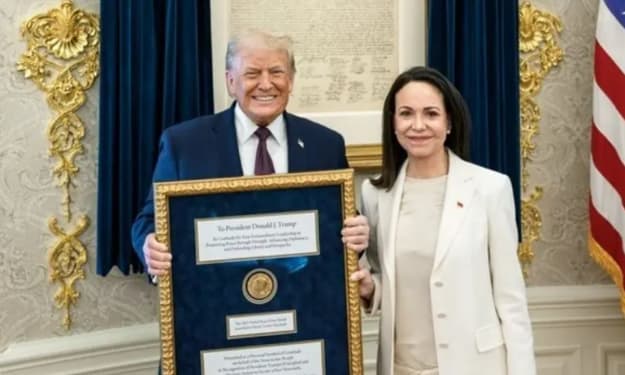
Trump Accepts Nobel Medal from Venezuelan Opposition Leader Machado. AI-Generated.
In a moment that made headlines worldwide, Venezuelan opposition leader María Corina Machado presented U.S. President Donald Trump with her Nobel Peace Prize medal at the White House on January 15, 2026. The event, described as both symbolic and political, immediately sparked discussion about the nature of international recognition, diplomatic strategy, and the role of symbolism in politics. Trump accepted the medal, describing it as a “wonderful gesture of mutual respect.” However, experts quickly clarified that the Nobel Peace Prize itself cannot be transferred, and while a physical medal can change hands, the title of Nobel Laureate remains with the original recipient. Despite this, the optics of the event immediately made it a global talking point. A Gesture Packed With Symbolism Machado, who won the 2025 Nobel Peace Prize for her efforts promoting democracy and human rights in Venezuela, explained that giving the medal to Trump was a thank-you for his support of Venezuelan freedom. The medal bore a ceremonial inscription reading: “In Gratitude for Your Extraordinary Leadership in Promoting Peace through Strength, Advancing Diplomacy, and Defending Liberty and Prosperity.” Trump, known for his longstanding desire to win a Nobel Peace Prize, posted on social media praising Machado as “a wonderful woman who has been through so much” and expressed gratitude for the symbolic gesture. The exchange was more than ceremonial—it was a political statement, emphasizing international alliances, shared ideals of governance, and the power of symbolism in modern diplomacy. Why the Medal Matters, But the Prize Doesn’t Transfer It’s important to distinguish between the physical medal and the official Nobel Peace Prize honor. The Norwegian Nobel Institute emphasizes that the title of Nobel Laureate cannot be transferred or shared, even if the medal is handed over to another person. This means that, despite public perception, Trump is not officially recognized as a Nobel Peace Prize winner. Nonetheless, the physical medal carries significant symbolic weight, especially in politics. In this case, the gesture communicated support for democratic principles in Venezuela and acknowledged Trump’s perceived role in influencing international outcomes. Venezuela’s Turbulent Political Context The backdrop of this gesture is crucial. Venezuela has experienced years of political instability under the leadership of Nicolás Maduro, whose administration was accused of corruption, human rights violations, and suppressing democratic institutions. In early January 2026, U.S. forces captured Maduro in a high-profile operation. Machado, a vocal opponent of Maduro, fled Venezuela in December and began lobbying internationally to regain influence. The Trump administration has maintained support for interim leadership under Delcy Rodríguez, a figure with ties to Maduro’s former government. In this context, Machado’s presentation of the medal was both strategic and symbolic, aiming to strengthen her political leverage while reaffirming her commitment to democratic ideals. Trump’s Response and Political Optics Trump’s acceptance of the medal was enthusiastic. He framed it as recognition of his contributions to international diplomacy and freedom movements, praising Machado and highlighting U.S. support for democratic transitions. However, critics argue that the gesture is largely symbolic, with limited direct impact on Venezuelan politics. By linking himself to Machado’s Nobel Peace Prize, Trump reinforced his image as a global influencer, while Machado sought to leverage the moment to draw renewed attention to her leadership ambitions. Global Reactions and Controversy The reaction to the event has been mixed: Some commentators hailed it as a powerful symbolic alignment between the U.S. and democratic movements in Venezuela. Others criticized the move, suggesting it undermined the prestige of the Nobel Peace Prize, using a personal award for political purposes. Observers in Norway, where the Nobel Peace Prize is administered, expressed surprise and concern, emphasizing that the prize is intended to honor peaceful achievements, not political maneuvering. International media coverage highlighted the event as unusual and unprecedented, raising broader questions about the intersection of awards, symbolism, and diplomacy. Symbolism Meets Realpolitik The medal exchange underscores how political symbolism is frequently leveraged to influence perceptions and relationships: The physical medal, while not granting the Nobel title, communicates respect and recognition. For Trump, it reinforced his international profile and provided positive imagery for supporters. For Machado, it was an opportunity to signal alignment with U.S. leadership and maintain relevance on the global stage. Analysts note that such gestures can shape public perception, media narratives, and diplomatic dialogue, even if they don’t directly alter policy outcomes. Implications for U.S.–Venezuela Relations This gesture also reflects the complexity of U.S.–Venezuela relations: The U.S. continues to back interim leadership under Rodríguez, maintaining strategic interests in the region. Symbolically, the medal presentation shows recognition of opposition leaders advocating for democracy, sending a message to both domestic and international audiences. Machado’s alignment with Trump illustrates the delicate balancing act opposition figures face when navigating global alliances while advocating for reform at home. How these symbolic acts translate into real-world political influence remains to be seen, but they are strategically valuable tools in international relations. Cultural and Historical Significance The event also sparks broader discussions about the role of awards and international recognition in politics: Can gestures like this alter public perception of leaders or movements? What is the value of symbolism in shaping global narratives? How do international institutions maintain credibility when political maneuvering intersects with honors like the Nobel Peace Prize? While there are no easy answers, the moment highlights the interplay between politics, recognition, and media attention in today’s globalized world. Final Thoughts Trump’s acceptance of a Nobel Peace Prize medal from María Corina Machado is more than a ceremonial act. It combines political symbolism, personal ambition, and international messaging in a single moment. Although the official Nobel title remains with Machado, the gesture demonstrates the power of visual symbolism in shaping narratives and influencing diplomatic perceptions. For Venezuela, it provides a renewed platform for opposition voices. For Trump, it reinforces his global visibility and reputation as a decisive actor in international politics. As the world watches, the event raises enduring questions about the intersection of recognition, diplomacy, and political strategy, offering a case study in how gestures — even symbolic ones — can resonate far beyond the room in which they occur.Start writing...
By Muhammad Hassan25 days ago in The Swamp
South Korea Sentences Ex-President to Five Years in First Martial Law Verdict. AI-Generated.
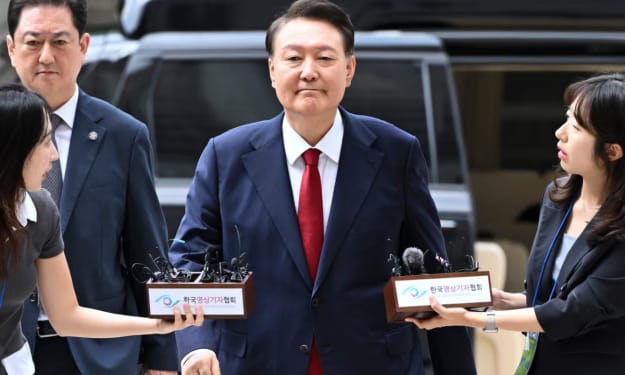
In a historic and unprecedented decision, a South Korean court has sentenced former President Chun Doo-hwan to five years in prison for his role in imposing martial law during the 1980s. This verdict marks the first time in South Korea’s modern history that a former leader has been held criminally accountable for actions taken under martial law, a period that left deep scars on the nation’s political and social fabric. The case revisits a dark chapter in South Korea’s journey toward democracy, highlighting issues of civil liberties, accountability, and the rule of law. For many South Koreans, the ruling represents both justice and a reminder of the challenges the country faced in transitioning from authoritarian rule to a democratic society. Background: Martial Law in South Korea Martial law in South Korea was imposed in October 1979, following the assassination of President Park Chung-hee. Chun Doo-hwan, a military general who later became president, played a central role in enforcing martial law. Under this regime, civil liberties were severely restricted, protests were violently suppressed, and political opponents were detained or exiled. The most notorious event associated with Chun’s rule was the Gwangju Uprising of 1980, during which pro-democracy demonstrators in the city of Gwangju were brutally suppressed by the military. Estimates suggest that hundreds of civilians were killed, with many more injured or imprisoned. For decades, survivors and activists have sought accountability, framing the trial as a litmus test for South Korea’s commitment to justice and democratic values. The Court’s Verdict The Seoul Central District Court found Chun Doo-hwan guilty of multiple charges, including: Abuse of power by imposing martial law beyond constitutional authority Violent suppression of civilian protests, particularly during the Gwangju Uprising Obstruction of justice and illegal detentions The court sentenced Chun to five years in prison, a decision that comes decades after his presidency but is widely seen as symbolically significant. The ruling underscores that even high-ranking leaders are subject to the rule of law and cannot evade responsibility for past abuses. Historical Significance This verdict is monumental for several reasons: First Martial Law Conviction: No former South Korean leader had previously been held criminally liable for imposing martial law, making this a groundbreaking legal precedent. Justice for Victims: For survivors and families of those affected by the Gwangju Uprising, the sentence represents long-overdue acknowledgment and validation of their suffering. Democratic Maturation: The decision reflects South Korea’s continued evolution as a democracy, where even former authoritarian leaders are accountable to the law. Legal experts note that while the sentence may be considered light relative to the gravity of the offenses, the symbolic weight of the verdict cannot be overstated. Reactions in South Korea Public response to the ruling has been mixed but largely positive among civil society and pro-democracy groups: Activists and survivors celebrated the decision, calling it a milestone in the fight against impunity. Conservative supporters of Chun criticized the ruling as politically motivated, arguing that the ex-president’s actions were justified during a period of national instability. Legal scholars emphasize that the case reinforces the principle that leaders cannot place themselves above the law, setting an important precedent for future generations. Many observers see this verdict as a national reckoning with the past, essential for consolidating democratic norms and healing historical wounds. The Gwangju Uprising Revisited The Gwangju Uprising remains one of the most defining moments of South Korea’s modern history. In May 1980, citizens of Gwangju protested against martial law, demanding democratic reforms. The government responded with military force, resulting in mass casualties and human rights violations. For decades, survivors of the uprising have fought to uncover the truth, identify perpetrators, and secure justice. The court’s verdict against Chun Doo-hwan is seen as a long-awaited acknowledgment of the state’s responsibility in the tragedy. Broader Implications for Accountability The sentencing of a former president for martial law abuses has broader implications: It reinforces the rule of law in democratic societies, demonstrating that historical crimes cannot be ignored. It serves as a deterrent to future authoritarian actions, reminding leaders that abuses of power carry legal consequences. It encourages nations worldwide to confront past human rights violations, particularly in contexts transitioning from authoritarianism to democracy. South Korea’s judicial system has been under scrutiny for decades, and this verdict signals that the courts are increasingly willing to challenge entrenched political power. Challenges Ahead While the ruling is historic, challenges remain: Implementation of justice: Some argue that a five-year sentence may be insufficient to fully address the gravity of human rights abuses. Political polarization: South Korea continues to grapple with divisions between conservative and progressive factions, which may influence public perception of the verdict. Historical reconciliation: Beyond legal accountability, there is a need for national dialogue, memorialization, and educational initiatives to ensure future generations understand the consequences of martial law. Experts stress that legal justice is only one part of the reconciliation process; societal acknowledgment and cultural remembrance are equally critical. Looking Forward The sentencing of Chun Doo-hwan represents a turning point in South Korea’s ongoing effort to confront its authoritarian past. By holding a former leader accountable, the country demonstrates a commitment to transparency, justice, and democratic integrity. For historians, activists, and citizens alike, the case highlights the importance of never forgetting history, learning from past abuses, and reinforcing democratic institutions to prevent their recurrence. South Korea’s experience offers lessons to other nations transitioning from authoritarian rule: accountability, transparency, and historical reckoning are vital for sustainable democracy. Final Thoughts The court’s five-year sentence for South Korea’s ex-president is more than a legal judgment; it is a symbolic affirmation of justice, democracy, and accountability. Decades after martial law was imposed, the verdict acknowledges the suffering of countless citizens, sets a precedent for holding leaders accountable, and strengthens the nation’s democratic foundations. As South Korea continues to grapple with its history, this verdict reminds the world that no one is above the law — not even a former president, and that confronting past abuses is essential for building a just and resilient society.
By Muhammad Hassan25 days ago in The Swamp
An Interview With the President Inside the Oval Conversation: Power, Pressure, and the Path Forward. AI-Generated.
The Oval Office is more than a workspace. It is a symbol of authority, responsibility, and the immense weight of decision-making. Every conversation held inside its curved walls carries echoes of history, power, and consequence. An interview with the president in this setting is not merely a dialogue—it is an encounter with the realities of leadership under constant pressure.
By Aarif Lashari25 days ago in The Swamp
The Climax of Fire. AI-Generated.
Fire has always been a symbol of transformation. From the first controlled flames used by early humans to modern industrial furnaces and raging wildfires, fire represents creation and destruction, warmth and devastation, survival and loss. “The Climax of Fire” refers to that pivotal moment when flames reach their peak—when energy, intensity, and consequence converge.
By Aarif Lashari25 days ago in The Swamp
It’s Not Monday, But It’s Not Friday Yet Either. AI-Generated.
There is a peculiar emotional space in the middle of the week. It’s not Monday, with its fresh starts and reluctant alarm clocks. But it’s also not Friday, with its promise of rest, release, and reward. It’s the in-between—the stretch of time where momentum exists, but excitement feels distant.
By Aarif Lashari25 days ago in The Swamp
Canada and China Reach Initial Trade Deal on Electric Vehicles and Canola. AI-Generated.
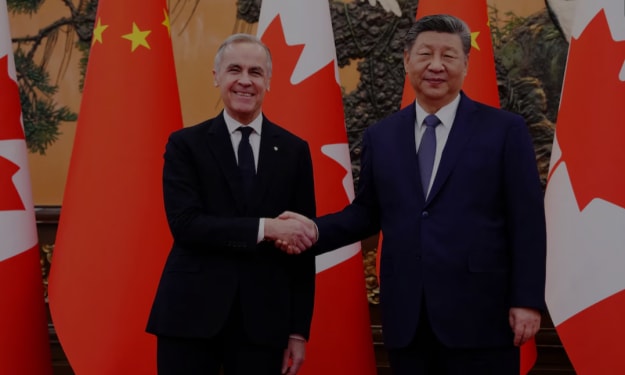
After years of strained relations and trade uncertainty, Canada and China have reached an initial trade agreement focused on two strategically important sectors: electric vehicles (EVs) and canola. While limited in scope, the deal marks a notable step toward stabilizing economic ties between the two countries at a time when global trade is increasingly shaped by geopolitics, supply-chain risks, and climate goals. Officials on both sides have described the agreement as preliminary rather than comprehensive, but its symbolism carries weight. For Canada’s farmers and clean-technology sector — and for China’s rapidly expanding EV market — the deal offers cautious optimism. Why This Deal Matters Now Relations between Canada and China have been tense for much of the past decade, affected by diplomatic disputes, trade restrictions, and growing mistrust between Western nations and Beijing. Agriculture and technology, in particular, have often been caught in the crossfire. Canola has long been a flashpoint. Canada is one of the world’s largest producers and exporters of the crop, while China is one of its most important markets. Past trade disruptions severely affected Canadian farmers, forcing Ottawa to seek alternative buyers. At the same time, electric vehicles have emerged as a new frontier of economic competition. China dominates global EV manufacturing, while Canada is positioning itself as a critical supplier of batteries, minerals, and clean-energy manufacturing. This deal reflects a shared recognition: economic realities are pushing both sides toward cooperation, even amid political differences. What the Agreement Covers While full details have not yet been released, officials confirm that the agreement addresses two key areas: 1. Canola Market Access China has signaled a willingness to ease restrictions on Canadian canola exports, addressing long-standing concerns from Canadian farmers and exporters. Improved access could help stabilize prices and restore confidence in one of Canada’s most valuable agricultural sectors. For producers in provinces like Saskatchewan and Alberta, this represents a potential economic lifeline after years of uncertainty. 2. Electric Vehicles and Clean Technology The deal also opens the door to cooperation in the EV sector. This includes trade discussions around electric vehicles, batteries, and related clean-energy components. Canada has been investing heavily in EV supply chains — from lithium and nickel mining to battery manufacturing — while China remains the world’s largest EV market and producer. The agreement suggests opportunities for investment, technology exchange, and supply-chain collaboration, though significant barriers remain. A Strategic Shift Toward Economic Pragmatism Rather than signaling a full reset in relations, the deal reflects a pragmatic shift. Canadian officials have emphasized that engagement does not mean abandoning concerns over human rights, national security, or foreign interference. Instead, the approach suggests that selective economic cooperation can coexist with political caution. China, meanwhile, benefits from reliable agricultural imports and diversified supply chains at a time when trade relations with the United States and parts of Europe remain strained. In short, both sides appear motivated by mutual economic interest rather than political alignment. Implications for Canadian Farmers For Canada’s agricultural sector, the canola portion of the deal is especially significant. China has historically been one of the largest buyers of Canadian canola, and past restrictions led to financial losses and market instability. Re-entry into the Chinese market could: Increase export volumes Improve farm incomes Reduce dependence on alternative, less predictable markets However, farm groups remain cautious. Many remember how quickly access was lost in the past and are urging the government to diversify export markets rather than rely too heavily on any single buyer. What It Means for the EV Industry The inclusion of electric vehicles highlights how trade priorities are shifting globally. Canada has positioned itself as a future EV powerhouse, leveraging its reserves of critical minerals and close proximity to U.S. manufacturing hubs. China, meanwhile, leads in EV production, battery technology, and consumer adoption. The deal could allow Canadian companies greater access to Chinese markets or supply chains, while Chinese firms may seek investment or partnerships in Canada’s growing clean-tech ecosystem. Still, challenges remain. National security concerns, investment screening rules, and political scrutiny mean that any deeper EV cooperation will be carefully managed. Political Reactions and Caution Reaction in Canada has been mixed. Supporters argue that the deal demonstrates responsible diplomacy — protecting jobs and industries without escalating tensions. Critics warn that economic engagement with China carries risks, particularly in strategically sensitive sectors like clean technology. Opposition parties have called for transparency, urging the government to clearly outline safeguards and ensure Canadian interests are protected. In China, state media has framed the agreement as evidence that cooperation remains possible despite global polarization — a narrative that emphasizes stability and economic growth. A Limited Deal, Not a Full Reset It’s important to note what this agreement does not do. It does not resolve broader diplomatic disputes, nor does it eliminate trade risks overnight. Instead, it establishes a framework for dialogue and incremental progress. Analysts describe it as a confidence-building step — one that tests whether limited cooperation can succeed without triggering political backlash on either side. If successful, it could pave the way for expanded talks in other sectors. If tensions resurface, it may remain an isolated exception. Global Context: Trade in a Fragmented World This deal comes amid a global shift toward strategic trade. Countries are increasingly prioritizing supply-chain security, climate goals, and economic resilience over pure free-market efficiency. In this environment, selective bilateral agreements are becoming more common. Canada’s move reflects an attempt to balance values, alliances, and economic necessity — a challenge facing many middle-power economies navigating rivalry between global giants. Final Thoughts The initial trade deal between Canada and China on electric vehicles and canola is modest in scope but significant in meaning. It signals that, despite deep political differences, economic pragmatism still has a place in international relations. For farmers, manufacturers, and policymakers alike, the agreement offers cautious hope — paired with a clear reminder that diversification and vigilance remain essential. Whether this deal marks the beginning of a broader thaw or remains a narrow exception will depend on how both sides manage trust, transparency, and the inevitable pressures of geopolitics in the months ahead.
By Muhammad Hassan25 days ago in The Swamp
Arsenal Take Step Toward Ending Semi-Final Nightmares – But Regrets Remain. AI-Generated.
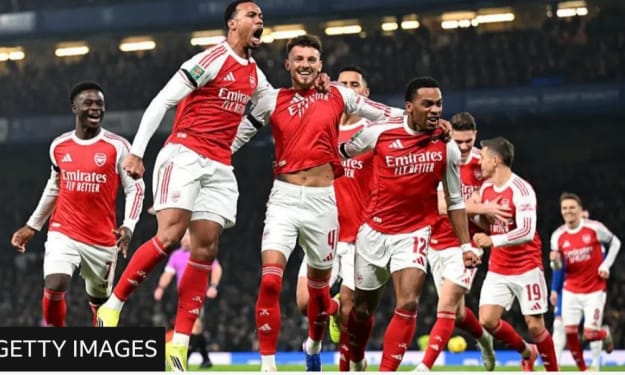
For Arsenal, semi-finals have often represented a painful psychological barrier rather than a gateway to glory. Over the years, the club has suffered a series of near-misses in domestic and European competitions, creating a narrative of promise followed by disappointment. This time, however, Arsenal have taken a meaningful step toward breaking that cycle—though not without lingering regrets.
By Aarif Lashari25 days ago in The Swamp
Death of Chimamanda Ngozi Adichie’s Son Prompts Calls for Overhaul of Nigeria’s Healthcare Sector. AI-Generated.
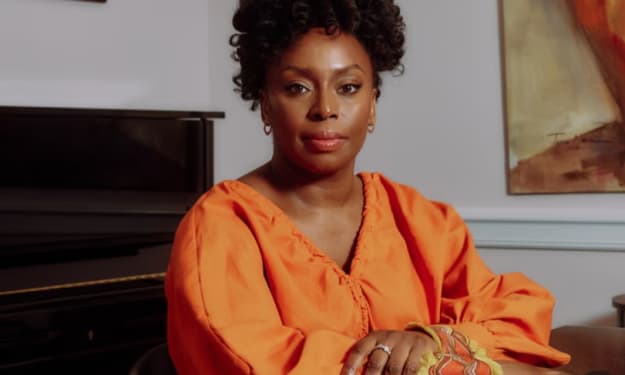
The reported death of the son of celebrated Nigerian author Chimamanda Ngozi Adichie has sent shockwaves across Nigeria and beyond, transforming a deeply personal tragedy into a broader national reckoning about the state of the country’s healthcare system. While details surrounding the incident remain private, the loss has reignited public debate over systemic failures in Nigeria’s medical infrastructure, access to quality care, and the widening gap between public and private health services.
By Aarif Lashari25 days ago in The Swamp
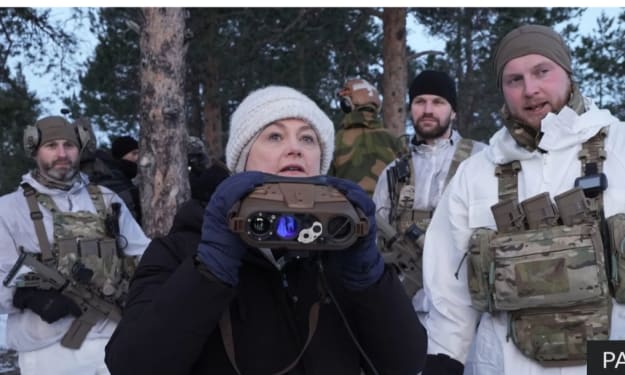
NATO Arctic Defence Needed Against Russia, Says Cooper. AI-Generated.
NATO must strengthen its Arctic defence posture in response to growing Russian military activity in the region, according to comments made by Cooper, a senior Western security figure. The warning highlights increasing concern among NATO members that the Arctic is becoming a frontline in geopolitical competition, rather than a remote zone of cooperation.
By Aarif Lashari25 days ago in The Swamp