humanity
Humanity topics include pieces on the real lives of politicians, legislators, activists, women in politics and the everyday voter.
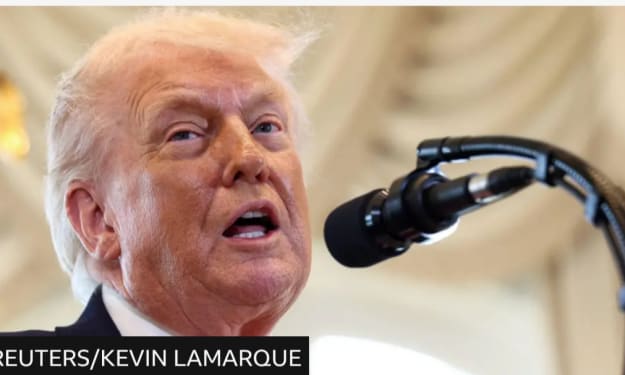
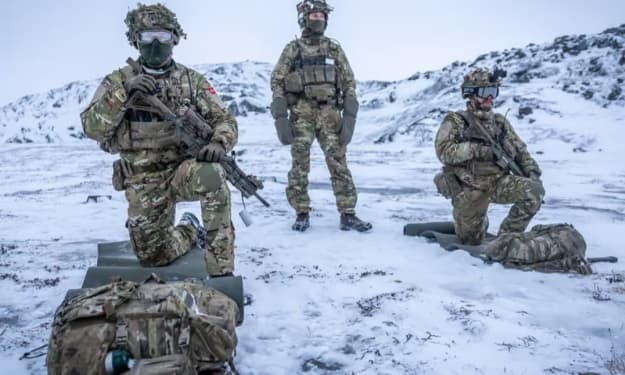
Trump Administration Live Updates: President Targets European Leaders and Doubles Down on Greenland Threats. AI-Generated.
The Trump administration has once again grabbed global headlines with its direct statements targeting European leaders and renewed threats regarding Greenland, intensifying diplomatic tensions. This comes amid ongoing discussions about trade, territorial influence, and the United States’ strategic interests in the Arctic region.
By Aarif Lashari16 days ago in The Swamp
An A.I. Start-Up Says It Wants to Empower Workers, Not Replace Them. AI-Generated.
Artificial intelligence is often portrayed as a job killer, a technology that automates tasks and threatens traditional employment. However, a rising AI start-up is challenging this narrative, stating that its mission is to empower workers rather than replace them. By focusing on augmentation rather than automation, the company aims to demonstrate that AI can enhance human capabilities, improve productivity, and create more meaningful work for employees.
By Muhammad Hassan16 days ago in The Swamp
As Spain Mourns Train Crash Victims, Investigators Focus on Track. AI-Generated.
Spain is in shock. A high-speed train collision near Adamuz, Córdoba has claimed at least 40 lives and injured over 120 people, marking one of the deadliest rail disasters in recent European history. Families, communities, and an entire nation are grappling with grief, while investigators scramble to find answers.
By Aqib Hussain17 days ago in The Swamp
Japan PM Takaichi Calls Snap Election Three Months After Taking Office. AI-Generated.
In a surprising move, Japanese Prime Minister Sanae Takaichi has announced a snap general election just three months after assuming office. The election is set for February 8, 2026, following the dissolution of the House of Representatives on January 23.
By Aarif Lashari17 days ago in The Swamp
Australia Moves to Pass Tougher Gun and Hate Crime Laws After Bondi Shooting. AI-Generated.
Australia is set to pass a significant package of stricter gun control and hate crime laws following the devastating Bondi Beach shooting in December 2025. This tragic attack, which left 15 people dead, has prompted lawmakers to act swiftly to prevent similar violence in the future.
By Aarif Lashari17 days ago in The Swamp
Prince Harry Returns to U.K. to Face Court Over Alleged Tabloid Snooping. AI-Generated.
Prince Harry has returned to the United Kingdom to appear in court for a high-profile case accusing several tabloids of illegal phone and email hacking. The case, which has captured global attention, raises significant questions about privacy, press freedom, and the rights of public figures — issues that resonate far beyond the royal family itself. The legal battle is part of a growing trend in which public figures, celebrities, and even ordinary citizens are taking a stand against invasive media practices. For communities concerned with media ethics, digital privacy, and responsible journalism, this case provides a high-profile lens into the tensions between public curiosity and personal boundaries. Why Prince Harry Is in Court The Duke of Sussex alleges that multiple U.K. tabloids engaged in illegal phone and email hacking to obtain private information. According to court filings, the publications collected sensitive details about his personal life and communications, which were then published without consent. Prince Harry’s legal team argues that such actions are a gross invasion of privacy, causing distress to both him and his family. While the public has long been fascinated by royal life, the case underscores that curiosity does not justify illegal surveillance. The Stakes: Privacy vs. Public Interest This case is about more than just celebrity gossip. It touches on fundamental questions of privacy in the digital age: How far should the media go to report on public figures? Do royals, as public personalities, have a reduced expectation of privacy? What limits exist for journalists when pursuing stories that attract massive attention? Legal experts say the outcome could reshape how the media approaches stories about private individuals, especially when technology makes personal data increasingly accessible. The Tabloid Culture in the U.K. U.K. tabloids have a long history of sensational reporting, often treading the fine line between investigative journalism and invasion of privacy. Prince Harry’s case follows previous high-profile instances, including actions by celebrities like Meghan Markle and members of the wider royal family. The tabloids involved in this case are accused of using sophisticated methods to access private information, including: Phone hacking to listen to voicemails Email interception to obtain sensitive correspondence Using insiders or intermediaries to gain personal details For many, these tactics raise ethical questions about journalistic integrity and the responsibility of media outlets toward their subjects and the wider public. Public Reaction and Community Impact Prince Harry’s court appearance has triggered widespread media coverage, sparking discussions in both traditional and online communities. Many have expressed support for the Duke, emphasizing the importance of protecting individual privacy. Others debate the role of public interest, arguing that royals, as global figures, are naturally newsworthy. Social media has become a platform for public discourse, where communities weigh in on: Media ethics and accountability Privacy rights in the digital era How public figures should respond to invasive reporting For citizens, this case serves as a reminder that privacy is not just a personal concern, but a community issue in a world where digital surveillance is increasingly common. Legal Context Prince Harry’s case draws on existing privacy laws in the U.K., including protections against: Phone hacking and interception of private communications Data protection breaches Harassment and misuse of personal information The legal framework is designed to balance freedom of the press with the right to personal privacy. However, critics argue that enforcement has historically been inconsistent, making high-profile cases like this essential for setting precedents. Legal observers note that if Prince Harry prevails, it could strengthen privacy protections for everyone, not just celebrities. This could influence how journalists and media outlets operate, potentially discouraging invasive practices. Implications for the Royal Family While the case focuses on Prince Harry, the outcome could impact the entire royal family. For younger royals and other public figures, it signals that taking legal action against media intrusion is a viable path. The case also reflects broader tensions within the royal family, especially as Prince Harry and Meghan Markle have previously spoken about media pressure affecting their mental health. Their experience highlights how media scrutiny can intersect with community wellbeing, prompting debates on responsible reporting. Why This Matters to the Public Prince Harry’s court battle is not just a celebrity issue; it resonates with anyone concerned about privacy, digital safety, and media accountability. Communities across the U.K. and around the world are increasingly aware that: Technology makes personal information vulnerable Media organizations wield significant power over public perception Legal protections are necessary to safeguard individuals from exploitation The case offers an opportunity for educational discussions, community engagement, and awareness-raising about digital privacy. It also underscores that privacy rights are a communal concern, affecting everyone who interacts with digital platforms or consumes media content. What to Watch for in Court Observers will be closely following several key aspects of the case: Evidence of illegal activity – Whether the tabloids violated laws related to hacking and data protection Extent of damages – How the invasion of privacy affected Prince Harry and his family Legal precedent – How the judgment might influence future privacy cases and media practices The outcome could either strengthen privacy protections or leave loopholes that allow continued intrusion by media organizations. Either way, it is a case with implications far beyond the royal family, affecting communities everywhere. The Takeaway Prince Harry’s return to the U.K. for this court case highlights the ongoing tension between public curiosity and individual rights. For communities concerned with media ethics, privacy, and responsible journalism, the case is a touchstone moment. It reminds us that privacy is not a luxury reserved for the famous; it is a fundamental right that communities must defend in a rapidly changing digital landscape. As the case unfolds, it will likely influence not only how the media covers public figures but also how communities understand and assert their own privacy rights in everyday life.
By Muhammad Hassan17 days ago in The Swamp
Australia Parliament Votes for Tighter Gun Controls After Bondi Shooting. AI-Generated.
In a dramatic shift in national policy, Australia’s federal parliament has voted to tighten gun controls following the devastating mass shooting at Bondi Beach last December — the deadliest in decades. The vote reflects a growing consensus across much of the country that action is needed to prevent similar tragedies, even as the reforms spark heated debate about civil liberties, community safety, and political division.
By Aarif Lashari17 days ago in The Swamp
Dow Set to Fall More Than 700 Points on Trump’s New Tariff Threat Over Greenland. AI-Generated.
Wall Street is bracing for a rough start to the week as the Dow Jones Industrial Average looks set to tumble sharply — potentially by more than 700 points — following a fresh round of tariff threats by former U.S. President Donald Trump. This new escalation revolves around Greenland, a vast Arctic territory of strategic importance, and has already rattled investors and markets worldwide. Futures for the Dow, S&P 500, and Nasdaq have all weakened significantly, pointing to a major sell-off when trading resumes. Analysts say the combination of geopolitical uncertainty and the potential for a new trade conflict with major European allies has created heightened anxiety among traders and investors alike. What Sparked the Market Drop? Trump’s latest announcement shocked the markets. He warned that the United States may impose new tariffs on imports from several NATO and European countries unless they negotiate over his controversial Greenland plans. Investors immediately feared the repercussions of a broad trade dispute. A prolonged tariff war could hurt corporate earnings, disrupt global supply chains, and slow economic growth. The Dow’s expected 700-point decline reflects concerns about these potential consequences. In Europe, the reaction was equally swift. Major indices such as Germany’s DAX and France’s CAC 40 fell more than 1% as traders priced in the risk of retaliatory measures. Meanwhile, safe-haven assets like gold and silver surged, as investors sought protection against rising uncertainty. The Details of Trump’s Tariff Threat Trump’s plan involves tariffs tied directly to Greenland, targeting imports from Denmark, Norway, Sweden, France, Germany, the Netherlands, Finland, and the United Kingdom. Initially, a 10% tariff would be imposed starting February 1. If negotiations fail by June 1, tariffs could jump to 25%, potentially escalating tensions further. This strategy is unprecedented because it targets allied nations rather than traditional trade rivals. Experts say it’s a bold move intended to pressure European governments into negotiating over Greenland, which Trump has repeatedly suggested could be of strategic and economic interest to the U.S. European leaders reacted strongly. British Prime Minister Keir Starmer called the threat “completely wrong,” while France’s Emmanuel Macron warned of coordinated EU retaliation if the tariffs go into effect. This diplomatic pushback adds another layer of complexity to the market reaction. How Global Markets Are Reacting The tariff threat is sending shockwaves across global markets: U.S. Stocks: Dow futures indicate a drop of over 700 points, with tech-heavy indices like the Nasdaq and S&P 500 also down sharply. European Markets: Germany, France, and other major indices fell as fears of a full-blown trade conflict escalated. Safe-Haven Assets: Gold and silver prices climbed as investors sought refuge from the volatile stock markets. Currencies: Traditional safe-haven currencies like the Swiss franc and Japanese yen strengthened against the U.S. dollar. Investors are watching the situation closely, worried that retaliatory tariffs from Europe could total billions of dollars in trade restrictions, further destabilizing global markets. Why Investors Are Concerned Several factors explain why Wall Street is reacting so strongly: Uncertainty Over Trade: The tariffs could spark a broader trade war with Europe, affecting multinational corporations with significant exposure to European markets. Corporate Earnings Risk: Higher tariffs usually translate to increased costs for U.S. companies, which could reduce profits and shake investor confidence. Geopolitical Tensions: This is a rare instance where trade policy is being used to pressure allies, creating additional unpredictability. Analysts caution that while volatility may be temporary, the potential economic impact could be serious if negotiations fail and tariffs are imposed. Investor Behavior in Times of Crisis When markets face sudden geopolitical shocks, investors typically move funds toward “safe-haven” assets. In this case, we’ve seen: Gold and silver prices rise significantly. Flight to secure currencies like the yen and Swiss franc. Equity sell-offs as traders exit riskier positions in tech and industrial stocks. These moves reflect broader market psychology: when uncertainty spikes, even short-term threats can trigger massive sell-offs. The Politics Behind the Markets Trump framed his Greenland tariffs as both a national security priority and an assertion of U.S. leverage. By threatening tariffs, he appears to be using economic pressure to influence European governments. European leaders, however, see it as an overreach. Starmer described the approach as “completely wrong” and warned it could escalate into unnecessary economic conflict. Macron echoed this sentiment, warning of coordinated EU retaliation if the tariffs are imposed. The situation underscores how closely politics and markets are intertwined. Geopolitical decisions now have immediate financial consequences, and markets are extremely sensitive to diplomatic developments. What Happens Next? Investors and traders are watching three key areas: Corporate Earnings Reports: These will indicate how resilient U.S. companies are to rising trade uncertainty. Economic Data: Jobs, inflation, and central bank signals could either calm or worsen market volatility. Diplomatic Negotiations: Talks between Washington and European capitals could ease tensions or further escalate the threat. The Dow’s projected drop of more than 700 points is a stark reminder of how quickly geopolitical events can influence investor confidence and market stability. Why This Matters The Greenland tariff threat demonstrates that even allies are not immune to trade-based leverage. Markets are now pricing in a level of uncertainty rarely seen in U.S.-European relations, showing how connected geopolitics and finance have become. For investors, this is a lesson in risk management. For policymakers, it is a cautionary tale of how rhetoric can affect global markets. And for the public, it underscores that events far from home — in Europe or Greenland — can ripple through Wall Street and beyond. The Takeaway As the Dow braces for a potential 700+ point drop, the story is about more than numbers. It reflects the fragility of global markets in the face of political decisions and highlights the importance of diplomacy in economic stability. Investors, governments, and communities alike will be watching closely in the coming weeks, as the Greenland dispute continues to shape the trajectory of global markets and trade relations.
By Muhammad Hassan17 days ago in The Swamp
Trump Links Greenland Dispute to Not Getting Nobel Peace Prize. AI-Generated.
In a surprising twist during a press conference earlier this week, former U.S. President Donald Trump linked his controversial Greenland dispute to the fact that he did not receive the Nobel Peace Prize. His comments sparked reactions from politicians, international media, and the public, highlighting once again the unusual rhetoric that characterized his presidency.
By Aarif Lashari17 days ago in The Swamp
EU Prepared to Respond to Trump’s Greenland Tariff Threats but Hopes to De‑escalate at Davos. AI-Generated.
In a tense turn of transatlantic relations, the European Union says it is ready to respond to U.S. President Donald Trump’s tariff threats tied to Greenland. At the same time, EU leaders hope to use diplomacy to de‑escalate tensions at the upcoming World Economic Forum in Davos.
By Aarif Lashari17 days ago in The Swamp
Mother of Elon Musk’s Child Sues xAI Over Grok Deepfakes. AI-Generated.
The world of artificial intelligence has taken another controversial turn, this time involving one of the most high-profile figures in tech: Elon Musk. Reports have surfaced that the mother of Musk’s child has filed a lawsuit against xAI, Musk’s AI company, over alleged misuse of AI-generated deepfake technology. The case centers on Grok, xAI’s chatbot, which, according to the lawsuit, created unauthorized deepfake content that impacted the plaintiff’s privacy and emotional wellbeing.
By Muhammad Hassan17 days ago in The Swamp
“I Was Hit in the Face by Pellets”. AI-Generated.
The echoes of gunfire and tear gas still linger in the border regions of Iran, where residents say security forces responded to growing protests with excessive violence. For many living in these remote areas, the line between daily survival and political resistance has blurred, as demonstrations against economic hardship and political repression continue to spread.
By Ayesha Lashari18 days ago in The Swamp