history
Past politicians, legislation and political movements have changed the course of history in ways both big and small. Welcome to our blast to the past.
The War of 1812
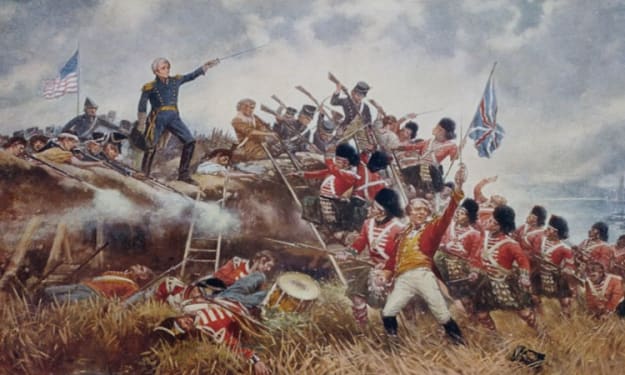
The War of 1812, one of many “forgotten wars”, is often ignored despite the part it played in forming the identities of the nations of North America. The United States, which, along with Canada, probably remembers the war best, experienced massive repercussions from the war, some physical—and some mental. The war helped stimulate the creation of the powerful standing army and navy America had never had before and would become known for in later conflicts; it created a new American nationalism based around various triumphs in the war, no matter how small; and it resulted in significant losses for the Native Americans, despite being a stalemate war between England and America. These changes shaped the American people as a whole and laid the groundwork for the nation we know today.
By History Roundtable7 years ago in The Swamp
Guardians of Scotland, Part 1
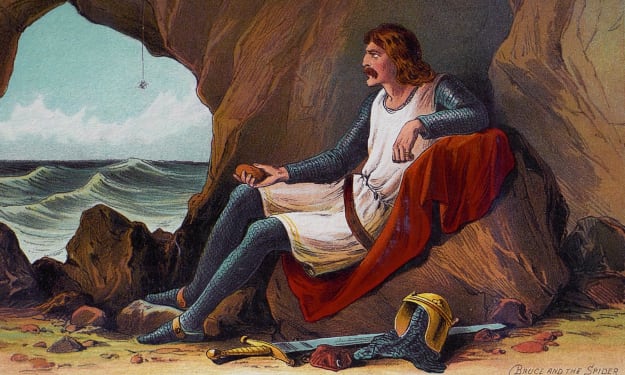
The Maid of Norway The untimely death of Alexander III of Scotland in 1286 brought to an end a period of relative stability during which Scotland’s existing status as an independent nation had remained secure after two reigns involving little conflict.
By David Morrison7 years ago in The Swamp
The Songhai Empire: The Golden Medieval African Civilization
The Songhai Empire (1464-1591) was the largest empire to emerge in West Africa. The capital of the Songhai Empire was Gao, which was located on the Niger River. This location was perfect for trading gold, kola, nuts, cloth, salt, and slaves for cowries (cowries are marine mollusks that was formally used as money in parts of Africa).
By Darryl C. Richie7 years ago in The Swamp
A 50-Year-Old Murder
A 50-Year-Old Murder: Why does it matter? My first awareness to the historical controversy surrounding the death of President John F. Kennedy arrived when I was about 12 years old. It may have been on the 30th Anniversary that I listened to my Dad recount his memory of that November weekend of 1963. He recalled it crisply, clearly and I remember it precisely. After graduating from Allen County High in 1962, he found employment at Woodmaster and was at work when the news came that the President had been shot. One of his coworkers told me that Dad left work early that day in tears.
By Drew Lindsey7 years ago in The Swamp
The Greenback
When the Kingston Trio came out with their rendition of "Greenback Dollar" with the lyrics saying, "I don't give a damn about a greenback dollar I spend it just as fast as I can," today, half of that phrase is actually true. Too many of us continue to spend that greenback ever faster though. But, what we do care about is why that ever-disappearing dollar doesn't afford the things it used to. We do give a damn about every last dime that comes into our possession today.
By Dr. Williams8 years ago in The Swamp
Best Political One-Liners in History
Great moments in history are often defined by the words used to describe the events. From ancient Roman critics to the modern era of political journalism, words have grown bigger than even the powerful men and women who speak them. There are political quotes for any number of situations, from lighthearted quotes at a fundraiser to powerful statements commemorating the outbreak of war. Whether humorous and witty or solemnly inspiring, political one-liners can take many shapes. Here are some of the best political one-liners in history.
By Joseph D. N. Kendrick8 years ago in The Swamp
Julius Caesar: Friend or Foe?
Julius Caesar and Pompey shared a special love/hate relationship within their personal and political life. To Caesar, Pompey represented a father figure to him; yet Caesar saw within himself to one day surpass and conquer Pompey for the throne of Rome. Caesar tolerated Pompey solely for the purpose of gaining his knowledge and wisdom---to later overthrow Pompey’s power in a civil war. Caesar and Pompey struggled for power which ultimately ended in luck on Caesar’s behalf. In 48 B.C., again erupts another civil war (which lasts until the year 45 B.C.) where Caesar utterly defeats everyone and assumes position as emperor of the Roman Empire. As emperor, Caesar adopts Octavian, to further advance his political and popularity status, which surprisingly backfired on Caesar’s original plans he had for Octavian. “Having outcompeted his rivals one by one, Octavian was now by far the most powerful man in the Roman empire … he was basically a military dictator with almost unlimited power (Sommer, 34).” Octavian, as he got older, proved to be far more advanced in his comprehension and skills than Caesar had anticipated, which played to Caesar’s advantage as Octavian willingly shared his insight with Caesar in planning war strategies for Caesar’s army. After Caesar’s death, he left everything he owned to his successor Octavian in his will. With his newfound power and wealth, Octavian decided to donate it all to the poor (in honor of Caesar’s wish). In doing so, Octavian gains prestige with the people of Rome---getting help and support from them to refinance and rebuild his power again. After the Senate went into hiding from killing Julius Caesar, Octavian then takes it upon himself to avenge Caesar’s death by hunting down and killing off each of the members of the Roman Senate. While Caesar was still alive though, he accentuated his supremacy by pleading to the Senate for a force unanimous decision of making him dictator of Rome.
By Robyn Welborne8 years ago in The Swamp
The Church, the Tribes, and the Roman Empire
“Pride goeth before destruction, and an haughty spirit before a fall. (Proverbs 16:18) Usually we just abbreviate it to “pride goeth before a fall”.” (Glen, ‘The King’s English’). A universally famous quote from the King James Bible sums up how too much of a good thing will eventually lead to ruin. History has a way of repeating itself. Just like the Grecian Empire before them, the mighty Roman Empire also experienced a great ‘fall’. But, was the Romans defeated by pride …or fear? Rome fell in August 410 at the hands of Alaric the Visigoth, erecting Alaric as the next successor to the Romans’ fragile legacy lineage. After Alaric’s death, Ostrogothic King Theodoric emerges through the challenges and responds by preserving what was left of the Roman Empire and merging its cultures with the Germanic tribes. Out from all of this chaos, the ‘true successors’ of Rome came to be the Roman Catholic Church; their peaceful influence over the invading barbarians showed how the Germanic leaders were just ‘inheritors’ to what the Catholic Church had already established. Although the Visigothic leader Alaric conquered Rome, and the Ostrogoth King Theodoric, after him, saved its traditions and history; the Roman Catholic Church still remains the only real successors of the fallen Roman Empire by providing stability for the Medieval Period.
By Robyn Welborne8 years ago in The Swamp
The Rise of 20th Century Fascism
To acolytes of Fascist ideology, the First World War served to reiterate their deep-seated belief that Liberal Democracy was essentially antiquated. They believed a heavily nationalistic, autocratic form of authoritarianism was required to transmogrify Europe; redefining the traditional constructs of social order in the process. Michael Mann in his book ‘Fascists’ discusses the rise of right wing authoritarianism through his IEMP model, this model refers to the means and distributions of social power; Ideological, Economic, Military and Political. I will be drawing upon the Mann’s IEMP model to coherently discuss the role that fear of the revolutionary left played in the proliferation of Fascism during the 20th century.
By T.P Schofield8 years ago in The Swamp