finance
Money talks; reviewing the global economy, government spending, taxes, and economic policy that affect our social and political future.
Issues with Extreme Capitalism
The rise of the Western world occurred due to capitalism. In fact, the notion of businesses, companies, and large corporation uses this customary bread and butter design of capitalism to make money, contribute to the economy and employ workers, skilled or unskilled. Because of this, the Western world rose in the Industrial Revolution and continued to rise amid corporatism and consumerism in the 20th Century and beyond. Due to developments and changes, capitalism has in many cases got out of control and became extreme in its measures to make profits. How did this happen? Let us look at its history.
By Kevin Tennert5 years ago in The Swamp
How can the tax hike amidst pandemic affect you?
A significant federal tax hike has been expected since 1993, and it is suspected to come soon. The purpose of the increase is to pay for the long-term economic program to help ease the financial burden of the pandemic.
By Lyle D. Solomon5 years ago in The Swamp
How ONGC’s Overseas Projects Help India Secure Oil and Gas Supplies
Overview ONGC is executing several oil and gas exploration projects overseas through its fully-owned subsidiary, ONGC Videsh which produced 9.76 million metric tons (MMT) of crude oil and 5.23 MMT of natural gas in 2020. The company has procured participating interest in 35 oil and gas assets located in 15 countries spread across all the continents barring Australia. ONGC Videsh contributed around 30.3% of crude oil and 23.7% of natural gas to India's domestic production in 2019-20. The company is constantly looking for viable deposits of oil and gas in different parts of the world and its personnel are braving different kinds of hazards to prospect for oil and gas in order to secure India's supply.
By ONGC India5 years ago in The Swamp
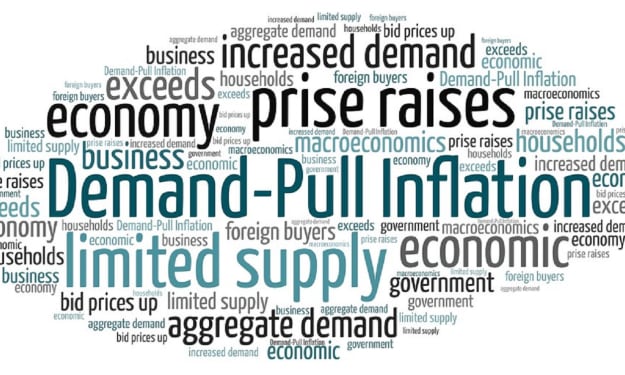
Inflation should not be allowed to undermine purchasing power, overall economic stability
Inflation is a rise in the price of daily and common goods. For example food, clothing, transportation, etc. Due to inflation purchasing power and currency value for a country decreases. It affects every aspect of the economy from consumers buying goods and services, reduces shaving, investment, stock price, and overall country's economic prosperity. It also creates a problem for producers, consumers, policymakers.
By Amit kumar singh5 years ago in The Swamp
Punjab Finance Minister Manpreet Singh Badal discloses Punjab Budget 2021-22
The current politics Punjabi news is all about the most anticipated Punjab Budget for the financial year 2021-22. Punjab Finance Minister Manpreet Singh Badal presented the state budget in the state assembly on Monday, March 8. The budget was with an outlay of Rs. 1,68,015 crore. In his budgetary document, the finance minister proposed spending on many key sectors.
By Writescuration5 years ago in The Swamp
Minimum Wage Increase vs Skilled Workers
One of the big talking point in the new 1.9 Trillion COVID relief bill is an increase of the minimum wage to $15 an hour for jobs that require minimal skills, but how does this affect skilled jobs? One of the things that is discussed is how 1.4 million jobs will be lost, which is unacceptable. How this will hurt small businesses and look at hiring less people in favor for automation to cut cost. What about devaluing skilled jobs like nurses, teachers, other healthcare professions, skilled labors like HVAC, mechanics and many more? Why is the media ignoring this part, where people go to either trade schools or community college to get degrees in these fields that starts at $15 an hour or lower? How will the increase of the minimum wage affect businesses like construction, doctors offices, law offices, auto repair shops, airlines, media companies, grocery stores, and so on that rely on skilled workers?
By Blanche Smith-Mighty5 years ago in The Swamp
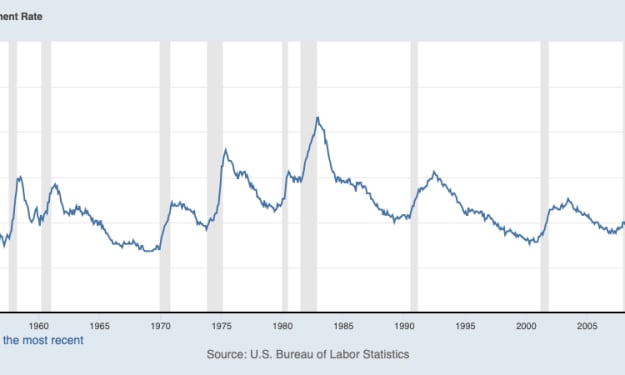
Does the U.S. National Unemployment Rate Accurately Describe Labor Market Conditions during the Covid-19 pandemic?
To answer this question, we go behind the scenes of this iconic statistic to garner a more accurate read of actual U.S. labor market conditions. First, it is important to mention that the U.S. Unemployment rate jumped from 3.5% in Feb. 2020 (pre-pandemic) to a peak of 14.8% in April 2020 and has since dipped to a much more favorable 6.3% reading as of Jan. 2021. On the surface, some may be tempted to interpret this movement as signaling that we are getting closer to declaring victory against the worse labor market collapse since the Great Depression in 1929!
By Anthony Chan5 years ago in The Swamp
How to Raise the National Minimum Wage Fairly and Avoid Massive Job Losses?
There is considerable debate about raising the National Minimum Wage to $15.00 per hour. Not surprisingly, since adjusting such wages upward on a national basis is a blunt instrument, the Congressional Budget Office (CBO) estimates that raising the national minimum wage to $15.00 per hour could result in the loss of 1.4 million U.S. jobs.
By Anthony Chan5 years ago in The Swamp