education
A place to hash out all opinions on education policy, charter schools, statewide testing, and what the political world is and isn't doing about it.
Let's Talk About It: Race
We often do not agree with each other on most issues and topics today and it’s no exception when it comes to how each of us perceives race. The importance of how we perceive race within schools is something we must explore deeper. Through the years, humans have been debating whether race matters or not. Meaning, some people will look at race as an important aspect to look at when it comes to how race affects people’s lives. Race is a way to represent each other’s culture and shows representation of a group or community for students within schools. As we look at each segment of how we perceive race, try to gain an understanding of how each person’s experience can affect what they believe in when it comes to race within American schools.
By Angel Tapia8 years ago in The Swamp
The Astute Rise of Islamism
In his book titled The Great Heresies, the great British historian Hilaire Belloc, in reference to the 1683 siege of Vienna, stated that ‘’It has always seemed possible, or even probable, that there will be a resurrection of Islam, and that our sons and our grandsons would see the renewal of that tremendous struggle between Christian culture, and what has been for more than a thousand years, its greatest opponent in history. The suggestion that Islam may re-arise sounds fantastic- but only because men are most powerfully affected by the immediate past:- One might say that they are blinded by it… Less than a hundred years before the declaration of Independence, Vienna was almost taken (by The Caliphate) and only saved by the Christian Army under the command of the King of Poland, on a date that ought to be among the most famous in history. September 11, 1683” (Belloc,1683). Belloc’s statement was resuscitated if not substantialized, following the attacks on the World Trade Centre on September 11th, 2001, which was arguably the most convulsive tragedy of the 21st century, after which the western world suddenly found itself vanquished with trepidation. The rest of the world, although startled, the attacks did not seem to provoke any threats. Perhaps the reason behind this was the fact that the terrorists had made clear what, or more appropriately, who their targets were, and what their underlying motivation was for their cause. Their targets, which exclusively consisted of innocent people, were not condemned to be so on the merits of the land mass or the natural resources of their respective countries, but solely because of ideological differences and were deemed as merely infidels. Their aim was not necessarily to conquer vast lands and claim natural resources, but rather, to revive the Islamic Caliphate by abolishing the economic, political and judicial systems of all infidel nations, thereby establishing a unified Islamic State under the hegemony of ‘Sharia’, which is the canon law of Islam. The end that Al Qaeda proclaimed to be to be striving towards at the time of 9/11, is shared today by the Islamic State.
By Hasan Shakeel8 years ago in The Swamp
Race to Academic Achievement: Leveling Out an Unfair Playing Field
In fall of 2016, I created a charity called VitalPacks. The organization gives care packages to the homeless population, with a primary focus on individuals living on the streets. At the end of our winter season, we had about 50 packages available, and we decided to contact a school in the South Shore area of Chicago, an area we worked in often, and asked them if we could organize a way to help some of their students. This was a local public elementary school under the Chicago Public School System. This city’s school district currently has over 18,117 homeless students, a growing rate yet with a declining district enrollment, per Chicago Coalition for the Homeless [1]. As the largest school district in the state of Illinois, Chicago Public school (CPS) is responsible for providing education for 396,683 students. With 664 total schools under the district regulations, poverty distribution is startling, with 86.02 percent of the total student body being low-income per U.S. Department of Education [3]. The majority of these students are put at a major disadvantage academically and socially, by being forced to attend the lowest 15 percent of elementary schools and high schools in the nation [2], which usually can’t even bring students up to the national grade-level standards. Academically, these inner-city children, from lower-income areas, are put at a much higher environmental disadvantage than their peers in the suburbs, such as Winnetka, or even city children from a middle-high income neighborhood. While historic discrimination on certain communities may have contributed to this, it would be ignorant to assume that de facto segregation is the sole contributor to this problem. De jure segregation, treatment occurring based on law, is the true illicit in the academic disadvantage of these poor students.
By Tayyaba Ali8 years ago in The Swamp
An Open Letter to the Picket Passerby
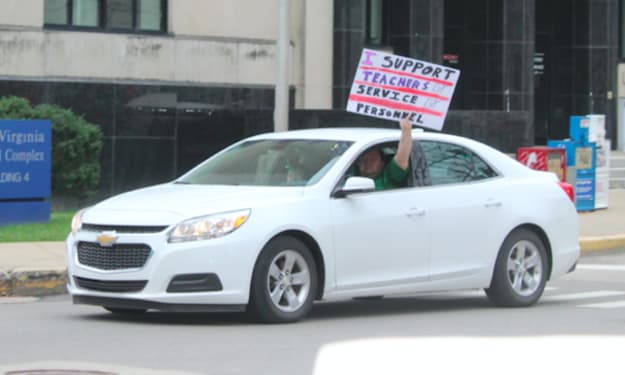
You are going about your day, taking the roads you normally take to get to the place you normally need to go and the job you need to work. Some of you are alone in your cars. Some of you have family members, friends, and children. If you’re anything like me, your commute is probably a blur. The scenery is always the same, the same buildings, the same scenery, and the same roadwork. But this past weekend, it’s been different. There are lines of people, groups of them, outside of regular buildings and outside the schools with signs and different noise makers. And you have a choice on how you respond.
By Courtney Lynn8 years ago in The Swamp
Mountain Mama Your Children Are Crying
“Almost Heaven, West Virginia…” those words incite a sense of pride in me. The pride that comes with waking up in Morgantown on the dawn of a brisk fall Saturday. The pride that comes with sitting at my great-grandmother’s sick bed and listening to her talk about growing up in a coal camp. It’s watching We Are Marshall on the big screen with my mother, who I was lucky enough to watch graduate with her Master’s Degree in special education from that school. It’s my father recounting stories of his grandfather who died in a coal mining accident, saving two others and risking his life. It’s the way my grandmother pronounces wash with an "r" between the "a" and the "s."
By Courtney Lynn8 years ago in The Swamp
Political "Education" of the Young
Should teachers be allowed to politically educate our children? This essay results from reading a post on Facebook. A post was questioning why do some on the Left continue to apparently ignore the millions killed in Russia and China during the imposition of one party “communist” government make the case for communism or insist upon applying a ridiculous veneer of objectivity when discussing its history? They quite rightly wouldn’t do this with the horror that was fascism or apartheid South Africa. And yet to wave a hammer and sickle flag at a rally is to celebrate a record of bloodshed and misery.
By Peter Rose8 years ago in The Swamp
Mind The Gap: Education & Employment Outcomes
Earlier this month, Shadow Education Secretary Angela Rayner was quoted as having said that “white working-class boys are being left behind because of the 'negative impact' of a focus on ethnic minorities and women.” That’s not what she actually meant, but her clumsy wording did make it seem as though she was blaming affirmative action for the poor educational outcomes of indigenous British boys. What she says she actually meant is that immigrant families send stronger messages about the importance of education to their children, and white working-class families tend not to. Therefore a cultural change is necessary because white British boys have not been specifically targeted for additional support in the same way that ethnic minorities and female students have (which has generated improvements, demonstrating that the measures work and should be continued). She wasn’t saying that if we help people with one characteristic, we’re taking assistance away from another group; more that we need to focus on changing perceptions and attitudes so that British boys don’t sabotage their futures through lack of aspirations. But that doesn’t make as punchy a headline, so the Telegraph went for something that pushed the right-wing buttons instead.
By Katy Preen8 years ago in The Swamp
Tone Deaf Post — Betsy Devos
Today the US Department of Education tweeted about Nancy Devos’ trip to Wyoming to celebrate the “Rethink School Initiative.” Devos visited the school on the Wind River Reservation today. The Department of Education’s tweet included a picture quoting a Native American Proverb that said, “You already possess everything necessary to become great.”
By Cody Perry8 years ago in The Swamp
The Miseducation of (Black) America
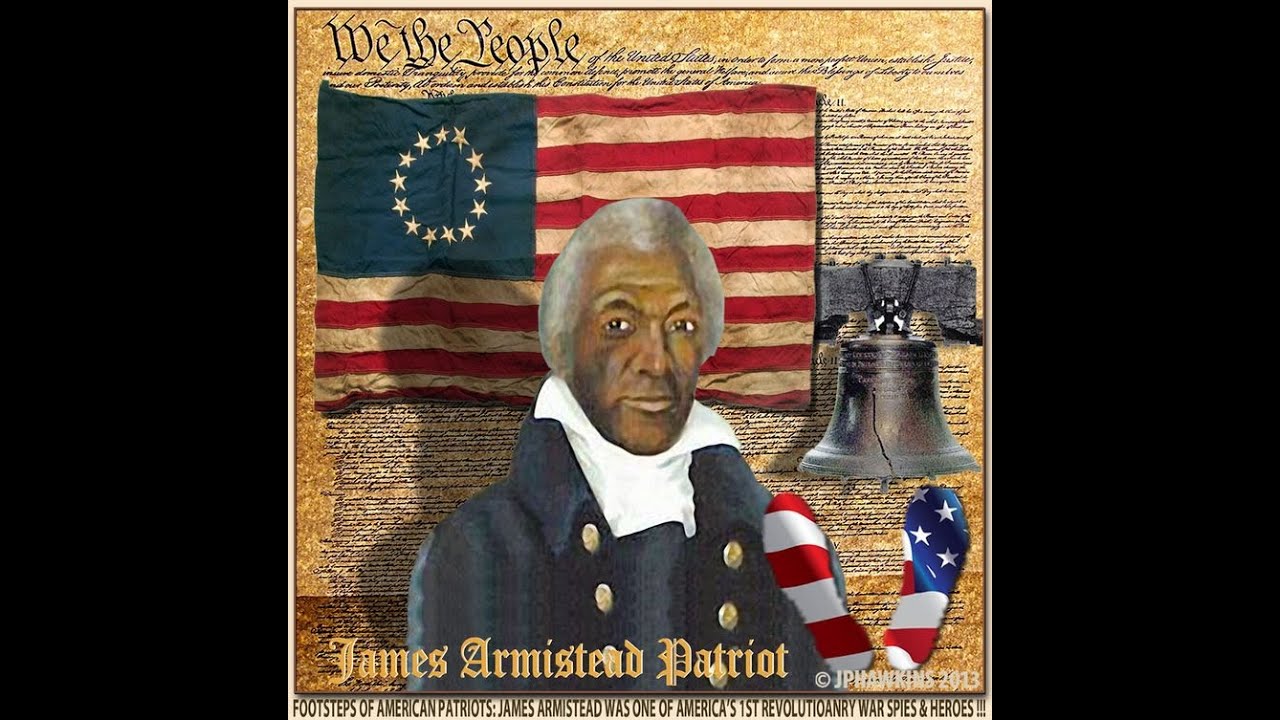
I was always well aware of the accomplishments of the Black people of the great African civilizations, now long since forgotten, through my own research outside of the classroom. What is troubling to me, though, is that I wasn't always aware of the Black people who built my country: the United States. When a nation goes out of its way to purposely "miseducate" you, that's when you know that nation has no regard for your well-being and, more than that, straight up dislikes you—hates you even.
By Dre Joseph9 years ago in The Swamp
We Need a New Black Education System Nationwide
This is why Black people need our own school system. State-funded, that is to say, White-owned and managed, public or private schools in Black neighborhoods have been a COLOSSAL failure for so long it's not even funny.
By Dre Joseph9 years ago in The Swamp
Education Reimagined
Education Reimagined is a book that was self-published to tackle the issues facing the U.S. education system. The book takes a student's perspective to inform and give students a voice to speak up and speak out against the bureaucracy of the system and the U.S. government. The book looks at nine major issues facing the U.S. education system in part one of the book and lastly looks to the future of the system. The second part of the book is narratives from students that volunteered to write for the book. It allows students to freely speak on an issue they care about and share their personal story regarding the topic they choose to write about. Lastly, it ends with the students giving a solution to the problem they discuss and how to go about changing or fixing the issue.
By Maruf Hossain9 years ago in The Swamp