
South Africa Orders Expulsion of Israeli Envoy, Declares Him Persona Non Grata
Pretoria escalates diplomatic pressure over Gaza war, signaling a sharp downturn in Israel–South Africa relations

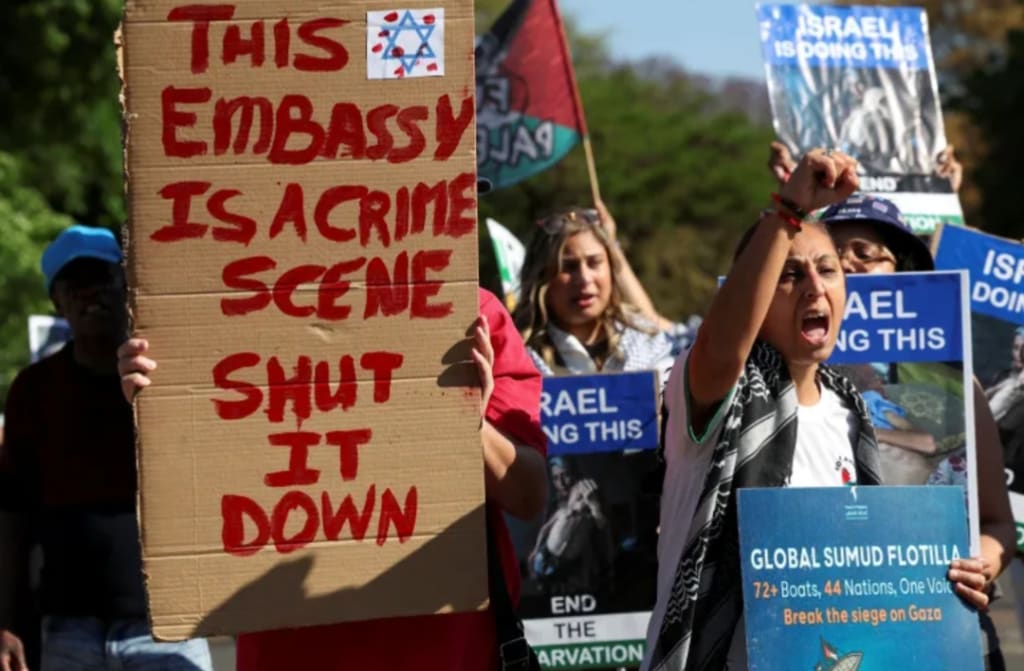
South Africa has taken a dramatic diplomatic step by ordering the expulsion of Israel’s envoy and declaring him persona non grata, marking one of the strongest actions yet by Pretoria in response to Israel’s military campaign in Gaza. The decision underscores South Africa’s increasingly confrontational stance toward Israel and reflects broader geopolitical fractures as governments reassess alliances amid the ongoing Middle East conflict.
The move has intensified debate over international law, diplomatic norms, and the role of moral positioning in foreign policy. It also signals a significant deterioration in bilateral relations between South Africa and Israel, relations that had already been strained by months of public criticism and legal action.
---
What Does ‘Persona Non Grata’ Mean?
In diplomatic terms, declaring an envoy persona non grata is the strongest formal rebuke a host country can issue short of severing relations entirely. Under the Vienna Convention on Diplomatic Relations, the receiving state may declare any diplomat unacceptable, requiring them to leave the country within a specified timeframe, often without providing a detailed explanation.
By invoking this mechanism, South Africa has effectively ordered the Israeli envoy to depart, signaling that normal diplomatic engagement is no longer possible under current circumstances.
---
Why South Africa Took This Step
South African officials have framed the expulsion as a response to Israel’s actions in Gaza, which Pretoria has repeatedly described as violations of international humanitarian law. The government has accused Israel of engaging in disproportionate military force against civilians and has positioned itself as a vocal advocate for Palestinian rights on the global stage.
Pretoria’s stance is consistent with its broader foreign policy narrative, which draws heavily on South Africa’s own history of apartheid and liberation struggle. Government leaders frequently argue that this history obliges the country to oppose what it sees as systemic oppression and violations of human rights anywhere in the world.
The expulsion follows months of escalating rhetoric, including the downgrading of diplomatic ties, public condemnations in parliament, and South Africa’s high-profile legal case at the International Court of Justice (ICJ), where it accused Israel of breaching the Genocide Convention.
---
Political Consensus at Home
Domestically, the decision has been largely welcomed by South Africa’s ruling African National Congress (ANC) and its allies, many of whom have long supported the Palestinian cause. Senior lawmakers described the move as “overdue” and a necessary assertion of South Africa’s moral authority in global affairs.
Civil society groups, trade unions, and pro-Palestinian organizations also praised the expulsion, arguing that symbolic gestures must be matched with concrete diplomatic action. Protests and demonstrations in major cities had previously called on the government to go beyond statements and take decisive steps against Israel.
However, opposition parties have expressed mixed reactions. While some supported the principle of holding Israel accountable, others warned that expelling an envoy could limit South Africa’s diplomatic leverage and complicate its international relationships, particularly with Western allies.
---
Israel’s Reaction and Diplomatic Fallout
Israel has strongly rejected South Africa’s accusations and criticized the decision as politically motivated and hostile. Israeli officials argue that Pretoria’s actions undermine diplomatic dialogue and reflect a one-sided interpretation of the conflict that ignores Israel’s security concerns.
The expulsion further deepens Israel’s diplomatic isolation among parts of the Global South, where sympathy for Palestinians remains high. It also risks triggering reciprocal measures, such as the reduction or suspension of South Africa’s diplomatic representation in Israel.
While trade and people-to-people exchanges between the two countries are limited, the symbolic impact of the move is significant, reinforcing a narrative of growing international opposition to Israel’s conduct in Gaza.
---
Part of a Broader Global Shift
South Africa’s decision does not exist in isolation. Several countries across Africa, Latin America, and the Middle East have recalled ambassadors, suspended diplomatic engagement, or issued formal protests in response to the Gaza war. These actions reflect a widening divide between states that prioritize Israel’s right to self-defense and those emphasizing civilian protection and international law.
Pretoria has positioned itself as a leader within this bloc, using diplomatic, legal, and rhetorical tools to press for accountability. By expelling the Israeli envoy, South Africa moves from condemnation to enforcement, reinforcing its image as one of Israel’s most outspoken critics.
---
Implications for International Law and Diplomacy
The expulsion raises important questions about the role of diplomacy during armed conflicts. Traditionally, even hostile states maintain channels of communication to reduce the risk of escalation and facilitate humanitarian access. Critics of the move argue that expelling envoys can reduce opportunities for dialogue precisely when communication is most needed.
Supporters counter that diplomatic norms should not shield states from consequences when international law is allegedly violated. From this perspective, declaring an envoy persona non grata is not a rejection of diplomacy itself but a tool to signal that business-as-usual relations are unacceptable.
---
What Comes Next for South Africa–Israel Relations?
The immediate consequence will be a further cooling of already strained ties, with limited diplomatic engagement likely to continue through lower-level or third-party channels. Full severance of relations remains possible but has not yet been announced.
South Africa is expected to continue pushing its case in international forums, including the United Nations and the ICJ, while advocating for ceasefire measures and humanitarian access to Gaza. Israel, for its part, is likely to strengthen ties with allies that support its position and dismiss Pretoria’s actions as symbolic rather than substantive.
---
Conclusion
By ordering the expulsion of the Israeli envoy and declaring him persona non grata, South Africa has taken a bold and highly symbolic stand that reflects both its domestic political values and its interpretation of international law. The move underscores Pretoria’s willingness to absorb diplomatic costs in pursuit of what it sees as moral accountability.
Whether this decision contributes to meaningful change on the ground or further entrenches global divisions remains to be seen. What is clear, however, is that South Africa has placed itself firmly at the center of the international debate over Gaza—transforming words of condemnation into decisive diplomatic action.
About the Creator
Keep reading
More stories from Salaar Jamali and writers in The Swamp and other communities.
Iran Designates EU Armies ‘Terrorist Groups’ in Retaliatory Move
In a dramatic escalation of tensions between Tehran and Brussels, Iran’s parliament has declared the armed forces of European Union (EU) member states to be “terrorist groups”, in a retaliatory response to the EU’s recent decision to list Iran’s powerful Islamic Revolutionary Guard Corps (IRGC) as a terrorist organization.
By Salaar Jamalia day ago in The Swamp
Small Heat Challenge Winners: Celebrating Creativity, Talent, and the Fire of Competition
A Platform for Creativity In the digital age, creative competitions have become a powerful way for artists, writers, and innovators to showcase their skills. Among these, the Small Heat Challenge stands out as one of the most inspiring platforms for emerging talent. Designed to encourage artistic exploration, storytelling, and experimentation, the challenge has grown exponentially in popularity. The latest round of the competition has just concluded, revealing a remarkable range of winners whose works reflect ingenuity, originality, and emotional depth. From thought-provoking short stories to visually striking art pieces, the Small Heat Challenge has once again proven that creativity knows no bounds. The Genesis of the Small Heat Challenge Before diving into the winners, it is important to understand the concept behind the challenge. The Small Heat Challenge was created to provide a level playing field for both emerging and seasoned creators. Its goals are simple but powerful: Inspire participants to experiment with new ideas Celebrate creative diversity across genres and media Provide recognition and rewards for talent often overlooked Over the years, the competition has evolved from a small, community-driven event into a globally recognized platform. It now attracts entries from multiple countries, each bringing unique cultural and stylistic perspectives. The Selection Process: From Hundreds to a Few Selecting winners in the Small Heat Challenge is no small feat. Judges consider creativity, originality, execution, and emotional impact. Submissions go through multiple rounds of evaluation: Preliminary Review: Initial screening to ensure adherence to the theme and quality standards Judging Panel Evaluation: Expert judges analyze technical skill, storytelling, and artistic expression Community Input: In many categories, audience votes influence the final decision Final Deliberation: Judges determine winners based on combined scores and impact This rigorous process ensures that the winners represent the best of the best, reflecting both skill and the spirit of creativity. Celebrating the Winners This year’s winners embody a range of talent, demonstrating that creativity can manifest in unexpected ways. Let’s explore some of the standout entries: 1. Fiction That Ignites the Mind The storytelling category produced entries that were both emotionally resonant and intellectually engaging. One winner crafted a short story that explored human resilience amid dystopian settings, earning praise for narrative depth and innovative structure. Another entry blended fantasy and contemporary reality, creating a world that captivated readers from the first sentence. 2. Visual Arts: The Power of Imagination In visual arts, winners pushed the boundaries of color, composition, and concept. From intricate digital illustrations to mixed-media masterpieces, these artworks reflected not only technical skill but also a distinct voice and perspective. One particular piece, which depicted a fusion of human emotion with natural elements, became a viral sensation within the challenge community. 3. Poetry and Spoken Word: Emotion in Motion The poetry and spoken word category saw entries that captured raw human emotion with brevity and power. Themes ranged from love and loss to hope and social commentary. Judges lauded winners for their ability to convey profound ideas through concise language, demonstrating that sometimes less is more when it comes to storytelling. 4. Innovative Multimedia Projects Some of the most remarkable entries came from creators who blended multiple mediums, combining animation, music, and interactive storytelling. These projects highlighted the challenge’s emphasis on experimentation and innovation, proving that creative expression is not limited by format. Interviews with the Winners: Insights and Inspiration Many winners shared their experiences and creative philosophies. Common themes emerged: Persistence: Almost all winners emphasized the importance of continuing to create despite obstacles or rejection Curiosity: Winners credited their ability to explore new techniques and ideas for their success Community Support: Many highlighted the role of peer feedback and mentorship in shaping their work These insights provide valuable lessons for aspiring creators: success is a combination of talent, effort, and openness to learning. The Role of the Small Heat Challenge in Career Growth Winning the Small Heat Challenge is more than just a badge of honor; it has tangible benefits: Exposure to a Global Audience: Winners often see their work shared widely, reaching new fans and collaborators Professional Opportunities: Recognition can lead to commissions, collaborations, and publishing deals Confidence and Validation: Receiving acknowledgment from a respected platform can boost confidence and fuel future projects Many past winners have gone on to launch successful careers in their fields, illustrating the challenge’s role as a springboard for creative professionals. Why the Small Heat Challenge Resonates The challenge resonates because it balances competition with community. Participants are not only vying for prizes but also engaging in meaningful dialogue with other creators, sharing feedback, and celebrating artistic achievement. This dual focus on individual excellence and community support sets the Small Heat Challenge apart from other contests. The Global Impact: Creativity Without Borders Entries in the Small Heat Challenge come from all corners of the globe, reflecting cultural diversity and unique perspectives. This global reach demonstrates that creativity is universal and that storytelling, art, and innovation can transcend borders and languages. Moreover, the challenge highlights emerging trends in digital art, literature, and multimedia storytelling, providing insight into the future of creative expression. Tips for Aspiring Participants For those looking to enter future challenges, winners often share actionable advice: Stay True to Your Voice: Originality and authenticity matter more than imitation Experiment Boldly: Try new techniques, formats, or genres Seek Feedback Early: Constructive criticism strengthens your work Be Persistent: Don’t be discouraged by initial rejection or setbacks Engage With the Community: Networking and collaboration can open unexpected doors Following these tips increases both the quality of submissions and the chances of success. Looking Ahead: The Future of the Small Heat Challenge With its growing popularity, the Small Heat Challenge is continuously evolving: Expanding categories to include emerging art forms Incorporating digital and interactive media Increasing scholarships, grants, and professional opportunities for winners The platform’s vision is clear: to empower creators worldwide, provide a stage for innovation, and celebrate creativity in all its forms. Conclusion: Celebrating Creativity in the Modern Age The latest Small Heat Challenge winners exemplify what it means to create fearlessly, imaginatively, and with passion. Their work is a testament to the power of human expression and the enduring importance of platforms that nurture talent. As the challenge continues to grow, it reminds us that creativity is not just a skill—it’s a movement, one that brings together artists, writers, and innovators from around the globe to inspire, challenge, and elevate each other. The Small Heat Challenge proves that, in a world of constant change, the spark of creativity is always worth celebrating.
By Zahid Hussain3 days ago in The Swamp




Comments
There are no comments for this story
Be the first to respond and start the conversation.