
Iran Designates EU Armies ‘Terrorist Groups’ in Retaliatory Move
Tehran escalates diplomatic conflict, marking a significant rupture with Brussels

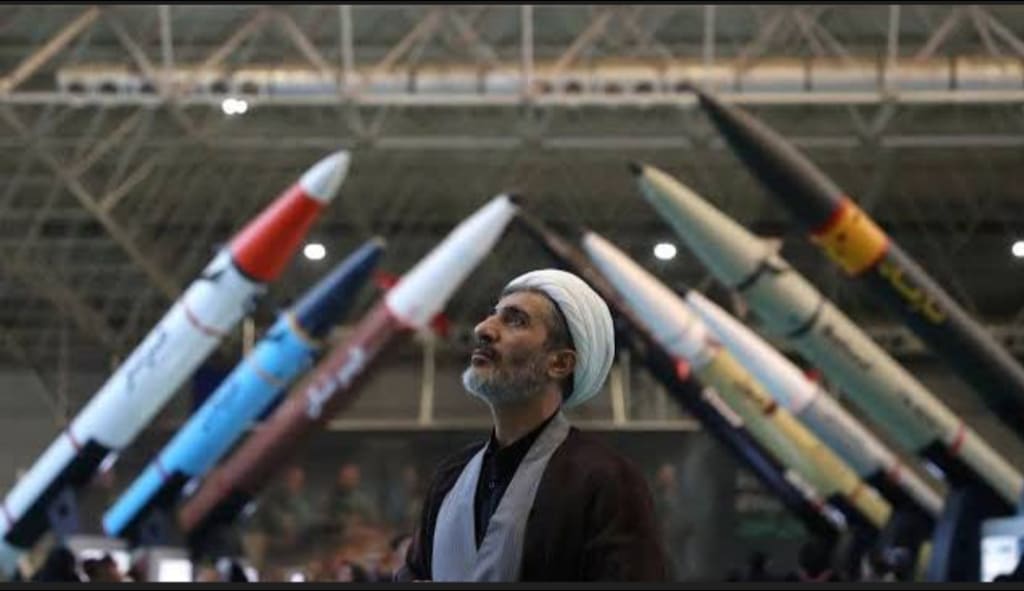
In a dramatic escalation of tensions between Tehran and Brussels, Iran’s parliament has declared the armed forces of European Union (EU) member states to be “terrorist groups”, in a retaliatory response to the EU’s recent decision to list Iran’s powerful Islamic Revolutionary Guard Corps (IRGC) as a terrorist organization.
The unprecedented move, announced on Sunday, February 1, 2026, marks one of the sharpest diplomatic confrontations between Iran and the EU in years — raising risks of further geopolitical fallout, shifts in sanctions dynamics, and impacts on military, economic, and diplomatic channels between the two sides.
---
What Triggered Iran’s Decision?
The immediate cause of Iran’s declaration was the EU’s announcement to designate the Islamic Revolutionary Guard Corps (IRGC) as a terrorist organization — a move that was formally agreed by EU foreign ministers late last week.
The IRGC, a powerful branch of Iran’s armed forces established after the 1979 Islamic Revolution, plays crucial political, military, and economic roles in the country. Over recent weeks, it has been at the center of domestic and international criticism due to its role in violently suppressing widespread protests, which have become some of the deadliest since the establishment of the Islamic Republic.
EU leaders — including foreign policy chief Kaja Kallas and European Commission President Ursula von der Leyen — described the designation as a necessary response to human rights abuses and repression. They argued that Tehran’s security forces should face consequences for actions against protesters.
In response, Iran’s parliament speaker Mohammad Bagher Ghalibaf invoked an Iranian law that allows reciprocal measures, stating that under its terms, the armies of EU countries that participated in the IRGC listing would now be treated as “terrorist groups”.
---
Inside Iran’s Parliament: Symbolism and Rhetoric
The retaliatory move occurred during a parliamentary session in Tehran, where lawmakers even wore IRGC uniforms in a symbolic show of support for the elite force and its role in national security.
Ghalibaf condemned the EU decision as blinding obedience to U.S. pressure and said it went against European interests. Iranian officials described the IRGC as a force that not only defends Iranian territory but also combats extremist groups — framing the EU’s designation as offensive and unjustified.
In strong rhetoric, lawmakers suggested possible future steps, including discussions about expelling military attachés from EU embassies, signaling that diplomatic and security ties could be affected.
---
Legal and Diplomatic Implications
Under Iranian law — particularly Article 7 of the 2019 Law on Countermeasures Against the Declaration of the IRGC as a Terrorist Organization — Tehran can impose reciprocal classifications on states that label the IRGC as a terrorist group.
While this legal framework exists domestically, designating the armies of sovereign EU nations as terrorist organizations has no immediate practical enforcement internationally, as these classifications are not recognized outside Iran. Nonetheless, the symbolic weight and diplomatic message are significant.
Many analysts note that Iran’s response is designed as a political counterstrike to project strength domestically and internationally, rather than to initiate an operational shift in military relations. But such tit-for-tat moves often carry broader diplomatic consequences, especially at a time when global tensions are already elevated.
---
Broader Geopolitical Context
Iran’s declaration follows a period of heightened tensions with Western powers, particularly related to the country’s domestic unrest and its relations with the United States. Alongside EU actions, the U.S. has previously labeled the IRGC as a terrorist organization — a designation that Tehran has long cited as provocative.
The EU’s decision, however, marked a rare instance of European unity on a policy targeting Iran’s military apparatus — reflecting growing concern over human rights violations and regional destabilization.
The intensifying diplomatic conflict occurs against a backdrop of U.S.–Iran tensions in the Middle East, especially related to naval deployments and warnings of potential military escalation. Iranian leaders, including Supreme Leader Ayatollah Ali Khamenei, have warned that any external military action could spark broader regional conflict.
---
Reactions in Europe and Beyond
While EU leaders have defended their decision as consistent with international norms and human rights obligations, Tehran’s retaliatory move has been met with disapproval from European capitals. Critics in Brussels and member states argue that Iran’s labeling of EU militaries trivializes the legal standards associated with counterterrorism and could further damage already fragile diplomatic ties.
Some European diplomats have emphasized that their designation of the IRGC is part of a broader sanctions and accountability effort, rather than a move intended to sever ties completely. Nonetheless, Tehran’s sharp response underscores how quickly diplomatic disputes can escalate into symbolic confrontations that strain negotiation paths and peace-building efforts.
---
What Comes Next?
The declaration of EU armies as “terrorist groups” is unlikely to have direct legal force outside Iran, but it intensifies diplomatic bitterness and complicates future dialogue between Tehran and Western institutions.
Experts caution that such retaliatory moves can widen divisions and reduce incentives for constructive engagement, especially at a time when negotiations over Iran’s nuclear program, regional stability, and protest-related human rights issues are ongoing.
As tensions simmer, both sides face critical choices: whether to double down on punitive actions or seek avenues for de-escalation through diplomatic channels. The coming weeks will be decisive in determining whether this confrontation deepens into further sanctions and countermeasures — or if external actors can mediate a reduction in rhetorical and legal hostilities.
About the Creator
Keep reading
More stories from Salaar Jamali and writers in The Swamp and other communities.
Silver Price Analysis – Silver Falls Apart Early on Friday
Global silver prices experienced a dramatic collapse early on Friday, marking one of the most violent sell-offs in the precious metals sector in recent memory. After weeks of sustained gains and record-breaking highs, silver — often dubbed the “white metal” — abruptly fell apart on Friday, triggering broad market reactions, steep losses for investors, and renewed debate about the metal’s short-term prospects.
By Salaar Jamalia day ago in The Swamp
France Spirals Down EU Wealth List Towards ‘Third-World Status’
France’s economic standing within the European Union is under renewed scrutiny after recent data revealed a steady decline in household wealth and purchasing power compared with several of its neighbors. Once considered one of Europe’s strongest economic pillars alongside Germany, France has slipped down the EU wealth rankings, prompting political debate and concern among economists over what some critics have dramatically described as a drift toward “third-world status.” While the phrase is controversial and widely criticized as exaggerated, it reflects growing frustration over stagnating growth, rising public debt, and widening inequality that have left many French households feeling worse off than they were a decade ago. Falling Behind European Peers According to recent Eurostat and OECD figures, France’s GDP per capita and median household wealth now trail behind countries such as Germany, the Netherlands, Ireland, and several Nordic states. Southern and Eastern European economies once considered less prosperous are also closing the gap faster than France. Economists point to sluggish productivity growth as a major factor. While France maintains a strong industrial base and world-class infrastructure, its output per worker has failed to keep pace with innovation-driven economies in northern Europe. “France is not collapsing, but it is clearly losing relative ground,” said one European economic analyst. “The problem is not absolute poverty, but stagnation compared to neighbors who are modernizing more quickly.” Rising Public Debt and Budget Pressure France’s public debt has reached historically high levels, exceeding 110 percent of GDP. Successive governments have relied on borrowing to fund social programs, pensions, and public services, leaving little room for fiscal flexibility. The burden of debt servicing has increased sharply as interest rates rose across Europe. This has limited the government’s ability to invest in long-term growth projects such as digital infrastructure, green energy, and industrial modernization. At the same time, tax pressure on workers and businesses remains among the highest in the EU. Critics argue that heavy taxation discourages entrepreneurship and drives skilled workers abroad, worsening the country’s competitiveness problem. Cost of Living and Social Strain For ordinary citizens, the economic slowdown is most visible in the rising cost of living. Food prices, housing costs, and energy bills have climbed faster than wages, reducing real purchasing power for millions of families. Urban centers such as Paris, Lyon, and Marseille face growing housing shortages, forcing young professionals and low-income workers into long commutes or substandard accommodation. Rural regions struggle with unemployment and declining public services. These pressures have fueled recurring protests and strikes over pensions, labor reforms, and public spending cuts. Social unrest has become a defining feature of France’s political landscape, reflecting deep anxiety about economic security and the future of the welfare state. The Controversial “Third-World” Label The description of France approaching “third-world status” has sparked backlash from academics and policymakers who argue the term is misleading and inflammatory. France remains one of the world’s largest economies, with advanced healthcare, transportation, and education systems. However, the phrase has gained traction in political discourse as a symbol of decline rather than a literal comparison. Supporters of the term say it captures the growing perception that public services are deteriorating and that opportunities are shrinking for younger generations. “People feel their country is slipping backwards,” said a political sociologist. “The rhetoric reflects emotion more than statistics, but it reveals a loss of confidence.” Structural Challenges Several long-term structural issues are weighing on France’s economy. Labor market rigidity continues to discourage hiring, especially among small and medium-sized businesses. Youth unemployment remains stubbornly high, and many graduates struggle to find stable work aligned with their education. The education system, while historically strong, has faced criticism for failing to adapt to the needs of a technology-driven economy. Investment in research and innovation lags behind competitors such as Germany and Sweden. In addition, demographic trends pose challenges. An aging population increases pension and healthcare costs, placing further strain on public finances. Government Response The French government has pledged reforms aimed at boosting competitiveness and restoring growth. Measures include reducing corporate taxes, reforming pension systems, and encouraging foreign investment. Officials argue these policies will stabilize public finances and create jobs. President Emmanuel Macron has repeatedly warned that without structural reform, France risks long-term economic decline. However, attempts to implement change have met strong resistance from unions and protest movements, making progress slow and politically risky. Opposition parties accuse the government of protecting elites while ordinary citizens bear the burden of austerity measures. European Implications France’s economic performance has implications beyond its borders. As one of the EU’s largest economies, its slowdown affects the entire bloc’s stability. A weaker France could undermine European unity at a time when the EU faces external pressures from global competition, energy security concerns, and geopolitical tensions. European officials have urged France to accelerate reforms while preserving social cohesion, warning that prolonged stagnation could deepen divisions within the union. Conclusion France is far from becoming a “third-world” country, but its decline in relative wealth rankings is a warning sign. Rising debt, slow productivity growth, and social unrest have weakened confidence in the nation’s economic future. While the country retains immense strengths in culture, industry, and infrastructure, failure to address structural problems could leave it increasingly behind its European peers. The debate now centers on whether France can modernize its economy without sacrificing the social protections that define its identity. The answer will shape not only its own future, but the direction of the European Union itself.
By Fiaz Ahmed about an hour ago in The Swamp



Comments
There are no comments for this story
Be the first to respond and start the conversation.