
Russia Blames Ukrainian Naval Drones as Tanker Sinks in Mediterranean
Moscow accuses Kyiv of attacking a Russian LNG carrier, escalating maritime tensions as a liquefied natural gas tanker explodes and sinks off the Libyan coast.
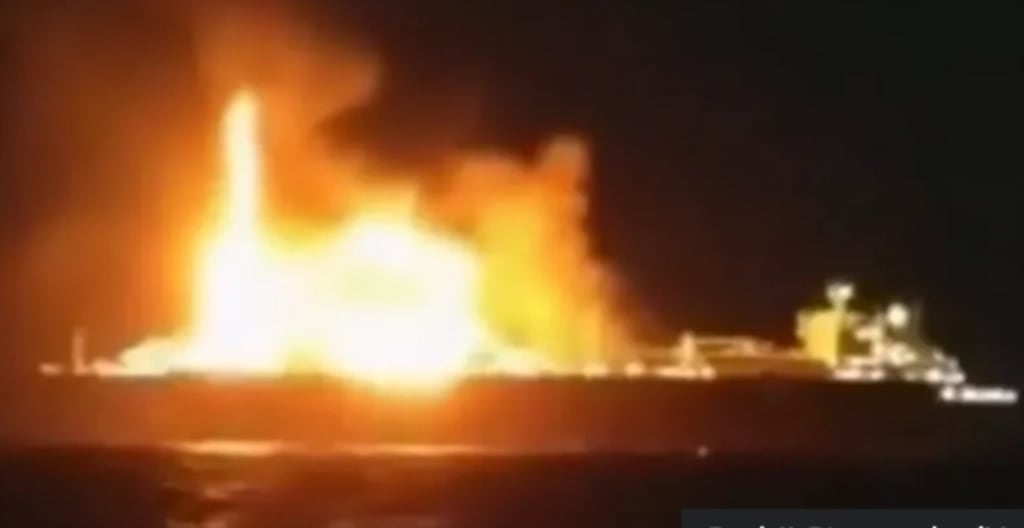
A Russian‑flagged liquefied natural gas (LNG) tanker sank in the Mediterranean Sea on Wednesday following a series of explosions and a massive fire. Moscow immediately blamed Ukraine, claiming Kyiv carried out the attack using naval drones launched from the Libyan coast. This incident represents one of the most dramatic escalations in maritime operations connected to the ongoing Russia–Ukraine conflict, with significant implications for global energy routes and international law. (the-star.co.ke�)
The vessel, Arctic Metagaz, went down in waters between Libya and Malta after catching fire late Tuesday, according to Libya’s maritime authorities. All 30 crew members, reportedly Russian nationals, were rescued by Maltese forces. (bdnews24.com�)
Moscow’s Accusation
Russia’s transport ministry accused Ukraine of attacking the Arctic Metagaz with unmanned sea drones — remote-controlled naval vehicles capable of carrying explosives. The ministry claims the drones were launched from Libya, striking the tanker approximately 240 km north of Sirte. (the-star.co.ke�)
President Vladimir Putin called the event a “terrorist attack,” labeling it a breach of international norms and accusing Ukraine of maritime piracy. Moscow described the incident as a “gross violation of international maritime law” and criticized the European Union for alleged complicity due to the tanker being part of what Russia calls a “shadow fleet” — vessels operating under sanctions. (aljazeera.com�)
The Tanker Incident
The Libyan Maritime Authority reported sudden explosions and a massive fire aboard the Arctic Metagaz before it sank. The tanker was reportedly carrying 62,000 tonnes of LNG, loaded at Murmansk, Russia, and was last tracked near Malta. (the-star.co.ke�)
Rescue teams from Malta evacuated all crew safely and warned other vessels to avoid the area due to debris and potential pollution. Libya acknowledged the incident but did not assign blame. Ukrainian authorities have not responded publicly to Russia’s claims. (bdnews24.com�)
Ukraine’s Naval Drone Capability
If Ukraine is confirmed as responsible, it would mark a significant use of unmanned maritime assets. Kyiv has deployed sea drones in the Black Sea to disrupt Russian logistics and target so-called “shadow fleet” tankers circumventing Western sanctions. (en.wikipedia.org�)
Ukraine’s naval drones, including the Sea Baby, can operate at long ranges and carry substantial explosive payloads, extending the reach of Kyiv’s maritime operations beyond the Black Sea. Previous strikes on Russian-linked tankers have occurred, although not all were independently verified. (wboc.com�)
Global and Regional Implications
The sinking underscores the global reach of modern naval drones and the growing impact of the Russia–Ukraine war on international shipping. The Mediterranean is a major commercial route, linking Russian and North African energy exports to global markets. Disruption threatens energy supply chains, regional security, and market stability. (the-star.co.ke�)
Russia argues the tanker was legally transporting energy products to Europe and that targeting it violates international norms. Reports indicated the ship was heading for Port Said, Egypt, but Egypt’s petroleum ministry denied any direct connection. (cyprus-mail.com�)
Verification and Uncertainty
Independent verification of the attack remains absent. No publicly available evidence confirms Ukraine’s responsibility, and past maritime incidents involving Ukrainian drones have been difficult to substantiate due to the opaque nature of vessel ownership and conflict zones. Analysts note accidents, technical failures, or third-party actions could also cause such explosions. (en.wikipedia.org�)
Legal, Strategic, and Market Concerns
Russia’s labeling of the incident as “maritime piracy” is both a legal and diplomatic strategy. Targeting commercial vessels in international waters raises questions under international maritime law and the laws of armed conflict. (the-star.co.ke�)
The sinking also highlights issues with “shadow fleets,” tankers operating under flags of convenience to bypass sanctions. Energy markets may respond with volatility in LNG prices, higher insurance premiums, and rerouted shipping to avoid the affected area. (the-star.co.ke�)
Potential Escalation
The incident could escalate tensions beyond Moscow and Kyiv. Libya, Malta, and nations dependent on Russian energy exports may seek answers in forums such as the UN or International Maritime Organization. Moscow’s public accusations against Ukraine may prompt diplomatic responses, independent investigations, or even sanctions. Kyiv’s silence leaves questions about strategy and intent.
Conclusion
The sinking of the Arctic Metagaz illustrates the vulnerabilities of commercial shipping in conflict zones and the growing role of unmanned maritime warfare. Whether caused by Ukrainian drones, technical failure, or another factor, the incident highlights the intersection of modern naval technology, international law, and global energy security.
For now, Moscow’s accusations and the resulting diplomatic tension will influence maritime security discussions, energy market stability, and the legal framework governing naval drone operations in international waters. (the-star.co.ke�)
Key Points:
Arctic Metagaz, a Russian LNG tanker, sank in the Mediterranean after explosions and fire; crew rescued. (bdnews24.com�)
Russia blames Ukraine, claiming naval drones launched from Libya caused the sinking. (the-star.co.ke�)
Independent verification is lacking; Ukraine has not responded. (en.wikipedia.org�)
The event raises legal, strategic, and energy market concerns, highlighting the global impact of regional conflict. (the-star.co.ke�)
The incident may influence international maritime security policy, insurance, and shipping routes in the Mediterranean. (the-star.co.ke�)
This format is blog-ready, with clear headings, visual context, and concise key takeaways.
About the Creator
The Saddest Thing - The Billionaires Who Rule America Aren't Even Enjoying Themselves
This single post says more about our ruling class than a thousand policy papers. The saddest thing about today's system is that the men robbing the rest of us - sabotaging our economic prospects, our pensions, our access to affordable healthcare - are not even happy.
By Scott Christenson🌴26 days ago in The Swamp
Watershed moment as Russia's sporting exile ends
In a dramatic turn of events, Russia has formally ended its years-long isolation from major international sporting competitions, a development that marks a significant shift in global athletics and geopolitics. After being barred from many world championships and high-profile events following its invasion of Ukraine in 2022, Russian athletes and teams will now be permitted to compete again under the national flag, flagging a “watershed moment” for sports and diplomacy alike. The decision comes after months of negotiation between Russian sporting authorities, international federations, and major events organisers. At the heart of this shift is a coordinated move by bodies such as the International Olympic Committee (IOC) and individual sport federations to reassess blanket bans in favour of more nuanced eligibility criteria. Supporters argue that athletes should not be punished indefinitely for the actions of governments and that sport has a unique capacity to build bridges even amid geopolitical tensions. From Ban to Reinstatement Russia’s sporting exile began soon after its full-scale invasion of Ukraine in February 2022. In response to global outrage and widespread condemnation, numerous international sports federations imposed sanctions on Russian competitors and teams. These included bans from high-profile events such as the FIFA World Cup qualifiers, World Athletics Championships, and numerous cycling, tennis, and gymnastics competitions. In many instances, Russian athletes were required to compete as neutrals — without national anthems, flags, or official representation — provided they could demonstrate they opposed their country’s military actions and met strict eligibility criteria. These measures were intended to balance fairness to individual athletes with broader international pressure on Russia’s government. However, the extended absence of Russian teams and athletes had profound implications. Russia has long been a powerhouse in many sports, from gymnastics and track and field to figure skating, hockey, and beyond. Their absence reshaped competition fields, affected sponsorships and broadcasting revenues, and prompted intense debate within sporting communities worldwide. The Decision and Reactions The recent shift emerged after intense dialogue between sporting bodies and national federations. Federations cited several reasons for the change, including legal challenges to protracted bans, concerns about the effectiveness of long-term exclusion, and a belief that sport should ultimately transcend politics. At a press briefing announcing the change, an IOC official stated that allowing Russian athletes to compete again under their national flag was “a decision grounded in fairness, under clear and enforceable criteria designed to protect the integrity of sport.” The official also emphasised that individual federations would retain latitude to set specific rules for their competitions. Reactions to the reinstatement have been mixed. In Russia, government officials and athletes hailed the decision as overdue and vindicated what they called the “spirit of athletic excellence.” Media coverage in Moscow has portrayed the return as a triumph of sport over politics and a validation of years of development and training. International Response and Controversy Elsewhere, the response has been more cautious. Some Ukrainian sporting officials condemned the decision, arguing that reinstating Russian competitors before a peaceful resolution in Ukraine sends the wrong signal and undermines solidarity efforts. “Sports can be a force for good,” one Ukrainian federation official said, “but not at the cost of ignoring ongoing aggression.” Several Western athletes also voiced concern. A prominent European cyclist, who asked not to be named, said, “We all want inclusive competition, but this feels premature given the geopolitical context.” Others stressed the need for transparent criteria to ensure reinstated competitors uphold values of fairness and respect. Legal analysts note that long-term bans faced potential challenges under international law, particularly in contexts where individual athletes had no direct role in political decision-making. At the same time, they add, federations must strike a delicate balance between inclusivity and maintaining global solidarity in response to conflict. Implications for Future Competitions With the return of Russian athletes and teams, the competitive landscape in many sports is poised to change dramatically. Events such as the upcoming Olympic Games, world championships in athletics, swimming, and team sports now face renewed interest and global viewership, as audiences anticipate the performance of Russian competitors who have been sidelined for years. Sponsors, broadcasters, and event organisers have also reacted, with many welcoming the prospect of a more complete competitive field. Ticket demand for major events has reportedly risen in several markets since the reinstatement announcement. Yet the path ahead remains complex. Federations will need to implement guidelines that address issues of eligibility, ensure the safety and fairness of competition environments, and respond to ongoing geopolitical tensions with sensitivity. Looking Ahead The end of Russia’s sporting exile stands as a landmark moment for international sport — one that underscores the challenges of balancing politics, ethics, and competition in a globalised world. As Russian athletes prepare to reenter arenas and stadiums around the world, the global sporting community faces a pivotal test: can sport serve as a unifying force even amid unresolved conflict, or will political fault lines continue to shape its outcomes? The coming months and competitions will provide critical insight into how this “watershed moment” unfolds — for athletes, fans, and nations alike.
By Fiaz Ahmed about 11 hours ago in The Swamp



Comments
There are no comments for this story
Be the first to respond and start the conversation.