
NASA Redirects Artemis Moon Mission Program, Postponing Planned Astronaut Landing
Facing technical hurdles and budget pressures, the space agency recalibrates its lunar timeline to prioritize safety, sustainability, and long-term exploration goals.
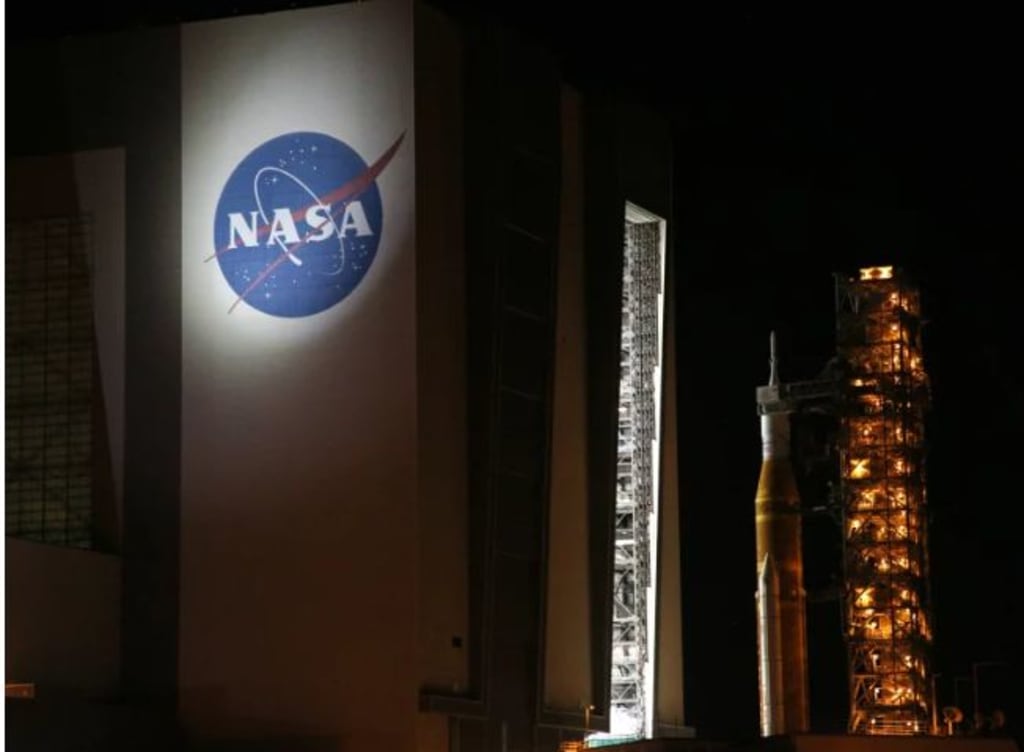
In a move that signals both caution and recalibration, NASA has announced a redirection of its Artemis program, postponing a planned astronaut landing on the Moon. The decision marks a significant shift in the timeline for humanity’s long-awaited return to lunar soil — a milestone that had been central to America’s renewed space ambitions.
The Artemis initiative, led by NASA, was designed to establish a sustained human presence on the Moon for the first time since the Apollo era. The program aimed not only to land astronauts — including the first woman and the first person of color — on the lunar surface, but also to build long-term infrastructure to support deeper exploration, including future missions to Mars.
Now, with the landing postponed, questions are swirling about funding, technical challenges, safety priorities, and what this means for global space competition.
Why the Artemis Landing Is Being Delayed
NASA officials have framed the postponement as a strategic decision driven by safety, engineering readiness, and logistical coordination. Complex systems required for the mission — including next-generation spacesuits, lunar landing systems, and integration with the Space Launch System rocket — require additional testing and validation.
The Artemis program depends on multiple components working flawlessly:
The Space Launch System (SLS), NASA’s most powerful rocket ever built
The Orion spacecraft designed to carry astronauts beyond low Earth orbit
A commercial human landing system developed in partnership with private industry
Advanced lunar surface suits and life-support systems
Each element represents cutting-edge engineering. Even minor delays in one component ripple across the entire mission schedule.
NASA leadership emphasized that the agency refuses to compromise on astronaut safety, especially for missions operating beyond Earth’s protective orbit.
A Quick Look Back at Artemis
The Artemis program was introduced as the successor to the historic Apollo program, which landed the first humans on the Moon in 1969. While Apollo was driven by Cold War urgency, Artemis is framed as a long-term exploration strategy.
Artemis I successfully completed an uncrewed mission around the Moon, demonstrating the capabilities of the Orion spacecraft and the SLS rocket. Artemis II is intended to carry astronauts on a lunar flyby mission, while Artemis III was originally slated to deliver the first crewed lunar landing of the modern era.
That landing is now being pushed further into the future.
The Role of Commercial Partnerships
Unlike the Apollo era, Artemis relies heavily on commercial partnerships. One of the most high-profile collaborators is SpaceX, which is developing a lunar landing system based on its Starship platform.
While commercial collaboration allows for innovation and cost-sharing, it also introduces coordination challenges. The integration of private-sector hardware with NASA’s legacy systems demands rigorous testing and alignment of schedules.
Delays in spacecraft testing, regulatory approvals, and hardware readiness can collectively influence mission timelines. NASA’s recalibration reflects the realities of managing one of the most ambitious multi-agency space projects in decades.
Budget Pressures and Political Dynamics
Space exploration is as much about politics as it is about engineering.
NASA’s budget, though substantial, must be allocated across multiple priorities — including Mars exploration, Earth science, planetary defense, and maintaining operations aboard the International Space Station. Rising costs in rocket production, supply chain disruptions, and inflation have added additional strain.
Congressional oversight also plays a role. Lawmakers have expressed both strong support and pointed scrutiny regarding Artemis expenditures. Delaying the landing could provide NASA breathing room to stabilize costs and strengthen bipartisan backing for long-term funding.
In Washington, space policy is often a reflection of national prestige. Yet political cycles can complicate long-range programs that span multiple administrations.
International Competition and Cooperation
The delay comes at a time when global interest in lunar exploration is intensifying.
China has advanced its own ambitious lunar roadmap and plans to establish a research base on the Moon in collaboration with Russia. The geopolitical undertones of renewed lunar exploration are impossible to ignore.
However, Artemis is also deeply collaborative. Through the Artemis Accords, multiple countries have signed agreements supporting peaceful lunar exploration and shared standards for space conduct. The postponement may shift timelines, but it does not signal retreat.
NASA officials have reiterated that the long-term vision remains unchanged: establishing a sustainable lunar presence that serves as a stepping stone to Mars.
Safety First: Lessons from History
Human spaceflight history carries painful reminders of what can happen when technical concerns are overlooked.
From Apollo 1 to the Challenger and Columbia shuttle disasters, NASA has learned that rushing missions can have devastating consequences. Modern spaceflight operates under intense public scrutiny, and astronaut safety remains the agency’s highest priority.
Delaying Artemis may disappoint space enthusiasts, but it underscores NASA’s commitment to ensuring every system meets rigorous safety benchmarks before astronauts embark on a deep-space mission.
What Happens Next?
The revised timeline is expected to include:
Additional testing of the Human Landing System
Further refinement of next-generation lunar spacesuits
Extended integration assessments between spacecraft components
Updated launch windows and mission sequencing
Artemis II, the crewed lunar flyby mission, remains a key stepping stone. Its success will shape confidence and readiness for the eventual landing attempt.
NASA is also advancing plans for the Lunar Gateway — a small space station that will orbit the Moon and serve as a staging hub for future missions. While the landing is postponed, other elements of the Artemis architecture continue progressing.
A Temporary Setback or Smart Strategy?
Critics argue that delays risk weakening U.S. leadership in space and emboldening competitors. Supporters counter that careful preparation strengthens credibility and prevents catastrophic setbacks.
In reality, both perspectives hold weight.
The Moon is not merely a symbolic destination. It represents access to potential resources, scientific discovery, technological advancement, and geopolitical influence. Every decision surrounding Artemis carries strategic implications.
Yet space exploration has always required patience. The Apollo program itself endured numerous technical obstacles before achieving success.
Looking Beyond the Delay
The postponement of a planned astronaut landing does not diminish Artemis’ long-term ambition. Instead, it reflects the immense complexity of modern space exploration.
NASA’s recalibration highlights a core truth: returning humans to the Moon in the 21st century is far more intricate than repeating a 1960s achievement. Today’s missions aim not for brief visits, but for sustainable presence.
When astronauts finally step onto the lunar surface under the Artemis banner, they will carry with them decades of scientific progress, international cooperation, and hard-earned lessons.
The delay may shift the calendar, but it does not erase the destination.
Humanity is still headed back to the Moon — just on a timetable shaped by precision rather than urgency.
About the Creator
A Gathering of Evil Bosses
“I’m the queen of chin jutting while I smooth my hair, attacking, insulting, and deflecting to protect my appointer.” “Oh, please, Blondi, my hair is curled, highlighted, and longer than yours. I feature television commercials telling immigrants that we will give them a free plane ride home, and if they voluntarily turn themselves in, they will be allowed to legally apply for re-entry. It runs everywhere, and I look good in it! You can’t compete because of your blond hair. Mine is nicer, and my lips are prettier than yours.”
By Andrea Corwin 14 days ago in The Swamp
A Historic Declaration
We the People of the Husbands of the United States of America, in Order to form a more perfect Union, and I mean you...with me...establish Justice, insure domestic Tranquility, provide for the common defence, promote the general Welfare, and secure the Blessings of Liberty to ourselves, after Puberty, do ordain and establish this Declaration of Co-Dependence.
By Gerard DiLeo6 days ago in Humans




Comments
There are no comments for this story
Be the first to respond and start the conversation.