
Kuwait stock exchange halts trading until further notice amid US, Israel strikes in Iran
Kuwait halts stock trading amid US and Israeli strikes on Iran, highlighting rising regional tensions and financial market uncertainty.

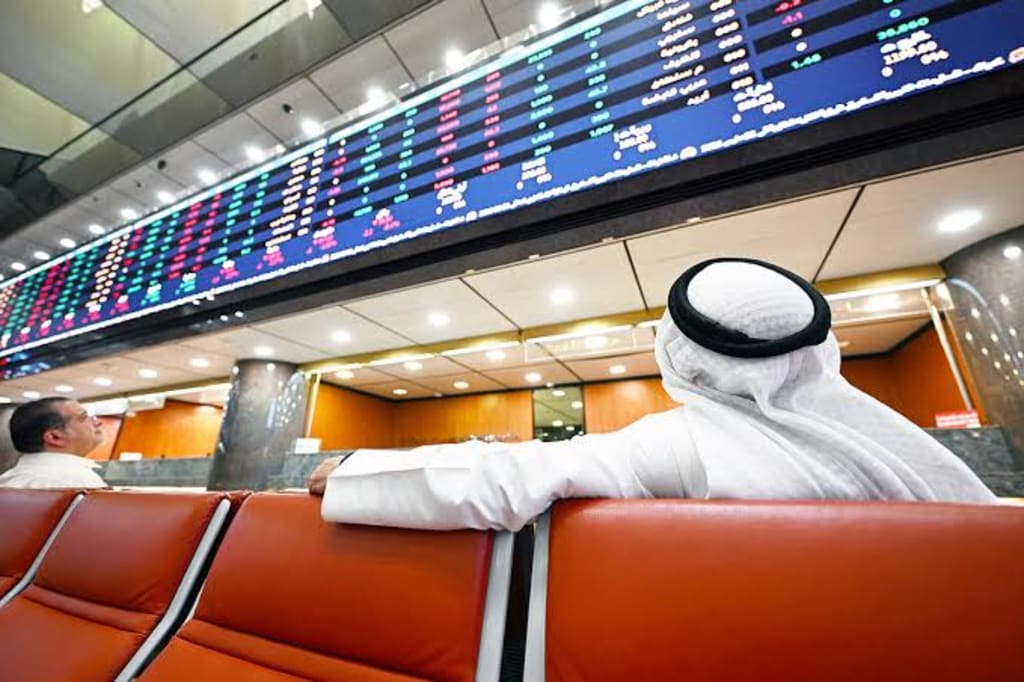
The Boursa Kuwait announced on March 1, 2026 that it has suspended all trading activities until further notice as Kuwait grapples with escalating geopolitical tensions triggered by coordinated strikes on Iran involving United States and Israel. The rare move underscores the growing economic fallout from a conflict that has roiled financial markets and raised fears of broader regional instability.
In an official statement, Boursa Kuwait said the decision to halt trading was made by its Board of Commissioners in coordination with the Capital Markets Authority. Citing “exceptional circumstances,” the exchange said the suspension aims to protect investors’ interests, preserve market integrity, and uphold orderly functioning amidst uncertainty surrounding security conditions and regional economic disruption. Officials emphasized that all technical systems remain fully operational and that investors’ funds and financial positions are secure in accordance with regulatory frameworks.
The suspension comes as financial hubs across the Gulf experience heightened volatility. Regional stock markets tumbled in early trading on Sunday, with indices in Saudi Arabia, Oman, and Egypt all posting significant declines in response to the escalating crisis. Analysts believe markets are pricing in the elevated geopolitical risk premium as investors seek safer assets amid fears of prolonged disruption to trade, shipping routes and economic activity.
The immediate catalyst for heightened tension was a series of strikes attributed to the United States and Israel targeting Iranian positions, which Iranian authorities said resulted in the death of Supreme Leader Ayatollah Ali Khamenei. Tehran responded with retaliatory attacks on U.S. targets in Gulf cities, according to international news agencies, triggering airspace closures, regional alerts, and even disruptions to major airports and civilian infrastructure. Witnesses also reported explosions in cities such as Dubai and Doha, further underscoring the volatility of the situation.
The suspension of trading in Kuwait marks a departure from normal market operations and reflects the acute uncertainty faced by financial regulators. Large-scale trading halts are unusual except in circumstances such as war, natural disasters or extreme economic distress. In this case, authorities have clearly prioritized financial stability and investor protection over normal market activity, signaling that developments in the geopolitical arena have the potential to directly affect economic infrastructure.
Investors have reacted swiftly to the news. With markets closed in Kuwait, traders and portfolio managers are left awaiting guidance on when normal operations might resume. The suspension also raises concerns about liquidity, price discovery and the broader impact on regional capital flows. While global markets are monitored continuously, localized trading halts can lead to delays in investment decisions and heightened anxiety among market participants.
Economists argue that while temporary closures may mitigate panic selling, prolonged disruptions could erode investor confidence, particularly among foreign portfolios. The Gulf region plays a crucial role in global energy exports, and any risk that affects shipping lanes, such as the Strait of Hormuz, could have significant repercussions on global oil markets and inflationary pressures worldwide. Higher oil prices often translate into increased costs for consumers and can influence exchange rates, bond yields, and commodities pricing in international markets.
Meanwhile, governments and financial authorities in the region continue to monitor the situation closely. Boursa Kuwait officials have pledged to provide updates to stakeholders through official channels and confirmed that emergency and continuity plans are in place to manage market infrastructure during the suspension. Market participants have been urged to stay informed through the exchange’s verified communications to avoid misinformation and misinformation-driven panic.
For now, the suspension of trading in Kuwait stands as a stark reminder of how geopolitical conflict can spill over into economic and financial systems. While Kuwait works to ensure the safety and stability of its markets, investors, regulators and governments across the region watch closely, hoping for de-escalation that could allow markets to reopen and normal trading to resume. The situation remains fluid, with market reopening tied closely to broader developments on the geopolitical front.
About the Creator
Fiaz Ahmed
I am Fiaz Ahmed. I am a passionate writer. I love covering trending topics and breaking news. With a sharp eye for what’s happening around the world, and crafts timely and engaging stories that keep readers informed and updated.
Keep reading
More stories from Fiaz Ahmed and writers in The Swamp and other communities.
Smugglers in Small Boats Turn to Belgium’s Beaches
Belgian Coast Sees Unusual Rise in Migrant Crossings as Smuggling Networks Adapt In a shift that has alarmed authorities in Western Europe, organised smuggling networks are increasingly using Belgium’s North Sea beaches as launch points for small boat crossings targeting the United Kingdom. Traditionally, most small-boat crossings into the Channel have originated from French beaches near Calais and Dunkirk, but recent intelligence from Belgian law enforcement indicates a rise in attempts from Belgian coastal towns such as De Panne, Koksijde and Nieuwpoort. Belgian police and coastal units have recorded at least five confirmed small-boat launch attempts this year – a notable change from the previous year, when no crossings were registered in the Westkust Police zone. These developments point to adaptability among smuggling networks seeking to evade intensified patrols and intervention efforts by French and British authorities. New Routes, New Tactics Officials say the use of Belgian beaches for attempted crossings marks a tactical shift by smuggling gangs. Historically, Belgium’s coastal launch points have been unattractive to organisers due to the longer distance to the UK and stronger tidal currents compared with French routes. But with increased law enforcement pressure in France, some networks have pivoted to secondary routes, effectively dispersing their operations across a wider stretch of coastline. On one recent night near the marina at Nieuwpoort, law enforcement found 15 migrants in possession of a rubber inflatable, a small outboard motor and jerry cans of fuel. Only four of the group had life jackets, underlining the perilous conditions inherent to such attempts. Authorities believe the group intended to reach the UK, reflecting a continued strong draw toward that destination despite rising risk. Westkust Police spokespersons confirmed that atypical launch locations such as Koksijde and Nieuwpoort, which are far from the French border, are now showing smuggling activity previously unseen in official records. “In the past we saw attempts primarily at De Panne,” said Jarne Pollie, a journalist with state broadcaster VRT. “Now we are seeing activity further afield.” Smugglers Respond to Pressure Smuggling networks are known to adapt rapidly in response to enforcement actions. Cross-Channel migrants frequently use so-called “taxi boats” — craft that shuttle groups out to larger dinghies in open water — complicating efforts by police and navies to intercept them close to shore. These tactics, which originated along French coasts, may be filtering across the border into Belgium as organised crime cells adjust their operations to exploit any relative gaps in supervision. According to some analysts, stronger patrols and barriers on French beaches — combined with joint UK-French deterrence strategies — have likely encouraged smugglers to test new launching points. The UK government has allocated £1.3 million to assist Belgian police in bolstering coastal surveillance and preventing smuggling attempts from Belgian territory. Police in Belgium have also installed physical obstacles to make it harder for vehicles carrying small boats to access dunes and beachfront areas where launches might occur. These include reinforced concrete blocks and increased use of night-vision and thermal imaging equipment during patrols. Broader Criminal Networks and Enforcement The evolving picture along Belgium’s coast is part of a larger pattern of transnational smuggling operations that extend well beyond simple beach departures. Several high-profile prosecutions across Europe have underscored the scale of organised crime involvement: in late 2025 a court in Bruges sentenced a Turkish national and several associates to lengthy prison terms for supplying thousands of small boats and outboard motors to smuggling networks servicing Channel crossings. The equipment often moved through Belgium en route to launch sites, highlighting the country’s role as a logistical node in broader smuggling schemes. Border Security Report Further back in 2023, Belgian courts handed significant sentences to 20 suspects tied to a cross-border smuggling ring responsible for moving hundreds of migrants. Such operations have historically exploited Europe’s open borders and interconnected transportation networks to shift migrants from source regions through multiple countries before reaching launch points. Public Safety and Humanitarian Concerns Officials warn that the longer crossing distances from Belgian beaches — combined with overcrowded and ill-equipped craft — pose grave risks to migrants. The English Channel is among the world’s busiest shipping lanes, and small boats lacking effective navigation or safety gear face significant danger from commercial traffic and unpredictable sea conditions. Retired maritime professionals echo these concerns, pointing out that many migrants are forced to wade into the sea to reach waiting craft, increasing the chances of hypothermia, exhaustion and tragedy before the journey even begins. aol.com Outlook Belgian authorities are stepping up cooperation with French, Dutch and UK counterparts to monitor smuggling activity and intercept attempted crossings from the North Sea coast. Law enforcement officials are emphasising intelligence sharing, improved surveillance technologies and continued disruption of organised networks that orchestrate and profit from these hazardous voyages.
By Fiaz Ahmed 3 days ago in The Swamp
The Saddest Thing - The Billionaires Who Rule America Aren't Even Enjoying Themselves
This single post says more about our ruling class than a thousand policy papers. The saddest thing about today's system is that the men robbing the rest of us - sabotaging our economic prospects, our pensions, our access to affordable healthcare - are not even happy.
By Scott Christenson🌴25 days ago in The Swamp
Tatt~Master
— Assembly Line Tatt Machine ~ Impressions to Impress — As I begin to understand more about the Tattoo Phenomenon. I've written silly, yet verbatim, dating site anecdotes in 'Frazzled.' So let me ask you: Would you be More attracted to someone slathered with tattoos, or Less?
By Jay Kantor3 days ago in Humor


Comments
There are no comments for this story
Be the first to respond and start the conversation.