
Karachi Protest Turns Deadly: At Least Nine Killed in Clashes at U.S. Consulate Over Iran Tensions
Deadly clashes outside the U.S. diplomatic mission highlight rising regional tensions and growing public anger over Middle East conflicts.
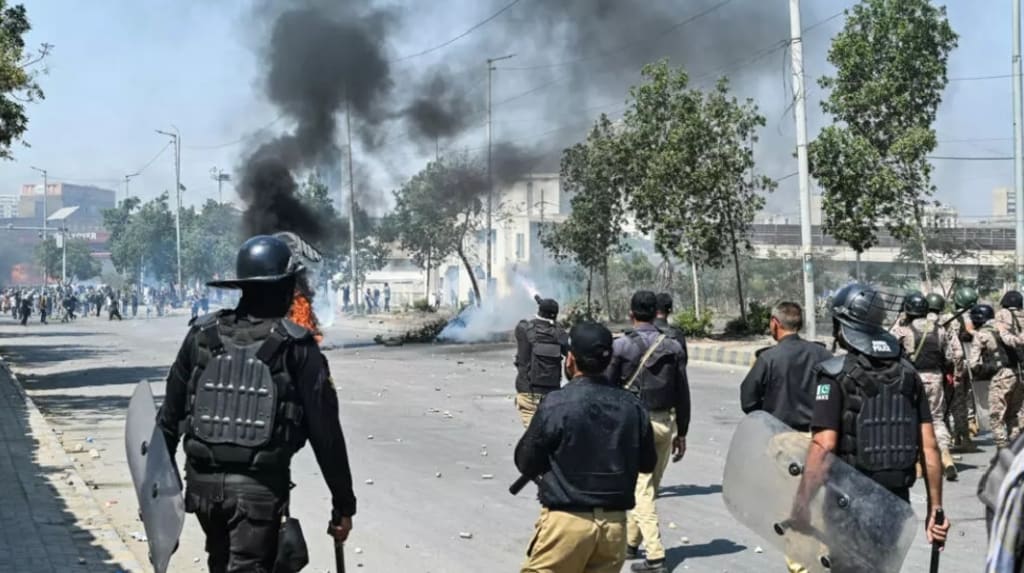
At least nine people were killed and dozens more wounded on Sunday after violent clashes erupted between protesters and law enforcement outside the United States Consulate General in Karachi, Pakistan’s largest city. The protests, which quickly escalated into violence, were sparked by outrage over the U.S. and Israeli strikes in Iran that resulted in the death of Iranian Supreme Leader Ayatollah Ali Khamenei.
Hundreds of demonstrators, many from the Shi’a Muslim community, gathered early on Sunday near the consulate on Mai Kolachi Road to express their anger at the killing of Khamenei in what Pakistani officials and international media described as coordinated airstrikes by the United States and Israel. The protest began peacefully but soon turned confrontational as the crowd surged toward the consulate’s security perimeter.
Violent Clashes and Escalation
Eyewitnesses reported that the crowd chanted anti-American and anti-Israel slogans and attempted to storm the consulate grounds, forcing security forces to intervene. According to hospital officials and rescue services, most of the fatalities resulted from gunshot wounds sustained during clashes with police and paramilitary forces deployed to protect the diplomatic compound.
AP News
Dr. Summaiya Syed, a police surgeon at Karachi’s Civil Hospital, said that initially six bodies were brought in, with additional injured individuals in critical condition. The death toll later rose to nine as some of the critically wounded succumbed to their injuries. Dozens more were wounded in the violence, and several remain in hospitals receiving treatment for gunshot wounds and other injuries.
AP News
Protesters reportedly breached the outer security barriers and managed to gain access to the consulate’s driveway, smashing windows and attempting to push deeper into the compound before being repelled by police and security personnel. Tear gas and baton charges were used to disperse the crowd, but clashes continued for several hours, drawing in reinforcements and heightening tensions in the surrounding neighborhoods.
NonStop Local Tri-Cities/Yakima
Government and Security Response
Pakistani authorities condemned the violence and appealed for calm, recognizing the constitutional right to peaceful protest but emphasizing that property destruction and attacks on diplomatic sites were unacceptable. Interior Minister Mohsin Naqvi publicly urged citizens to channel their grievances through lawful and nonviolent means, noting that the government was committed to protecting foreign missions and maintaining order.
AP News
Local senior police official Irfan Baloch confirmed that protesters briefly attacked the consulate’s perimeter before being pushed back by security forces. He dismissed claims that parts of the consulate were set ablaze, saying that the situation was brought under control after significant efforts by police and Pakistan Rangers.
United News Bangladesh
In response to the incident, the Sindh provincial government announced the formation of a high-level joint investigation team tasked with reviewing the circumstances that led to the deadly confrontation and determining accountability for the escalation. This inquiry aims to assess security preparations and identify any lapses in intelligence that may have contributed to the scale of the unrest. �
Dawn
Security Heightened Across Pakistan
The unrest was not limited to Karachi. Similar protests occurred in other major cities, including Lahore, Islamabad, and the northern region of Gilgit-Baltistan, where demonstrators expressed solidarity with Iran and condemned Western involvement in the Middle East. In Skardu, protestors reportedly set fire to a United Nations office building, though no casualties were immediately reported in that incident.
In Islamabad, authorities closed roads leading to the diplomatic Red Zone, where foreign embassies and key government buildings are located, to prevent crowds from approaching sensitive areas. Police and security forces used tear gas and other crowd-control measures to keep protests from turning violent in the capital.
Authorities also bolstered security at U.S. diplomatic missions across the country, including the U.S. Embassy in Islamabad and the consulate in Lahore, after receiving intelligence of potential demonstrations. The U.S. Embassy issued advisories urging American citizens in Pakistan to monitor local news, avoid large gatherings, and ensure their travel registrations were up to date amid heightened risks.
Regional and International Context
The deadly outbreak in Karachi represents one of the most significant episodes of civil unrest in Pakistan in recent years, occurring against the backdrop of broader regional instability following the death of Ayatollah Khamenei. The strikes that killed the powerful Iranian leader have intensified already volatile tensions in the Middle East, drawing widespread reactions from populations with strong cultural, religious, and political affiliations.
Analysts note that Pakistan’s sizable Shi’a population has strongly felt the impact of Khamenei’s death, and historical anti-American sentiment has amplified public anger toward Western nations. Although protests against U.S. foreign policy are not uncommon in Pakistan, the scale of the violence and the direct confrontation with international diplomatic facilities mark a significant escalation.
United News Bangladesh
International responses have been cautious, with several governments calling for restraint and urging diplomatic channels to address rising tensions. Meanwhile, the unfolding crisis appears to have reverberated outside Pakistan, with reports of protests in Iraq and other countries where demonstrators gathered near U.S. diplomatic missions to express similar grievances.
Human and Political Impact
The deadly clashes have prompted soul-searching within Pakistan’s political and civil society circles. Many community leaders and moderate politicians have appealed for restraint and dialogue, warning that the violence could deepen societal fractures and undermine the rule of law. Religious leaders in Karachi and other cities called on worshippers to mourn Khamenei’s death peacefully, emphasizing that lawful protest is a legitimate avenue for expression in a democratic society.
Families of the victims have gathered at hospitals and morgues, demanding answers and justice for their loved ones, even as authorities struggle to restore normalcy to areas surrounding the consulate. The emotional toll of the violence highlights the complex intersection of foreign policy, religious identity, and domestic stability that Pakistan now faces
Conclusion
The violent protests outside the U.S. consulate in Karachi, which left at least nine people dead and many more wounded, reflect deep regional tensions and a volatile public response to geopolitical developments. As officials investigate the incident and work to prevent similar outbreaks, the incident may have lasting implications for Pakistan’s internal security and diplomatic relations. In the coming days, authorities and community leaders will likely grapple with balancing freedom of expression, public safety, and Pakistan’s role on the international stage
About the Creator
A Gathering of Evil Bosses
“I’m the queen of chin jutting while I smooth my hair, attacking, insulting, and deflecting to protect my appointer.” “Oh, please, Blondi, my hair is curled, highlighted, and longer than yours. I feature television commercials telling immigrants that we will give them a free plane ride home, and if they voluntarily turn themselves in, they will be allowed to legally apply for re-entry. It runs everywhere, and I look good in it! You can’t compete because of your blond hair. Mine is nicer, and my lips are prettier than yours.”
By Andrea Corwin 14 days ago in The Swamp



Comments
There are no comments for this story
Be the first to respond and start the conversation.