
It's a Brave New World...Again
a.k.a. Did I Wake Up in Bizzaro World?

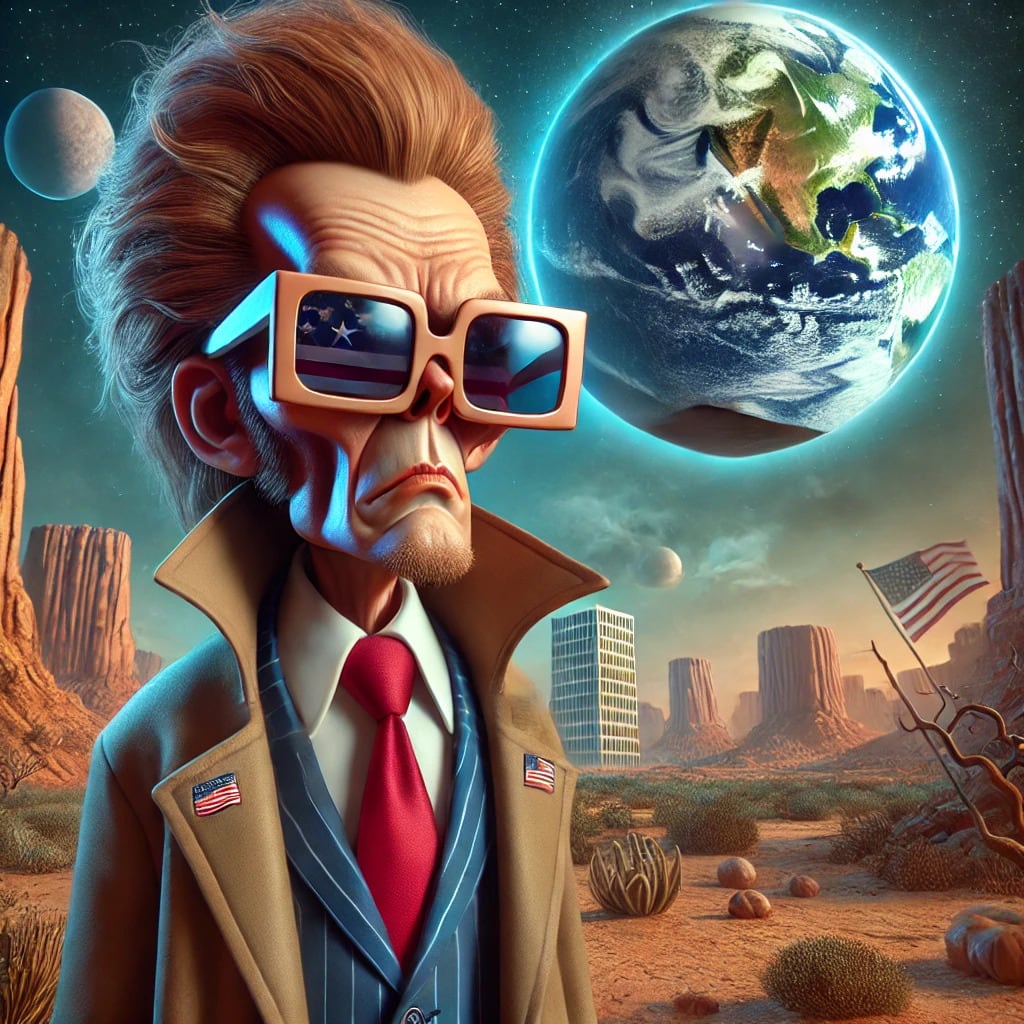
In between watching President Trump and JD Vance tag-team Ukrainian leader Volodymyr Zelenskiy and hearing the whining from FOX pundits about the latest MAGA voter fired by Elon Musk, I had a flashback to my childhood Saturday morning cartoon days. I remembered watching an episode of Superfriends (or maybe Justice League?) that introduced Bizarro World, and I thought to myself: This feels just like that.
Surely, I couldn't be watching the President and Vice President of the United States bully another world leader in the Oval Office—broadcast live to the entire world. Could I?
Sadly, I was. And, more than likely, it was only the first of many surreal moments to come in the next three years and eleven months. Yes, I’m counting the days.
In the days that followed, I reflected on what I had witnessed and the responses—or lack thereof—from both sides of the American political spectrum. So I started asking questions. How did America elect a narcissistic bully to the highest office in the land? Why didn’t anyone notice that two-thirds of his executive orders to date closely align with the Project 2025 objectives? Tough questions. Here are some of the things I found in my search for answers.
How Did We Elect a Narcissist as President?
To understand what it means to be a narcissist, I turned to the Diagnostic and Statistical Manual of Mental Disorders (DSM-5-TR). According to the DSM, narcissism is characterized by a pervasive pattern of grandiosity, a need for admiration, and a lack of empathy. These behaviors begin in early adulthood and persist across various contexts. Clinically, at least five of the following traits must be present:
A grandiose sense of self-importance (e.g., exaggerating achievements, expecting to be recognized as superior without commensurate accomplishments).
Preoccupation with fantasies of success, power, brilliance, beauty, or ideal love.
A belief in being "special" and understood only by high-status individuals.
A need for excessive admiration.
A sense of entitlement.
Exploitative behavior.
A lack of empathy.
Envy of others or a belief that others are envious of them.
Arrogant, haughty behaviors and attitudes.
That was a chilling read, but I pressed on. I wanted to understand the distinction between standard Narcissistic Personality Disorder (NPD) and malignant narcissism.
Malignant narcissism is not an official diagnosis but is commonly used to describe severe narcissistic traits combined with antisocial behaviors. The differences? Someone with standard NPD has little empathy, while someone with malignant narcissism has none. Someone with standard NPD may feel shame or remorse if their behavior is exposed, while a malignant narcissist will not.
I’m not a clinician or a doctor, but the pattern seemed clear. I leave it to the reader to draw their own conclusions.
Why Did We Elect a Narcissist?
In researching narcissism, the answer to my second question started to take shape. Imagine a person—let’s call him Donald Trump—who has a history of grandiosity, lack of empathy, and exploiting others for personal gain. Someone with a demonstrable record of doing whatever it takes to get what he wants. Not exactly what most would consider presidential material. But there’s more.
Trump combined his personality traits with a deliberate strategy of misinformation and disinformation to confuse and manipulate the American people. He offered simplistic solutions to the problems plaguing the poor, the uneducated, and the far right—solutions that were easy to digest but largely ineffective in practice.
You may be saying to yourself, That’s a bold claim. Where’s the proof? In which case, you should be paying more attention. But don’t worry, I’ll use small words.
Misinformation and the Manipulation of Truth
Misinformation is perhaps the easiest of Trump’s tactics to document:
COVID-19 Disinformation: During his first term, Trump promoted hydroxychloroquine as a treatment for COVID-19, despite a lack of scientific evidence. This led to public confusion, shortages, and likely undermined trust in medical institutions.
The 2020 Election Fraud Lie: Trump and his allies repeatedly claimed widespread voter fraud despite lacking credible evidence. This "firehose of falsehood" approach to propaganda eroded trust in democratic institutions.
The Politicization of Government Agencies: More recently, Trump appointed figures known for spreading misinformation to key positions. Case in point: Dan Bongino, a pro-Trump podcaster with a history of misinformation, was appointed as the FBI’s Deputy Director—raising serious concerns about the politicization of federal law enforcement. (Time Magazine)
Trump’s relentless accusations of "fake news" and his attacks on the media? Straight out of The Art of War: All war is based on deception. Throw your enemy into disarray, cause confusion in his ranks, and take advantage of the chaos.
The Far-Right Connection
Trump’s appeal to the far-right is no mystery. By openly welcoming previously fringe ideologies—neo-Nazis, white nationalists, and other extremist groups—he provided them with mainstream political legitimacy. And they rewarded him with unwavering support.
In the past, politicians ignored hate groups because they deserved to be ignored. Trump, on the other hand, embraced them. So they embraced him back.
The Oversimplification of Complex Problems
Oversimplified solutions are harder to quantify, but still obvious. Consider the Department of Government Efficiency (DOGE), Trump’s supposed answer to wasteful government spending. The narrative is that DOGE would eliminate corrupt, useless federal employees and reduce the deficit. A compelling pitch—except for a few problems:
No real vetting of agencies or employees.
Mass layoffs followed by mass rehiring and contradictory directives.
A federal workforce now more chaotic, ineffective, and demoralized than before.
The messages federal workers have received over the past 60 days:
"You’re fired."
"You’re not fired. Come back."
"You must report to the office."
"There are no desks or computers. Work from home."
"Send us a list of your work this week."
"Actually, send us a list from this week."
"Forget it. You’re fired again."
Was Department of Government Efficiency supposed to be ironic? If so, I missed the joke.
The Bigger Question
Trump speaks like an angry fourth-grader because that’s what his base understands and relates to. The Democrats lost in 2024 because they appealed to people who understood the actual issues at stake—and, sadly, that’s a shrinking demographic.
Are we truly a nation of homophobes, xenophobes, misogynists, and racists? I hope not. But the next four years will put that hope to the test.
About the Creator
Jeff Olen
Husband and father living (currently) in California. As a software engineer I spent most of my career in Telecom and Healthcare. Then I found my calling in the video game industry. Still want to write sci-fi but we’ll see.
New Travel Updates: UAE, Saudi Arabia, and Qatar Suspend Flights to Israel Amid Rising Gulf Tensions
Flights Grounded: What’s Happening? In early 2026, rising tensions involving Iran, Israel, and the U.S. have caused a significant shake-up in Middle Eastern aviation. Airlines are suspending or rerouting flights to protect passengers and crews as governments close or restrict airspace over high-risk regions.
By Sajida Sikandar2 days ago in The Swamp
Ukraine Sees Quieter Night as Trump Says Putin Will Not Attack Its Cities
Ceasefires, calm periods, and political statements highlight ongoing uncertainty in Ukraine Ukraine experienced a relatively quiet night on the front lines, with reports indicating fewer missile strikes and artillery attacks across several regions. This temporary lull comes amid high tension and international attention, as former U.S. President Donald Trump claimed that Russian President Vladimir Putin will not attack Ukrainian cities directly. While the news of reduced activity offers momentary relief for civilians and troops, experts caution that the situation remains fragile, and political statements do not necessarily reflect military strategy on the ground. The Quiet Night in Ukraine Reports from Ukrainian authorities and local media suggested that several cities and towns, including Kyiv, Kharkiv, and Zaporizhzhia, saw fewer air raids and shelling incidents than usual. Some points from the night include: Reduced missile activity: Air defense systems intercepted several projectiles, but the overall number of attacks dropped compared to previous nights. Civilian response: Residents reported feeling safer, with fewer sirens and explosions disturbing the night. Many returned to normal routines after temporary shelters had been used. Military vigilance: Ukrainian forces remain on high alert, continuing defensive operations and monitoring border areas for potential escalations. Military analysts caution that short periods of calm are common in ongoing conflicts and do not necessarily indicate a long-term reduction in hostilities. Donald Trump’s Statement Former U.S. President Donald Trump recently stated that he believes Vladimir Putin will not order attacks on Ukrainian cities directly. He added that: Russia is likely to focus on military targets rather than civilian areas. Diplomatic negotiations and international pressure could influence Putin’s strategy. The war could continue for some time, but direct strikes on urban centers may be avoided. Trump’s comments have sparked debate among political analysts, journalists, and international observers, with opinions divided on whether his predictions reflect reality or political optimism. International Reactions The international community has responded to both the quiet period in Ukraine and Trump’s remarks: U.S. officials: Current administration spokespeople emphasized that any prediction about Russian strategy is speculative, and the U.S. continues to support Ukraine with intelligence, defense systems, and economic aid. European Union: Brussels continues to monitor the situation closely, stressing that Russia’s previous behavior makes it difficult to rely on assurances. NATO: Alliance officials reiterated that defensive measures must remain in place, highlighting the importance of air defense systems and troop readiness. Observers stress that political statements, while influential, cannot replace concrete military and humanitarian measures. Civilians and Daily Life For Ukrainians, even a brief lull in fighting can have significant impacts: Daily routines: Shops, schools, and public services temporarily operate more normally when missile alerts are reduced. Psychological relief: Mental health experts note that periods of calm help civilians recover from stress and trauma, even if temporary. Preparedness: Despite the quieter night, residents continue to maintain safety measures, such as bomb shelters, emergency supplies, and evacuation plans. This shows that, while the quiet night is welcome, uncertainty remains the dominant factor in daily life. Military Implications For Ukrainian forces, a quieter night offers: Opportunity for regrouping: Troops can rest, replenish supplies, and perform maintenance on equipment. Strategic reassessment: Commanders may analyze recent attacks to adjust defensive tactics and anticipate potential escalations. Surveillance and intelligence gathering: Drones and reconnaissance units continue to monitor Russian troop movements, even during quieter periods. Analysts caution that these calm moments are often used by opposing forces to reposition or prepare for future offensives. Political and Media Impact Trump’s comments have stirred discussion across multiple platforms: Social media reactions: Many users debated the validity of his statements, weighing them against recent Russian attacks and intelligence reports. Media coverage: International news outlets have emphasized that predicting enemy behavior is challenging, and periods of calm can be misleading. Diplomatic messaging: Leaders in Kyiv, Washington, and Europe continue to communicate with the public and allies about ongoing threats and security measures. Experts agree that political statements influence perception, but they cannot guarantee actual safety on the ground. Looking Ahead While the quiet night is encouraging, several uncertainties remain: Russian strategy: Analysts warn that Russia could resume intense attacks at any moment, particularly in contested regions. Humanitarian concerns: Even brief lulls cannot fully alleviate the ongoing humanitarian crisis, including displaced persons, damaged infrastructure, and shortages of essential goods. International support: Continued aid from NATO, the U.S., and the EU will remain critical in ensuring Ukraine’s defensive capabilities and civilian safety. The combination of a temporary calm and public political statements underscores the fragility of peace in the conflict zone. Conclusion Ukraine’s recent quieter night provides a short-lived respite for civilians and troops alike. However, the situation remains tense and unpredictable, with Russian military actions still a looming threat. Former President Donald Trump’s statement that Putin will not attack Ukrainian cities adds political commentary to the discourse, but military analysts caution that such remarks cannot replace vigilance and preparedness. As Ukraine navigates these uncertainties, both residents and international partners continue to watch closely, hoping for periods of calm while preparing for the possibility of renewed hostilities.
By Fiaz Ahmed 5 days ago in The Swamp
Dead and Wearing Green
She was wearing that green dress when I first saw her, five years ago to the day. Flowing meadow fabric draped over long legs, thick auburn hair flowing down her back. That smile. Of course, she is still beautiful now. But now she is no longer alive.
By Karen Cave7 days ago in Fiction


Comments
There are no comments for this story
Be the first to respond and start the conversation.