
Inside Trump’s 2026 War Chest
What His Fundraising Numbers Reveal That Polls Can’t

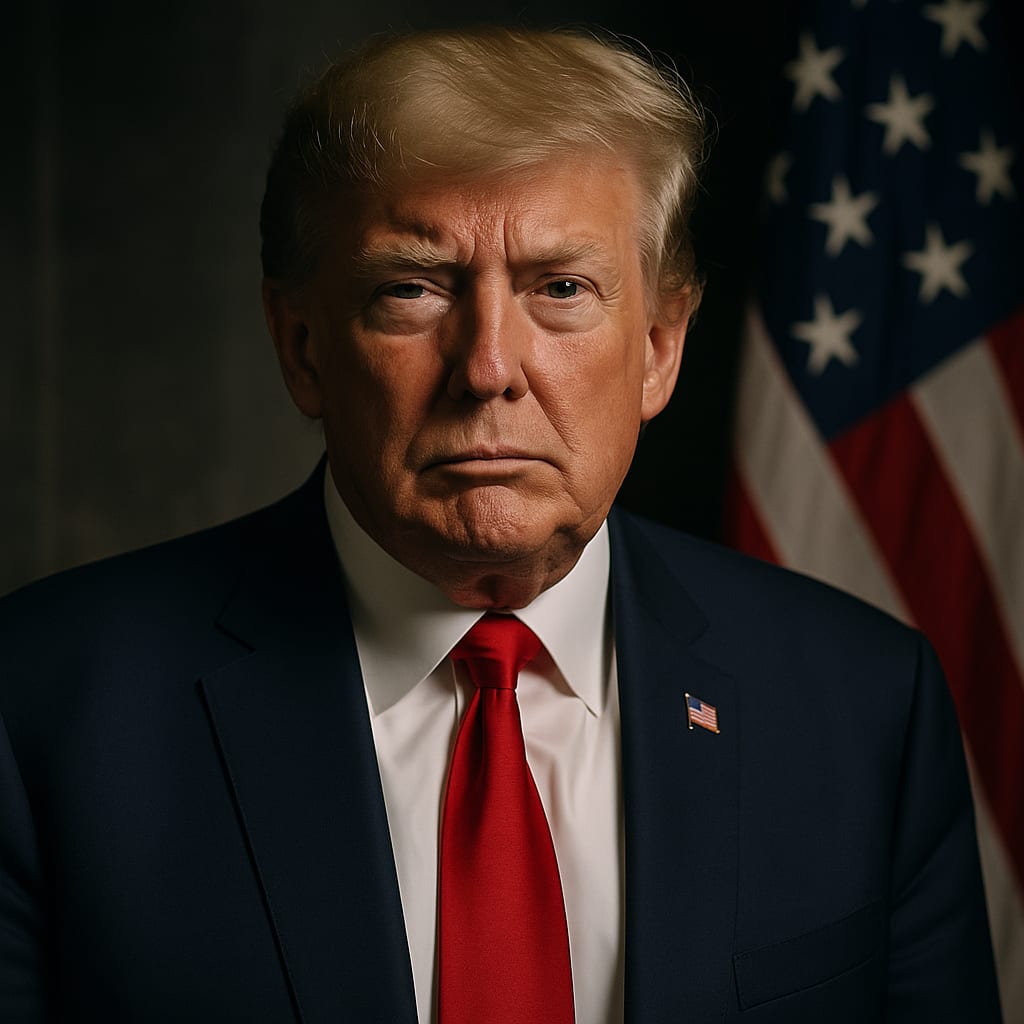
The money behind the movement, the fear behind the numbers, and what it really says about where America is headed next
The first time I saw the new 2026 Trump fundraising totals, it wasn’t on TV or in some think tank report.
It was on my phone, in the dark, at 1:17 a.m., scrolling in that half-sleep haze where everything feels a little too sharp and a little too unreal.
The headline was simple: Record-breaking haul. Massive war chest. Democrats outpaced again.
I remember staring at the numbers and having two thoughts at the exact same time:
How is this still happening?
Of course this is still happening.
Because whatever you think of Donald Trump, the man has done something most candidates never manage:
He turned political fundraising into an emotional subscription plan.
And 2026 is the bill coming due.
The moment the numbers stopped feeling like math
If you follow politics casually, fundraising stories can feel like background noise.
“Candidate raises $X million” doesn’t mean much when everything in the news has a price tag attached.
But this time, the numbers landed differently.
Trump’s 2026 political operation — PACs, aligned groups, and official committees — is sitting on a war chest that rivals full presidential cycles.
We’re talking hundreds of millions raised and stockpiled, with new cash pouring in from two directions:
Deep-pocket mega donors writing checks big enough to buy small towns
Small-dollar supporters giving $5, $10, $27 with a level of loyalty that’s starting to look less like politics and more like tithing
Some analysts see this and shrug: “Typical Trump. He’s always been good at fundraising.”
But I don’t buy that anymore.
This isn’t just about being “good at fundraising.”
This is about building an emotional economy out of outrage, nostalgia, and fear — and then cashing it in on a schedule.
Why people keep paying for the same political product
If you’ve never donated to a campaign, it’s easy to assume people give money because they agree with policies.
Lower taxes. Stricter borders. More freedom. Less regulation. Whatever it is.
That’s the story candidates tell: Support my agenda.
Trump flipped that script years ago.
He doesn’t just ask people to support an agenda.
He asks them to participate in a worldview.
The 2026 emails and texts are the same emotional cocktail he’s been serving since 2016, just poured into a new glass:
“They’re trying to silence us.”
“They’re stealing your country.”
“They want to erase your vote, your history, your values.”
“We’re under attack. Stand with me.”
There’s always a countdown timer.
There’s always a “midnight deadline.”
There’s always some urgent crisis that curiously can be addressed by clicking a red button and entering your credit card details.
People say they’re giving to Trump.
But on a deeper level, they’re paying for the feeling that they’re not alone, not powerless, not invisible.
The money is a receipt for belonging.
The small donors who fund big chaos
The most revealing part of Trump’s 2026 war chest isn’t the billionaires.
Billionaires hedge. They bet on access, not allegiance.
What really matters are the repeat $20 donors.
These are the people who:
Aren’t sure how they’ll pay for a car repair
Know exactly how much groceries have gone up
Haven’t seen their wages move in years
Still somehow find room for a monthly “Stop the Radical Left” charge on their bank statement
If that makes you angry, sit with it for a second.
Because it’s not just about political manipulation.
It’s about a country where people feel so ignored, so written off, that sending money to a man who has already been president feels like their loudest remaining option.
It’s easy to call them “brainwashed” or “cult-like.”
It’s harder to admit that a lot of them feel the same economic pain, confusion, and disillusionment that people on the left talk about — they’ve just chosen a different person to blame.
Trump’s 2026 war chest is full of small financial sacrifices from people who fundamentally don’t trust institutions anymore.
Not the media. Not the courts. Not the schools. Not the experts.
But they trust him enough to keep typing in those card numbers.
That’s not a fundraising story.
That’s a faith story.
The other side of the ledger: where the money goes
Campaign coverage loves the top-line number: Trump raised X, spent Y, has Z on hand.
But what makes this war chest interesting is not just how big it is — it’s how strangely it’s being used.
A normal political war chest pays for:
Ads
Organizers
Travel
Voter outreach
Events
Trump’s operation does all that, but there’s a twist: a significant chunk of the money is also going toward his personal legal battles and the legal fees of allies.
So when a supporter donates to “Save America” or “Defend Trump,” the money might be:
Funding lawyers in multiple states
Covering settlements and court fights
Paying consultants who live in the permanent campaign bubble
Building voter lists that can be re-monetized endlessly
It’s politics, business, and litigation all running through the same credit card machine.
If you step back from the partisanship for a second, it feels like watching a new kind of political creature evolve in real time:
Half candidate.
Half media brand.
Half defendant.
And yes, that adds up to more than a whole — because Trump’s entire fundraising model is about being more than one thing at once.
Victim and warrior.
Billionaire and underdog.
Insider and outsider.
He sells every version of himself at the same time, and each one comes with its own donation link.
The emotional math behind the 2026 Trump machine
We’re used to thinking about money in politics like a scoreboard: whoever raises more must be stronger.
But Trump’s 2026 numbers aren’t just a measure of strength.
They’re a measure of unresolved grievance and unprocessed fear.
Look at what his fundraising messages actually say between the lines:
“You are under attack”
“You are being replaced”
“You are losing control”
“They are laughing at you”
Then comes the pivot:
“I will fight for you”
“I will take the hits for you”
“I will say what you’re not allowed to say”
“Chip in $5 right now”
Money becomes a form of emotional release.
Can’t yell at your boss? Donate.
Can’t get through to your congressperson? Donate.
Can’t stand watching the news? Donate.
Every charge is a quiet, private moment of rebellion in a world where most people feel deeply powerless.
And the numbers show it’s working.
Even after indictments, impeachments, and a lifetime’s worth of scandal, the fundraising machine keeps humming.
If anything, legal trouble has become a loyalty test — and the war chest grows every time it looks like he’s cornered.
Why traditional politics can’t compete with this
People love to say, “We just need a normal candidate who talks about policy and brings people together.”
That sounds nice.
But a standard-issue politician is never going to beat a movement that’s built on intensity over broad appeal.
Policy doesn’t trend on social media the way outrage does.
“10-point infrastructure plan” doesn’t pull in money like “They are coming for you.”
Trump’s operation understands something most campaigns still treat as an afterthought:
Attention is currency.
Emotion is leverage.
Fear is renewable.
The 2026 war chest isn’t about buying TV ads.
It’s about proving, cycle after cycle, that this intensity can be refueled on command.
Meanwhile, more conventional candidates send out emails that sound like they were written by a committee:
“Friend, we’re falling short of our quarterly goal…”
Compare that to:
“They want to throw me in prison for standing up for YOU.”
One of those lines is a fundraising strategy.
The other is a plot.
Guess which one people remember.
The hidden cost of a permanent campaign
There’s something else buried inside these fundraising numbers that we don’t talk about enough.
When politics becomes a never-ending emergency, there’s no room left for normal.
No governing.
No cooling-off period.
No collective exhale.
Trump’s 2026 war chest is proof that we’ve entered an era where the campaign never truly ends.
The outrage can’t stop, because if it stops, the money stops.
So the messages stay cranked to eleven.
The threats are always existential.
The stakes are always apocalyptic.
The result is a kind of emotional burnout that lives quietly in people who still keep giving anyway.
I’ve seen it in relatives who swear they’re “done with politics,” then forward three donation links in a week.
I’ve seen it in friends who hate Trump but doom-scroll his every speech and tweet, unable to look away.
The war chest doesn’t just fund political activity.
It monetizes a national nervous system on permanent alert.
And whether you’re giving to him, opposing him, or trying to ignore him — you’re still living inside the atmosphere he’s helped create.
What these numbers really say about us
This is the part that stings a little.
Trump’s 2026 fundraising isn’t just a reflection of his power.
It’s a reflection of our vacuum.
Our vacuum of trust.
Our vacuum of meaning.
Our vacuum of leaders who can talk about people’s real fears without turning them into weapons.
If millions of people feel more seen by a billionaire-turned-politician under indictment than by the institutions that are supposed to serve them, that’s not just a Trump problem.
That’s a society problem.
It’s easier to mock his donors than admit why they exist.
It’s easier to laugh at “MAGA griftees” than reckon with the fact that, for a lot of them, this is the only place they feel like their anger has a home.
You don’t fix that with a fact-check.
You don’t fix it with a clever ad.
You fix it by building something people can actually trust more than a man who sends them texts in all caps.
And no one, on either side, has convincingly done that yet.
The takeaway I can’t shake
I don’t look at Trump’s 2026 war chest and see inevitability.
I see a warning label.
Because underneath the giant dollar signs are millions of quiet decisions:
To believe that one man can punish the people you think ruined your life
To treat donations like a shield against a world that feels unrecognizable
To keep reaching for the same story, even when it hasn’t delivered what it promised
Here’s what I carry away from those numbers:
Money in politics has always mattered, but now it’s telling a different kind of story — not just about who’s winning, but about who feels abandoned, afraid, and desperate enough to keep paying for a fight that never ends.
If Trump can still raise this kind of money in 2026, after everything, it means the conditions that created him are still very much alive.
The anger.
The mistrust.
The loneliness.
The sense that nobody in power really cares if you’re drowning.
You don’t have to like him.
You don’t have to excuse the harm he’s done or the danger he represents.
But if you look at that war chest and see only “stupid voters” or “corrupt politics,” you’re missing the deeper message written in every transaction:
This many people would rather send their fragile, hard-earned money to a political figure under endless investigation than to any institution that claims to represent them.
Until that stops making sense to them, the fundraising will continue.
The war chests will keep growing.
And the rest of us will keep living in a country where outrage is a business model and democracy is something you pay to feel part of.
The uncomfortable truth is this:
Trump’s 2026 war chest doesn’t just reveal the strength of his movement.
It reveals the size of the hole we still haven’t figured out how to fill.
About the Creator
abualyaanart
I write thoughtful, experience-driven stories about technology, digital life, and how modern tools quietly shape the way we think, work, and live.
I believe good technology should support life
Abualyaanart
Keep reading
More stories from abualyaanart and writers in The Swamp and other communities.
A Gathering of Evil Bosses
“I’m the queen of chin jutting while I smooth my hair, attacking, insulting, and deflecting to protect my appointer.” “Oh, please, Blondi, my hair is curled, highlighted, and longer than yours. I feature television commercials telling immigrants that we will give them a free plane ride home, and if they voluntarily turn themselves in, they will be allowed to legally apply for re-entry. It runs everywhere, and I look good in it! You can’t compete because of your blond hair. Mine is nicer, and my lips are prettier than yours.”
By Andrea Corwin 9 days ago in The Swamp
U.S. Economic Growth Weaker Than Thought in Fourth Quarter With Government Shutdown, Consumer Pullback
When economists first projected growth for the final quarter of the year, optimism was still in the air. But updated figures have revealed a more sobering picture: U.S. economic growth slowed far more than expected during the fourth quarter, largely due to a prolonged government shutdown and a noticeable pullback in consumer spending.
By Sajida Sikandar6 days ago in The Swamp



Comments
There are no comments for this story
Be the first to respond and start the conversation.