
In the Rooftop Bars of Dubai, Expats Brace for What Tomorrow May Bring
As global uncertainty rises, foreign professionals in the UAE reflect on opportunity, risk, and the fragile balance of life abroad
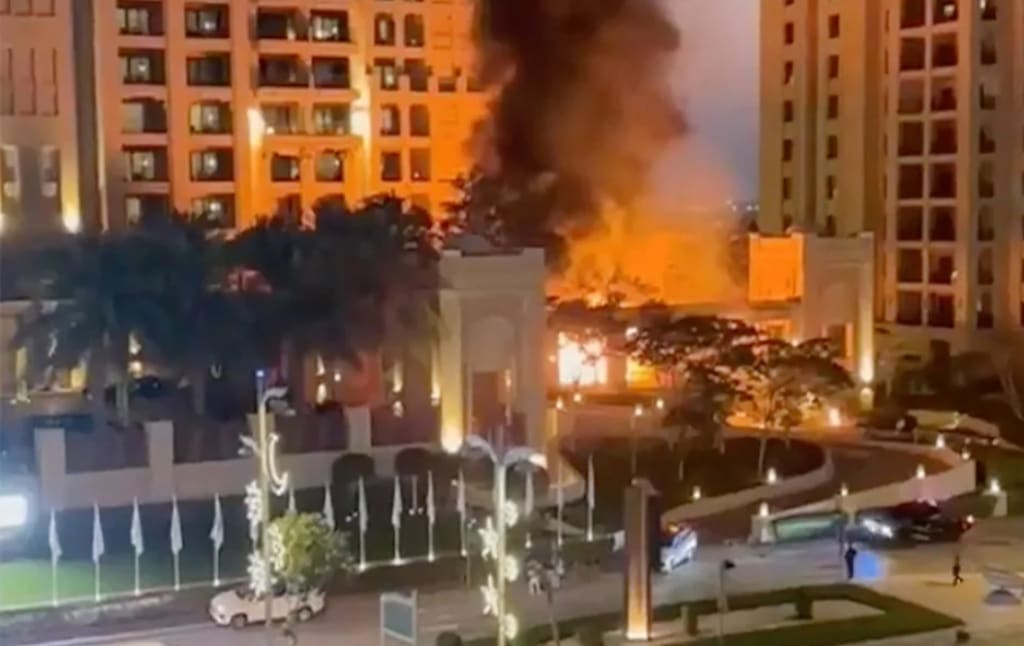
As the sun dips behind the Burj Khalifa and the skyline glows in gold and glass, Dubai’s rooftop bars fill with a familiar crowd — financiers from London, tech entrepreneurs from Mumbai, consultants from New York, creatives from Beirut, and hospitality managers from Manila. Conversations drift above the hum of music and clinking glasses, but beneath the polished surface lies something more subdued: uncertainty.
For decades, Dubai has marketed itself as a city of opportunity — tax advantages, high salaries, modern infrastructure, and safety. It has attracted millions of expatriates who now make up nearly 90% of the population of the United Arab Emirates. But as global economic pressures mount and geopolitical tensions ripple through markets, many expats are quietly asking the same question: what does tomorrow hold?
A City Built on Mobility
Dubai thrives on movement. Contracts are temporary, visas are employer-sponsored, and career progression often depends on global demand. Unlike traditional immigration hubs, residency in the UAE is closely tied to employment.
For many expatriates, this creates both freedom and vulnerability.
“You always know it’s not permanent,” says a European marketing executive who has lived in Dubai for six years. “That’s part of the deal. But lately, it feels more fragile.”
Economic slowdowns in Europe, Asia, and North America influence hiring decisions in the Gulf. When global companies restructure, regional offices feel the effects.
Rooftop conversations often turn to job security, shifting visa rules, and contingency plans.
The Economic Tightrope
Dubai has proven remarkably resilient in recent years. After navigating pandemic-related disruptions, the city rebounded with renewed tourism, real estate growth, and investor confidence.
Luxury developments continue to rise. International conferences fill hotels. New restaurants open almost weekly.
Yet global headwinds remain.
Inflation, fluctuating oil prices, and broader geopolitical uncertainty create underlying tension. While the UAE has diversified its economy beyond oil, it is not immune to worldwide financial currents.
Expats working in finance, aviation, real estate, and tech watch international markets closely.
“Dubai moves fast,” says an Australian investment advisor. “But it’s still connected to everything happening globally.”
Lifestyle and Illusion
There is perhaps no city where ambition and aesthetics merge so seamlessly.
Infinity pools, skyline views, and Michelin-starred dining coexist with ambitious startup pitches and deal-making dinners.
But beneath the luxury lies a transient reality.
Many expats maintain savings accounts abroad. Some support families in home countries. Others are building careers with the understanding that relocation may come suddenly.
“Everyone has a backup plan,” says a South African architect. “Or at least, they should.”
The rooftop bars, then, become more than leisure spaces. They are informal networking hubs, therapy sessions, and strategy rooms rolled into one.
Visa Reforms and New Pathways
The UAE has introduced long-term visa options in recent years, including Golden Visas for investors, entrepreneurs, and skilled professionals. These reforms aim to provide greater stability for residents.
For some, these initiatives offer reassurance.
“For the first time, I feel like I could actually stay long-term,” says a tech entrepreneur from India who recently secured a 10-year residency permit.
Still, not everyone qualifies for extended visas. For many mid-level professionals, employment contracts remain the central anchor.
The possibility of sudden change continues to shape decision-making.
Regional Tensions and Global Impact
Dubai’s strategic location — bridging Europe, Asia, and Africa — has made it a global crossroads. But proximity to regional tensions can create unease.
Although the UAE has maintained relative stability, geopolitical developments in the broader Middle East sometimes spark concern.
Financial markets react quickly to regional conflict, and industries like aviation and tourism can feel immediate impact.
While daily life in Dubai remains largely unaffected, expats remain aware of the delicate balance.
“Things can change quickly in this part of the world,” says a British airline manager. “We’ve seen that before.”
The Real Estate Question
Property has long been both a symbol of commitment and a hedge against impermanence.
During boom periods, expats rush to purchase apartments or villas, viewing ownership as a step toward stability.
Yet property markets in Dubai have historically experienced cycles of sharp growth followed by corrections.
Those gathered over skyline views often debate whether buying signals confidence — or overexposure.
“Renting keeps you flexible,” says a Canadian consultant. “Buying makes you feel invested. It’s a tough call.”
Community and Identity
For many expatriates, Dubai is neither home nor temporary stop — but something in between.
Children attend international schools. Friendships form across continents. Cultural diversity becomes part of daily life.
Yet identity can feel fluid.
Without a pathway to citizenship for most residents, long-term belonging remains complicated.
“Dubai gives you opportunity,” says a Lebanese hospitality executive. “But you always know you’re a guest.”
That awareness shapes both ambition and caution.
Why They Stay
Despite uncertainties, Dubai continues to attract global talent.
Tax-free income remains appealing. Safety and infrastructure are strong. Career mobility is often faster than in more established economies.
For many, the trade-off feels worthwhile.
“You accept the risk because the upside is real,” says an American startup founder.
In rooftop bars across the city, conversations may reflect anxiety — but they also carry optimism.
Deals are still being signed. Businesses are still launching. Flights still arrive daily with new hopeful arrivals.
Preparing for Tomorrow
What sets Dubai apart is adaptability.
The city has reinvented itself multiple times — from trading port to aviation hub to global financial center.
Expats, too, have learned to adapt.
Diversifying income streams, investing globally, and building cross-border networks are common strategies.
“Flexibility is the key,” says a Filipino hospitality manager. “You don’t put everything in one place.”
Conclusion
In the rooftop bars of Dubai, beneath glittering towers and desert skies, expatriates reflect on a future shaped by both opportunity and uncertainty.
They came seeking growth, ambition, and global connection.
They stay because the city continues to offer possibility.
But they also prepare — quietly — for change.
Dubai’s skyline tells a story of resilience and reinvention. So do the people who call it home, however temporarily.
As the music fades and elevators descend toward the night streets below, one truth remains clear: in a city built on ambition, tomorrow is always both promise and question.
About the Creator
Keep reading
More stories from Aarif Lashari and writers in The Swamp and other communities.
Trump Claims Iran’s Supreme Leader Ayatollah Ali Khamenei Is Dead After US-Israeli Strikes
Global tensions escalated sharply after former U.S. President Donald Trump claimed that Iran’s Supreme Leader, Ayatollah Ali Khamenei, is dead following reported US-Israeli military strikes. The statement, delivered amid already heightened hostilities in the Middle East, has triggered intense international reaction — though, at the time of writing, there has been no independent confirmation from Iranian state media or verified international sources.
By Aarif Lashariabout 6 hours ago in The Swamp
The Saddest Thing - The Billionaires Who Rule America Aren't Even Enjoying Themselves
This single post says more about our ruling class than a thousand policy papers. The saddest thing about today's system is that the men robbing the rest of us - sabotaging our economic prospects, our pensions, our access to affordable healthcare - are not even happy.
By Scott Christenson🌴22 days ago in The Swamp
Trump Says He’s Sending a Hospital Boat to Greenland
In a surprising announcement on 21 February 2026, Donald Trump said that the United States is sending a “great hospital boat” to Greenland to care for “sick people” he claims are not being adequately served there. The declaration, made via social media, has caused confusion among diplomats, alarm among Greenlandic officials, and renewed scrutiny of Washington’s intentions toward the vast Arctic island. Trump’s post, shared on his Truth Social platform just before a White House dinner for Republican governors, said he was working with Jeff Landry — whom he appointed as a special envoy to Greenland in December — to dispatch the medical vessel. “Working with the fantastic Governor of Louisiana… we are going to send a great hospital boat to Greenland to take care of the many people who are sick, and not being taken care of there. It’s on the way!!!” Trump wrote, without specifying which vessel would be sent or what medical needs it would address. A Vague Mission With Big Questions Trump’s announcement included an image resembling the USNS Mercy, one of the U.S. Navy’s two hospital ships. However, neither ship — Mercy nor its sister vessel USNS Comfort — is currently stationed near Greenland, and both are based in the continental United States undergoing maintenance or deployment planning. It remains unclear whether that specific ship, another vessel, or a smaller “hospital boat” will be deployed. Crucially, Trump did not explain why the mission was necessary, who requested it, or whether Danish or Greenlandic authorities had been consulted. Greenland offers universal health care for its residents as part of Denmark’s social system, leading critics to question the stated medical rationale. Danish and Greenlandic officials have not publicly requested emergency medical assistance from the United States. Diplomacy and Sovereignty Concerns The announcement comes amid a broader and contentious backdrop. Trump has repeatedly stated that the United States should acquire Greenland for strategic reasons, citing its geographic importance in the Arctic and potential mineral wealth. Those proposals have been met with firm rejection by Greenlandic and Danish authorities, who insist the island is not for sale and remains firmly part of the Kingdom of Denmark. Tensions flared last year when Denmark deployed additional military presence under Operation Arctic Endurance, a NATO-related mission intended to deter any aggressive moves by the United States or other powers and reassure Greenlanders of their security ties with Europe. Trump has at times refused to rule out force as a means of gaining control of Greenland, though official U.S. policy remains unclear and the White House has denied imminent military action. By framing the hospital ship mission as humanitarian, Trump’s announcement may be an attempt to soften his Arctic policy’s image. Critics, however, see it as part of a pattern of provocative statements that blur humanitarian action with geopolitical signaling. The involvement of Landry, whose role as “special envoy” lacks formal diplomatic accreditation in Copenhagen, adds to diplomatic confusion. Reactions From Greenland and Denmark In Greenland, the announcement was met with puzzlement and skepticism. Activists and community leaders noted that local health systems have long provided care under the Danish model and that extra-territorial assistance was neither requested nor generally needed. Some expressed concern that the overture could be a pretext for deeper U.S. involvement in Greenland’s internal affairs. The Independent Danish officials have historically responded firmly to unilateral comments about Greenland’s status, and recent diplomatic engagement included discussions between the three governments — Denmark, Greenland, and the United States — to ease friction. The hospital boat announcement complicates those efforts, raising questions about whether it will require new diplomatic clarifications or even formal negotiation. No Details, Big Implications Despite the rhetoric of care and assistance, Trump’s post offered no timeline for the mission, no indication of the medical issues being addressed, and no confirmation from the Pentagon, U.S. Navy, or Department of War (a reference to the Pentagon used in Trump’s social post) about any planned deployment. Requests for clarification from U.S. Northern Command, the Danish Embassy, and Greenland’s parliament reportedly went unanswered at the time of reporting. Observers say the announcement may reflect broader strategic messaging. Control and influence in the Arctic are increasingly contested as climate change opens new shipping lanes and exposes untapped resources. Greenland’s location — geographically closer to Canada and the U.S. than to many parts of mainland Europe — makes it a linchpin of Arctic security calculations involving Russia, China, and NATO allies. What Comes Next For now, Trump’s hospital boat announcement remains ambiguous. Whether it evolves into a formal mission with logistical planning, diplomatic coordination, and clarity of purpose — or remains another piece of Arctic posturing — will depend on reactions from Greenlandic and Danish leaders, U.S. military authorities, and international partners watching the Arctic’s strategic future.
By Fiaz Ahmed 7 days ago in The Swamp



Comments
There are no comments for this story
Be the first to respond and start the conversation.