
Trump Claims Iran’s Supreme Leader Ayatollah Ali Khamenei Is Dead After US-Israeli Strikes
Unverified statement sparks global shockwaves as world leaders await official confirmation
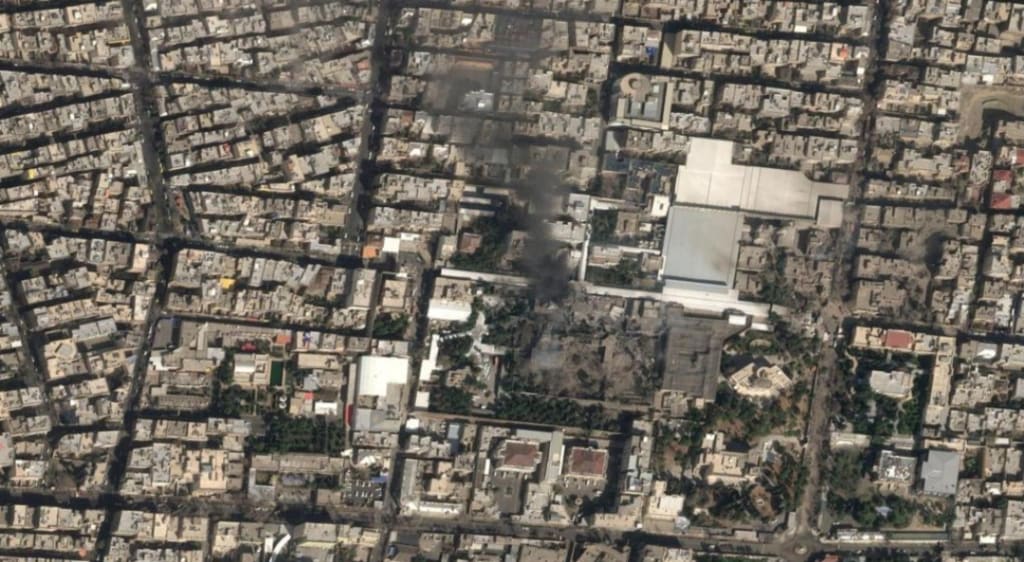
Global tensions escalated sharply after former U.S. President Donald Trump claimed that Iran’s Supreme Leader, Ayatollah Ali Khamenei, is dead following reported US-Israeli military strikes. The statement, delivered amid already heightened hostilities in the Middle East, has triggered intense international reaction — though, at the time of writing, there has been no independent confirmation from Iranian state media or verified international sources.
Given the magnitude of such a development, governments, intelligence agencies, and global markets are closely monitoring the situation.
The Claim and Immediate Reaction
Trump’s statement alleged that joint US-Israeli military operations targeted high-level Iranian leadership structures, resulting in the death of Iran’s Supreme Leader.
If confirmed, such an event would represent one of the most consequential geopolitical moments in modern Middle Eastern history.
However, Iranian authorities have not officially confirmed the claim. State-affiliated outlets in Tehran have remained either silent or have denied major leadership losses in past similar scenarios.
In the absence of verified confirmation, analysts caution against drawing immediate conclusions.
Who Is Ayatollah Ali Khamenei?
Ayatollah Ali Khamenei has served as Iran’s Supreme Leader since 1989, following the death of Ayatollah Ruhollah Khomeini. As Supreme Leader, he holds ultimate authority over:
The Iranian armed forces
The judiciary
State broadcasting
Major foreign policy decisions
The Islamic Revolutionary Guard Corps (IRGC)
Unlike Iran’s president, the Supreme Leader’s role is not elected by direct public vote but appointed by the Assembly of Experts.
His leadership has shaped Iran’s regional influence, nuclear negotiations, and relations with Western nations for more than three decades.
Regional Implications If Confirmed
If the claim were to be confirmed, the consequences would likely be profound.
1. Political Transition in Iran
Iran’s constitution outlines a process for selecting a new Supreme Leader through the Assembly of Experts. However, such a transition during military conflict could generate internal instability.
Power centers within Iran — including the IRGC and clerical establishment — could compete to shape succession outcomes.
2. Military Escalation Risks
Iran could respond with significant military retaliation if it views leadership targeting as an act of war.
This could involve:
Missile strikes
Cyber operations
Regional proxy responses
Disruption of oil shipping routes
The Strait of Hormuz, through which a significant percentage of global oil passes, would become a key focal point.
Global Market Reaction
Even unverified reports of leadership changes in Iran are enough to shake global markets.
Oil prices typically spike amid instability involving Iran, a major energy producer and key regional power.
Stock markets across Asia and Europe could experience volatility as investors assess risk exposure.
Currency markets may also react sharply.
The US-Israel Alliance Context
The United States and Israel have long maintained close military cooperation.
Israel has frequently expressed concern over Iran’s nuclear program and regional military expansion.
However, a direct strike resulting in the death of Iran’s Supreme Leader would represent a dramatic escalation beyond previous confrontations.
Historically, both Washington and Jerusalem have weighed the risks of targeting senior Iranian leadership due to potential regional blowback.
Information Warfare and Verification Challenges
Modern conflicts increasingly involve information battles alongside military action.
False or premature claims can spread rapidly through social media before official confirmation.
In past geopolitical crises, unverified reports have later proven inaccurate or exaggerated.
This is why major international news agencies typically require multiple confirmations before reporting leadership deaths.
Until credible independent verification emerges, caution remains essential.
Internal Iranian Stability
Iran’s political structure blends theocratic oversight with republican institutions.
The Supreme Leader serves as the ultimate authority above elected officials.
A sudden leadership vacuum during military tension could test institutional resilience.
Observers note that Iran has succession mechanisms in place — but their real-world implementation under crisis conditions is untested at this scale.
Diplomatic Fallout
World leaders are likely engaging in urgent diplomatic communication behind closed doors.
The United Nations Security Council may convene emergency discussions if confirmation surfaces.
Regional powers such as Saudi Arabia, Turkey, and Russia would also closely assess their strategic positions.
China, which maintains energy ties with Iran, could play a diplomatic role.
The Risk of Escalation
Whether the claim proves accurate or not, rhetoric alone can intensify tensions.
Statements suggesting high-level casualties increase the probability of miscalculation.
Military analysts warn that rapid escalation cycles can develop when communication channels break down.
This is why verification, restraint, and diplomatic clarity are critical.
What Happens Next?
Key developments to watch include:
Official confirmation or denial from Iranian authorities
Pentagon briefings or clarifications
Statements from Israeli leadership
UN Security Council responses
Military movement in the Gulf region
Until verified information becomes available, the situation remains fluid.
Conclusion
The claim that Iran’s Supreme Leader Ayatollah Ali Khamenei is dead following US-Israeli strikes, as stated by Donald Trump, represents an extraordinary and highly sensitive development.
However, without independent confirmation, it remains a claim — not a verified fact.
If confirmed, the geopolitical consequences would be historic, potentially reshaping Middle Eastern power dynamics and global security calculations.
For now, the international community waits for clarity.
In moments like these, responsible reporting and verified information are more important than ever.
About the Creator
Keep reading
More stories from Aarif Lashari and writers in The Swamp and other communities.
Trump Says US Has Begun ‘Major Combat Operations’ in Iran After Israel Launches Strikes – Live Updates
Tensions in the Middle East have surged dramatically after former President Donald Trump announced that the United States has begun what he described as “major combat operations” in Iran, following Israeli strikes on Iranian targets. The statement, delivered amid rapidly unfolding developments, signals a potential turning point in a volatile regional crisis that could have global implications.
By Aarif Lashariabout 23 hours ago in The Swamp
A Gathering of Evil Bosses
“I’m the queen of chin jutting while I smooth my hair, attacking, insulting, and deflecting to protect my appointer.” “Oh, please, Blondi, my hair is curled, highlighted, and longer than yours. I feature television commercials telling immigrants that we will give them a free plane ride home, and if they voluntarily turn themselves in, they will be allowed to legally apply for re-entry. It runs everywhere, and I look good in it! You can’t compete because of your blond hair. Mine is nicer, and my lips are prettier than yours.”
By Andrea Corwin 11 days ago in The Swamp


Comments
There are no comments for this story
Be the first to respond and start the conversation.