
Drowning in Data, Starving for Truth
How nonstop content, curated feeds, and digital noise are destroying our ability to think clearly.

We were promised a revolution. The internet, we were told, would democratize knowledge—bring the wisdom of the world to our fingertips and make us more intelligent, more informed, and more connected than any generation before. But something went wrong. Because despite living in the most information-rich era in human history, we're not more informed—we're more distracted, misled, and divided than ever before.
We've mistaken access for understanding. We scroll, we skim, we share. But we rarely stop to verify, reflect, or question. Headlines become a reality. Memes become facts. And opinions, carefully curated by algorithms, are served up to us as truth. In this new age of endless information, depth has been replaced with volume. The result isn't enlightenment—it's confusion dressed as certainty.
The problem isn't that we don't have enough information—it's that we have too much of the wrong kind. Our feeds are filled with emotional bait, rage content, and stories stripped of context. Nuance doesn't go viral. Outrage does. In the race for clicks, content creators—many masquerading as journalists—don't ask, "Is this true?" They ask, "Will this trend?" And when virality matters more than accuracy, truth becomes collateral damage.
People no longer seek knowledge. They seek confirmation. We don't ask, "What's real?" We ask, "Does this align with what I already believe?" Critical thinking has been replaced with tribal loyalty. And thanks to algorithmic personalization, two people can live in the same country, follow the same story, and see two completely different versions of reality. One framed as proof. The other is propaganda.
The age of information has given rise to a strange illusion—one where we feel informed because we're constantly consuming content. But consumption isn't comprehension. Reading tweets, glancing at headlines, or watching 30-second clips isn't the same as understanding the world. In fact, the sheer volume of content leaves most people overwhelmed. So, instead of digging deeper, we retreat to the safety of headlines that make us feel good, channels that echo our views, and influencers who package complexity into easy-to-digest certainty.
That illusion has consequences. When people believe they're informed—but aren't—they become harder to reach with facts. Harder to reason with. Harder to persuade. And that's precisely where we are now. Dialogue has turned into shouting. The debate has become an insult. Instead of engaging ideas, we label people. Instead of asking questions, we cancel them. It's easier to dismiss someone as "brainwashed" than to challenge our own assumptions.
We are not lacking data. We are starving for discernment.
Some of the blame lies with the platforms. Tech companies profit off our attention, and controversy keeps us clicking. Their algorithms don't prioritize truth—they prioritize engagement. If a lie gets more reactions than a well-researched fact, guess which one gets shown first. Social media isn't a public square—it's a behavioral lab designed to exploit your emotions.
However, we can't place all the blame on technology. The problem runs deeper than the code. The real issue is cultural. Somewhere along the way, we stopped valuing patience, curiosity, and humility. We began to believe that reading one article made us an expert. Watching one viral clip gave us insight. And that being right mattered more than being honest.
Even worse, social media platforms—designed to connect the world—began deciding which "truths" were acceptable. Posts that questioned the mainstream narrative were flagged as misinformation, even when they were later found to be accurate. Medical experts, investigative journalists, and average citizens were censored, deplatformed, or discredited—not for lying but for disagreeing. The truth wasn't just buried under noise—it was actively filtered based on political convenience.
We were promised open access to information, but we were handed a curated feed of acceptable opinions.
And most people didn't push back. Why? Because the information they did see confirmed what they already wanted to believe. When something aligns with our bias, we rarely question it. But when something challenges it, we're too lazy—or too prideful—to check if it might be true. We dismiss it, label it, mock it. We don't verify. We just scroll past it, trusting that our chosen platform, influencer, or favorite news outlet already did the thinking for us.
This is the trap of modern information: having more data doesn't make you wiser. If what you're absorbing is laced with lies, distortion, or omission, then you're not becoming informed—you're being programmed. We've confused quantity with quality. We assume that because we know something, we know enough. But if what we know is based on manipulation, partial truths, or outright propaganda, then the more we consume, the more distorted our view of reality becomes.
We now have generations raised on a steady diet of confirmation bias—fed not what is true but what feels true. And once that kind of thinking takes root, it's nearly impossible to uproot. People become emotionally attached to their version of the truth. Any challenge to it feels like a personal attack, and the facts no longer matter.
That arrogance, built on shallow understanding, is dangerous. It's how conspiracy theories spread. It's how propaganda takes root. It's how ordinary people become pawns in political games they don't fully understand—angry, activated, and convinced they know the whole story because a social media influencer gave them "the truth" in under sixty seconds.
In the age of information, deception doesn't need to be hidden. It just needs to be louder.
This shift doesn't just affect individuals—it affects democracies. A functioning republic depends on an informed electorate. But what happens when the electorate is misinformed, disinformed, or simply overwhelmed by conflicting narratives? What happens when people vote based on viral rage instead of verified facts? What happens when trust in every institution—from media to government to science—is eroded by nonstop exposure to contradiction and cynicism?
What happens is what we're seeing now: apathy, outrage, and confusion all wrapped into one. People either stop trusting anything, or they trust only the voices that tell them what they want to hear. Both are dangerous. Both leave the door wide open for manipulation.
And here's the bitter irony: the very tools that could have empowered us—search engines, open data, real-time news—have been turned against us by the sheer speed and scale of modern life. We don't take time to compare sources or question motives. We barely take time to finish reading an article before we've already formed an opinion. We've traded careful thought for constant motion and honest reflection for snap reactions.
So now what?
The most important thing we can do is simply slow down. In a world addicted to speed, taking a moment to think feels almost rebellious. Before you post, before you comment, before you make up your mind—pause. Ask yourself, Do I really understand this, or am I just reacting emotionally?
Then, instead of chasing more and more content, choose depth. Read the full article. Watch the full interview. Don't settle for the soundbite or the headline that makes you feel good. Give the truth enough time to speak. That means reading beyond the headline, finishing the article, and listening to full interviews—not just viral clips or soundbites. Real understanding takes time, and we have to be willing to give it that. Seek out opposing views—not to argue, but to understand. You don't have to agree. But if you can't explain the other side reasonably, you probably don't understand your own.
Third, we teach and model critical thinking—not just in schools but also in everyday life. Show your kids how to check a source. Challenge your friends—respectfully—when they share something false. Make it a habit to ask, "Where did that come from?" and "What's missing here?"
Finally, we must rebuild our tolerance for discomfort. Because the absolute truth isn't always comfortable. It's often complicated, messy, and inconvenient. But it's worth it.
The information age was supposed to make us smarter. But intelligence isn't in the access—it's in how we process, how we question, and how we choose to respond.
We don't need less information. We need more wisdom.
Because if we don't learn to cut through the noise, we'll stay stuck in a world where the loudest voices win, the sharpest lies spread, and the truth—however real—gets lost in the scroll.
About the Creator
Keep reading
More stories from Robert Lacy and writers in The Swamp and other communities.
What Happened to True Journalism? A Nation Starved of Truth
There was a time when journalism carried the weight of the republic—tasked with uncovering what was hidden, holding the powerful accountable, and speaking for those who couldn't. It wasn't perfect, but it was respected. The press said, and the country listened.
By Robert Lacy9 months ago in The Swamp
Why Black History Matters in America?
The United States of America is celebrating their 250th anniversary in 2026. I'm proud to be an American and as someone who was born here, I wouldn't imagine myself living anywhere else. This is a country where opportunities are possible. Where anyone can be successful in anything they desire to do. Equality, community, and togetherness are the backbones of what America is and should be about. However, we have an administration who wants to erase and disregard those who have made positive, meaningful impacts in our country, specifically Black figures, such as Martin Luther King, Jr., Rosa Parks, and Maya Angelou. President Trump and his administration have been constantly complaining and fighting against what they call the "Woke agenda". They use this excuse as a distraction from other issues they refuse to address, such as the high cost of living, climate change, and inflation. That equality is dividing America, when in reality, it's bringing us together. Being woke is not tied to a specific political party. No matter where you stand on the political spectrum, you can still care about other people and their plights. Compassion and empathy for others isn't tied to a political party, either. We were taught as children to treat others the way we want to be treated and not judge others because they're different from us. Caring about others isn't a personal attack on your beliefs. It doesn't make you any less of a person. People who are easily offended over African American figures, past or present, or anything related to it, are grasping at straws. Current and future generations need to know who people like Harriet Tubman and Shirley Chisholm were, especially in the classroom. Black History is part of American History. It should be recognized, not hidden or forgotten. Besides, you can't shield children from everything, just because your feelings are easily hurt.
By Mark Wesley Pritchard 7 days ago in The Swamp
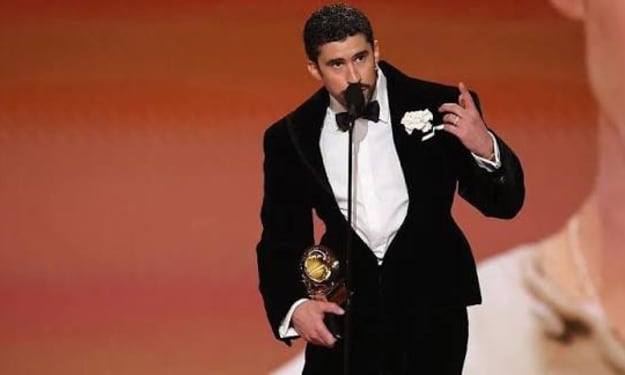
Bad Bunny Says ‘ICE Out’ in Forceful Grammy Speech
At the 68th Annual Grammy Awards in Los Angeles, Puerto Rican superstar Bad Bunny used his acceptance speech to deliver what many observers called one of the most political and powerful moments of the night — calling for “ICE out” as he condemned U.S. immigration enforcement and urged compassion and unity in a fraught political climate. Bad Bunny, whose real name is Benito Antonio Martínez Ocasio, received the Best Música Urbana Album award for Debí Tirar Más Fotos. Rather than begin with the typical list of thanks, he chose to open with a pointed rebuke of U.S. Immigration and Customs Enforcement (ICE), the federal agency at the center of heated national debate over immigration policy and enforcement tactics. Reuters +1 “Ice out,” he declared to loud applause from the audience. “We’re not savage. We’re not animals. We’re not aliens. We are humans, and we are Americans.” Reuters +1 A Political Statement on a Global Stage The line drew a standing ovation and became one of the most discussed moments of the night. Bad Bunny’s remarks resonated amid growing public scrutiny of ICE’s actions, including controversial enforcement operations and recent incidents that have sparked nationwide protests and criticism. People.com Bad Bunny framed his message around humanity and empathy, seeking to push back against rhetoric that dehumanizes migrants and marginalized communities. “The hate gets more powerful with more hate,” he said, adding that the only thing more powerful than hate is love. “If we fight, we have to do it with love.” NBC Los Angeles His speech went beyond simply rejecting federal enforcement tactics; it called on viewers to reject dehumanizing language and see all people as human before labels or legal status. In doing so, he tapped into broader debates over immigration, civil rights and national identity — issues that many artists at the ceremony also addressed. Vogue A Moment of Solidarity Bad Bunny was not alone in using the Grammy platform to raise political and social issues. Other performers and winners also wore “ICE OUT” pins on the red carpet and referenced immigrants’ contributions in their remarks — including artists such as Billie Eilish and Olivia Dean, who wove immigrant narratives into their victory speeches and acceptance moments. uk.news.yahoo.com Billie Eilish, for example, was reported to have voiced strong opposition to ICE by the end of her own speech, saying emphatically that “no one is illegal on stolen land” — remarks that were powerfully symbolic, even if briefly censored in parts of the broadcast. www.ndtv.com Olivia Dean also spoke about her immigrant heritage, calling herself a “product of bravery” and honoring the people who came before her. Teen Vogue The collective messages from multiple artists painted a picture of the Grammy Awards as not just a music celebration, but a moment of cultural activism — one where artists deliberately used their visibility to speak on political matters that extend far beyond entertainment. Tension and Backlash Bad Bunny’s remarks have sparked a polarized response. Supporters have praised him for bravery and using his platform to address what many see as injustices in immigration enforcement. Social media reactions — including posts from fans and observers — describe the moment as meaningful and historically significant. Reddit Critics, particularly from conservative corners of U.S. politics, argue that award shows are not appropriate venues for political protest or critiques of federal agencies. Some have attacked the Grammy producers for allowing such statements, while others have questioned whether entertainment stages should blend performance with political advocacy. Coverage in entertainment news outlets reflects both sides of the debate. Reuters +1 Broader Context of Immigration Debate Bad Bunny’s speech comes amid ongoing national conversations about immigration policy in the United States. Federal immigration enforcement has intensified in recent months, particularly under the current administration’s priorities. ICE’s operations have drawn criticism from civil rights groups over tactics and reported abuses. Meanwhile, lawmakers and immigration advocates continue to push for comprehensive reforms. www.ndtv.com Protests and rallies have taken place nationwide, with activists calling for an end to aggressive immigration raids and for humane treatment of migrants. Bad Bunny’s public rebuke of ICE at one of music’s highest-profile events underscores how deeply these issues resonate in American culture — even on stages not typically associated with politics. Art, Activism and Audience Bad Bunny has long been known not just for his music but for his willingness to engage with political and cultural issues affecting Latino and immigrant communities. Previously, he has highlighted concerns about immigration and border policies, and he opted not to tour the continental U.S. at one point in part because of fears over enforcement actions at concert venues. Reddit His Grammy speech — arriving just a week before he is scheduled to perform at the Super Bowl halftime show — adds another layer of national conversation about where art and politics intersect. NBC Los Angeles For many viewers, the moment was more than a protest slogan — it was a call for empathy, unity and recognition of shared humanity. For others, it was a reminder that cultural platforms are increasingly spaces where political debate and artistic expression converge. Conclusion Bad Bunny’s “ICE out” message at the 2026 Grammy Awards became one of the night’s most talked-about statements, reflecting broader tensions in U.S. society over immigration enforcement, human dignity and how far artists will go to use their platforms for advocacy. In a ceremony that celebrated musical excellence, the speech underscored how deeply cultural figures can influence national conversations — and how the world’s biggest stages have become stages for social and political expression.
By Fiaz Ahmed 7 days ago in The Swamp
Field of the Fallen
Sunlight danced softly across the frost-crusted fields, making the little blades of grass sparkle like emeralds. The faraway chirrup of a songbird was the only disruption to the quiet of the morning. An icy chill, the last vestige of the dying winter, clung to the air, settling in a thick white mist at the far side of the open field. The heavy stench of decay hung in that mist, punctuation by the sharp tang of freshly spilled blood.
By A. J. Schoenfeld7 days ago in Fiction



Comments
There are no comments for this story
Be the first to respond and start the conversation.