fact or fiction
Is it a fact or is it merely fiction? Exploring and debunking conspiracies and the lesser known truths in the world of politics.
Rules for Authors 2026
Rules for Authors 2026 Remember Control the Masses? Word Patrol 2026 I am sharing these notes because it is not about me but about the authoritarian system under which we are living. One Need to research rules for authors, artists, etc.
By Vicki Lawana Trusselli a day ago in The Swamp
The Architecture of the Empty. Content Warning.
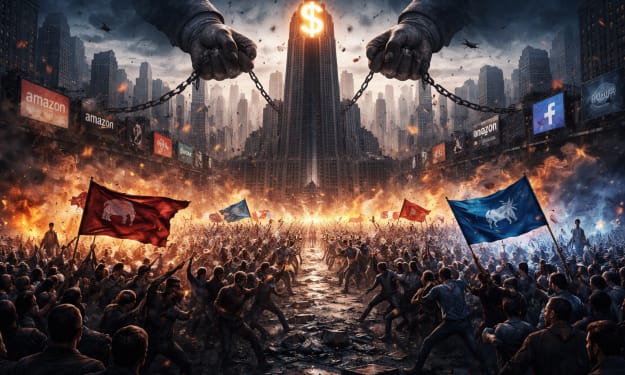
"In a world increasingly obsessed with 'hollow thinking' where people are reduced to units and human dignity is phased out of the budget the act of creation becomes a form of resistance. This piece was born from a week of rigid rules and 'authoritarian bull shit,' but it ends in the only place the parasites cannot reach: the sanctuary of the imagination.
By Vicki Lawana Trusselli 10 days ago in The Swamp
Gold Price in Pakistan for Today, January 24, 2026. AI-Generated.
Gold prices in Pakistan have surged to extraordinary levels on January 24, 2026, hitting new records and drawing significant attention from investors, consumers, and analysts alike. As international market pressures and geopolitical uncertainties continue to elevate bullion demand, Pakistan’s domestic gold rates reflect broader global trends and local economic dynamics.l Markets
By Salaar Jamali10 days ago in The Swamp
Gold and Silver Prices Hit High After Tariff Threat: What’s Behind the Surge and Why It Matters. AI-Generated.
Global financial markets have recently witnessed an extraordinary surge in precious metal prices, with gold and silver hitting record highs — a development that has captured the attention of investors, economists, and everyday savers alike. The catalyst for these dramatic price movements is a renewed tariff threat by the United States, which has intensified geopolitical uncertainty and triggered a flight to traditional safe‑haven assets.
By Salaar Jamali14 days ago in The Swamp
Trump’s Redistricting Clash Ignites GOP Tensions in Indiana. AI-Generated.
Donald Trump has never been known for quiet disagreements, and his latest clash within the Republican Party is no exception. This time, the former president has turned his attention to Indiana, where a redistricting dispute has sparked an unusually personal political feud. Trump has publicly vowed to “take out” a leading Indiana GOP figure, accusing the state party leadership of undermining conservative voters through the redrawing of congressional maps. The episode highlights not only Trump’s enduring influence over Republican politics but also the deep divisions within the party over power, loyalty, and representation. At the center of the controversy is Indiana’s redistricting process, a routine but highly consequential political exercise that occurs after census data reshapes population counts. In theory, redistricting is meant to ensure fair representation as communities grow or shrink. In practice, it often becomes a fierce partisan battle, with lawmakers drawing district lines that protect incumbents or favor one party over another. Indiana, a reliably Republican state, has long seen internal GOP negotiations play a decisive role in how maps are finalized. Trump’s anger appears rooted in his belief that the new district lines dilute the influence of his preferred candidates and grassroots supporters. According to his statements, the Indiana GOP leadership failed to prioritize what he sees as “America First” conservatives, instead crafting maps that safeguard establishment figures. For Trump, this is not merely a technical disagreement over boundaries; it is a perceived betrayal of the movement he helped build. The language Trump used to describe the situation quickly drew attention. When he said he would “take out” the Indiana GOP leader responsible, he was speaking politically, not physically, signaling his intention to back primary challengers and mobilize his base against party insiders. Still, the phrasing underscored how personal and confrontational Trump’s approach remains, even years after leaving the White House. Redistricting fights are rarely this public within a single party. More often, disagreements are resolved behind closed doors to present a united front against Democrats. Trump’s intervention disrupted that tradition. By calling out an Indiana Republican leader by name, he sent a clear message to other state officials across the country: crossing Trump’s political priorities could come at a cost. For Indiana Republicans, the situation presents a dilemma. On one hand, Trump remains immensely popular with GOP voters, particularly in Midwestern states. His endorsement can make or break a primary campaign, and few politicians are eager to find themselves on the wrong side of his base. On the other hand, state leaders argue that redistricting decisions require balancing multiple interests, including legal requirements, demographic realities, and long-term electoral stability. They insist that the maps were drawn to preserve Republican strength overall, not to target Trump-aligned candidates. This tension reflects a broader struggle within the Republican Party. Since 2016, Trump has reshaped the GOP into a more populist, personality-driven movement. Loyalty to Trump often carries as much weight as policy positions. Figures who were once considered reliable conservatives can suddenly find themselves labeled as “RINOs” or establishment obstacles if they diverge from Trump’s expectations. The Indiana redistricting fight fits squarely into this pattern. Political analysts note that Trump’s vow to unseat the Indiana GOP leader may have ripple effects beyond the state. Redistricting battles are unfolding nationwide, and many Republican officials are watching closely. If Trump successfully helps defeat a prominent state party leader over redistricting, it could embolden him to intervene in similar disputes elsewhere. Conversely, if his efforts fall short, it may signal limits to his influence at the state level. There is also the question of voter fatigue. While Trump’s base remains highly energized by his combative style, some Republicans worry that constant internal warfare distracts from broader goals, such as winning general elections or advancing conservative policy. Public feuds over redistricting risk reinforcing Democratic arguments that Republicans are more focused on power struggles than governance. From a democratic perspective, the episode raises important questions about how district lines should be drawn and who gets to decide. Critics of partisan redistricting argue that both parties manipulate maps to entrench themselves, often at the expense of competitive elections. Trump’s outrage highlights one version of this problem: even within a dominant party, mapmaking can be used to marginalize certain factions. Supporters of independent redistricting commissions point to cases like Indiana as evidence that removing politicians from the process could reduce conflict and restore trust. Still, Trump shows no interest in structural reform. His focus remains firmly on winning battles and asserting dominance within the party. By vowing to “take out” an Indiana GOP leader, he is reinforcing his role as a political kingmaker who demands loyalty and rewards defiance of the establishment. Whether Trump follows through on his promise will depend on upcoming election cycles and the availability of viable challengers. If he throws his support behind a primary opponent, the race will become a test of Trump’s continuing hold over Republican voters in Indiana. For now, the threat alone has already reshaped the conversation, turning a technical redistricting debate into a high-profile political showdown. In the end, the Indiana redistricting fight is about more than lines on a map. It is a window into the ongoing struggle for the soul of the Republican Party, where loyalty to Trump, control over institutions, and the future direction of conservatism remain fiercely contested. As long as Trump stays politically active, clashes like this are likely to continue, reminding Republicans and Democrats alike that the former president still knows how to command attention and ignite controversy.
By Saboor Brohi 16 days ago in The Swamp
“After the End: One Man’s Journey to Rebuild Humanity”
The film begins with a man named Ash, who lives in the middle of a forest. He is a biologist and, due to his research, has been living far away from the city in the wilderness. One day, during his research, he is bitten by a venomous snake in the forest. He panics immediately, and at that moment his phone falls to the ground. Now he cannot call anyone for help. He tries to extract the venom himself and even cuts his own hand, but it has no effect. Even when he goes home and tries to cut his hand again, it is too late. The venom has already started spreading through his body, and he begins experiencing strange hallucinations. He remains in this state for several days. One day, some scientists arrive to take him away. He is somewhat conscious. He is alive, but his body has no strength. He musters the courage to try to call out to them, but no sound comes out. The scientists, assuming he is not there, leave. The scene cuts to a few days later. The cut on his hand has expelled most of the venom, and the small amount that had reached his brain is now healing. He only experiences mild hallucinations. Upon regaining consciousness, he immediately decides to go to a city hospital. He cleans his car and sets off toward the city. However, he notices something strange: there are no cars on the roads. When he reaches the city, there is no activity. He does not see a single living person. All the buildings are empty. Seeing this, he panics. A pandemic has broken out here. This pandemic is so deadly that it wipes out the entire population in just a few days. Being a biologist, Ash understands that because he had been isolated from the population for several days, the disease could not infect him, and he survived. Now the entire population has been wiped out — there is no government, no authority, and no owner of anything. Ash immediately thinks of his parents. Driving home, he sees that his parents have been dead for several days, and their bodies are in a terrible state of decay. Yet, he gathers courage and digs a grave outside his house to bury them. After that, he surveys the entire city, but there are no other survivors. Thinking this through, he decides to travel to another city and plans to go to Las Vegas. Taking some essential supplies and a gun, he sets off. However, the bridge to Las Vegas is sealed. He becomes very angry and chooses a longer route instead. When he finally reaches Las Vegas, everyone there has also died. Malls, large hotels, casinos — all are empty. Exhausted, he goes into a hotel. He spends the night there, enjoying expensive things because now everything is free for him. He does not expect to meet anyone else, but the next night he encounters two people. They, too, have survived the disease. The girl tells a sorrowful story, saying she watched her family die over a video call and now has no hope left to live. The man also wants to die, as living in such a lonely world seems impossible for him. That night, they stay with Ash, but by morning, he senses danger in their intentions. The man has a gun and wants to make the deaths of all three of them easy. But Ash wants to live, so he gets up and leaves. Behind him, he hears gunshots — the two have committed suicide. This event breaks Ash even more. Now, he realizes that he is completely alone in the world. Driving at high speed, he returns home. On the way, a dog crosses in front of his car. The dog is also completely alone, just like Ash. He takes the dog with him, finding a new reason to live. Ash begins a new life. He starts reading survival books. There is no shortage of food or drink, and there is no need to earn money anymore. He works every day and roams the town, hoping to find another survivor, but each day he returns disappointed. One day, while standing by a window drinking tea with his dog, it suddenly starts barking. He realizes that there is someone nearby. Smoke rises from a distant house, suggesting the presence of a human. He immediately takes his car and heads toward the house. Fortunately, there is a girl there. She is scared upon seeing Ash, but he reassures her that he means no harm and that he is also alone, searching for other survivors. Hearing this, the girl allows him into her house. Her name is Emma. Through their conversation, it becomes clear that nearly a year has passed since the pandemic, and neither Ash nor Emma has seen any other survivors in all that time. They are very happy to have found another human, as being alone has been extremely difficult, and they were on the verge of depression.
By Filmon Ke Raaz | Movie Mysteries Explained17 days ago in The Swamp
“Escape from Siberia: A Journey of Courage and Survival”
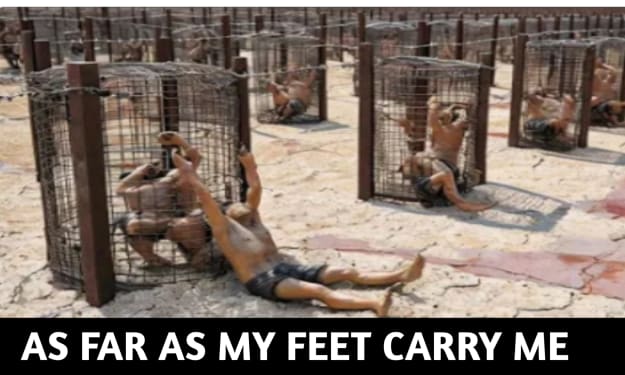
At the beginning of the story, we see a prison in Siberia, where many German soldiers are lined up. In fact, after the end of World War II, Russia captured a large number of German soldiers and forced them to work day and night in coal mines. Although the security of this prison was quite low, no one ever tried to escape from it. The reason was that the prison was surrounded by nothing but endless snow, and it was located about 14,000 kilometers away from any human settlement. So even if a prisoner managed to escape from this prison, his death in the freezing cold of Siberia was certain. This prison was built in the middle of snow stretching thousands of kilometers in every direction, which is why no prisoner could even imagine escaping from here. However, among these prisoners, there was one man who was extremely intelligent and wanted to escape from this prison to return to his wife and daughter. This prisoner’s name was Clemens Feirl. He had been sentenced to 25 years in this prison, and Clemens did not want half of his life to pass inside these prison walls. Clemens wanted to escape from this prison at any cost. Fortunately, one day Clemens got a chance to escape, and he fled the prison by hiding inside a freight train carrying coal. When he came out of the prison and saw the stars in the open sky, he felt overwhelmed with happiness. But this happiness was short-lived. After traveling some distance, the freight train was stopped. When Clemens looked outside, he saw a Russian soldier standing in front of him with a gun aimed at him. Unfortunately, Clemens was caught, and for the crime of escaping, he was locked inside an open-air cell. The cold was extreme, and the rain during the night worsened Clemens’s condition. He was not kept in that cell for a few hours, but for a full two days. After two full days, the next morning, the prison warden came to him and took him out of the cell, but did not torture him. He only said, “Your companions are waiting for you impatiently.” When Clemens reached his fellow prisoners, they were waiting for him with sticks and clubs in their hands. They were extremely angry with Clemens because, due to his escape attempt, all of them had been kept hungry for the past two days. Now Clemens understood why the warden had said that his companions were waiting for him. As soon as the other prisoners saw Clemens, they attacked him and beat him very badly. During this beating, Clemens was injured so severely that he had to be admitted to the prison hospital. The doctor of this prison was also a German prisoner. When Clemens regained consciousness, he said to the doctor, “I want to escape from this prison once again, and I need your help.” The doctor was astonished by Clemens’s courage. Even after enduring so much suffering, he was still not ready to give up. The doctor explained to him that escaping alive from this prison was impossible, and even if he did escape, he would die in the freezing cold outside. But the truth was that even if he did not escape, his death was still certain. The coal mines where they worked had extremely high levels of carbon, which entered their bodies through the air and caused deadly diseases like cancer. That is why the doctor said to Clemens, “You must try to escape from this prison one last time.”
By Filmon Ke Raaz | Movie Mysteries Explained17 days ago in The Swamp
“When Survival Created the First Friendship Between Man and Beast”
This story takes us back about 20,000 years from today, to a time when humans lived in small tribes. In the story, we see ancient European people who lived in tribal groups and hunted together. We are introduced to the leader of this tribe, whose name is Ergen. A few months later, winter is about to arrive, so Ergen goes out hunting with the people of his tribe to gather food for the cold season. In front of them is a very large herd of wild bison. Everyone crawls closer to the bison. Ergen, being the leader of the tribe, waits for the right moment and signals the attack, and everyone rushes toward the bison. To escape the hunters, the bison start running in the opposite direction, and one by one many of them fall into a ravine. However, one bison survives and, in anger, charges toward Ergen’s son, Noyan. Noyan has come on a hunt for the first time and does not know how to protect himself. Ergen tells his son to move out of the way, but Noyan gets scared and starts running. The wild bison quickly approaches Noyan, lifts him onto its horns, and runs toward the ravine. Seeing this, Ergen throws his spear at the bison to save his son. The spear hits the bison, but despite being injured, it does not let go of Noyan and instead throws him toward the edge of the ravine. From here, the story goes into a flashback, one week earlier, where we see the tribe preparing for the hunt. They are making different kinds of sharp weapons from stones. This was not just preparation; new people who wanted to join the hunt had to make such stone weapons. Whoever made the sharpest and most pointed weapon was selected for the hunt. In this competition, Ergen’s son Noyan also succeeds. That night, Noyan’s mother tells Ergen not to take Noyan on the hunt with him, saying that he is still a child. She says that she loves him very much and does not want to lose him. Ergen replies that winter is coming and at this time of the year everyone goes hunting. If they do not hunt, they will die of hunger during the winter, and Noyan must prove that he is his son. The next morning, all the people of the tribe leave for the hunt. Noyan’s mother feels anxious that something might happen to her son, but Ergen reassures her and says not to worry, nothing will happen to Noyan. Then they all set off on the hunt. After going some distance, they encounter another tribe that, like them, has also gone out hunting to gather food for the winter. After traveling a long distance, they reach a stone structure that was built by their ancestors. This journey is very dangerous, and many of their elders had lost their lives during it, which is why they built this stone structure in their memory. Moving forward, they spot a wild boar, which they injure with a spear. Ergen tells his son Noyan to kill it, but Noyan has never hunted before. He panics and is unable to kill the boar. Ergen then snatches the stone dagger from his hand, kills the boar, and says: “I never thought you would turn out to be so cowardly. Only the strong survive here — this is the law of the jungle.” At night, while they are eating their hunt, strange sounds are suddenly heard. Ergen tells everyone to stay alert. At that moment, a lion appears and carries away one of the boys. The next morning, they make a small grave in memory of that boy and continue their journey. Despite walking many miles, they do not find any more prey. After walking the entire day, they decide to spend the night in a cave. There, Ergen makes star-shaped tattoos on Noyan’s hand and tells him that these stars will appear in the night sky, and if he follows them, he will find his way back home. In reality, this is a map, so that if someone gets lost during the hunt, they can find their way back home.
By Filmon Ke Raaz | Movie Mysteries Explained18 days ago in The Swamp