
Day Set to Turn Into Night: The Longest Solar Eclipse of the Century Now Has an Official Date
Experts highlight remarkable duration and extraordinary visibility as global excitement builds
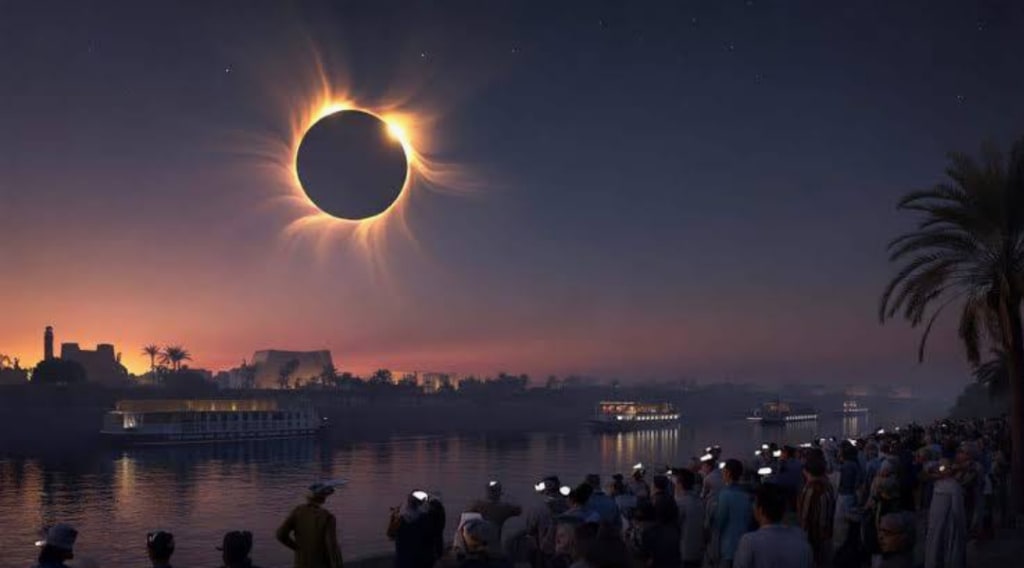
Astronomers have officially confirmed the date of what is being described as the longest solar eclipse of the century — a rare celestial event expected to transform daylight into an eerie twilight across parts of the globe. With its exceptional duration and unusually wide path of visibility, scientists say this eclipse will be one of the most remarkable astronomical spectacles in modern history.
As anticipation builds worldwide, space agencies, observatories, and skywatching communities are already preparing for an event that promises to captivate millions.
What Makes This Eclipse So Special?
Solar eclipses occur when the Moon passes between the Earth and the Sun, temporarily blocking sunlight. While partial and total eclipses happen periodically, not all are created equal. What sets this upcoming event apart is its extraordinary length.
Experts confirm that totality — the period when the Sun is completely obscured — will last longer than any other solar eclipse in this century. In some regions along the central path, total darkness could extend for more than six minutes. For comparison, many total solar eclipses last between two and four minutes.
The extended duration will give observers more time to witness phenomena that are usually fleeting:
The Sun’s corona shimmering in the darkened sky
A dramatic drop in temperature
Sudden changes in wind patterns
Wildlife reacting to temporary darkness
The Science Behind the Duration
The length of a solar eclipse depends on several astronomical factors. These include the distance between Earth and the Moon, the Earth’s position in its orbit, and the angle of alignment between the three bodies.
This particular eclipse benefits from near-perfect alignment conditions. The Moon will appear slightly larger in the sky due to its orbital position, allowing it to cover the Sun for a longer period. Additionally, Earth’s relative distance from the Sun at the time will contribute to the extended totality.
Astronomers describe it as a rare combination of orbital mechanics that will not repeat under similar conditions for decades.
Where Will It Be Visible?
One of the reasons excitement is building globally is the broad visibility range. While totality will be visible along a specific path, partial phases will be observable across multiple continents.
Countries within the path of totality are expected to experience:
Full daytime darkness
Clear views of the solar corona
Enhanced atmospheric effects
Outside this path, millions more will witness a dramatic partial eclipse.
Tourism agencies in projected viewing regions are already anticipating increased travel bookings as eclipse chasers plan their trips well in advance.
A Global Cultural Moment
Solar eclipses have historically held deep cultural and spiritual significance. Ancient civilizations often interpreted them as powerful omens. Today, while science explains the mechanics, the emotional impact remains profound.
When the sky darkens unexpectedly in the middle of the day, even modern observers describe a sense of awe and connection to the cosmos.
The upcoming eclipse is expected to:
Inspire public science events
Drive educational programs in schools
Boost interest in astronomy
Encourage community gatherings
Planetariums and observatories are already planning special viewing events.
Economic and Tourism Impact
Major solar eclipses frequently generate economic activity in regions along the path of totality. Hotels, restaurants, and travel operators often experience surges in demand.
Local governments may prepare for:
Increased visitor traffic
Temporary road congestion
Special public safety measures
Organized viewing festivals
Previous large-scale eclipses have demonstrated that astronomical events can create measurable economic boosts for host regions.
Safety First: Viewing Precautions
Experts strongly emphasize the importance of safe viewing practices. Looking directly at the Sun without proper eye protection can cause serious eye damage.
Safe viewing requires:
ISO-certified solar eclipse glasses
Special solar filters for telescopes and cameras
Indirect viewing methods such as pinhole projectors
During totality only — when the Sun is fully covered — it is briefly safe to view without protection. However, eye protection must be worn before and after this phase.
Public education campaigns are expected to intensify as the date approaches.
The Role of Technology
Unlike ancient observers, modern audiences will experience the eclipse not only in person but also through digital platforms. Space agencies plan to livestream the event using advanced telescopes and satellite imaging.
Social media will likely play a major role, with real-time updates, photography, and video shared globally.
High-resolution imaging and scientific instruments will also allow researchers to gather valuable data about:
Solar corona structure
Magnetic field behavior
Atmospheric changes
The event represents both a scientific opportunity and a global shared experience.
Climate and Environmental Observations
Solar eclipses offer rare chances to study short-term atmospheric changes. During totality, temperatures can drop noticeably, sometimes by several degrees within minutes.
Researchers monitor:
Wind speed shifts
Changes in animal behavior
Variations in light intensity
Temporary alterations in local weather patterns
The extended duration of this eclipse provides scientists with a longer window to analyze these effects.
Why It Matters
While eclipses are predictable astronomical events, their emotional and scientific significance remains powerful. They remind humanity of its place in a vast cosmic system governed by precise natural laws.
In an age dominated by digital screens and urban living, a total solar eclipse encourages millions to look up — literally and figuratively.
The anticipation surrounding this particular event reflects a broader fascination with space exploration and celestial phenomena.
Preparing for the Big Day
Astronomy organizations recommend early planning for those wishing to witness totality. Key steps include:
Confirming the exact path of totality
Checking local weather forecasts
Arriving early at viewing locations
Securing proper eye protection
Staying informed through official astronomical sources
Because the next eclipse of similar duration may not occur for many decades, experts say this is a rare opportunity.
Conclusion
The confirmation of the longest solar eclipse of the century has sparked global anticipation. With its exceptional duration and wide visibility, the event promises to transform day into night for millions — an unforgettable spectacle blending science, wonder, and shared human experience.
As the official date approaches, excitement will continue to grow. For a few extraordinary minutes, the rhythm of daily life will pause, replaced by cosmic alignment and collective awe.
In a world often divided by headlines and uncertainty, this celestial event offers something universal: a reminder that we all stand beneath the same sky.
About the Creator
Keep reading
More stories from Aarif Lashari and writers in The Swamp and other communities.
When Home Births Go Wrong, Hospitals Can Add to the Complications
In recent years, home births have gained renewed attention as more families seek personalized, low-intervention childbirth experiences. For many, delivering at home represents comfort, autonomy, and a desire to avoid unnecessary medical procedures. But while planned home births can proceed safely for carefully selected low-risk pregnancies, complications can arise unexpectedly. When they do, emergency transfers to hospitals may introduce additional challenges — sometimes compounding the original medical issue.
By Aarif Lasharia day ago in The Swamp
The Saddest Thing - The Billionaires Who Rule America Aren't Even Enjoying Themselves
This single post says more about our ruling class than a thousand policy papers. The saddest thing about today's system is that the men robbing the rest of us - sabotaging our economic prospects, our pensions, our access to affordable healthcare - are not even happy.
By Scott Christenson🌴21 days ago in The Swamp




Comments
There are no comments for this story
Be the first to respond and start the conversation.