
China’s New Aircraft Carrier Looks Powerful — But It Has a Major Problem
As Beijing expands its naval ambitions, its newest warship offers both cutting-edge promise and a conspicuous Achilles’ heel
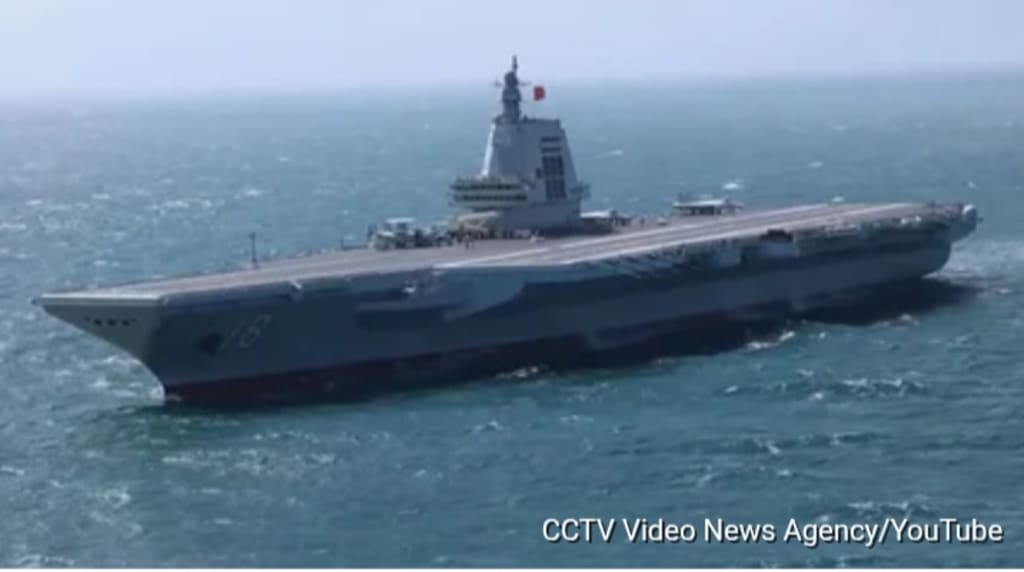
China’s rise as a maritime power has been steady, strategic, and impossible to ignore. With the launch of its newest aircraft carrier, the Chinese aircraft carrier Fujian, Beijing appears closer than ever to matching the technological sophistication of Western naval giants.
At first glance, the Fujian looks like a game-changer. It is larger, more advanced, and more capable than China’s previous carriers. It features cutting-edge launch systems and is designed to project power far beyond China’s coastline.
But beneath its impressive profile lies a serious operational problem—one that could significantly limit its effectiveness in high-intensity combat.
A Major Leap for China’s Navy
The Fujian represents the third aircraft carrier operated by the People’s Liberation Army Navy (PLAN), following the Liaoning and Shandong. Unlike those earlier vessels, which used ski-jump ramps to launch aircraft, Fujian is equipped with electromagnetic catapults—a sophisticated system that allows aircraft to take off with heavier payloads and more fuel.
This is a big deal.
Electromagnetic Aircraft Launch Systems (EMALS) improve efficiency, reduce stress on airframes, and enable a wider range of aircraft types to operate from the deck. Only one other country currently fields this technology at sea: the United States.
With these catapults, Fujian can potentially deploy advanced versions of the J-15 fighter jet and the KJ-600 airborne early warning aircraft. That combination would significantly expand China’s ability to conduct surveillance, air defense, and long-range strike missions.
On paper, it looks formidable.
The Core Problem: Flight Deck Bottlenecks
Despite its advanced launch system, analysts have pointed out a critical design flaw involving the ship’s flight deck layout.
Aircraft carriers are not just floating airstrips—they are finely tuned machines designed to maximize sortie generation. Sortie generation refers to how many aircraft a carrier can launch, recover, refuel, rearm, and relaunch within a given period. In modern naval warfare, this metric is everything.
Here’s the issue:
The Fujian’s angled landing strip appears to sit unusually close to its forward catapults. In certain operational configurations, one catapult may interfere with landing operations. That means the carrier may not be able to conduct simultaneous launch and recovery operations as efficiently as its U.S. counterparts.
Why does that matter?
Because in high-tempo combat, simultaneous launches and landings are essential. Any interruption slows the operational rhythm of the air wing. And when the rhythm slows, combat effectiveness drops.
Some military observers estimate that this configuration could limit the Fujian’s sortie rate to significantly below that of a U.S. supercarrier under comparable conditions.
Power Without Nuclear Propulsion
Another constraint lies beneath the surface: propulsion.
Unlike American supercarriers, which are nuclear-powered, Fujian relies on conventional fuel-based propulsion. That choice has major implications.
Nuclear-powered carriers generate enormous amounts of electrical energy and can operate for years without refueling. That abundance of power supports high-tempo flight operations, advanced radar systems, and sustained deployments.
Fujian, by contrast, must balance fuel consumption between propulsion and onboard systems. While it still represents a major advancement for China, conventional propulsion limits endurance and potentially restricts sustained operations far from home waters.
In a prolonged conflict scenario, that could prove significant.
A Transitional Platform?
It’s important to recognize that Fujian is not a failure. Far from it.
For China, building and launching a carrier of this scale is an enormous technological and industrial achievement. Carrier design is one of the most complex engineering challenges in the military world. The learning curve is steep, and incremental improvements are part of the process.
Many analysts believe Fujian is a stepping stone toward China’s next-generation carrier, often referred to as the Type 004. That future vessel is widely expected to be nuclear-powered, potentially solving many of the endurance and energy limitations seen in Fujian.
In that context, Fujian may serve as a testing ground—allowing Chinese engineers and naval planners to refine their approach before moving to even more ambitious designs.
Strategic Implications
China’s carrier expansion is not symbolic. It reflects a deliberate strategy to extend naval reach beyond coastal defense and into blue-water operations.
Carrier strike groups allow a nation to project air power across oceans without relying on foreign bases. They are tools of deterrence, diplomacy, and dominance. As tensions simmer in the South China Sea and across the broader Indo-Pacific, such capabilities matter deeply.
Even with its limitations, Fujian strengthens China’s maritime posture. It increases operational flexibility and complicates strategic calculations for rival powers.
But the design bottleneck underscores a broader truth: hardware alone does not guarantee superiority. Efficiency, integration, and operational tempo are just as important as size and technology.
The Bottom Line
China’s newest aircraft carrier looks powerful—and in many ways, it is. The Fujian marks a major milestone in the modernization of the People’s Liberation Army Navy. Its electromagnetic catapults, expanded air wing potential, and large displacement demonstrate significant progress.
Yet the ship’s flight deck layout and conventional propulsion system present serious operational challenges. If those issues limit sortie generation during combat, the carrier’s battlefield impact could fall short of its impressive appearance.
In military strategy, perception and performance are not always the same thing.
Fujian sends a strong message about China’s ambitions. But whether it can fully deliver on that message under the pressure of real-world conflict remains an open question.
Powerful? Yes.
Perfect? Not quite.
About the Creator
A Gathering of Evil Bosses
“I’m the queen of chin jutting while I smooth my hair, attacking, insulting, and deflecting to protect my appointer.” “Oh, please, Blondi, my hair is curled, highlighted, and longer than yours. I feature television commercials telling immigrants that we will give them a free plane ride home, and if they voluntarily turn themselves in, they will be allowed to legally apply for re-entry. It runs everywhere, and I look good in it! You can’t compete because of your blond hair. Mine is nicer, and my lips are prettier than yours.”
By Andrea Corwin 9 days ago in The Swamp
State Department Warns Americans of ‘Extremely Dangerous’ Avalanche Conditions Across Europe
The U.S. State Department has issued an urgent travel advisory for Americans planning to visit Europe this winter, warning that unusually heavy snowfall and volatile weather patterns are creating “extremely dangerous” avalanche conditions in multiple alpine regions. Officials stressed that travelers should exercise extreme caution, monitor local advisories, and avoid high-risk areas unless properly trained and equipped. High-Risk Regions According to the advisory, countries particularly affected include France, Switzerland, Austria, and parts of Italy. Ski resorts, alpine passes, and remote mountainous regions have experienced record snowfalls over the past several weeks, dramatically increasing avalanche risk. The department specifically noted that backcountry areas, unpatrolled slopes, and off-piste routes are extremely hazardous. Even experienced mountaineers and skiers face significant risk due to unstable snowpack, unpredictable weather, and rapidly changing conditions. “The combination of recent heavy snow, wind accumulation, and fluctuating temperatures has created layers in the snowpack that are prone to collapse,” said a State Department spokesperson. “Avalanches can occur without warning, making travel in these areas extremely dangerous.” Recommendations for Travelers The advisory outlines several precautions for Americans traveling to Europe during this period: Avoid off-piste skiing or mountaineering unless part of an organized, professional expedition with safety equipment. Check local avalanche forecasts and weather updates daily. Carry appropriate safety gear, including transceivers, shovels, and probes if venturing into snowy terrain. Notify local authorities or resort staff of planned excursions in high-risk areas. Consider postponing travel to mountainous regions until conditions stabilize. The State Department emphasized that the advisory applies not only to winter sports enthusiasts but also to hikers, climbers, and motorists who may encounter avalanche-prone areas. Roads through alpine passes can be blocked or damaged by snow slides, and some villages in remote regions may be temporarily isolated. Regional Authorities Respond European authorities have ramped up warnings and safety measures in response to the snow conditions. In France and Switzerland, avalanche alerts have reached the highest levels in several regions, prompting temporary closures of ski lifts and mountain roads. Austrian officials have deployed additional rescue teams and patrolled popular backcountry areas to monitor snow stability. Meteorologists report that while temperatures are fluctuating across the continent, the current snowpack is particularly vulnerable due to layers of ice and powder accumulation. Experts warn that even minor disturbances, such as wind gusts or small tremors, could trigger significant avalanches. Growing Concerns About Climate and Safety While extreme snowfall can create prime conditions for winter sports, climate researchers note that unpredictable weather and rapid accumulation of snow in some areas have amplified risks. Officials warn that travelers should not underestimate the danger, even in familiar resorts. The advisory also highlights the importance of emergency preparedness, urging travelers to have contingency plans, secure accommodations, and clear communication options in case of isolation or natural disasters. Looking Ahead With forecasts predicting continued snowfall over the next several days in multiple alpine regions, the State Department has urged Americans to remain vigilant. Travelers are advised to maintain situational awareness, respect local safety instructions, and avoid unnecessary exposure to high-risk terrain. As winter progresses, authorities across Europe are expected to continue monitoring avalanche risk closely, implementing preventive measures, and issuing updated warnings. For Americans planning vacations in the Alps or other mountainous regions, vigilance and caution remain essential to ensure safety.
By Fiaz Ahmed 7 days ago in The Swamp




Comments
There are no comments for this story
Be the first to respond and start the conversation.