
I'd always felt different, like a puzzle piece that didn't quite fit. Growing up, I struggled to understand my emotions, my attractions. I'd feel drawn to one gender, then the other, leaving me confused and uncertain.
As I navigated adolescence, the questions swirled: "Am I gay? Straight? Something in between?" The fear of not knowing, of not conforming, weighed heavily on me.
One day, I realized I was bisexual. The label felt right, yet I hesitated to embrace it. Fear of judgment, rejection, and uncertainty held me back.
I decided to confide in my mom, hoping for love and acceptance. But instead, she dismissed my feelings.
"It's just a phase," she said, patting my hand. "You'll grow out of it."
I tried again, thinking maybe she didn't understand. But her response remained the same: "It's just a phase."
Determined to make her see, I approached her once more. This time, her words cut deeper.
"If you're really...that way," she said, her voice dripping with disdain, "then maybe I don't want you as my child."
Her rejection stung. I felt lost, unloved. Did my mom's love come with conditions?
I withdrew, hiding my true self from her. The pain lingered, but I knew I couldn't change who I was.
Time passed, and I found the courage to share my truth with a friend. I thought she'd be supportive, but she had other plans.
She asked me to follow her to see her boyfriend, without disclosing her true intentions. They'd conspired to manipulate me into a threesome, without my knowledge or consent.
As we arrived at her boyfriend's place, I sensed something was off. He was overly friendly, invasive. I tried to brush it off, but he wouldn't back down.
Suddenly, he was forcing himself on me. I froze, shocked and terrified.
My friend just stood there, silent.
In that moment, I realized she'd set me up. Betrayal and anger flooded me.
"Why?" I demanded. "Why would you do this?"
She shrugged, unapologetic. "I thought you'd be into it."
Her invalidation cut deep. Coming out to her had made me vulnerable, and she exploited that trust.
But something within me shifted. I realized that her actions, her ignorance, didn't define my worth. I deserved respect, love, and acceptance – not just from others, but from myself.
As I navigated the complex world of relationships, I encountered another challenge. Straight men would often approach me, curiosity gleaming in their eyes.
"Hey, you're bi, right?" they'd ask, barely concealing their excitement. "Would you be into a threesome?"
Their questions reduced my identity to a fetish, ignoring the complexities of my emotions. It wasn't about connection or mutual respect; it was about fulfilling their fantasies.
And then there were the women. Some would approach me, intrigued by the idea of exploring their own sexuality through me. They'd assume my bisexuality made me available for experimentation.
These encounters left me feeling objectified, used. People saw me as a gateway to their desires, disregarding my feelings and boundaries.
What hurt most was the assumption that, because I was part of the LGBTQ+ community, I wouldn't get hurt. That my relationships were somehow less real, less meaningful.
But I do get hurt. I do have boundaries. I do deserve respect.
Living in Nigeria, where LGBTQ+ rights were scarce, I felt isolated. But everything changed when I connected with other LGBTQ+ individuals.
We found each other through secret groups, online forums, and whispered introductions. Our bonds formed quickly, forged in the fire of shared experiences.
For the first time, I saw people like me – unapologetic, proud, and resilient. They understood my struggles, my fears, and my desires.
Through their stories, I gained courage. I realized I wasn't alone in this conservative society.
We'd gather in hidden spaces, sharing laughter and tears. Our conversations flowed freely, without judgment.
They asked, "How do you feel?" and listened attentively.
In their company, I unfolded like a blooming flower. My true self emerged, no longer shackled by shame or doubt.
With each passing day, I became more open about my sexuality and feelings. The weight of secrecy lifted.
We formed a support network, a safe haven amidst the chaos.
We'd discuss our struggles – family rejection, social stigma, and legal fears.
But we also celebrated our triumphs – embracing our identities, finding love, and living authentically.
In this community, I discovered my
A pivotal moment for me was reading "Red, White, and Royal Blue" by Casey McQuiston. Alex Claremont-Diaz's journey resonated deeply, especially his struggle to come out to his family.
"I was terrified to reveal my true self, fearing disappointment and rejection from those I loved. Alex's words echoed my own fears: 'Being around Henry makes me feel like I'm standing too close to the sun – inevitable and unbearable.' The weight of expectation and the desire for acceptance suffocated me.
But Alex's growth and self-acceptance inspired me. His realization that 'I'm bi, and I'm starting to realize that being bi doesn’t mean I’m confused or unsure... It means I’m capable of loving more than one gender' empowered me to embrace my own identity.
Another powerful representation was Sean Hewitt's memoir, "All Down Darkness Wide." His vulnerability and honesty about navigating identity, family, and self-acceptance created a sense of kinship. Hewitt's reflection on his journey, "I had to learn to love myself, to find beauty in my own brokenness," resonated deeply.
Hewitt's struggle to reconcile his queer identity with his Catholic upbringing resonated deeply. His fear of disappointing his family echoed my own anxieties.
One passage stood out: "I knew I was queer, but I didn't know what that meant... I was scared to find out." Those words validated my own experiences, my own fears.
For the first time, I felt seen. Representation matters, and Hewitt's story gave me hope.
I realized I wasn't alone in my journey. Someone out there understood my struggles.
This moment sparked a sense of belonging. I felt connected to a larger community, one that transcended borders and backgrounds.
Seeing myself in these stories and characters validated my experiences. I realized I wasn't alone in my struggles, and my identity was worthy of love and acceptance.
Music also played a significant role. Artists like Billie Eilish and Dove Cameron, who unapologetically express their identities, inspired me to embrace mine.
These moments of representation fortified my sense of self, reminding me that my identity is valid and deserving of love.
To be yourself in a world that is constantly trying to make you something else is the greatest accomplishment - Ralph Waldo Emerson
About the Creator
Keep reading
More stories from Sharon Oghenekaro and writers in Pride and other communities.
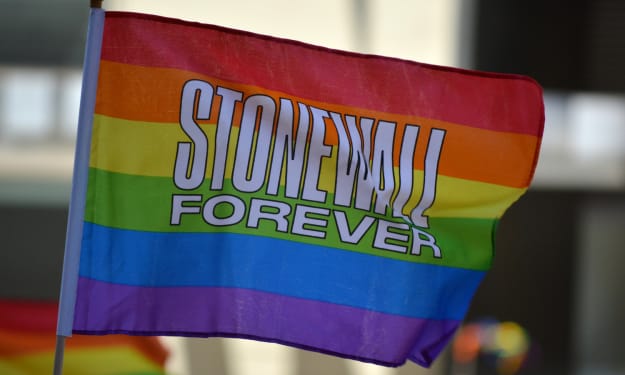
The Pride Flag and the Diversion
For nearly a decade, the LGBTQIA Pride Flag rippled in the wind at Christopher Park, a kaleidoscope of color staked into the soil of America’s first national monument to LGBTQIA+ liberation. That flag came down this week. Federal officials, citing new guidance from the Trump Administration, silently lowered the rainbow flag from its pole across the street from the Stonewall Inn. The birthplace of the modern gay rights movement now flies only the United States flag.
By Tim Carmichaelabout 10 hours ago in Pride
What is the difference between bisexual and pansexual
What Is the Difference Between Bisexual and Pansexual? Understanding Identity, Attraction, and Fluidity The terms "bisexual" and "pansexual" are both integral parts of the LGBTQIA+ lexicon, describing rich and valid experiences of sexual and romantic attraction. While they are often used interchangeably in casual conversation and there is significant overlap in their communities—they hold distinct meanings, histories, and personal resonances for many. Understanding the difference isn't about creating a rigid hierarchy, but about appreciating the nuanced ways people describe their identities.
By David Femboy6 days ago in Pride

Comments
There are no comments for this story
Be the first to respond and start the conversation.