
Venezuela’s Lost Trillion Dollars and the Crisis Reshaping Latin America
What Really Happened to Venezuela’s Lost Trillion Dollars — And Why the World Can’t Ignore It

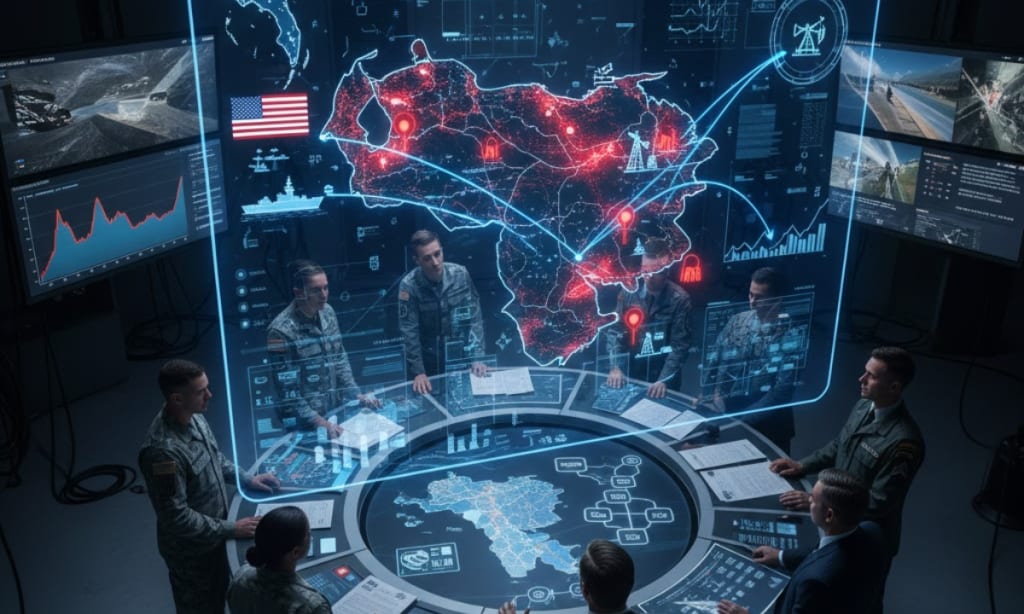
What Really Happened to Venezuela’s Lost Trillion Dollars — And Why the World Can’t Ignore It
For a long time, I’ve felt that Venezuela is often discussed in fragments. People talk about oil. Or sanctions. Or migration. Or dictatorship. But very rarely do we sit down and connect all the dots patiently, clearly, and without slogans.
When I closely analyzed what was being discussed here, one question stood out more than anything else:
How does a country receive close to a trillion dollars in revenue and still collapse into mass poverty?
That question opens the door to everything else corruption, power, cartels, geopolitics, and why what happens in Venezuela doesn’t stay in Venezuela.
In this article, I want to walk through these ideas carefully, in simple language, and explain how all of this fits together, based entirely on what was explained in the discussion.
A Country That Received Enormous Wealth — And Still Fell Apart
Let’s start with the raw contradiction.
Venezuela experienced an enormous inflow of money close to a trillion dollars over time largely tied to oil revenues. Yet today, the country has seen:
- A massive collapse in GDP
- An extreme drop in oil production
- Widespread poverty
- Shortages of basic necessities
- Nearly a quarter of the population leaving the country
When I look at this situation, the obvious question becomes unavoidable:
Where did the money go?
The explanation given is not that the money simply disappeared overnight. Instead, it was systematically redirected away from ordinary Venezuelans and into very specific channels.
How the Money Was Used — And Misused
Social Programs Were Only a Small Part
Some portion of the money initially funded social programs during the Chávez years. These programs were framed as existential or revolutionary in nature designed to reshape society.
But that only accounts for a fraction of the total wealth.
Exporting Revolution Across Latin America
A much larger share of the money was used to support political movements, regimes, and revolutionary groups throughout Latin America.
This wasn’t random generosity. It followed a very specific ideological vision one rooted in the belief that socialism had to expand beyond borders to survive.
Under this worldview:
- Venezuela’s oil money became a tool of influence
- Friendly governments and movements were financially supported
- Loans were issued to politically aligned regimes
- Ideological loyalty mattered more than economic responsibility
This expansionist strategy drained Venezuela internally while strengthening external allies.
The Role of Cuba and Revolutionary Ideology
To understand this, I think it’s important to recognize the influence of Cuba.
The Cuban revolutionary vision viewed capitalism, liberal democracy, and individualism as sources of corruption. Socialism was not just an economic system it was framed as a moral mission.
That belief deeply shaped the Venezuelan leadership.
When Chávez gained power with access to vast resources, Cuba became both an ideological guide and a beneficiary. Funds flowed to sustain the Cuban state and to help replicate similar systems elsewhere.
This was never just about Venezuela improving itself. It was about transforming an entire region.
Corruption at the Top — And Wealth for a Few
While ordinary Venezuelans struggled, something else was happening quietly.
Those close to power political elites and their families accumulated enormous personal wealth. Billions of dollars ended up in private accounts across Europe, the United States, and other regions.
The contrast was stark:
- Luxury cars in Caracas
- Extreme poverty for the general population
- Millions fleeing the country in desperation
When redistribution happens this way, the result is not equality. It’s concentrated power and widespread suffering.
Creating a Parallel Armed Structure
One of the most consequential decisions made early on was the creation of a parallel armed force.
After experiencing a military coup attempt in 2002, Chávez no longer trusted the traditional armed forces completely. The solution was not reform it was duplication.
This led to the formation of armed civilian groups loyal to the regime.
Today, these groups are described as:
- Enforcers against protesters
- Participants in violent repression
- Agents of intimidation and torture
Maintaining such a force requires money equipment, weapons, loyalty. And a significant portion of Venezuela’s wealth went into sustaining this parallel structure.
Why the Collapse Was Ignored for So Long
One of the most frustrating aspects of this entire situation is how openly it unfolded and how often it was dismissed.
Even as institutions were dismantled, opposition figures imprisoned, and human rights violated, many influential voices in the West praised what was happening.
Media coverage and public intellectuals often framed the regime sympathetically, downplaying the warning signs.
From my perspective, this inconsistency condemning some abuses while excusing others deeply contributed to how long the crisis was allowed to grow.
Venezuela as a Narco-State
Now we reach one of the most disturbing aspects.
The regime is described not merely as corrupt, but as deeply intertwined with drug cartels.
This didn’t happen overnight.
How Cartels Became Political Partners
At first, cartels were given protection and refuge. Borders became safe zones. Territory became negotiable.
Over time:
- Cartels funded political power
- Politicians protected cartel operations
- Entire regions fell under cartel control
Eventually, the distinction between state and cartel blurred.
In this model, the cartels are no longer criminals hiding from the government they are part of the government.
Cartels Don’t Just Control Territory — They Control Politics
This pattern isn’t limited to Venezuela.
Across parts of Latin America:
- Large regions are effectively run by cartels
- Governments lose monopoly over force
- Violence becomes systemic, not accidental
Cartels operate like businesses. They expand where profits are possible. They exploit weak borders, weak institutions, and political protection.
And once embedded, they have no incentive to allow democratic transitions.
International Connections That Change Everything
What makes this even more serious is that these cartels don’t operate in isolation.
They maintain connections with:
- Hezbollah
- Iran
- Russia
- China
These relationships are transactional. Cartels provide logistics, territory, and revenue streams. External powers gain influence close to the United States.
This is not ideological romance it’s strategic cooperation.
Why This Should Matter Outside Latin America
At this point, many people understandably ask:
Why should someone in the US or Canada care?
Here’s the uncomfortable truth.
Instability Creates Migration
When countries collapse, people leave.
Latin America is already the primary source of migration into the United States. Continued destabilization guarantees more mass movement not just of families, but of criminal networks embedded within that flow.
National Security Risks Grow Quietly
When cartel-linked systems expand northward, they don’t stop at borders.
Organized crime adapts fast. Markets expand where demand exists. Influence follows access.
Ignoring this doesn’t make it disappear it allows it to spread.
Geopolitics Has Shifted — And Latin America Matters Again
There’s another layer that often gets missed.
Supply chains are changing. Global trade is fragmenting. Resources matter more than ever.
Latin America holds:
- Oil
- Natural gas
- Lithium
- Copper
- Precious metals
- Manufacturing capacity
- A relatively young population
China, in particular, understands this very well. Ports, mines, and infrastructure are being acquired steadily.
When I look at this, it’s clear that ignoring the region isn’t neutrality it’s surrendering influence.
The Core Lesson I Took From This
If I had to summarize everything in one simple idea, it would be this:
You cannot separate internal collapse from external consequences.
A trillion dollars misused doesn’t just disappear. It reshapes politics, fuels criminal power, destabilizes regions, and eventually crosses borders.
The idea that distant instability won’t affect stable countries is comforting but deeply mistaken.
Final Thoughts
Venezuela’s tragedy is not just about one country failing. It’s about what happens when ideology overrides accountability, when power replaces institutions, and when the world chooses convenience over clarity.
From everything analyzed here, one thing is painfully obvious to me:
Ignoring what happens in your backyard has never ended well and it never will.
About the Creator
Dilip Kumara
Digital Marketer, Politician specializing in web development, SEO, and community leadership
Keep reading
More stories from Dilip Kumara and writers in Potent and other communities.
5 Kitchen Upgrades That Will Last a Lifetime
Introduction In today’s fast-moving world of home design, trends come and go faster than ever. But when it comes to your kitchen the heart of your home longevity matters far more than fleeting style. The best kitchens are not only beautiful on day one but remain functional, stylish, and durable for decades to come.
By Dilip Kumara19 days ago in Potent
Trouble at the Tea Leafing Café
The rain had started right around the time that Annie was buttering her second thick slice of homemade toast for breakfast, and hadn’t paused since. Not that anyone could tell. The windows of the café were fogged over, and with every seat filled with happy customers munching on fresh baked pastries or steaming bowls of the delicious soup of the day, it was hardly surprising. Annie looked around the room, finally taking a moment to breathe after the lunch time rush. Her old life already felt like a bad memory, a part of her history, always, but just that. History.
By Hannah Moore3 days ago in Fiction
Living in a hemp house
Hemp, a multi-purpose crop that delivers fibres, shivs, seeds, and pharmaceuticals is currently used in insulation materials and bio-composites for a more sustainable construction industry. Russ Martin and his wife Karon Korp tell their story as owners of the first hemp house in the U.S.
By Susan Fourtané 7 days ago in Interview




Comments
There are no comments for this story
Be the first to respond and start the conversation.