

The right words can convey our feelings at the time, that years later we will have forgotten we felt.
It’s a way to let go and yet never forget, a way for the universe to hold your thoughts and all that came with them without losing yourself in them.
Reading them will take us back to that moment, outside looking in, we can remember it all- without it taking us down again.
Poetry, blogs, journals, photos, stories and dances, songs of paintings and drawings of life.
Any medium can relate a story to another, words that we expressed to help us cope, sometimes forget but hopefully heal.
Others can relate to it, remember theirs from reading ours. We can share them, or hide them or burn them away.
We can box it up and keep it forever or find it one day and finally purge it.
We can revisit it with music, photos and loved ones or publish it for the world to learn from.
The subsistence of our lives will live on in our words, forever encapsulating our feelings.
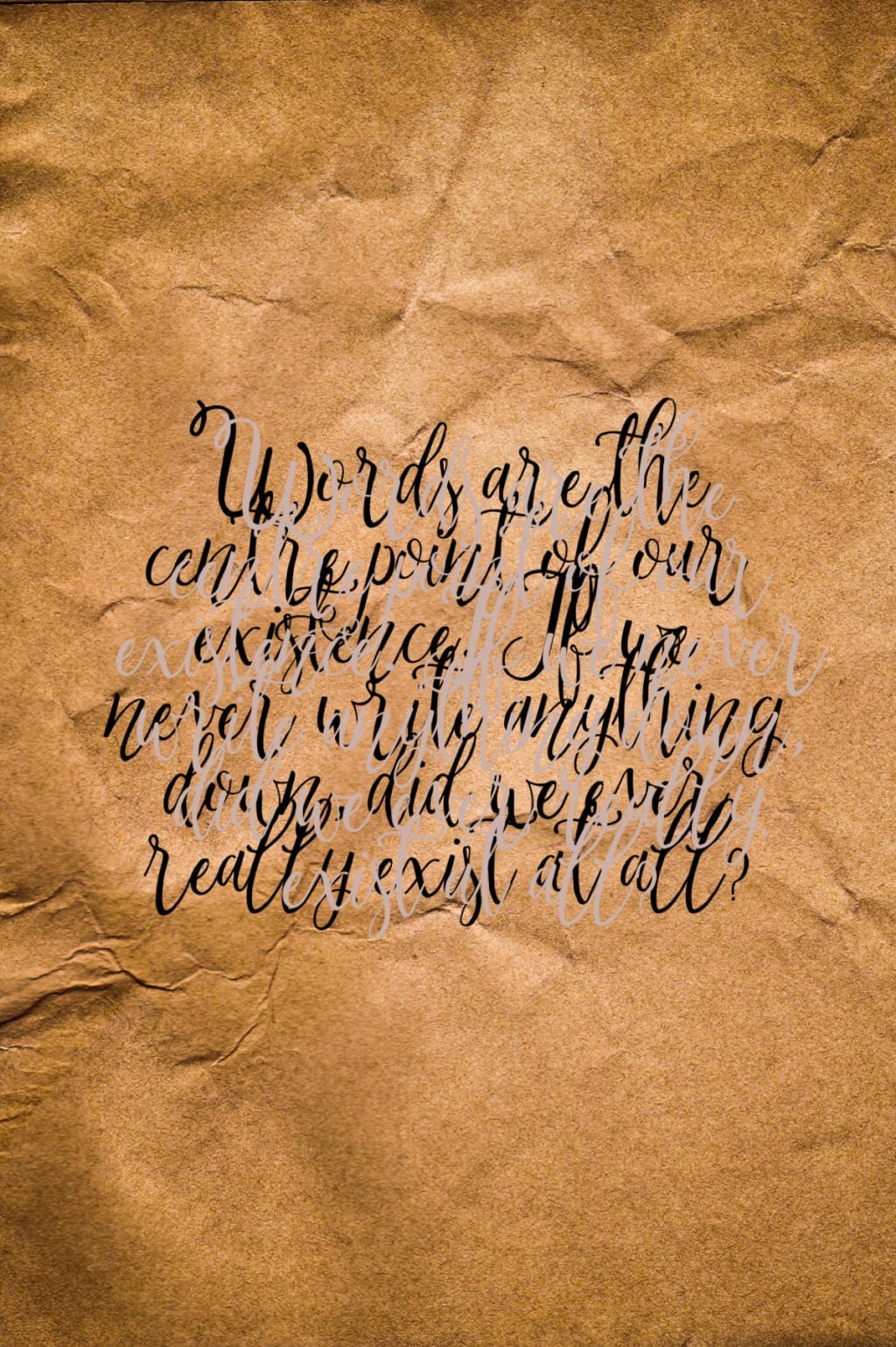
Words are the centre point of our existence. If we never write anything down, did we ever really exist at all?
About the Creator
VJHD
The subsistence of our lives will live on in our words, forever encapsulating our feelings.
Words are the centre point of our existence. If we never write anything down, did we ever really exist at all?
Poem of the Week – From Plastic: A Poem by Matthew Rice
In an age defined by mass consumption and environmental anxiety, poetry continues to find new ways to reflect the contradictions of modern life. From Plastic, a striking poem by Matthew Rice, confronts readers with an unsettling meditation on waste, memory, and the artificial permanence of everyday objects. Through spare language and vivid imagery, Rice turns a mundane material into a powerful symbol of human excess and fragile hope. The poem opens with an image that feels instantly familiar: discarded plastic scattered across a landscape, caught between nature and neglect. Rather than presenting this debris as purely ugly or meaningless, Rice frames it as a kind of fossil of the present age — an artifact future generations may one day study to understand who we were. This shift in perspective is one of the poem’s most compelling achievements. Plastic is no longer just rubbish; it becomes testimony. A Material That Refuses to Die Central to From Plastic is the idea that plastic outlives intention. Objects once designed for convenience persist far longer than the people who used them. Bottles, bags, and wrappers drift through rivers and fields, carrying traces of human life into places never meant to hold them. Rice’s poem suggests that these materials form a parallel history, one written not in books but in fragments of polymer and color. The poem’s language is restrained, almost clinical at times, mirroring the artificial quality of its subject. Yet moments of tenderness surface unexpectedly. Rice describes plastic catching sunlight or floating like a strange kind of flower on water. These images blur the boundary between beauty and harm, forcing the reader to confront how easily humans aestheticize what they have damaged. Memory and Responsibility Beyond its environmental message, From Plastic also explores memory and responsibility. The poem asks who will remember the lives attached to these objects. A child’s drink bottle, a grocery bag from a hurried evening, a wrapper dropped without thought — each once held meaning for someone. Now, stripped of context, they drift anonymously. Rice does not accuse directly. Instead, he allows the objects themselves to speak silently of their origins. This indirect approach gives the poem emotional depth. Rather than preaching, it invites reflection. The reader is left to recognize their own habits in the fragments described on the page. There is also an undercurrent of mourning in the poem. The persistence of plastic becomes a metaphor for unresolved guilt and unfinished stories. What we throw away does not truly disappear; it simply changes form. In this way, Rice links environmental damage with human psychology — both are shaped by denial and convenience. Craft and Structure Structurally, the poem unfolds in short, controlled lines that mimic the scattered presence of plastic in the world. Each line feels like a small piece of debris itself, contributing to a larger accumulation of meaning. This formal choice reinforces the poem’s theme: small actions create vast consequences. Rice’s diction is precise but not ornamental. He avoids grand metaphors in favor of concrete observation. The effect is subtle but powerful. Readers are not overwhelmed by abstract theory but grounded in physical reality — the sight of plastic lodged in sand, tangled in branches, or drifting along a stream. The rhythm of the poem is quiet and contemplative. There is no dramatic climax, only a gradual realization that the landscape has changed and will not easily return to what it once was. This slow unfolding mirrors the way environmental damage occurs: incrementally, often unnoticed, until it becomes unavoidable. A Poem for the Present Moment From Plastic resonates deeply in a time when climate awareness is growing alongside consumption. The poem does not offer solutions, nor does it claim moral superiority. Instead, it holds up a mirror to modern life. It suggests that poetry can still intervene in public conversations, not through slogans but through attention. What makes the poem particularly effective is its refusal to simplify. Plastic is not portrayed as purely monstrous; it is shown as human-made, human-used, and human-abandoned. This complexity allows readers to feel implicated without feeling attacked. Conclusion Matthew Rice’s From Plastic transforms an ordinary substance into a lens through which to view humanity’s relationship with the planet. It is a poem about leftovers — not just material ones, but emotional and ethical ones as well. In giving voice to what we discard, Rice reminds us that nothing truly vanishes and that even the smallest object carries a story. As Poem of the Week, From Plastic stands as a quiet but urgent work. It does not shout. It does not accuse. It simply asks us to look again at what lies at our feet and consider what it says about us. In that act of looking, poetry fulfills one of its oldest roles: to make the invisible visible and the ordinary unforgettable.
By Fiaz Ahmed about 5 hours ago in Poets
The Pride Flag and the Diversion
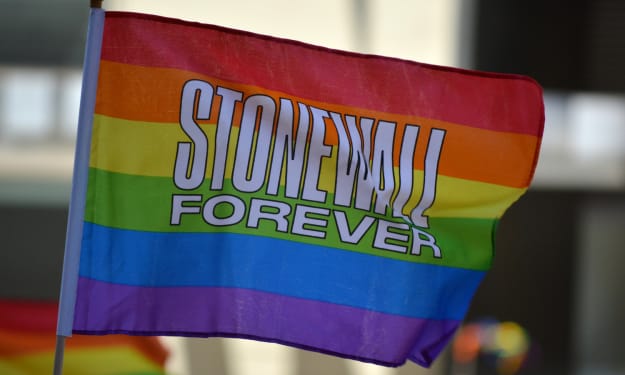
For nearly a decade, the LGBTQIA Pride Flag rippled in the wind at Christopher Park, a kaleidoscope of color staked into the soil of America’s first national monument to LGBTQIA+ liberation. That flag came down this week. Federal officials, citing new guidance from the Trump Administration, silently lowered the rainbow flag from its pole across the street from the Stonewall Inn. The birthplace of the modern gay rights movement now flies only the United States flag.
By Tim Carmichael5 days ago in Pride


Comments
There are no comments for this story
Be the first to respond and start the conversation.