wild animals
Animals the way nature intended it; explore the world of wild animals and the controversies surrounding domestication and hunting of feral beasts.
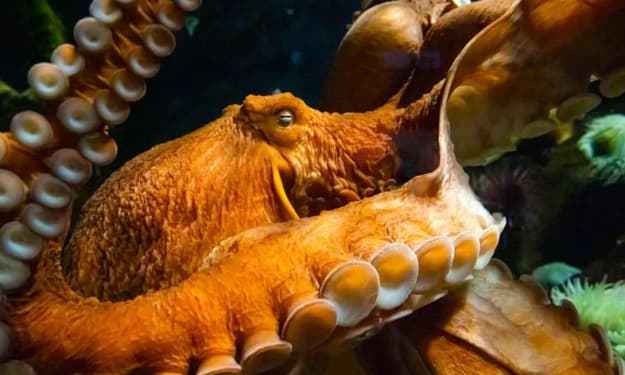
The mysterious inner life of the octopus
It was a big night for Inky the octopus. The day's visitors had been and gone, and now his room in the aquarium was deserted. In a rare oversight, the lid of his tank had been left ajar. The common New Zealand octopus had been without female company for some time, sharing a tank with only a fellow male, Blotchy. The loose lid provided Inky with an opportunity. With eight strong suckered limbs and, quite possibly, intimate concerns on his mind, Inky hauled himself out of the water, made his way under the loose lid, and off across the aquarium floor.
By Holy horse3 years ago in Petlife
How does wildlife find garden ponds?
here, at the bottom of the emptied pond, wriggled an unexpected cadre of eels. This body of water was huge, originally designed as an outdoor swimming pool by whoever lived in the house previously. But the former owner soon deemed it too cold to swim in. So they had filled it with ornamental goldfish instead.
By keenan eliezer3 years ago in Petlife
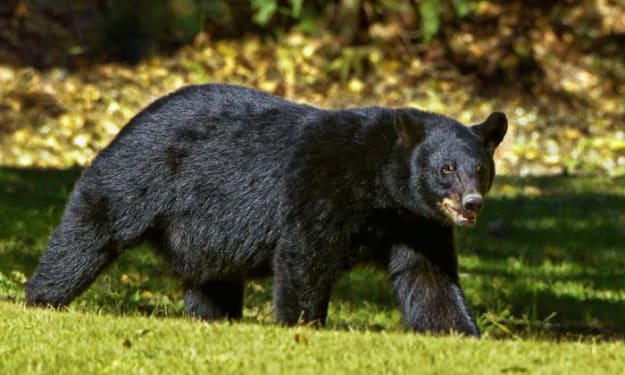
Bears are not just carnivores, study finds
Bears are perceived as fierce carnivores, but a team from Washington State University recently studied the diets of giant pandas and sloth bears and found that bears are closer to omnivores. Bears also appear to need much less protein than they do in captivity in zoos.
By Gareth Geyer3 years ago in Petlife
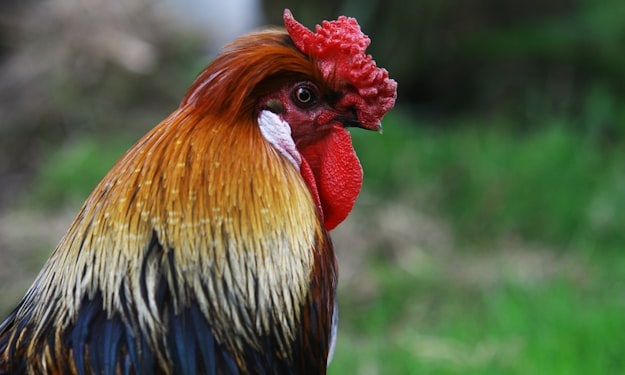
The Rooster and Its Many Faces
The Rooster is traditionally considered to be a favorable sign. His crow is a sign of the break of dawn and the beginning of a new start, chasing away the ghosts and evil spirits of the night. The only creature of the Chinese zodiac with wings and, per se, is regarded as the messenger that attaches the two worlds of heaven and earth.
By Rachel Caspari3 years ago in Petlife
Bears may not be carnivores
Bears are perceived as fierce carnivores, but a team from Washington State University recently studied the diets of giant pandas and sloth bears and found that bears are closer to omnivores. Bears also appear to need much less protein than they do in captivity in zoos.
By Gareth Geyer3 years ago in Petlife
The world's only flying mammal
1. Bats are found in almost every corner of the world Bats live on every continent on Earth, except Antarctica. Bats can be found as far north as the Arctic Circle and as far south as Argentina and the southernmost tip of South Africa. The largest bat is the giant golden-crowned flying fox, a rare fruit bat that lives only in the Philippines. Not only does this bat weigh 1.5 kg, but it also has a wingspan of 1.5 to 1.6 meters! The smallest bat in the world is the Kitts hog-nosed bat, an endangered bat species that live in southeastern Burma and western Thailand. This tiny bat is probably the smallest mammal on Earth.
By Gareth Geyer3 years ago in Petlife
Dogs see neighbors bullying their masters, pretending to show kindness to neighbors to withhold.
Amy, a 25-year-old girl, had a dog that helped her owner out of a bad mood. The dog led Amy's neighbor to a dark place with a pit in the ground on purpose, and the neighbor was inattentive and fell hard and broke her leg.
By Fester Hammer3 years ago in Petlife
How to Get Rid of Raccoons: Removal & Control
It is very small, with a body length of only 65-75 cm and a weight of between 7-13 kg. Its body is fat and short, with long and thin limbs, a pointed mouth, mixed hair color, gray, yellow, and brown mixed, and black spotted hair on the face. It has a fat tail with black and white rings, somewhat like a small panda. Raccoons are omnivores, eating mice, insects, frogs, fish, shrimp, and crabs, as well as fruit and bird eggs.
By conant abram3 years ago in Petlife
Extinct Animals: North American Traveling Pigeon North Island Tarantula
Extinct Animals: North American Traveling Pigeon The North American Traveling Pigeon, also known as the Traveling Pigeon, is a famous bird that once lived on the North American continent. At its peak, the traveling pigeon population numbered in the billions, and it was once the most numerous bird not only in North America, but most likely in the world at the time. However, in the early 20th century, the last traveling pigeon died alone in a zoo in the United States, and the species eventually became extinct.
By Richard Shurwood3 years ago in Petlife