
What is MS?
Multiple sclerosis in a nutshell

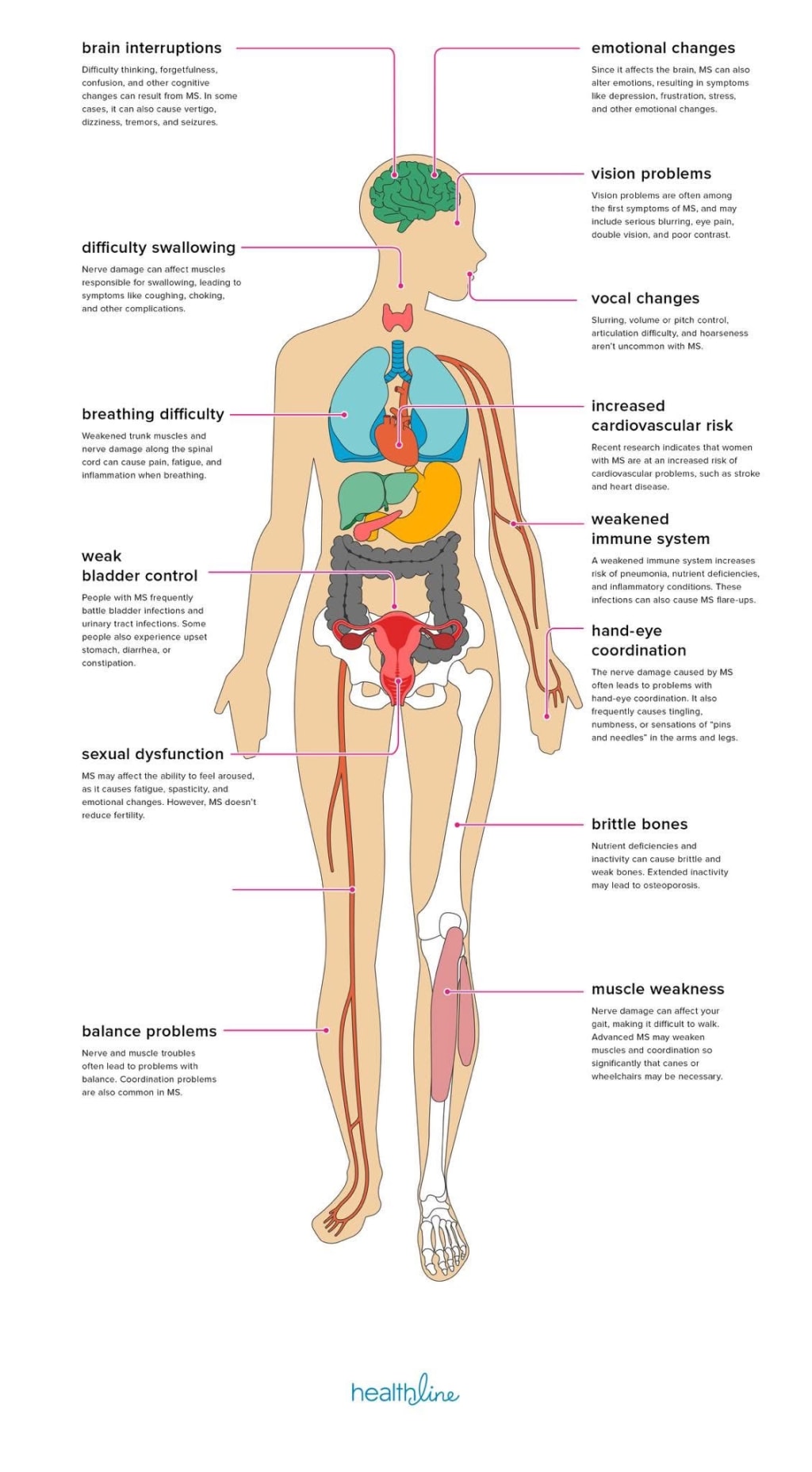
Multiple sclerosis is often described as an invisible illness. The phrase sounds simple, almost gentle, as though invisibility softens its impact. The reality is far more complex.
Multiple sclerosis, commonly known as MS, is a lifelong neurological condition that affects the central nervous system. The central nervous system includes the brain, spinal cord, and optic nerves. These structures control everything from movement and balance to vision, sensation, and cognitive function. MS disrupts the communication between the brain and the rest of the body.
To understand MS, it helps to understand how the nervous system normally works.
Nerves are protected by a coating called myelin. Myelin functions like insulation around electrical wires, allowing messages to travel quickly and efficiently between the brain and the body. In MS, the immune system mistakenly attacks this protective coating. The damage creates scar tissue, known as lesions, which interrupts or slows down nerve signals.
When communication between the brain and body is disrupted, the effects can appear almost anywhere.
Movement may become difficult. Balance may become unreliable. Vision may blur or double. Fatigue may become overwhelming. Sensation may change, creating numbness, tingling, or pain. Cognitive processes such as memory and concentration may be affected.
MS does not follow a predictable pattern. Symptoms vary from person to person. No two experiences are identical. Some people experience mild symptoms that remain manageable for years. Others experience more significant disability. The condition exists on a spectrum.
One of the most misunderstood aspects of MS is fatigue.
Fatigue in MS is not ordinary tiredness. It is neurological exhaustion. Rest does not always resolve it. Sleep does not guarantee relief. Fatigue can appear suddenly, without warning, making simple tasks feel impossible. This symptom alone can reshape daily life.
MS is often diagnosed in early adulthood, typically between the ages of 20 and 40. The diagnosis arrives at a stage of life associated with independence, career development, and long-term planning. The timing can feel particularly disruptive.
The cause of MS is not fully understood. Research suggests that a combination of genetic and environmental factors may contribute. MS is not contagious. It cannot be passed from one person to another through contact, and it is not hereditary.
Several types of MS exist. The most common form is relapsing-remitting MS. This type involves periods of new or worsening symptoms, known as relapses, followed by periods of recovery. Recovery may be partial or complete. Some symptoms may remain.
Other forms of MS involve gradual progression, where symptoms slowly worsen over time without clear periods of recovery.
MS is currently incurable. Treatments exist to manage symptoms, reduce relapses, and slow disease progression. These treatments vary depending on individual circumstances. Medical care often involves neurologists, specialist nurses, and ongoing monitoring.
Living with MS involves more than managing physical symptoms. It requires adaptation.
Energy becomes something to protect. Plans become flexible. Daily life becomes shaped by unpredictability. Ordinary tasks require more awareness, more preparation, and more recovery.
MS is often invisible to others. Many people living with MS do not appear disabled. They may walk, work, and interact normally. The absence of visible signs creates misunderstanding. Disability becomes something questioned rather than recognised.
This invisibility can make MS difficult to explain.
People may assume that looking well means being well. They may struggle to understand fluctuating symptoms. They may expect consistency where none exists.
MS teaches a different relationship with the body.
Reliability becomes uncertain. Trust becomes something rebuilt over time. Listening becomes essential. The body communicates through fatigue, pain, and limitation, requiring attention rather than resistance.
MS changes life. It does not end it.
People with MS continue to work, love, build relationships, and pursue goals. Adaptation becomes part of existence. Strength takes new forms. Identity evolves.
MS is not defined solely by limitation. It is defined by complexity.
Understanding MS begins with recognising that disability does not always look the way people expect. It begins with listening to lived experience rather than relying on assumption.
MS exists within the nervous system. Its effects reach into every aspect of life.
Its invisibility does not make it any less real.
About the Creator
Keep reading
More stories from Millie Hardy-Sims and writers in Motivation and other communities.
Dear Past Me
There is a version of me that still exists in my memory. She moves quickly. She makes plans without hesitation. She says yes without calculating the cost. Her body is not something she negotiates with or questions. It simply works. It carries her forward without resistance, without interruption, without fear.
By Millie Hardy-Simsabout 19 hours ago in Motivation
One Hard Thing
Stop me if you’ve heard this one before: You have the number, you know your schedule- you’ve even picked out the perfect day and time to make this appointment. Shoot, you’ve even picked out alternative days and times just in case their schedules can’t accommodate you!
By Taylor Rigsby20 days ago in Motivation
The real Access Codes to Higher Dimensions
💗 Many teachers explore the ascension process, spiritual enlightenment, awakening, and the higher dimensions. Nowadays, words like vibrations, energies, frequencies, and higher dimensions are often used as marketing tools. Yet, the teachings behind them remain deeply valuable and insightful. What’s truly beautiful is that much of this knowledge is now widely accessible, often for free, allowing people all over the world to benefit from it.
By Jeanne Jess 4 days ago in Motivation
Super Bowl LX Recap: A Team Called Hawks
Sixty. The Super Bowl turned 60! Still amazes me that this was the sixtieth Super Bowl played in NFL history. It seems like yesterday that I watched Super Bowl XXVII, the first SB I ever watched. The QB who won Super Bowl XXVII has since called a few SBs, and will call next year's game, but that's another story. Super Bowl LX took place at Levi's Stadium in Santa Clara, California, the home stadium of the San Francisco 49ers. However, it was one of their division foes who represented the NFC, as the Seattle Seahawks faced off against the New England Patriots.
By Clyde E. Dawkins5 days ago in Unbalanced




Comments
There are no comments for this story
Be the first to respond and start the conversation.