
The Missing Piece
Don’t Hurt Yourself Just to Fit In

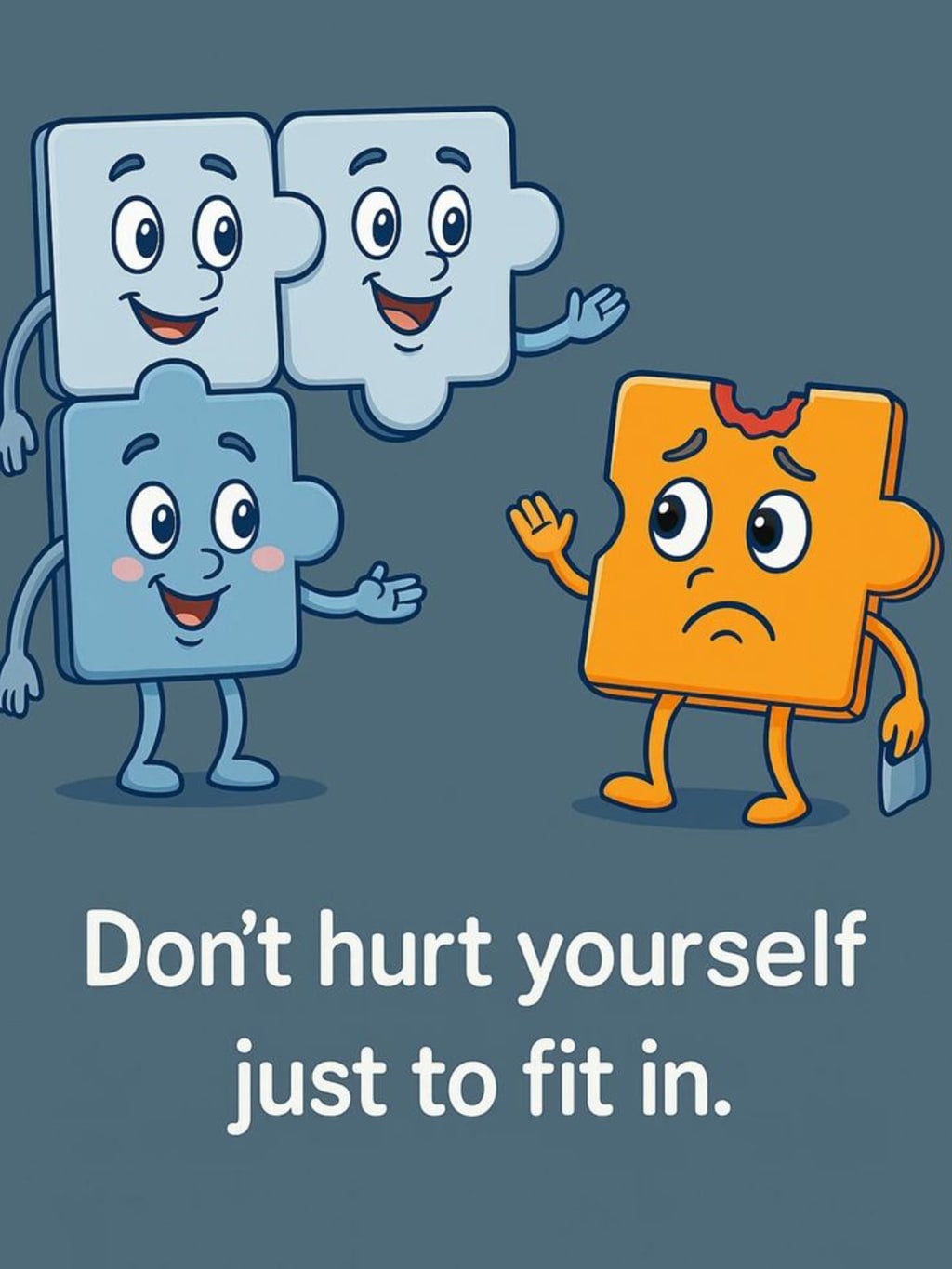
In a small wooden box on a dusty shelf, there lived four puzzle pieces. Three of them were sky blue—smooth, shiny, and perfectly shaped. They laughed together, clicked together, and proudly displayed how easily they connected. The fourth piece was different. It was bright orange, slightly chipped at the top, and shaped in a way that didn’t match the others.
The blue pieces often smiled at the orange one, but their smiles carried a quiet message: You don’t quite belong.
The orange piece tried not to notice. It tried to stand tall and confident. But every time the blue trio snapped together perfectly, forming a neat square, the orange piece felt like a mistake.
One evening, as moonlight spilled across the shelf, the orange piece spoke softly.
“Can I join you?”
The blue pieces looked at one another. “We’re already complete,” one replied gently. “But you can try.”
That word—try—became the orange piece’s mission.
The Pain of Pretending
The next morning, the orange piece began reshaping itself. It pushed against the wooden wall of the box, trying to flatten its curved edge. It scraped its top to make it smoother. It forced its sides inward, hoping to match the others’ design.
Each attempt hurt.
Small cracks formed. The bright orange color faded where it rubbed too hard. But the piece kept going. “If I can just change a little more,” it thought, “I’ll finally belong.”
Days passed. The orange piece grew weaker. It stopped shining. It stopped smiling. It barely recognized its own shape.
Finally, with trembling effort, it pressed itself against the blue trio. For a moment, it almost fit. Almost.
But then—snap.
The pressure was too much. The orange piece fell back, a new crack splitting across its surface.
The blue pieces gasped.
“You’re breaking yourself,” one said.
The orange piece looked down at the damage and whispered, “I just wanted to fit in.”
A Gentle Realization
From the far corner of the box, an old puzzle piece—faded and forgotten—cleared its throat.
“Young one,” it said kindly, “why are you trying to become something you are not?”
The orange piece blinked. “Because they’re complete. And I’m not.”
The old piece chuckled softly. “Completeness doesn’t come from looking the same. It comes from connecting where you truly belong.”
The blue trio listened carefully.
“You see,” the old piece continued, “every puzzle is designed with intention. You are not a mistake. You are part of a different picture.”
The orange piece hesitated. “But what if no one wants me?”
The old piece smiled. “The right puzzle will.”
Finding the Right Fit
Days later, the box was opened. A pair of hands lifted the pieces out and began sorting them. The blue trio was placed together on a board that matched their color perfectly. They clicked into place with ease, forming part of a calm blue sky.
The orange piece waited anxiously.
Then, it was picked up and placed on a different board—one filled with warm colors, bold patterns, and bright energy. As it touched the surface, something magical happened.
Click.
It fit.
Not by force. Not by pain. Not by pretending.
But naturally.
The cracks were still there, small reminders of its struggle. But now, surrounded by pieces that matched its vibrant color and unique shape, the orange piece felt something it had never felt before.
Belonging.
The Lesson in the Cracks
As the puzzle came together, the orange piece reflected on its journey.
It remembered the pressure. The scraping. The breaking. The desperate desire to be accepted. It realized something important: trying to change yourself to please others only leads to damage.
The cracks it carried were not signs of weakness. They were proof of resilience. Proof that it had survived the pain of pretending and learned the value of authenticity.
Meanwhile, the blue pieces also learned their own lesson. Watching the orange piece nearly destroy itself made them understand that quiet exclusion can hurt just as much as harsh words.
They realized that being different isn’t wrong—it’s necessary. A puzzle made of identical pieces would never create a beautiful picture.
You Are Not Meant for Every Space
Life is much like that wooden box.
Sometimes we find ourselves surrounded by people who don’t understand us. We try to change our personality, hide our dreams, silence our voice, or dim our brightness just to feel accepted. We file down our edges and reshape our identity.
But every time we pretend to be someone else, we lose a small piece of who we truly are.
The truth is simple: not every group is meant for you. Not every space is designed for your shape. And that’s okay.
You are not supposed to fit everywhere.
You are supposed to fit somewhere.
And when you find that place, you won’t have to hurt yourself to belong.
The Power of Being Different
The orange piece’s uniqueness was never the problem. It was the solution to a different picture.
Your differences—your ideas, your personality, your struggles, your dreams—are not flaws. They are features of the masterpiece you are part of.
If you constantly try to shrink yourself to match others, you’ll never discover where you truly shine.
Belonging is not about blending in. It’s about standing confidently in your own shape and trusting that the right connections will come.
Final Reflection
The next time you feel like the odd one out, remember the orange puzzle piece.
Remember that forcing yourself into the wrong place only creates cracks. Remember that pain is not proof that you should change—it might be proof that you are in the wrong environment.
You don’t need to reshape yourself to be worthy.
You don’t need to silence your voice to be accepted.
And you certainly don’t need to hurt yourself just to fit in.
Somewhere, there is a puzzle waiting for your exact shape.
Stay whole.
Stay true.
And let yourself fit where you were always meant to belong.
About the Creator
Active USA
Motivation, News, technology
Keep reading
More stories from Active USA and writers in Motivation and other communities.
The Price Of Everything
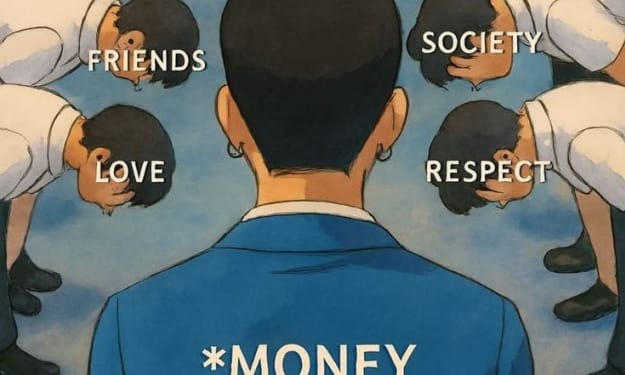
In today’s world, money speaks louder than words. It opens doors, builds houses, creates opportunities, and commands attention. But sometimes, without realizing it, we allow money to rise higher than everything else — higher than love, higher than friends, higher than happiness, and even higher than self-respect.
By Active USA about 9 hours ago in Motivation
One Hard Thing
Stop me if you’ve heard this one before: You have the number, you know your schedule- you’ve even picked out the perfect day and time to make this appointment. Shoot, you’ve even picked out alternative days and times just in case their schedules can’t accommodate you!
By Taylor Rigsby20 days ago in Motivation
The Quiet Road to Brightness
: In the northern hills of a small European country stood the town of Alderwick. Once known for its steel factories and river trade, it had grown quieter with each passing decade. The trains no longer stopped there. Young people left for larger cities. Storefronts closed one by one, leaving behind dusty windows and fading signs.
By Iazaz hussain6 days ago in Motivation
Nancy Guthrie: Is a miracle still possible after close to two weeks?
Close to two weeks since Nancy Guthrie's abduction As of February 12, 2026, Nancy Guthrie remains classified as missing for 12 days, but there is no official confirmation that she is deceased. Blood matching Guthrie’s DNA was found on her front porch, indicating she likely suffered an injury during the abduction.
By Cheryl E Preston2 days ago in Geeks



Comments
There are no comments for this story
Be the first to respond and start the conversation.