
Disabled, Not Difficult
The fear of how others see me


There is a moment that happens quietly, almost invisibly.
It appears in hesitation. In the pause before asking for a chair. In the careful calculation before explaining why I cannot stand for long, why I need to leave early, why I cannot simply push through.
The moment is shaped by a single fear: being seen as difficult instead of disabled.
Disability does not always announce itself clearly. Multiple sclerosis exists inside my nervous system, hidden from view. Fatigue does not have a visible shape. Pain does not introduce itself. Limitation does not always look like weakness.
From the outside, I often appear capable.
That appearance creates expectation.
Expectation that I will stand when standing hurts. Expectation that I will continue when continuing carries consequences. Expectation that I will behave in ways that make other people comfortable, even when comfort comes at the expense of my safety.
Requesting accommodation disrupts those expectations.
Asking for a place to sit changes the flow of a room. Leaving early interrupts social rhythm. Declining plans introduces inconvenience. Explaining limitation creates discomfort.
Discomfort is often misinterpreted.
Instead of being seen as someone responding to a medical reality, disabled people are often seen as uncooperative, inflexible, or demanding. The language used rarely acknowledges disability directly. It frames behaviour instead.
Difficult. High maintenance. Unreliable.
These words exist in quiet spaces. They exist in expressions, in tone, in the subtle shift of perception that follows disclosure. They do not need to be spoken aloud to be understood.
This fear shapes behaviour.
There have been moments when I remained standing longer than I should have. Moments when I stayed in environments that exhausted me. Moments when I chose silence instead of explaining my needs.
The cost of being perceived as difficult can feel heavier than the cost of physical discomfort.
This calculation happens constantly.
Every decision involves balancing physical reality against social perception. Every request carries the risk of being misunderstood. Every act of self-protection carries the risk of being interpreted as inconvenience.
The responsibility of managing other people’s expectations becomes part of living with invisible illness.
This responsibility is exhausting.
It requires emotional labour alongside physical survival. It requires self-advocacy in environments that were not designed to accommodate unpredictability. It requires the willingness to risk judgment in order to protect personal wellbeing.
The fear itself is not irrational. It is learned.
Society often rewards endurance. Pushing through pain is praised. Continuing despite exhaustion is framed as strength. Rest is viewed with suspicion. Limitation is viewed as failure.
Disabled people exist outside that narrative.
Choosing rest becomes an act of resistance. Choosing accommodation becomes an act of self-preservation. Choosing honesty becomes an act of vulnerability.
These choices are often misunderstood.
There is grief in that misunderstanding.
Grief for the simplicity of existing without explanation. Grief for the ease of being trusted. Grief for the absence of doubt.
Over time, something shifts.
The need to protect the body becomes stronger than the need to protect perception. Physical reality becomes impossible to ignore. The consequences of pushing beyond limitation become too severe to justify silence.
Self-preservation replaces performance.
This shift does not eliminate fear. Fear remains present. Judgment remains possible. Misunderstanding remains inevitable.
What changes is priority.
The body becomes something to listen to rather than something to override. Needs become something to honour rather than something to hide. Survival becomes more important than approval.
Being seen as difficult is no longer the worst outcome.
Being unseen is.
Disability deserves recognition without apology. Accommodation deserves respect without justification. Existence deserves space without performance.
I am not difficult.
I am disabled.
The difference should not require explanation.
About the Creator
Keep reading
More stories from Millie Hardy-Sims and writers in Motivation and other communities.
One Hard Thing
Stop me if you’ve heard this one before: You have the number, you know your schedule- you’ve even picked out the perfect day and time to make this appointment. Shoot, you’ve even picked out alternative days and times just in case their schedules can’t accommodate you!
By Taylor Rigsby24 days ago in Motivation
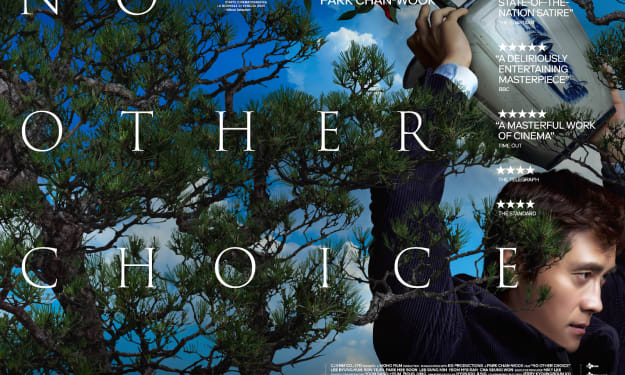
No Other Choice (2025)
It is only February, so other films may well surpass “No Other Choice”, but I think this is the best film I’ve seen so far this year. And that surprises me, because, it is a subtitled film and while I am pretentious enough to choose to watch foreign-language films, I was also very tired and that was an extra commitment from me. But more importantly, let me warn you, this film is gruesome and violent. There were times I had to turn away from the screen to avoid the worst of it (including some self-inflicted dentistry).
By Rachel Robbins7 days ago in Geeks


Comments
There are no comments for this story
Be the first to respond and start the conversation.