
Inside the Moon Megaproject Set to Land in 10 Countries
A Billion-Dollar Lunar Experience Bringing Space Tourism Down to Earth
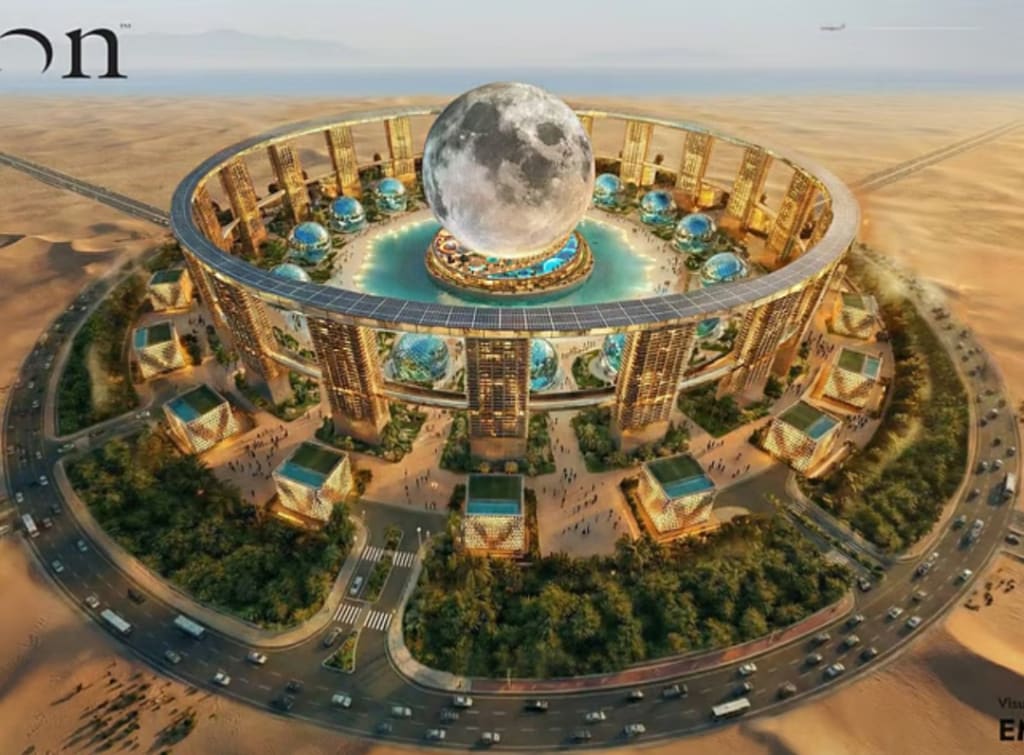
The dream of walking on the Moon has fascinated humanity since the historic landing of NASA’s Apollo mission in 1969. While only a handful of astronauts have experienced the lunar surface firsthand, a groundbreaking entertainment and hospitality venture aims to make that dream accessible to millions — without ever leaving Earth.
Known simply as “Moon,” this ambitious megaproject is a $5 billion mixed-use development concept designed to replicate the look and feel of Earth’s only natural satellite. Spearheaded by Canadian entrepreneurs, the project is expected to land in 10 major global cities over the coming decades, blending luxury hospitality, immersive entertainment, and futuristic design into one monumental structure.
But this is far more than a themed hotel. It is an audacious attempt to redefine experiential tourism, urban entertainment, and architectural innovation on a global scale.
---
What Is the Moon Megaproject?
At its core, Moon is a massive spherical building rising approximately 735 feet (224 meters) high, constructed atop a podium base that houses entertainment venues, retail spaces, restaurants, and event facilities. The structure’s exterior is designed to resemble the lunar surface — complete with craters and textured terrain — illuminated to mimic the Moon’s glow in the night sky.
Inside, visitors would find a luxury hotel with approximately 4,000 suites, a “lunar colony” simulation experience, a state-of-the-art arena, and immersive attractions that replicate walking on the Moon in controlled gravity-like environments.
Unlike traditional theme parks, Moon integrates hospitality, nightlife, business conferences, wellness facilities, and space-themed adventures into one vertical ecosystem. Think of it as part resort, part science exhibit, part entertainment capital.
---
Why Build the Moon on Earth?
Space tourism has grown into a high-profile industry, with companies like SpaceX and Blue Origin pushing commercial spaceflight into public consciousness. However, actual space travel remains financially inaccessible for most people.
The Moon megaproject aims to bridge that gap. Instead of spending millions on a rocket launch, guests could experience simulated lunar exploration for a fraction of the cost. The concept taps into the booming “experiential economy,” where travelers prioritize immersive experiences over traditional sightseeing.
According to developers, the project could attract up to 10 million visitors annually in each host city, making it one of the most visited entertainment destinations in the world.
---
The 10-Country Expansion Plan
The vision isn’t limited to a single landmark location. The Moon concept is designed to be replicated in 10 strategic global cities — potentially across North America, Europe, Asia, and the Middle East.
Although specific confirmed cities remain under discussion, developers have previously explored markets like Las Vegas, Dubai, and parts of Asia known for large-scale entertainment infrastructure.
Each Moon installation would cost roughly $5 billion, financed through private investment, hospitality partnerships, and destination tourism funds. The strategy resembles the global expansion model seen in mega-resorts and integrated entertainment complexes.
If fully realized, the network of Moon destinations would represent one of the largest coordinated architectural developments in modern history.
---
Inside the Lunar Experience
One of the project’s most talked-about features is the “Lunar Surface Experience.” Visitors would ride an internal shuttle system to the top of the sphere, where they would walk across a simulated lunar landscape designed with cutting-edge lighting, sound engineering, and motion effects.
The environment would mimic the feeling of reduced gravity, giving guests the sensation of bouncing across the surface — all while remaining safely indoors.
Other highlights include:
A 4,000-room luxury hotel integrated into the sphere’s structure
A multi-purpose arena capable of hosting concerts and sporting events
A nightclub and sky bar with panoramic views
Retail corridors themed around space exploration
Interactive exhibits showcasing lunar science and astronomy
The project blends fantasy with technological ambition, merging science fiction aesthetics with real-world hospitality.
---
Economic and Urban Impact
Megaprojects of this magnitude often reshape city skylines and economies. The Moon structure would instantly become a landmark, much like the Burj Khalifa transformed Dubai’s global identity.
Developers claim each Moon installation could generate billions in annual tourism revenue, create thousands of jobs, and stimulate local infrastructure investment.
Critics, however, question the sustainability and practicality of constructing massive themed structures in already dense urban environments. Concerns include energy consumption, environmental footprint, and long-term viability in fluctuating tourism markets.
Supporters argue that with green building technologies and smart-city integration, Moon could serve as a model for next-generation entertainment architecture.
---
Engineering the Impossible
Building a 224-meter spherical structure is no small feat. Engineers would need advanced materials, seismic-resistant foundations, and climate-controlled internal systems capable of handling millions of visitors annually.
Modern architectural achievements — from the geodesic dome of Spaceship Earth to the floating design of the Marina Bay Sands — demonstrate that once-impossible concepts can become reality with innovation and investment.
The Moon project seeks to push those boundaries further, blending art, architecture, and experiential design into a single iconic structure.
---
A Reflection of Humanity’s Space Obsession
Human fascination with the Moon spans mythology, science, and pop culture. From ancient lunar calendars to modern science fiction films, the Moon represents mystery, ambition, and exploration.
Since the Apollo era, renewed interest in lunar exploration has surged, with plans from global space agencies and private companies aiming to return humans to the Moon in the coming decade.
In this context, the Moon megaproject feels both timely and symbolic. It reflects our collective desire to explore beyond Earth — even if the first step is through simulation.
---
Will the Moon Rise?
Despite its bold vision, Moon remains in the development and investment phase. Large-scale projects often face financial, regulatory, and logistical hurdles before breaking ground.
Yet history shows that transformative entertainment ventures often begin as seemingly unrealistic dreams. The Eiffel Tower, once criticized as impractical, became one of the world’s most beloved landmarks.
If even a single Moon structure is completed, it could redefine urban tourism and experiential design. If all 10 are built, the world may soon have a new category of architectural icon — a network of glowing lunar spheres scattered across global skylines.
For now, the Moon megaproject stands as a testament to human imagination: a reminder that sometimes, reaching for the Moon starts right here on Earth.
About the Creator
Keep reading
More stories from Sadaqat Ali and writers in Men and other communities.
Students, Educator Among Dead in Tumbler Ridge, B.C., Mass Shooting
Tumbler Ridge, British Columbia — A devastating mass shooting rocked the small community of Tumbler Ridge on February 10, 2026, leaving multiple victims dead and dozens wounded, including young students and an educator. The town, located in northeastern British Columbia, is now grappling with profound grief after one of Canada’s deadliest shootings in recent years.
By Sadaqat Ali5 days ago in Trader
Reclaiming Your Nights: An Chinese Herbal Medicine Guide to Soothing an Irritated Prostate
The moment your head hits the pillow, the urge strikes. You’ve just been to the bathroom, but there it is again—that persistent, nagging feeling. So you get up, relieve what feels like a tiny amount, and crawl back into bed, only for the cycle to repeat an hour or two later. If this sounds familiar, you’re not alone. For many men, especially those dealing with prostatitis, these midnight bathroom trips aren't just an annoyance; they are the thieves of deep, restorative sleep, leaving you groggy, irritable, and drained the next day.
By Shuang hou5 days ago in Men
What Makes a True Man
Ever since the Industrial Era came to a close, men have been missing strong male figures to look up to. Spoiled by comfortable office jobs, our hands have grown tender and our determination has weakened. We've transformed into the classic corporate "yes man" – spineless individuals who sneak around ready to betray others just to climb the ladder of material gain. We might wonder, "Perhaps women will find me appealing now that I own this fancy car and upscale apartment."
By LaMarion Ziegler5 days ago in Men


Comments
There are no comments for this story
Be the first to respond and start the conversation.