
Why Gut Health Affects Your Mind
How Fixing My Stomach Saved My Mental Health—And What Science Finally Confirmed

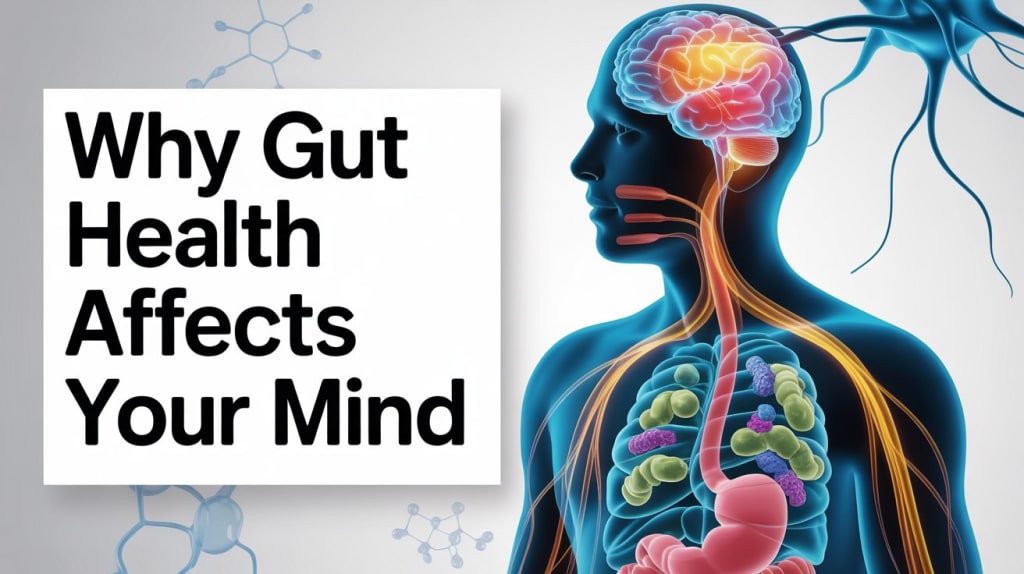
I thought I was losing my mind.
Anxiety that appeared out of nowhere. Depression that made getting out of bed feel impossible. Brain fog so thick I couldn't remember simple words.
Doctors tested me for everything. Thyroid issues. Vitamin deficiencies. Neurological problems. Everything came back normal.
"Maybe you should see a therapist," they suggested kindly. "This might be psychological."
I did. Therapy helped, but something still felt off. Like we were treating symptoms of a problem nobody could identify.
Then one day, a nutritionist asked me a question that changed everything:
"How's your digestion?"
The Connection Nobody Talked About
For three years, I'd been struggling with stomach issues.
Bloating after meals. Irregular digestion. Constant discomfort I'd learned to ignore because "everyone has stomach problems sometimes," right?
I never connected my gut troubles to my mental health struggles. Why would I? They seemed completely unrelated.
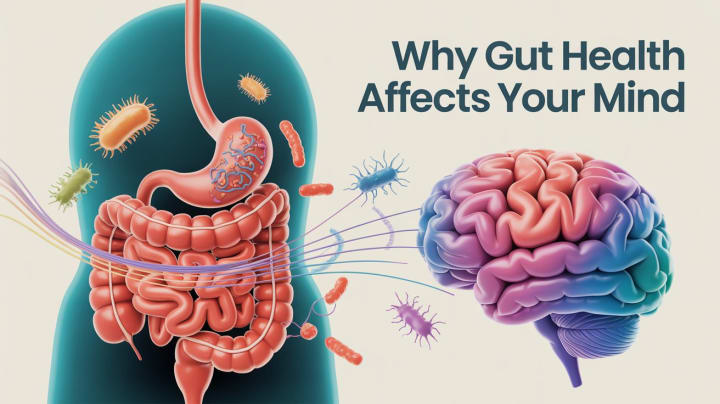
But this nutritionist explained something my other doctors hadn't: your gut and your brain are directly connected.
The gut produces 90% of your body's serotonin—the neurotransmitter that regulates mood, sleep, and emotional wellbeing. When your gut is inflamed or imbalanced, it can't produce serotonin properly.
Which means gut problems can literally cause depression and anxiety.
My mind wasn't broken. My gut was. And it was taking my mental health down with it.
The Experiment That Changed Everything
She suggested an elimination diet to identify foods causing inflammation, then slowly rebuilding my gut health with probiotics, fiber, and fermented foods.
I was skeptical. Food felt too simple to fix something as complex as mental health.
But I was also desperate.
So I tried it.
Within two weeks, something shifted.
The constant brain fog started lifting. My energy improved. The baseline anxiety I'd carried for years—the kind that made my chest tight even on good days—began to ease.
By week four, I felt like a different person.
Not because I'd added medications or changed therapy approaches. Because I'd healed my gut, and my gut had healed my mind.
What the Science Actually Says
I started researching obsessively. Turns out, the gut-brain connection isn't alternative medicine—it's established science.
The gut microbiome produces neurotransmitters, regulates inflammation, and communicates directly with the brain through the vagus nerve. When your gut bacteria are imbalanced (often from processed foods, stress, antibiotics, or chronic inflammation), it sends distress signals to your brain.
Studies link gut dysfunction to depression, anxiety, ADHD, and even neurodegenerative diseases.
Your gut isn't just digesting food. It's influencing your thoughts, emotions, and mental clarity.
And I'd spent three years treating my brain while my gut was screaming for help.
The Healing Journey
Fixing my gut wasn't instant or easy.
I eliminated foods that triggered inflammation—for me, that was gluten and dairy. I added fermented foods like sauerkraut and kimchi. I took high-quality probiotics. I prioritized fiber and whole foods.
I also addressed stress, because chronic stress destroys gut health. I started meditating, walking daily, sleeping better—all things that supported both my gut and my mind.
The transformation was gradual but undeniable.
My anxiety decreased significantly. My depression lifted. My brain fog cleared. I felt like myself again—maybe for the first time in years.
And the wildest part? My therapist noticed too. Our sessions shifted from crisis management to genuine growth work because I finally had the mental clarity to engage.
Why This Matters for You
If you're struggling with mental health issues that won't fully resolve—despite therapy, medication, or lifestyle changes—I'm not saying your gut is definitely the problem.
But I am saying: it's worth investigating.
Especially if you also experience digestive issues, food sensitivities, chronic inflammation, or autoimmune symptoms.
Your brain and gut are partners. When one suffers, the other often does too.
The Changes You Can Make Today
You don't need a complicated protocol. Start simple:
Reduce processed foods and sugar. They feed harmful gut bacteria and promote inflammation.
Add fermented foods. Yogurt, kefir, sauerkraut, kimchi—they introduce beneficial bacteria.
Eat more fiber. Fruits, vegetables, whole grains feed the good bacteria.
Manage stress. Chronic stress damages your gut lining and microbiome.
Consider probiotics. Quality matters—research strains that support mental health.
These aren't replacements for therapy or medication. They're additional tools in your healing toolkit.
The Truth I Wish I'd Known Sooner
Mental health isn't just in your head. It's in your gut, your hormones, your inflammation levels, your sleep, your stress response.
You're not broken. You're just treating the wrong system.
For three years, I tried to think my way out of depression caused by physical inflammation. It didn't work because I was addressing the symptom, not the source.
When I finally healed my gut, my mind followed.
Your Gut-Brain Connection Matters
If you've tried everything and still feel like something's off—if your mental health struggles seem disproportionate to your circumstances—listen to your gut. Literally.
It might be trying to tell you something your brain can't hear yet.
Healing isn't always where you expect to find it.
Sometimes the path to mental clarity runs straight through your stomach.
Pay attention. Your gut might hold the answers your mind has been searching for.
Listen to your gut. It's smarter than you think.
----------------------------------
Thank you for reading...
Regards: Fazal Hadi
About the Creator
Fazal Hadi
Hello, I’m Fazal Hadi, a motivational storyteller who writes honest, human stories that inspire growth, hope, and inner strength.
Keep reading
More stories from Fazal Hadi and writers in Longevity and other communities.
Day 4 of Quitting
If this is how sobriety feels, maybe it’s better to go through life a little buzzed… this, along with other hits like, I want to kill myself, I wish I was dead, and I’m going to throw myself off a bridge have been the only thoughts on rotation these past few days. I promise myself that if, in a month, I still feel like this (‘this’ meaning despondent, full of rage, and simultaneously numb) I can go back to smoking. Until mid-February though? Nicotine is off the table.
By sleepy drafts26 days ago in Longevity



Comments
There are no comments for this story
Be the first to respond and start the conversation.