
The Importance of Mutual Aid in Community Building
Wesley Oler IV explores the impact mutual aid has on forming and strengthening community.

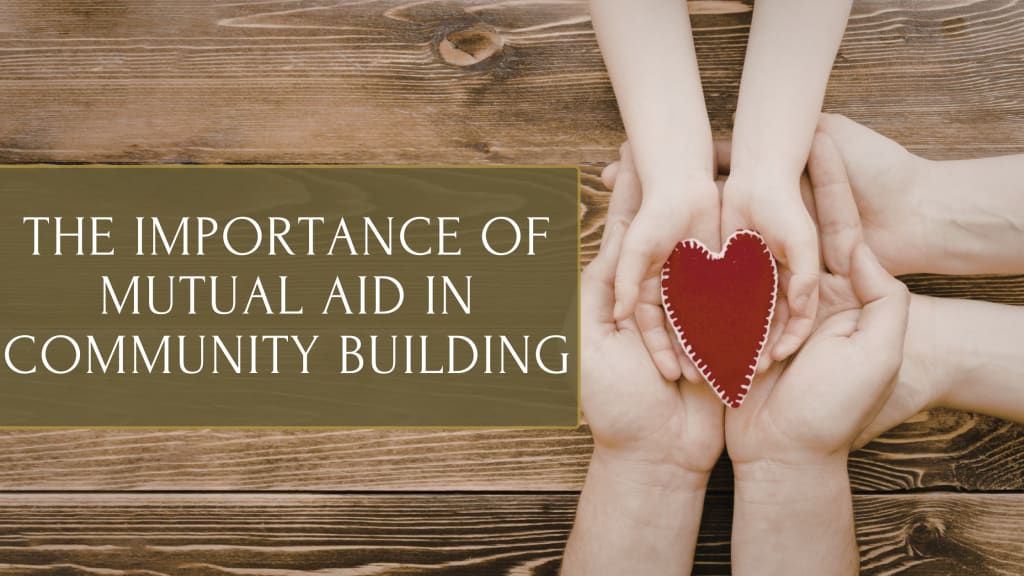
Mutual aid plays a vital role in strengthening communities by fostering cooperation, shared responsibility, and collective care. At its core, mutual aid is the voluntary exchange of resources and services for the mutual benefit of those involved. Unlike traditional charity, which often operates through a top-down model where resources flow from donors to recipients, mutual aid emphasizes solidarity and collaboration. Everyone participates as both a giver and a receiver of support, creating stronger social bonds and more resilient communities.
One of the most important aspects of mutual aid is its ability to build trust among community members. When people help one another directly—whether by sharing food, offering childcare, assisting with transportation, or providing emotional support—they develop deeper relationships based on empathy and reliability. These relationships form the foundation of healthy communities because they create networks of people who look out for one another. Trust built through mutual aid can also lead to stronger cooperation in other areas, such as neighborhood safety, local decision-making, and community projects.
Mutual aid also helps communities respond more effectively to crises. During natural disasters, economic downturns, or public health emergencies, formal institutions and government systems may struggle to meet the immediate needs of everyone affected. In these moments, grassroots mutual aid networks often emerge or expand to fill the gaps. Neighbors organize to distribute food, collect supplies, check on vulnerable individuals, and share critical information. Because these efforts are organized locally, they can respond quickly and adapt to the unique needs of their communities.
Another important benefit of mutual aid is its ability to empower individuals. Many traditional support systems can unintentionally create a sense of dependency or hierarchy between those who provide help and those who receive it. Mutual aid, on the other hand, recognizes that everyone has something valuable to contribute. Someone who cannot provide financial support may offer time, skills, or knowledge instead. This shared participation encourages dignity and self-worth, allowing people to feel like active contributors rather than passive recipients.
Mutual aid also plays a role in addressing inequality and systemic barriers. In many communities, certain groups face limited access to resources such as healthcare, housing, education, and employment opportunities. Mutual aid networks can help reduce the impact of these barriers by redistributing resources within the community. For example, community members might organize clothing swaps, free meal programs, tutoring networks, or tool libraries where people can borrow equipment rather than purchase it. These initiatives make essential resources more accessible while promoting a culture of sharing rather than competition.
Community building through mutual aid also encourages civic engagement. When people collaborate to solve local problems, they become more invested in the well-being of their neighborhoods. This involvement can lead to greater participation in community meetings, local initiatives, and advocacy efforts. People who feel connected to their communities are more likely to take action when challenges arise, whether that means organizing a neighborhood cleanup, advocating for better public services, or supporting local businesses.
In addition, mutual aid helps preserve cultural knowledge and traditions. Communities often pass down valuable skills such as cooking, farming, repairing items, or caring for children through informal support networks. When neighbors exchange these skills, they strengthen cultural identity while ensuring that important knowledge is not lost over time. Skill-sharing workshops, community gardens, and cooperative learning groups are all examples of mutual aid practices that support both cultural preservation and practical education.
The long-term impact of mutual aid is the creation of resilient communities that are better prepared to face challenges. Resilience comes from strong relationships, shared knowledge, and the ability to mobilize resources quickly when needed. Communities that practice mutual aid develop these qualities naturally because cooperation becomes part of everyday life rather than something reserved only for emergencies.
Importantly, mutual aid does not replace institutions or public services, but it complements them by filling gaps and fostering stronger local connections. Government programs and nonprofit organizations can provide large-scale resources, but mutual aid ensures that support is personal, immediate, and community-driven. The two approaches can work together to create a more comprehensive support system.
In an increasingly fast-paced and individualistic world, mutual aid reminds people of the value of collective care. Communities thrive when individuals recognize that their well-being is interconnected with the well-being of others. By sharing resources, supporting neighbors, and working together to address challenges, mutual aid helps create communities that are not only stronger but also more compassionate and inclusive.
About the Creator
Wesley Oler IV
Wesley Oler IV lives in New York, New York where he’s enjoyed a substantial career in investment, an interest that was sparked in college.
Keep reading
More stories from writers in Longevity and other communities.
Why Protein Is Essential for the Elderly
As people age, maintaining good nutrition becomes increasingly important for health and independence. One nutrient that often receives special attention in elderly nutrition is protein. While protein is important at every stage of life, it becomes especially crucial in older adulthood.
By Being Inquisitiveabout 6 hours ago in Longevity
How Adult Nutrition Can Improve Energy, Confidence, and Performance
When people talk about health, they often focus on fitness, weight loss, or muscle gain. But one important topic is often overlooked—adult nutrition and how it impacts intimacy, energy, and confidence.
By Being Inquisitive3 days ago in Longevity
A More Human Vocal
When we launched Vocal nearly a decade ago, the world was a very different place. LLMs did not exist, and stories were created one at a time by people sitting down to write, revise, and share something personal. Many of our assumptions about publishing, trust, and participation were built for a world where effort and output were inseparable.
By Justin @ Vocal7 days ago in Resources
📢 Raise Your Voice Thread: 03/05/2026
Our “Raise Your Voice Threads” are hosted most alternating Thursdays at 12PM ET to offer creators more avenues to uncover exceptional stories on Vocal. As we are continuously searching for fresh creators and inspiring stories, this thread provides an opportunity to exchange and discuss the stories that have moved and motivated us on Vocal.
By Raise Your Voice by Vocal7 days ago in Resources



Comments
There are no comments for this story
Be the first to respond and start the conversation.